

Beef Tallow vs. Argan Oil: Which Moisturizes Better?
Beef tallow and argan oil are two distinct natural moisturizers that differ fundamentally in composition, clinical evidence, and skin type suitability. Beef tallow is rendered animal fat rich in saturated and monounsaturated fatty acids, including oleic, stearic, and palmitic acids, along with fat-soluble vitamins A, D, E, and K. Argan oil is a cold-pressed plant oil from Moroccan argan tree kernels, dense in unsaturated fatty acids, vitamin E, antioxidants, and rare phytosterols. When you look at how beef tallow compares to argan oil, the clearest distinction is clinical evidence: argan oil has controlled trial data showing measurable skin elasticity improvements, while Cleveland Clinic dermatology experts state beef tallow’s proven benefits do not extend beyond basic moisturizing.
How beef tallow compares to argan oil in composition
Understanding the fatty acid profiles of both oils tells you exactly what each one does on your skin. Beef tallow is dominated by saturated fats, primarily stearic and palmitic acids, which give it a solid texture at room temperature and strong occlusive properties. Its high saturation level means it reduces transepidermal water loss effectively, forming a physical barrier on the skin’s surface. This makes it particularly useful for dry, barrier-damaged skin but also means it can feel heavy.
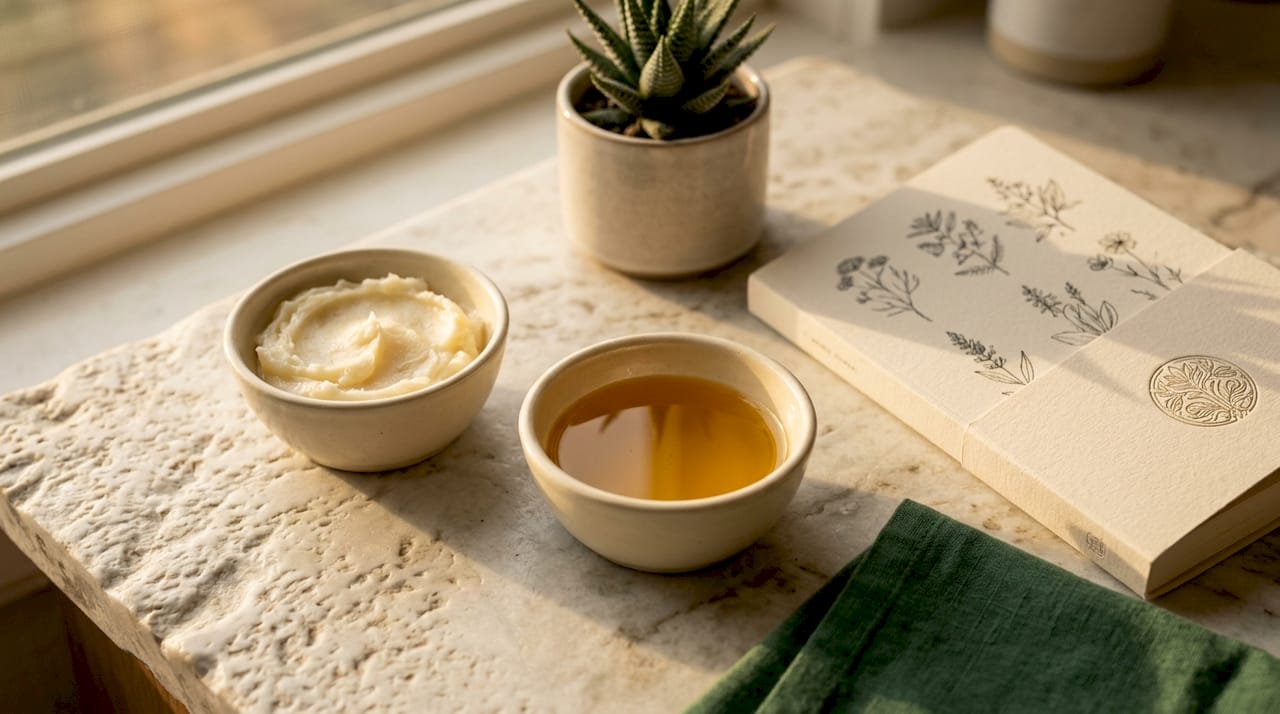
Argan oil sits on the opposite end of the spectrum. It is primarily composed of oleic acid (roughly 43 to 49 percent) and linoleic acid (roughly 29 to 36 percent), both unsaturated fatty acids that absorb more readily into skin. Beyond its fatty acid profile, argan oil delivers antioxidant protection through phytosterols and vitamin E, which actively support the skin’s lipid barrier and reduce inflammation. Beef tallow also contains vitamin E, but in smaller concentrations and without the same antioxidant diversity.
Here is a direct comparison of their core nutritional profiles:
| Property | Beef tallow | Argan oil |
|---|---|---|
| Primary fatty acids | Stearic, palmitic, oleic (saturated and monounsaturated) | Oleic, linoleic (unsaturated) |
| Vitamin E content | Present, lower concentration | High concentration |
| Antioxidants | Minimal | Vitamin E, polyphenols, phytosterols |
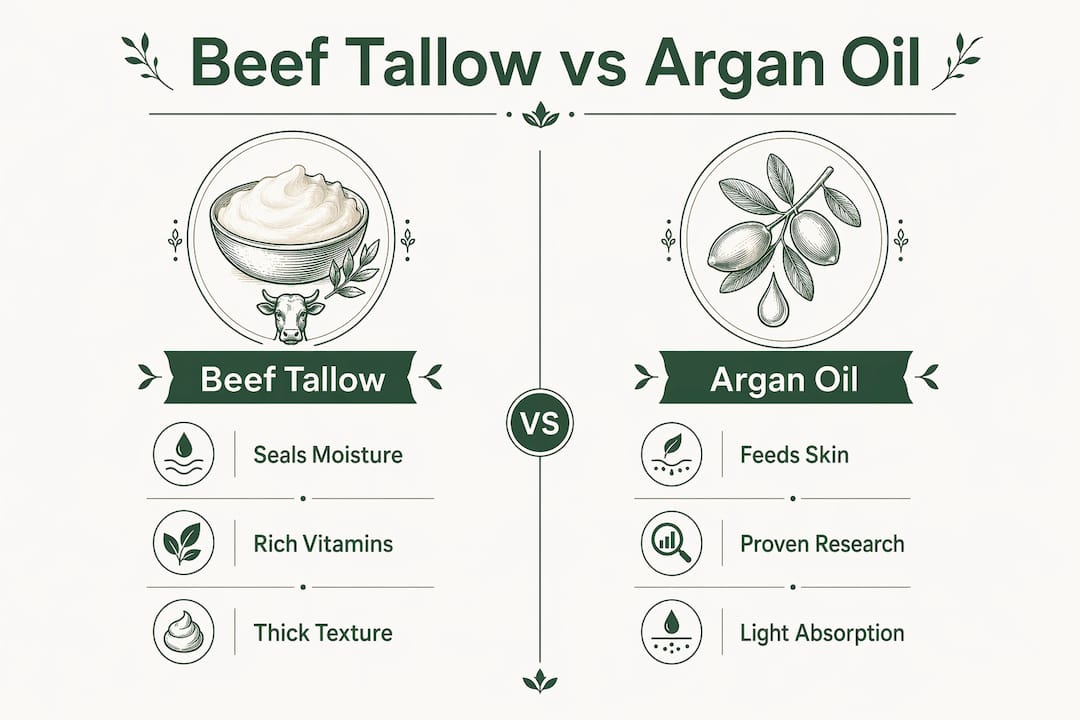
| Texture | Thick, solid, occlusive | Light, liquid, emollient |
| Absorption speed | Slow, sits on surface | Faster, penetrates skin layers |
| Fat-soluble vitamins | A, D, E, K | Primarily E |
The texture difference alone shapes how each one fits into a skincare routine. Tallow seals. Argan oil feeds.
What clinical evidence says about each oil
Argan oil holds a clear advantage in peer-reviewed research. A 2015 randomized controlled trial published in Clinical Interventions in Aging tested argan oil on postmenopausal women and found significant skin elasticity improvements after 60 days, with results outperforming an olive oil control group at p less than 0.001. That level of statistical significance is not common in cosmetic ingredient research. The study measured multiple elasticity parameters, and argan oil improved them across the board.
Beef tallow does not have equivalent trial data. Cleveland Clinic dermatology experts confirm that studies on tallow for skin are limited and that no proven benefits beyond moisturizing have been established. The vitamins present in tallow, particularly vitamin A and D, are theoretically beneficial, but there is no clinical evidence that they are delivered to skin cells in meaningful quantities through topical application.
Argan oil’s benefits are also broader than hydration alone. Research from North Biomedical highlights that argan’s unique phytosterols and antioxidants reinforce the skin’s lipid barrier and provide anti-inflammatory effects. Verywell Health summarizes the clinical picture as promising but still developing, noting that argan oil supports hydration and elasticity based on both clinical and observational data.
Key clinical takeaways:
- Argan oil: one RCT with statistically significant elasticity results, supported by observational data on hydration
- Beef tallow: no RCT data for skin benefits beyond occlusive moisturizing
- Vitamin delivery from tallow: theoretically possible, clinically unproven
- Argan oil’s anti-inflammatory phytosterols: documented in peer-reviewed literature
“There isn’t enough research to conclude beef tallow provides proven skin-care benefits beyond acting as a natural moisturizer.” — Cleveland Clinic dermatology experts
How texture, absorption, and safety compare for different skin types
Practical performance matters as much as biochemistry. Beef tallow’s thick, occlusive texture works well for people with very dry or eczema-prone skin who need a strong barrier. It locks in moisture quickly and prevents water from escaping the skin’s surface. The downside is that rich, thick animal-fat moisturizers carry a higher risk of clogged pores for oily or acne-prone skin types, according to NBC News dermatology experts.
Argan oil absorbs faster and leaves a lighter finish, which is why it appears in so many facial skincare products. It is generally considered suitable for sensitive skin and does not carry the same comedogenic risk as tallow. For people managing acne or rosacea, argan oil is the safer starting point.
Safety considerations for beef tallow go beyond pore-clogging. Tallow products are unregulated, vary widely in quality, and may contain added fragrances to mask the natural odor. Those fragrances can cause irritation or allergic reactions, particularly on sensitive skin. Cleveland Clinic also notes that tallow’s heavy texture can trap heat and potentially trigger rosacea flare-ups.
DIY tallow formulations carry an additional risk. Mixing tallow with water without proper emulsifiers or broad-spectrum preservatives creates conditions for microbial contamination. This is not a theoretical concern. Swonlab’s formulation guidance is explicit: water-in-tallow emulsions require the same preservation standards as any cosmetic emulsion.
Skin type guidance at a glance:
- Dry or eczema-prone skin: Beef tallow’s occlusive barrier is effective; choose a well-formulated product from a trusted source
- Oily or acne-prone skin: Argan oil is the lower-risk option; tallow may worsen breakouts
- Sensitive skin: Argan oil is generally better tolerated; avoid tallow products with added fragrances
- Normal or combination skin: Either can work; argan oil is more versatile for daily facial use
Pro Tip: If you want to try beef tallow on sensitive skin, patch-test on your inner arm for 48 hours before applying it to your face or any reactive area.
How to choose between beef tallow and argan oil for your skin
The right choice depends on what your skin actually needs, not what is trending. If your primary goal is sealing in moisture and repairing a damaged skin barrier, beef tallow’s occlusive properties deliver that result. If you want antioxidant support, improved elasticity, and a lighter daily moisturizer, argan oil has the clinical backing and the texture to match.
Here is a practical decision framework:
- Identify your skin type first. Dry and barrier-compromised skin benefits most from tallow’s occlusive effect. Oily, acne-prone, or combination skin responds better to argan oil’s lighter emollient profile.
- Define your goal. Barrier repair and moisture retention favor tallow. Elasticity, antioxidant protection, and anti-aging support favor argan oil.
- Consider your face versus your body. Argan oil is better suited for facial use due to its lighter texture and lower comedogenic risk. Tallow works well on the body, hands, and feet where pore-clogging is less of a concern.
- Source quality products. For argan oil, look for cold-pressed, virgin oil with no added ingredients. For beef tallow, choose grass-fed, chemical-free formulations from reputable producers rather than unverified DIY recipes.
- Avoid water-based DIY tallow blends. Unless you understand emulsification and preservation chemistry, stick to anhydrous tallow balms. Proper emulsification is non-negotiable when water is involved.
Some users find that combining both works well. Applying argan oil first as a serum-like layer, then sealing with a small amount of tallow balm on very dry patches, gives you antioxidant delivery plus occlusive protection. This layering approach is particularly useful in winter or for people with chronic dry skin conditions.
Pro Tip: When buying argan oil, check that the label reads “100% pure argan oil” or “Argania spinosa kernel oil” with no fillers. Diluted products are common and deliver a fraction of the documented benefits.
Key takeaways
Beef tallow seals and protects; argan oil feeds and repairs. The right choice depends on your skin type, your goals, and how much clinical evidence matters to you.
| Point | Details |
|---|---|
| Clinical evidence gap | Argan oil has RCT data for elasticity; beef tallow has none beyond basic moisturizing. |
| Skin type fit | Tallow suits dry and barrier-damaged skin; argan oil suits sensitive, oily, and facial skin. |
| Safety considerations | Tallow products vary in quality and may contain irritants; DIY water blends require preservation. |
| Antioxidant advantage | Argan oil’s phytosterols and vitamin E provide anti-inflammatory and barrier-reinforcing benefits. |
| Sourcing matters | Choose grass-fed tallow balms and cold-pressed virgin argan oil for the most reliable results. |
What I’ve learned from watching people choose between these two oils
Most people come to this comparison already leaning toward one option based on what they’ve read online. Tallow gets positioned as the ancestral, back-to-basics choice. Argan oil gets positioned as the luxury, science-backed option. Neither framing is entirely accurate, and both miss the point.
What I’ve found is that skin type is the deciding factor, not philosophy. I’ve seen people with severely dry, cracked skin get real relief from a well-formulated tallow balm when nothing else worked. I’ve also seen people with sensitive or acne-prone skin make their breakouts significantly worse by switching to tallow because they read it was “natural” and therefore safe. Natural does not mean appropriate for every skin type.
The clinical evidence gap between the two is real and worth taking seriously. Argan oil has a 2015 RCT with statistically significant results. Beef tallow has tradition and anecdote. That doesn’t make tallow useless. It means you should use it for what it demonstrably does: occlude, seal, and prevent water loss. Don’t expect it to deliver vitamins or reverse aging.
My honest recommendation is to treat them as tools with different jobs. If your skin is dry and you need a barrier, tallow from a trusted, grass-fed source is a reasonable choice. If you want antioxidant support and something suitable for your face every day, argan oil is the better-evidenced option. And if you’re tempted to make your own tallow cream at home by adding water, please don’t do it without understanding preservation chemistry. That’s where “natural” skincare can genuinely cause harm.
— Michael
Try Lordslovebutter’s grass-fed tallow balm for real skin results
If beef tallow’s occlusive, barrier-sealing properties sound right for your skin, the formulation quality of what you use matters enormously. Lordslovebutter produces whipped beef tallow balms made from grass-fed, chemical-free tallow, crafted without synthetic additives or fragrances that dermatologists flag as irritation risks.
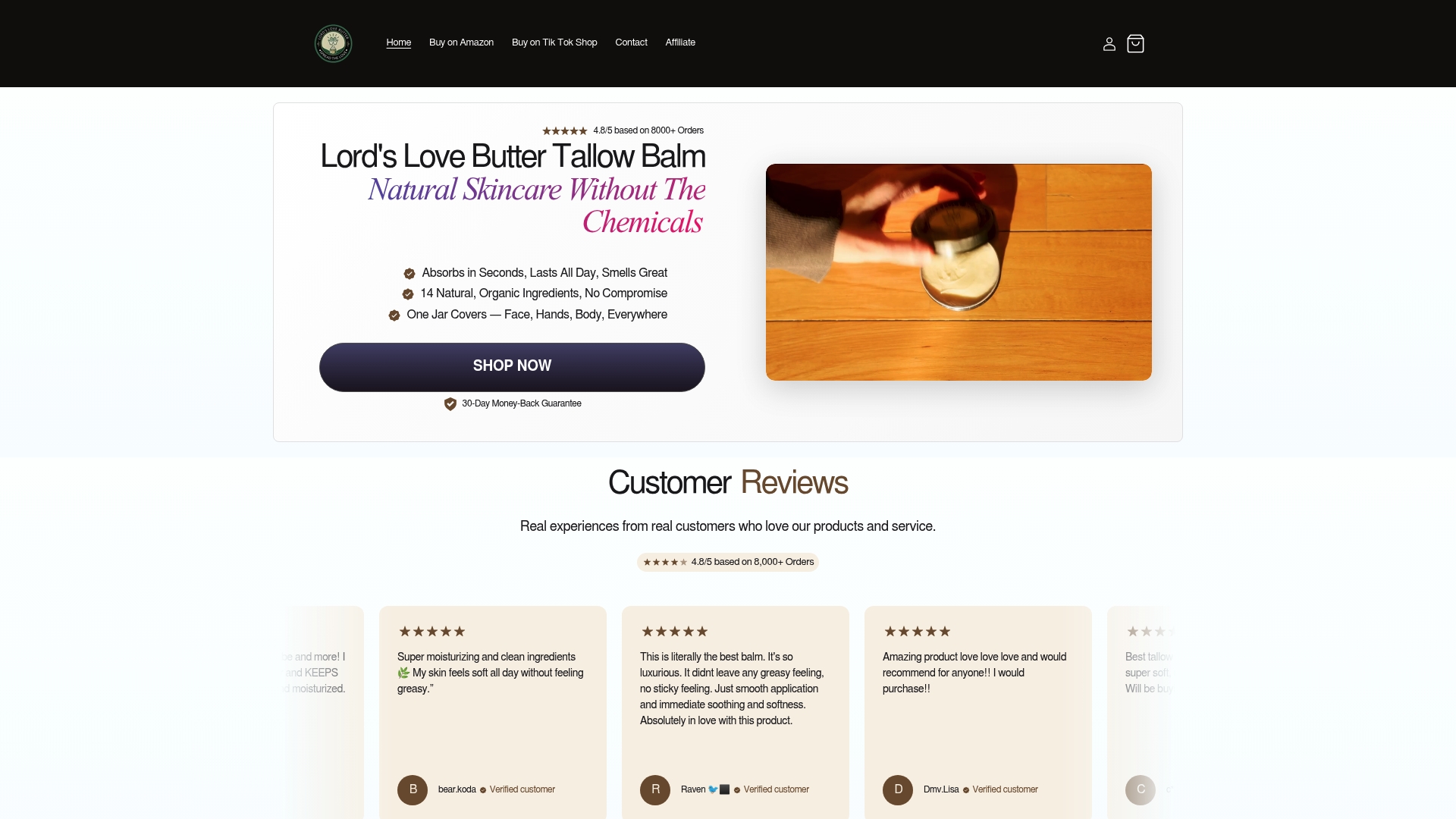
The Lordslovebutter whipped tallow balm is designed for whole-body application and formulated to deliver lasting moisture without the heavy, greasy residue that makes many tallow products impractical. Customers with eczema and psoriasis report improved skin texture within days. As a veteran-owned business, Lordslovebutter brings a level of care and ingredient transparency that sets it apart from unregulated, generic tallow products. Explore the full product line and see the ingredient details before you buy.
FAQ
What is the main difference between beef tallow and argan oil for skin?
Beef tallow is an occlusive animal fat that seals moisture into the skin, while argan oil is a plant-based emollient with antioxidants and clinical evidence for improving skin elasticity. Tallow works best as a barrier; argan oil works best as a daily moisturizer with added skin-health benefits.
Is argan oil better than beef tallow for sensitive skin?
Argan oil is generally the safer choice for sensitive skin because it absorbs faster, carries a lower comedogenic risk, and does not require added fragrances to mask odor. Beef tallow products can contain fragrance additives that trigger irritation or allergic reactions in sensitive skin types.
Can beef tallow clog pores?
Yes, beef tallow carries a real risk of clogged pores for oily or acne-prone skin types. Dermatology experts cited by NBC News confirm that rich, thick animal-fat moisturizers increase breakout risk for these skin types, particularly when applied to the face.
Does beef tallow deliver vitamins to the skin?
Beef tallow contains vitamins A, D, E, and K, but Cleveland Clinic dermatology experts state there is no clinical evidence that these vitamins are delivered to skin cells in meaningful quantities through topical application. The moisturizing benefit is real; the vitamin delivery claim is not proven.
How do you use beef tallow safely in a DIY skincare product?
Anhydrous tallow balms, meaning those without any water, are the safest DIY option. Any formulation that combines tallow with water requires proper emulsifiers and broad-spectrum preservatives to prevent microbial contamination, a standard that most home formulators cannot reliably meet.

