

Petroleum-Free Lip Balm: What Actually Works Instead
Effective petroleum-free lip balm exists, and formulas built on beef tallow and Manuka honey can seal in moisture as well as petroleum jelly without the fossil-derived base. If you want a quick pick, the Mint Beef Tallow Lip Balm Stick delivers grab-and-go relief in a water-free stick, while the Whipped Beef Tallow Balm with Manuka Honey (2.4 oz Tin) works better as an overnight repair balm for cracked or wind-burned lips.
- Want portable, on-the-fly relief? The mint stick fits a pocket or bag and skips water entirely, so there’s nothing to destabilize the formula.
- Want deeper overnight repair? The whipped tin’s richer texture and Manuka honey content sit on lips longer, which matters most while you sleep.
Non-petroleum alternatives don’t just substitute for petrolatum. When the fat content and lipid profile are right, they can match or beat it on comfort and skin feel.
Key Takeaways
Petroleum-free lip balms built on tallow, plant waxes, and lipid-rich actives like Manuka honey can match petrolatum’s occlusive performance while adding barrier-supportive ingredients that petroleum jelly can’t provide.
| Point | Details |
|---|---|
| Read the full INCI list | Petrolatum hides under names like paraffinum liquidum, ozokerite, and microcrystalline wax. |
| Occlusion plus lipid replacement wins | Combining a fatty barrier ingredient with occlusion speeds repair more than occlusion alone. |
| Match texture to the problem | Light sticks suit daily touch-ups; whipped balms suit overnight repair on cracked lips. |
| Storage extends shelf life | Storing natural balms properly—cool and out of direct sunlight—helps extend their usable life before they degrade. |
| Lord’s Love Butter covers both needs | The Mint stick handles portable daytime relief, and the whipped Manuka honey tin or jar handles overnight barrier repair. |
Table of Contents
- What Does Petroleum-Free Lip Balm Actually Mean?
- What Ingredients Replace Petroleum Jelly in Lip Balm?
- Does Petroleum-Free Lip Balm Actually Repair Dry Lips?
- Lord’s Love Butter Options: Which Petroleum-Free Balm for Which Need
- How Do You Choose the Right Petroleum-Free Lip Balm?
- Why Trust This Recommendation?
- How Long Does Non-Petroleum Lip Balm Last?
- Are Non-Petroleum Ingredients More Sustainable?
- What Most Lip Balm Advice Gets Wrong
- The Real Alternative to Petroleum-Based Balms
- Sources
What Does Petroleum-Free Lip Balm Actually Mean?
“Petroleum-free” sounds simple, but the label hides a fair amount of chemistry, and vague terminology is exactly why some shoppers get burned buying a balm they thought was clean. Petrolatum, the medical term for petroleum jelly, is a semi-solid mixture of hydrocarbons refined from crude oil. It’s cheap, stable, and genuinely good at blocking water loss, which is why it’s been the default lip balm base for over a century.
The concern for most health-conscious shoppers isn’t that petrolatum is dangerous when properly refined. It’s that they’d rather not put a fossil-fuel derivative on their mouth every day, and they’re wary of impurities in poorly refined batches. Cosmetic-grade petrolatum has to meet purity standards, but sourcing and refining quality vary by manufacturer, and a label rarely tells you which grade you’re getting.
To actually avoid it, you need to recognize its aliases on an ingredient list:
- Petrolatum
- Paraffinum liquidum (liquid paraffin)
- Paraffin wax
- Mineral oil
- Ozokerite
- Ceresin
- Microcrystalline wax
These are all petroleum-derived, even when the front label says “natural” or “dermatologist recommended.” Front-of-package language isn’t regulated the way ingredient lists are, so a jar can call itself “pure” while petrolatum sits third on the INCI panel. The FDA’s cosmetic labeling guidance is built around exactly this gap: it pushes for accurate ingredient disclosure precisely because marketing claims and formulation reality don’t always match.
One more distinction worth knowing: “mineral oil-free” and “petroleum-free” aren’t interchangeable. A balm can drop mineral oil but still contain paraffin wax or petrolatum for structure. Read the whole INCI list, not just the claim printed above it.
What Ingredients Replace Petroleum Jelly in Lip Balm?
Every petroleum-free lip balm leans on some combination of three ingredient categories: occlusives that block moisture loss, emollients that soften and smooth, and sometimes humectants that pull water into the skin. Understanding which is which tells you what you’re actually buying.
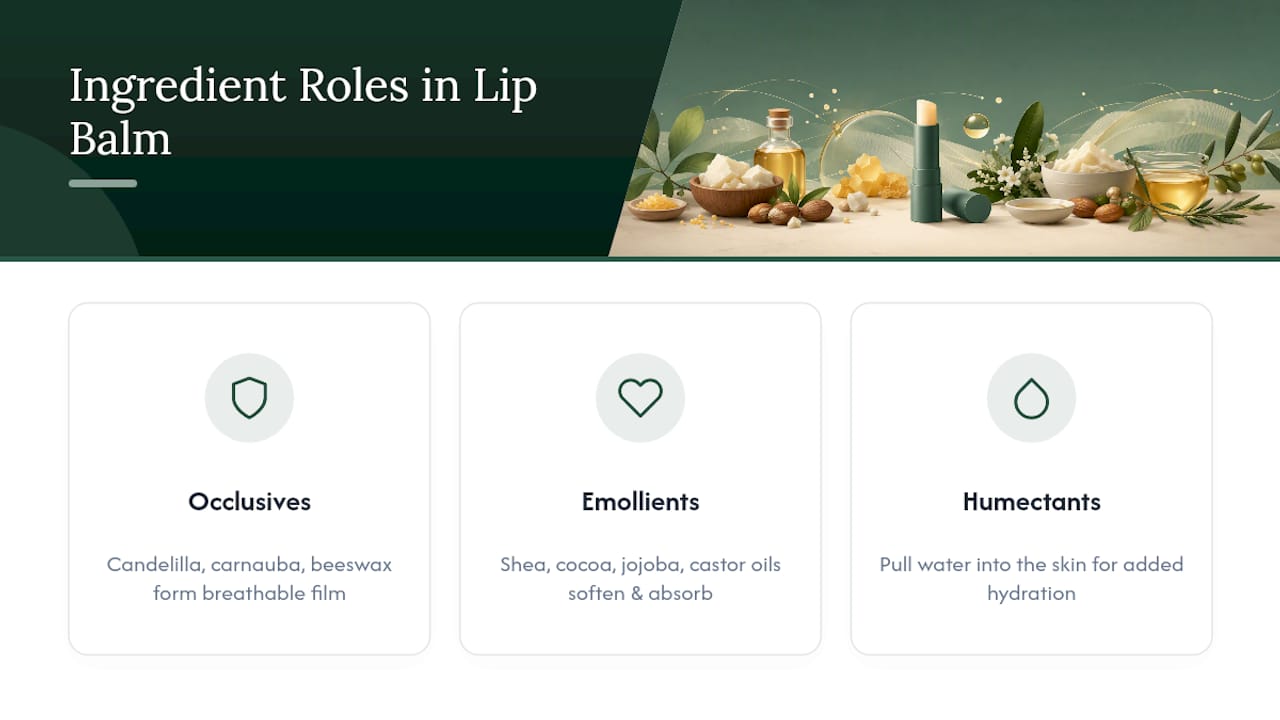
Plant waxes like candelilla and carnauba, plus beeswax, form the structural backbone of most stick-format balms. They’re firm at room temperature, melt slightly on contact with lip heat, and create a breathable film rather than a heavy seal. Beeswax isn’t vegan, so candelilla and carnauba are the go-to substitutes for a vegan lip balm option, though carnauba can feel slightly more brittle in cold weather.
Butters and oils carry most of the emollient work. Shea and cocoa butter soften rough, flaking skin; jojoba oil closely mimics human sebum, which makes it absorb without feeling greasy; castor oil adds shine and a glossy finish that many lip conditioners rely on for that “just applied” look.
Animal-derived lipids, namely lanolin and tallow, sit closer to human skin lipids in molecular structure than most plant oils do. That’s the whole argument for tallow-based balms: the fat composition resembles what’s already in your skin barrier, so it integrates instead of just sitting on top. Lanolin works similarly but comes with a real caveat: wool allergy sufferers can react to it, so anyone with known lanolin sensitivity should skip it and check labels carefully.
Pro Tip: If your lips crack every winter no matter what you use, the problem is usually texture, not effort. A firmer wax-based stick for daytime wind protection, paired with a richer whipped balm at night, covers both occlusion needs without switching brands.
For sensitive lips, skip fragrance and go with tallow or plain shea. For vegan preference, candelilla wax plus jojoba oil is a reliable combination. For genuinely cold, dry climates, richer whipped formulas outperform thin sticks because they leave more lipid on the surface.
Does Petroleum-Free Lip Balm Actually Repair Dry Lips?
Yes, and the mechanism is the same one petrolatum relies on: occlusion. An occlusive ingredient physically blocks transepidermal water loss, trapping moisture your skin already has instead of adding water from outside. Studies on topical occlusives show this barrier effect measurably reduces water loss and supports skin recovery, and that mechanism works whether the occlusive comes from crude oil or from rendered animal fat.
The nuance most lip balm marketing skips: occlusion alone isn’t the whole story. A 2019 review of skin lipids and topical treatments found that combining occlusion with actual lipid replacement, meaning fats structurally similar to what your skin barrier is missing, speeds up recovery more than occlusion by itself. That’s the practical case for tallow and lanolin over plain wax: they don’t just sit on top, they resemble the lipids your damaged barrier needs replaced.
Lipid replacement paired with occlusion outperforms occlusion alone for repairing a compromised skin barrier, according to the review’s synthesis of topical treatment mechanisms.
What this means for daily use: a light, water-free stick works fine for quick daytime touch-ups when your lips are only mildly dry. But if your lips are cracked, peeling, or chronically chapped, that’s a barrier repair job, not a maintenance job. Apply a richer, lipid-dense balm before bed and let it sit uninterrupted for hours. That’s when lipid replacement actually has time to work.
Lord’s Love Butter Options: Which Petroleum-Free Balm for Which Need
Every Lord’s Love Butter balm starts from grass-fed beef tallow, which means the base fat is already close to your skin’s own lipid makeup before any actives get added. Here’s how the lineup breaks down by use case.
The Mint Beef Tallow Lip Balm Stick is the water-free, portable pick. No water means no risk of the emulsion separating in a hot car or a gym bag, and the mint adds a light cooling sensation that plain tallow balms lack.
For overnight repair, the Whipped Beef Tallow Balm with Manuka Honey (2.4 oz Tin) and its 2.4 oz Jar counterpart both whip the tallow to a lighter, spreadable texture and add Manuka honey, which is prized for its soothing, humectant-like feel on compromised skin. The tin travels better; the jar makes it easier to scoop a generous amount for a nightly ritual.
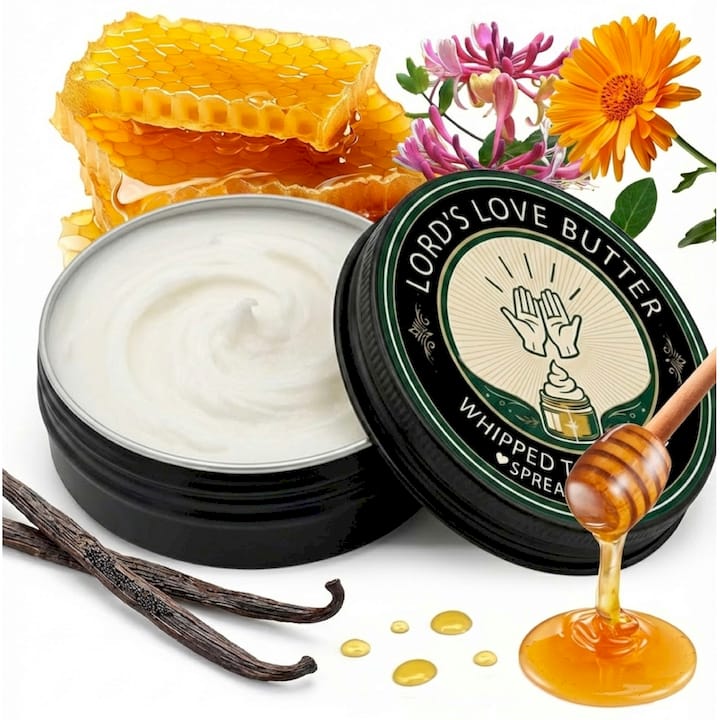
If richness feels like too much, the Original Beef Tallow Balm Lite with Manuka Honey cuts the density down for anyone who finds standard tallow balms too heavy or oily-feeling on the skin, without dropping the Manuka honey entirely.
For lips or skin that are genuinely struggling, the Tallow Lite Double doubles the Manuka honey and adds propolis, another bee-derived ingredient with a long history in topical skin support. It’s the pick when a barrier feels visibly compromised, not just seasonally dry.
Two products cross over from skincare into occasional lip use. The Tallow Face Duo with Vitamin C, Squalane, and Rosehip Oil and the standalone Vitamin C Whipped Beef Tallow Balm are formulated for the face, but a small dab on lips in the evening adds antioxidant support alongside the tallow’s occlusive base. Use sparingly since they’re not built lip-first.
Finally, for daytime sun exposure, the Beef Tallow Sun Balm Stick with Zinc Oxide pairs a mineral UV filter with the same occlusive tallow base, covering both sun protection and moisture retention in one application. It’s the only SKU in the lineup built specifically for daytime mineral defense.
- Portable daily relief: Mint stick
- Overnight barrier repair: Whipped tin or jar
- Lighter daily feel: Original Lite
- Compromised or cracked lips: Tallow Lite Double
- Daytime sun exposure: Sun Balm Stick with zinc oxide
How Do You Choose the Right Petroleum-Free Lip Balm?
Five questions narrow the field fast:
- Do you have a known sensitivity? Lanolin (wool-derived) and tree nut oils are the two most common triggers in “natural” lip balms, so check the INCI list against your own allergy history first.
- Do you need a vegan formula? If so, rule out beeswax, lanolin, and tallow, and look for candelilla or carnauba wax bases instead.
- What packaging fits your routine? Sticks resist contamination and travel clean; tins and jars require clean fingers but let you apply a thicker layer.
- Do you need SPF? A zinc oxide stick is the right call for daytime outdoor exposure; skip mineral SPF balms after dark since there’s no UV to block.
- What texture matches the season? Light sticks for mild daytime dryness, whipped or lite balms for genuine winter cracking.
Patch test any new balm on the inner wrist or the corner of your mouth for two to three days before full use. Watch for redness, itching, or small bumps in the first 7 days. That covers the delayed-reaction window dermatology providers flag for new topical products.
Pro Tip: If lips are already cracked and bleeding slightly, skip the stick format for the first week. A thicker whipped balm applied by fingertip causes less friction on broken skin than dragging a stick across it.
Why Trust This Recommendation?
Lord’s Love Butter builds every formula around one non-negotiable: grass-fed beef tallow with no synthetic fillers, no petroleum derivatives, and full ingredient disclosure on every product page. That transparency matters because the FDA’s own labeling guidance puts the burden on shoppers to check INCI lists rather than trust front-of-package claims, and Lord’s Love Butter’s product pages list the complete formulation for exactly that reason.
The brand is veteran-owned, which shapes how it approaches quality control: small-batch production, sourcing accountability, and a direct line between the people making the balm and the people buying it.
Customer feedback on the whipped balm line has consistently pointed to visible skin texture improvement within days of regular use. .
- Chemical-free, grass-fed tallow base
- Full INCI list published per product
- Veteran-owned, small-batch production
- Manuka honey and propolis sourced for actives, not filler
How Long Does Non-Petroleum Lip Balm Last?
Petroleum-free balms have a shorter realistic shelf life than petrolatum-based products, and that’s simply chemistry. Plant oils, butters, and animal fats contain unsaturated compounds that oxidize over time, while petrolatum is chemically inert and barely degrades. Most natural lip balms have a limited shelf life, which tends to be shorter than that of petrolatum products, and usage can reduce their effective duration.
Storage habits matter more with these formulas than with a plain petroleum stick. Heat exposure can cause natural lip balms to separate or spoil more quickly than if stored at stable, cool room temperature. A faint sour or “off” smell, a grainy texture that wasn’t there before, or a color shift toward yellow or brown are your signals to toss a jar, even if it’s within the printed date.
Jars and tins are more exposed to air and fingers than a stick format, which shortens their practical life once opened. If you want a balm to last the full stated shelf window, a stick that seals completely is the more reliable pick. If you prefer the richer texture of a whipped tin or jar, keep the lid tight, store it away from direct sunlight or bathroom humidity, and consider a small spatula instead of a fingertip to cut down on contamination.
Cool, dry storage, away from windowsills and glove compartments, is the single habit that extends a natural balm’s usable life the most.
Are Non-Petroleum Ingredients More Sustainable?
Petrolatum is a byproduct of crude oil refining, a nonrenewable resource whose extraction carries a well-documented environmental cost. Plant waxes, butters, and even animal-derived lipids like tallow come from renewable, regenerating sources, which is the core sustainability argument driving many shoppers toward petroleum-free products in the first place.
That doesn’t mean every alternative is automatically better for the planet. Palm-derived ingredients carry real deforestation concerns depending on sourcing, and not every “natural” brand discloses where its butters or waxes actually come from. Grass-fed tallow sidesteps some of these questions because it’s typically a byproduct of the beef industry rather than a crop grown specifically for cosmetics, which means it uses land and animals already in production rather than requiring new agricultural clearing.
Cruelty-free claims deserve the same scrutiny as sustainability claims. Beeswax, lanolin, and tallow are all animal-derived but not necessarily animal-tested, and those are two entirely separate ethical questions. If cruelty-free specifically means no animal testing to you, check the brand’s testing policy directly rather than assuming a vegan-labeled product is automatically untested, or that an animal-derived one automatically isn’t.
Packaging is the other overlooked piece. Metal tins are infinitely recyclable in a way that mixed-material plastic tubes usually aren’t, so a jar or tin format often edges out a stick on end-of-life impact, even when the formula inside is comparable.
What Most Lip Balm Advice Gets Wrong
Most articles on this topic treat “petroleum-free” as a checkbox: does it contain petrolatum or not? That framing misses the more useful question, which is whether the replacement ingredient actually resembles your skin’s own lipids. Plenty of petroleum-free balms swap crude oil for a plant wax that offers structure but little real repair value.
The evidence points somewhere more specific: lipid replacement, not just occlusion, is what accelerates barrier recovery. That’s the case for tallow over a generic wax blend, and it’s why a richer, lipid-dense balm at night does more for cracked lips than a light stick reapplied ten times a day. Frequency isn’t a substitute for formulation.
If you’re shopping with health in mind, prioritize the fat profile over the marketing language on the front label. A “natural” claim tells you nothing about whether the formula actually supports repair. An ingredient list that resembles your own skin chemistry tells you a lot more, and that’s the standard worth applying before anything else.
— Michael
The Real Alternative to Petroleum-Based Balms
If you’ve read this far, you already know that swapping petrolatum for a plant wax isn’t automatically an upgrade. What actually helps is a fat that resembles your skin’s own lipids, which is exactly the case for grass-fed beef tallow. Lord’s Love Butter builds every balm around that principle instead of chasing a “natural” label with no lipid science behind it.
For quick, portable relief, the Mint Beef Tallow Lip Balm Stick skips water entirely, so there’s nothing to separate or spoil in a bag or glove compartment. For lips that need real overnight repair, the Whipped Beef Tallow Balm with Manuka Honey combines lipid replacement with a soothing, humectant-rich active in one jar. And if daytime sun exposure is the issue, the Beef Tallow Sun Balm Stick with Zinc Oxide covers mineral protection and occlusion in a single stick.
Pick the format that matches your daily routine and add it to your cart today. Your lips will tell you within a week whether the switch was worth it.
Sources
- PubMed listing: topical occlusives and barrier repair (2012 study reference)
- NCBI PMC review on skin lipids and topical treatments (2019)
- FDA: Cosmetic labeling & safety guidance (guidance document)

