

Replace Synthetic Lotion with Natural Balm: A Smart Switch
Natural balm is defined as a water-free, plant-based moisturizer made from oils, butters, and waxes that replaces synthetic lotion without relying on preservatives or emulsifiers. When you replace synthetic lotion with natural balm, you cut out a long list of additives your skin never needed. Clinical research shows anhydrous balms improve transepidermal water loss by 42% over four weeks in people with atopic dermatitis. That number means your skin holds onto moisture far more effectively than it does under a water-based lotion. Dermatologist Dr. Whitney Bowe confirms that fewer ingredients on compromised skin speed healing, which is exactly what a minimalist balm formula delivers.
What are the primary benefits of replacing synthetic lotion with natural balm?
Synthetic lotions are mostly water. That sounds harmless, but water-based formulas require preservatives like parabens and emulsifiers to stay stable on a shelf. Those additives are the most common triggers for contact dermatitis and chronic skin irritation.
Natural balms skip all of that. Because they contain no water, they need no preservatives. The result is a formula your skin can actually use rather than fight off. High-quality botanical balms contain at least 95% plant-derived ingredients with no synthetic emulsifiers. That purity directly reduces the risk of allergic reactions.
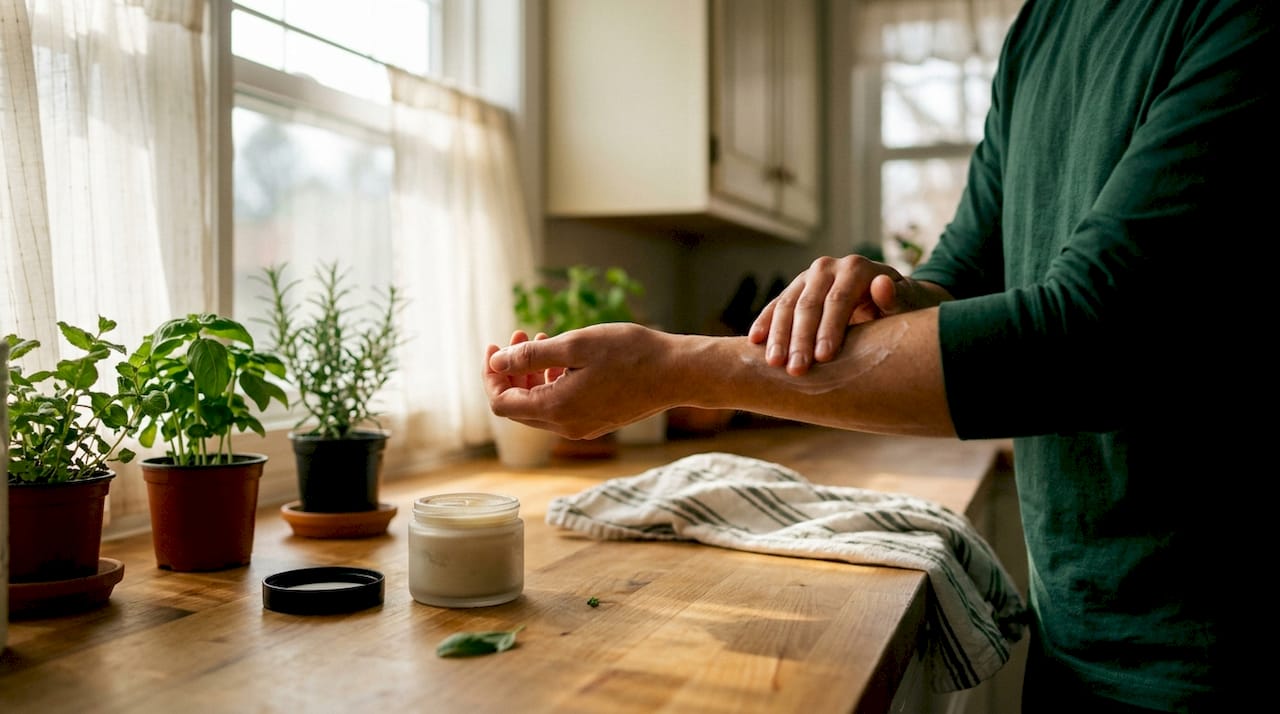
The benefits go beyond what you remove. Plant-based fatty acids, antioxidants, and phytosterols in ingredients like shea butter and jojoba oil actively repair the skin barrier. They do not just sit on top of the skin. They feed it. Beeswax and plant butters form a protective barrier that cuts environmental dryness and slows moisture evaporation.
Key advantages of switching to a natural balm include:
- No synthetic preservatives that trigger irritation or sensitization over time
- Concentrated formula so a pea-sized amount covers the entire face
- Longer-lasting hydration because the occlusive layer seals moisture in rather than evaporating with the water base
- Active skin repair from plant fatty acids and antioxidants
- Suitable for dry, sensitive, eczema-prone, and psoriasis-affected skin
Pro Tip: If you currently use a lotion twice a day, you will likely use a balm once. The concentrated formula lasts longer per application, which also makes it more cost-effective over time.
How can you identify a genuine natural balm and avoid synthetic imposters?
The word “natural” on a label means nothing without verification. Many products marketed as natural still contain synthetic fillers, fragrance compounds, or petroleum derivatives.
The first thing to check is the ingredient list. A genuine natural balm lists plant-derived ingredients at the top: shea butter, jojoba oil, sunflower seed oil, candelilla wax, or beeswax. If you see “fragrance” or “parfum” anywhere, the product likely contains undisclosed synthetic chemicals. Ingredients ending in “-eth” or “-oxynol” signal synthetic processing. Walk away from those.
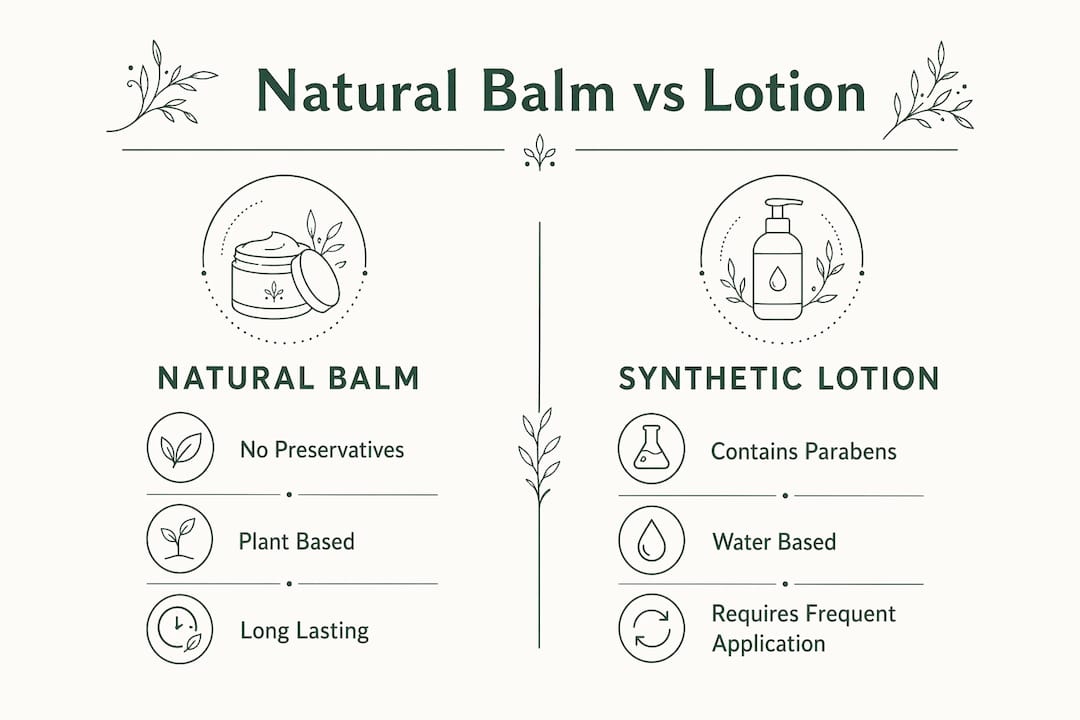
Certifications add a second layer of confidence. Look for USDA Organic, COSMOS Organic, or Ecocert on the label. These standards require verified plant-origin content and prohibit most synthetic additives. They are not perfect, but they are far more reliable than marketing copy. You can also check the ingredient transparency page at Lordslovebutter to see exactly what goes into each product.
Texture tells you a lot too. A real balm melts on contact with your skin’s warmth. It absorbs without leaving a waxy film or a greasy shine. If a product stays slick or sits on top of your skin for more than a minute, it likely contains mineral oil or heavy synthetic waxes that block rather than nourish.
Watch for these red flags on any label:
- “Fragrance” or “parfum” listed as an ingredient
- Ingredients ending in “-eth,” “-oxynol,” or “-PEG”
- Mineral oil or petrolatum in the top five ingredients
- No certifying body or third-party verification
- Water listed first (that is a lotion, not a balm)
Pro Tip: Flip the product over and read the INCI ingredient list before you read the front label. The front is marketing. The back is the truth.
How to switch from synthetic lotion to natural balm
A gradual transition protects your skin from unnecessary reactions. Switching everything at once overwhelms your skin’s adjustment process and makes it impossible to identify what caused any reaction.
Start by stripping your routine to three steps: a gentle cleanser, a moisturizer, and sunscreen. Remove the serums, toners, and multi-step treatments temporarily. This gives your skin a clean baseline before you introduce anything new. Switching products three to four weeks apart is the recommended approach to reduce irritation risk.
Follow these steps in order:
- Simplify first. Cut your routine to cleanser, moisturizer, and sunscreen for one week before introducing a balm.
- Start with a low-risk area. Introduce balm on your hands or body before moving to your face. This lets your skin adapt without risking a visible reaction.
- Apply to damp skin. Applying balm within three minutes of cleansing boosts hydration by up to 70%. The balm seals in the water already on your skin.
- Use less than you think. A pea-sized amount covers the full face. Using too much causes the greasy feeling people wrongly blame on the balm itself.
- Give your skin four weeks. Your skin may feel slightly drier in the first one to two weeks as it adjusts from a water-heavy formula to an oil-based one. That is normal.
- Avoid layering under makeup. Balm under makeup causes pilling and uneven texture. Use balm at night or on bare skin during the day.
- Isolate reactions. If your skin reacts, change one product at a time to find the cause. Never change two products simultaneously.
Pro Tip: Apply your balm immediately after a shower while your skin is still slightly damp. That three-minute window is the single most effective habit change you can make for dry skin.
For a full routine built around chemical-free moisturizing, the whole-body moisturizing guide at Lordslovebutter walks through each step in detail.
How do natural balms perform across different skin types?
Natural balms are not one-size-fits-all. Knowing your skin type determines which balm formula works and which one to avoid.
Dry, flaky, and sensitive skin types benefit most from natural balms. The occlusive layer locks in moisture that dry skin cannot retain on its own. People managing eczema or psoriasis see the strongest results because balms eliminate the preservatives and fragrances that commonly trigger flares. Post-procedure skin, such as after laser treatment or chemical peels, also responds well to the simplified ingredient profile.
Natural balms are not always suitable for oily or acne-prone skin unless the formula uses non-comedogenic oils like jojoba or squalane. Heavy occlusives like shea butter can block pores on skin that already produces excess sebum. If you have oily skin and want to try a balm, look specifically for lightweight, non-comedogenic formulations.
| Skin type | Best balm ingredients | What to avoid |
|---|---|---|
| Dry or flaky | Shea butter, beeswax, sunflower oil | Heavy mineral oil |
| Sensitive or reactive | Chamomile extract, jojoba oil | Fragrance, nut oils |
| Eczema or psoriasis | Grass-fed tallow, calendula | Synthetic preservatives |
| Oily or acne-prone | Jojoba oil, squalane | Coconut oil, heavy butters |
| Post-procedure | Simple plant oils, no actives | Anything with fragrance or acids |
Cold, dry, or low-humidity environments amplify the benefit of balms. The occlusive layer acts as a physical shield against wind and dry air. If you live in a dry climate or spend time outdoors in winter, a balm outperforms any water-based lotion in those conditions.
Pro Tip: If you have nut allergies, check every balm for almond oil, macadamia oil, or walnut oil. Plant allergens are real, and a patch test on your inner arm before full application is always the right call.
What mistakes should you avoid when using natural balms?
The most common mistake is applying balm to completely dry skin. Balms are occlusives, meaning they seal what is already there. On dry skin, they seal in dryness. Always apply to damp skin.
The second most common mistake is using too much product. A balm is concentrated. Using a lotion-sized amount leaves a greasy film that takes too long to absorb. Start with a very small amount and add more only if needed. For lip care, the same principle applies. Natural lip balm ingredients work best in thin, even layers rather than heavy coats.
Additional mistakes to avoid:
- Skipping the patch test. Apply a small amount to your inner arm and wait 24 hours before using a new balm on your face.
- Storing balm in a warm place. Heat degrades plant oils and can cause rancidity. Keep balm in a cool, dry location away from direct sunlight.
- Choosing scented balms. Even natural fragrances like essential oils can irritate sensitive skin. Fragrance-free is the safest starting point.
- Layering balm under makeup. The occlusive layer prevents foundation from adhering properly, causing pilling. Use balm at night or on days without makeup.
- Abandoning the routine too early. Skin takes three to four weeks to fully adapt. Short-term dryness is not failure.
Pairing balm use with a gentle, sulfate-free cleanser protects the skin barrier you are trying to rebuild. Harsh cleansers strip the barrier every morning and force your balm to work harder than it should.
Key Takeaways
Replacing synthetic lotion with natural balm improves skin hydration, reduces irritation risk, and simplifies your routine by eliminating preservatives, water, and synthetic additives.
| Point | Details |
|---|---|
| Anhydrous formula seals moisture | Balms improve transepidermal water loss by 42% over four weeks, outperforming water-based lotions. |
| Apply to damp skin always | Applying within three minutes of cleansing boosts hydration by up to 70%. |
| Fewer ingredients heal faster | Dr. Whitney Bowe confirms that minimizing ingredient complexity speeds healing on compromised skin. |
| Transition gradually | Switch products three to four weeks apart to isolate reactions and let skin adjust. |
| Match balm to skin type | Dry and sensitive skin benefit most; oily or acne-prone skin needs non-comedogenic formulas. |
Why I stopped overthinking my skincare and switched to balm
I spent years rotating through water-based lotions, layering serums, and chasing the next ingredient trend. My skin stayed dry, occasionally reactive, and never quite right. The routine was complicated, and the results were mediocre.
Switching to a simple balm changed that. Within two weeks, the tightness after washing was gone. Within a month, my skin held moisture through the day without reapplication. The routine went from six steps to three. That simplicity was not a compromise. It was the point.
What surprised me most was how much the ingredient list mattered. The moment I stopped putting synthetic preservatives and fragrance compounds on my skin, the low-grade irritation I had accepted as normal disappeared. Dr. Whitney Bowe’s position that fewer ingredients speed healing is not theoretical. I felt it.
The one thing I would tell anyone starting this switch: be patient with the adjustment period. Your skin has been relying on water-heavy formulas for years. It needs time to recalibrate. The mild dryness in week one is not a sign the balm is failing. It is a sign your skin is adapting. Stay with it.
Natural balms are not a trend. They are a return to what skin actually responds to: pure plant actives, no unnecessary additives, and a formula that works with your biology rather than around it.
— Michael
Lordslovebutter: a natural balm built for real skin
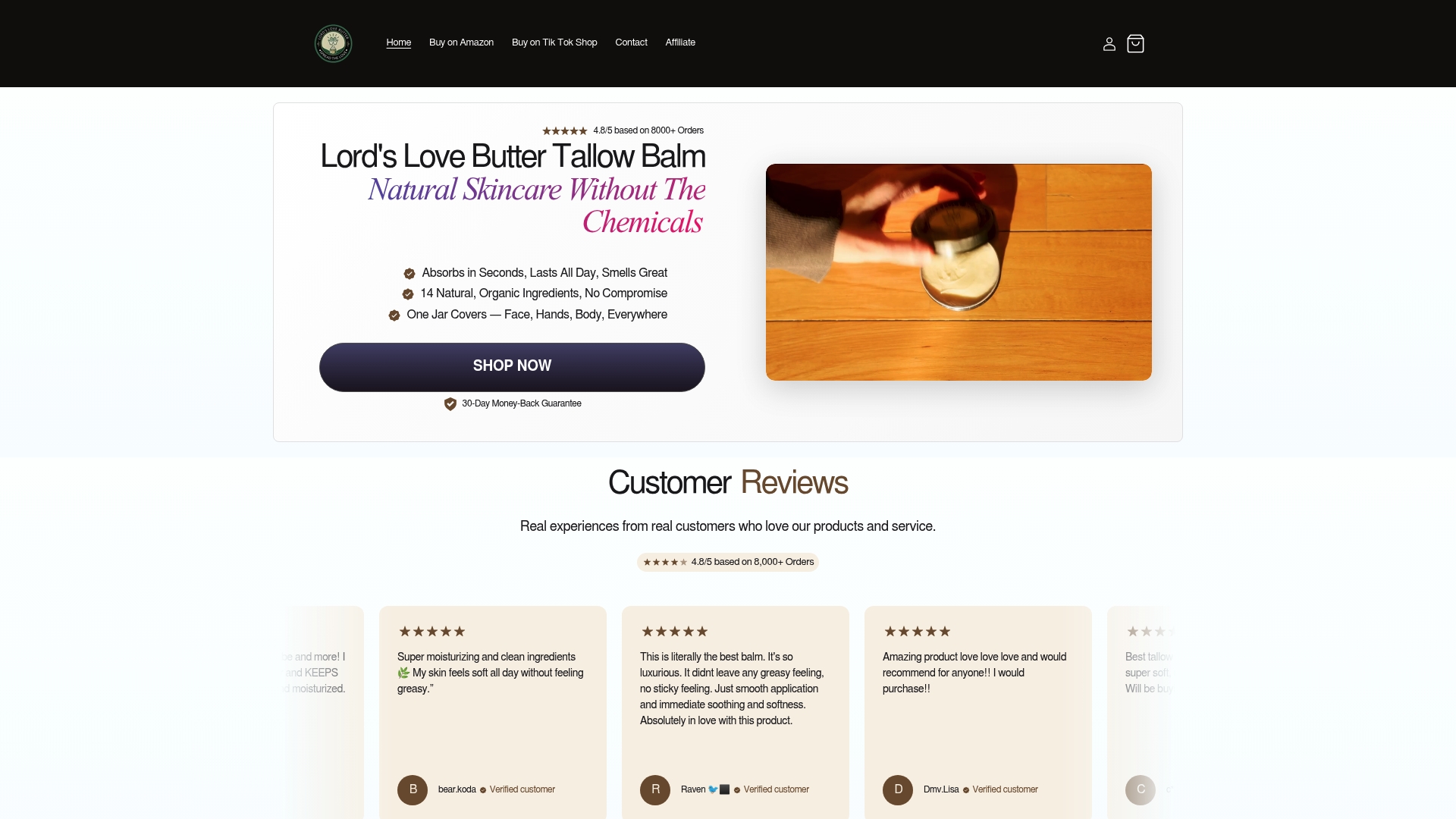
Lordslovebutter makes a whipped beef tallow balm from grass-fed beef tallow and Manuka honey, with no synthetic preservatives, no fragrance, and no fillers. The formula is designed for whole-body use and works particularly well for dry, sensitive, eczema-prone, and psoriasis-affected skin. Customers report improved skin texture within days of switching. Lordslovebutter is a veteran-owned business, and every ingredient is listed openly so you know exactly what you are putting on your skin. If you want to try both formats, the tin and jar bundle gives you flexibility for different applications at home and on the go.
FAQ
What is the difference between a natural balm and a synthetic lotion?
A natural balm is a water-free formula made from plant oils, butters, and waxes, while a synthetic lotion is water-based and requires preservatives and emulsifiers to stay stable. Balms seal moisture more effectively and contain far fewer ingredients.
Can natural balm replace lotion for the whole body?
Yes. Natural balms are concentrated enough for whole-body use, and a small amount covers large areas. Apply to damp skin after a shower for the best results.
Are natural balms safe for eczema-prone skin?
Natural balms are well-suited for eczema-prone skin because they eliminate the synthetic preservatives and fragrances that most commonly trigger flares. Look for fragrance-free formulas with simple, plant-derived ingredients.
How long does it take to see results after switching to a natural balm?
Most people notice improved hydration within one to two weeks. Full skin barrier improvement typically takes four weeks, which aligns with the recommended transition period for switching skincare products.
Do natural balms work for oily or acne-prone skin?
Standard natural balms can clog pores on oily or acne-prone skin. Choose formulas specifically made with non-comedogenic oils like jojoba or squalane if you have this skin type.
Recommended
- Why Natural Balms Reduce Routine Steps Effectively – Lord’s Love Butter
- One Balm, Fewer Products: Simplify Your Skincare Routine – Lord’s Love Butter
- Tallow vs Synthetic Moisturizer for Kids: 2026 Guide – Lord’s Love Butter
- Top 4 thebetterbutters.com Natural Balm Alternatives 2026 – Lord’s Love Butter

