

Whole Body Chemical-Free Moisturizing Routine Guide
A whole body chemical-free moisturizing routine is a natural skincare regimen that uses non-toxic, plant-derived, or minimally processed ingredients applied in a specific sequence to deliver lasting hydration and protect the skin barrier. Synthetic fragrances, parabens, and mineral oils are the most common irritants hiding in conventional body lotions. Skipping them is not just a preference for the health-conscious. It is a practical decision backed by dermatology, especially for people with eczema, psoriasis, or reactive skin. The right natural body moisturizer works with your skin’s biology rather than against it, and the sequence and timing of application matter just as much as the ingredients themselves.
What are the essential natural ingredients in a whole body chemical-free moisturizing routine?
Effective chemical-free body creams contain shea butter, jojoba oil, and plant-derived hyaluronic acid for both immediate hydration and long-term barrier support. These formulations avoid mineral oils, parabens, and synthetic fragrances entirely. Understanding why each ingredient category works helps you read labels with confidence and choose products that actually perform.
Natural moisturizers work by balancing occlusives, emollients, and humectants to mimic the skin’s own moisture system. Plant butters like shea and cocoa act as occlusives, sealing water into the skin. Oils like jojoba and coconut serve as emollients, softening and smoothing the skin’s surface. Humectants like hyaluronic acid and glycerin pull water from the environment into the skin.
Here is what each ingredient category does and where to find it naturally:
- Humectants (hyaluronic acid, glycerin, aloe vera): Draw moisture into the skin from the air and deeper layers. Best for all skin types, especially dehydrated or combination skin.
- Emollients (jojoba oil, sweet almond oil, squalane): Fill gaps between skin cells, creating a smooth, soft surface. Squalane is particularly notable because it mimics the skin’s natural oils and strengthens barrier function without clogging pores.
- Occlusives (shea butter, beeswax, plant waxes, beef tallow): Form a physical seal over the skin to prevent water loss. These are the heaviest-feeling ingredients and the most effective for very dry or damaged skin.
- Barrier-repair actives (ceramides from wheat germ, niacinamide from niacin, botanical squalane): Actively rebuild the skin’s protective layer rather than just coating it.
Pro Tip: If your skin feels tight within an hour of applying a moisturizer, you are likely using only an emollient without an occlusive on top. Layer a small amount of shea butter or a tallow-based balm over your serum to lock everything in.
The best moisturizers do more than hydrate. They actively repair the skin’s barrier to prevent future damage and maintain long-term skin health. That distinction separates a truly effective chemical-free skincare routine from one that just feels good temporarily.
How to time and sequence your natural body moisturizing routine
Timing is the most underrated variable in any moisturizing routine. The optimal application window is within 3 minutes of stepping out of the shower while skin is still slightly damp. Residual moisture on the skin enhances ingredient absorption and prevents transepidermal water loss. Waiting until your skin is completely dry reduces the effectiveness of even the best organic moisturizing products.
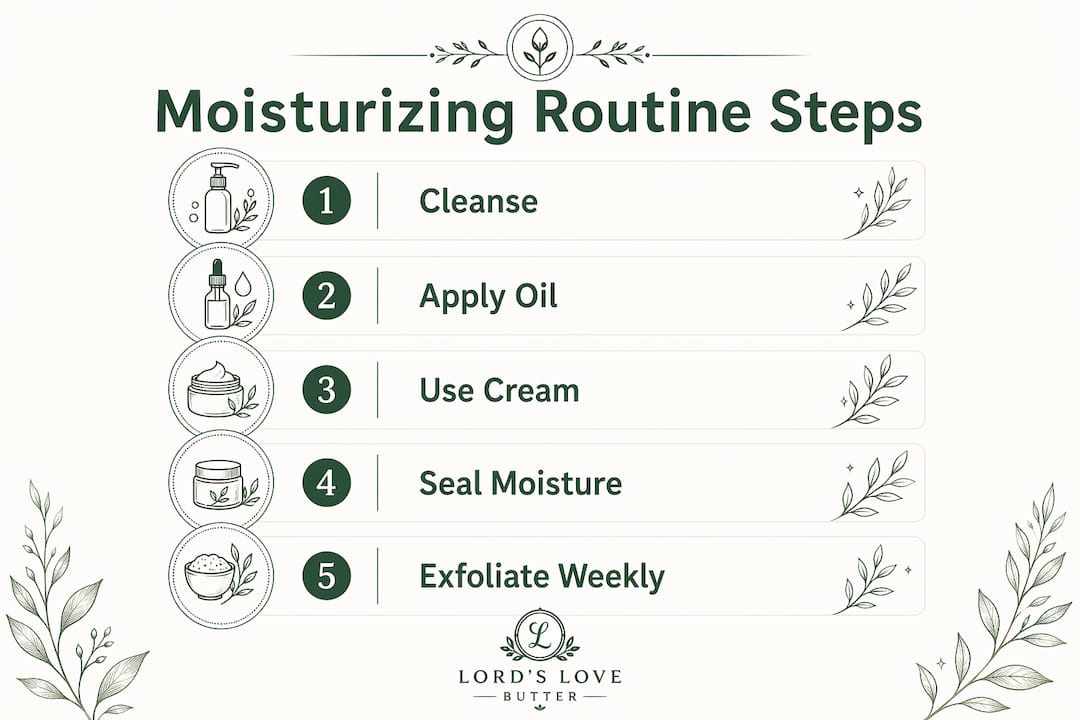
The correct layering sequence for a full body routine follows this order:
- Cleanse with a gentle, fragrance-free body wash using lukewarm water. Hot water strips the skin’s natural oils.
- Pat dry gently with a towel. Leave skin slightly damp, not wet.
- Apply a serum or lightweight oil while skin is damp. This is your humectant and emollient layer.
- Apply your main moisturizer or body butter on top to seal everything in. This is your occlusive layer.
- Target dry zones last. Elbows, knees, heels, and shins lose moisture faster and need a thicker application.
Pro Tip: Apply body oils on damp skin immediately after showering. Botanical oils seal in moisture far more effectively than when applied to dry skin.
Frequency matters as much as sequence. Twice-daily application is the standard recommendation for naturally dry skin or during winter months. Applying morning and evening produces noticeably better hydration than once-daily use. That means a morning application after your shower and a lighter evening application before bed, focusing on areas that feel tight or rough.

Step-by-step guide to a daily chemical-free body moisturizing routine
A practical daily routine does not need to be complicated. The goal is consistency and correct technique, not a 12-step process.
Morning routine
- Shower with lukewarm water using a fragrance-free, sulfate-free cleanser.
- Pat skin dry with a clean towel, leaving a slight sheen of moisture.
- Apply a lightweight plant-based serum or a few drops of jojoba oil to your entire body. Work in sections: arms, torso, legs.
- Follow immediately with a richer body butter or balm. Use circular motions and gentle pressure to encourage absorption.
- Allow 2–3 minutes before dressing to let the outer layer set.
Weekly additions
- Exfoliate 1–2 times per week. Limiting exfoliation to this frequency prevents barrier disruption while improving skin texture and product absorption.
- Use a dry brush or a gentle sugar scrub before showering on exfoliation days.
- Chemical exfoliation with glycolic acid can gently remove dead skin cells without physical abrasion and supports collagen production. Alternate it with barrier-repair moisturizers for best results.
Pro Tip: For rough patches on elbows and heels, apply a thick layer of an occlusive balm at night and cover with cotton socks or a light wrap. The overnight contact time dramatically increases absorption.
Adapting your routine to your skin type is straightforward. Oily skin benefits from lighter emollient layers like squalane or jojoba oil without a heavy occlusive on top. Dry or sensitive skin needs the full layering approach: humectant, emollient, and occlusive every time. Learn more about whole-body moisturizer benefits to understand how a single well-formulated product can sometimes replace multiple steps.
Common mistakes that undermine a chemical-free skincare routine
Most people who struggle with dry skin are making one of five consistent errors. Identifying yours is the fastest way to see results.
- Over-exfoliating: Scrubbing more than twice a week strips the acid mantle and causes the very dryness you are trying to fix. More is not better here.
- Applying moisturizer to completely dry skin: Dry skin has no residual moisture to lock in. You end up with a surface coating that evaporates quickly rather than deep hydration.
- Ignoring hidden irritants: Products labeled “natural” can still contain essential oil allergens, denatured alcohol, or synthetic preservatives. Read the full ingredient list, not just the front label.
- Skipping sun protection: UV exposure degrades the skin barrier daily. A chemical-free SPF or a zinc oxide-based sunscreen belongs in any complete natural skincare routine.
- Neglecting lifestyle factors: Skin hydration reflects internal health. Low water intake, poor sleep, and a diet low in omega-3 fatty acids all reduce the effectiveness of even the best topical routine.
“The skin barrier is not just a cosmetic concern. It is the body’s first line of defense against environmental damage, pathogens, and water loss. Every product choice either supports or degrades it.”
When your routine stops working, the first adjustment is frequency, not product. Increase to twice-daily application before switching products entirely. If irritation appears, strip the routine back to a single fragrance-free moisturizer and reintroduce products one at a time.
How to customize your routine for sensitive skin and different climates
Sensitive skin and changing seasons require the same core routine with targeted adjustments. The principles do not change. The products and frequency do.
For sensitive skin, the rules are clear:
- Use fragrance-free products exclusively. Even natural essential oils like lavender or peppermint trigger reactions in reactive skin.
- Keep ingredient lists short. Fewer ingredients mean fewer potential irritants.
- Patch test every new product on the inner arm for 48 hours before full-body use.
- Choose natural balms that seal moisture without synthetic additives. Tallow-based and plant-butter-based balms are well-tolerated by most sensitive skin types.
- Avoid hot showers. Heat inflames reactive skin and worsens conditions like eczema and rosacea.
Climate adaptation is equally straightforward. The table below shows how to shift your routine based on environmental conditions.
| Climate or season | Recommended adjustment |
|---|---|
| Winter or dry indoor air | Switch to thicker creams or balms; increase to twice-daily application |
| Summer or humid climate | Use lighter emollient layers; reduce occlusive weight |
| High-altitude or windy conditions | Add an occlusive layer even in warm weather to prevent wind-driven moisture loss |
| Tropical or very humid climate | Focus on humectants and lightweight emollients; skip heavy occlusives |
Combining natural oils with your primary moisturizer adds flexibility. A few drops of jojoba oil mixed into a body butter increases slip and absorption without adding synthetic ingredients. For very dry climates, beef tallow-based balms provide an exceptionally dense occlusive layer that plant-only products rarely match. Signs that your routine needs adjustment include persistent tightness after application, new breakouts on the body, or increased sensitivity to products you previously tolerated.
Key Takeaways
A whole body chemical-free moisturizing routine works best when you apply the right ingredient layers in the correct sequence within three minutes of showering, consistently, twice daily in dry conditions.
| Point | Details |
|---|---|
| Apply within 3 minutes | Damp skin absorbs ingredients faster and retains more moisture than dry skin. |
| Layer in the right order | Apply humectants first, then emollients, then occlusives to seal everything in. |
| Exfoliate 1–2 times per week | More frequent exfoliation disrupts the barrier and causes the dryness you are trying to prevent. |
| Twice daily in dry conditions | Morning and evening application produces noticeably better hydration than once-daily use. |
| Customize for climate and skin type | Thicker balms in winter and dry climates; lighter emollient layers in heat and humidity. |
What I have learned from years of paying attention to skin
The most common mistake I see is treating moisturizing as a finishing step rather than a repair process. People rush through it, apply product to bone-dry skin, and wonder why their results are inconsistent. The three-minute window after a shower is not a suggestion. It is the difference between hydration that lasts all day and a surface coating that is gone by noon.
The other thing most articles skip is the ritualistic value of a full-body routine. When you slow down, work through each section of your body deliberately, and use products that smell and feel genuinely natural, the routine becomes something you actually look forward to. That consistency is what produces long-term skin barrier health. No product works if you use it three times a week.
I am also skeptical of the idea that more ingredients equal better results. The most effective formulations I have encountered are simple: one or two occlusives, one emollient, one humectant. Lordslovebutter’s approach with grass-fed beef tallow and Manuka honey is a good example of this. Two ingredients with strong functional profiles, no filler. That is the standard worth holding other products to.
— Michael
Lordslovebutter: A natural balm built for whole-body care
Lordslovebutter’s Whipped Beef Tallow Balm is formulated from grass-fed beef tallow and Manuka honey, two ingredients with well-documented skin nourishing and barrier-repair properties. It contains no synthetic chemicals, parabens, or artificial fragrances. The balm is clinically proven to hydrate for up to 48 hours and improve skin firmness and tone, making it a strong fit for the occlusive layer in any chemical-free skincare routine. It is gentle enough for sensitive skin and conditions like eczema and psoriasis.
Lordslovebutter is a veteran-owned business. Every tin is made with the same short, clean ingredient list that makes it suitable for whole-body application without a greasy residue. If you are building or refining a natural body moisturizer routine, it fits directly into the final sealing step described in this guide.
FAQ
What is a whole body chemical-free moisturizing routine?
A whole body chemical-free moisturizing routine is a daily skincare practice using non-toxic, naturally derived products applied in a specific sequence to hydrate and protect the skin barrier from head to toe. It avoids synthetic fragrances, parabens, mineral oils, and other common irritants.
When is the best time to apply a natural body moisturizer?
Apply your moisturizer within 3 minutes of stepping out of the shower while skin is still slightly damp. Residual moisture on the skin significantly enhances ingredient absorption and reduces transepidermal water loss.
How often should I exfoliate in a chemical-free skincare routine?
Exfoliate 1–2 times per week. More frequent exfoliation disrupts the skin’s protective barrier, causing dryness and increased sensitivity rather than improved texture.
Is beef tallow safe for sensitive skin?
Beef tallow has a fatty acid profile very similar to human sebum, making it well-tolerated by most skin types, including sensitive and eczema-prone skin. Lordslovebutter uses grass-fed beef tallow with no synthetic additives, which reduces the risk of irritation further.
How do I adjust my routine for winter or dry climates?
Switch to thicker creams or balms in winter and increase application to twice daily, morning and evening. Heavier occlusives like shea butter or tallow-based balms are more effective at preventing moisture loss in cold or low-humidity environments.

