

Chemical-Free Kids Skincare Benefits for Sensitive Skin
Chemical-free kids skincare refers to formulations that avoid potentially irritating synthetic chemicals and focus on gentle, natural ingredients that protect and nourish sensitive children’s skin. The chemical-free kids skincare benefits parents care most about are reduced irritation, stronger skin barrier function, and fewer allergic reactions. Children’s skin is structurally thinner than adult skin, which makes it more permeable and more reactive to harsh ingredients. The American Academy of Dermatology identifies moisturizer use as the foundational step in pediatric skin care, particularly for managing eczema. Brands like Lordslovebutter and certifications from pediatric dermatology organizations give parents a reliable starting point when evaluating products.
1. What are the main benefits of chemical-free kids skincare?
The most direct benefit of avoiding harsh synthetic ingredients is a lower risk of skin irritation and allergic reactions. Children’s skin barrier is not fully mature, which means it absorbs more of what you put on it and reacts more strongly to irritants. Synthetic fragrances, parabens, sulfates, and certain preservatives are among the most common triggers for contact dermatitis in children.

Formulations built around gentle, natural ingredients support rather than disrupt the skin’s protective layer. This matters because a compromised barrier lets moisture escape and allows allergens to enter, which is the core mechanism behind eczema flares. Choosing products without these disruptors gives the skin a better chance to maintain its own defenses.
The benefits of organic kids products and naturally derived formulas also extend to hormone safety. Some synthetic chemicals, including certain parabens and chemical sunscreen filters, are classified as potential endocrine disruptors. Removing them from a child’s daily routine reduces cumulative exposure during a period when hormonal development is most sensitive.
- Reduced contact with synthetic fragrances, which are a leading cause of pediatric skin reactions
- Avoidance of sulfates that strip natural oils and weaken the skin barrier
- Lower exposure to parabens and preservatives linked to hormone disruption
- Gentler cleansing that preserves the skin’s natural pH and moisture balance
- Compatibility with the naturally thinner and more permeable skin of toddlers and young children
Pro Tip: Read ingredient lists from top to bottom. Ingredients are listed by concentration, so if a potentially irritating ingredient appears in the first five, it is present in a meaningful amount.
2. How chemical-free ingredients support the skin barrier in children
The skin barrier is the outermost layer of skin that keeps moisture in and irritants out. In children, this barrier is thinner and less developed than in adults, which is why safe skincare for sensitive skin prioritizes barrier support above everything else.
Emollients are the workhorses of barrier care. Ingredients like shea butter, squalane, and ceramides fill the microscopic gaps between skin cells, reducing water loss and blocking environmental irritants. Ceramides in particular are lipids that naturally occur in the skin barrier. Replenishing them through topical products directly supports structural integrity.
The European Dermatology Forum recommends the soak and seal method as a core technique for barrier restoration. The process works in three steps:
- Bathe the child in lukewarm water for five to ten minutes to hydrate the skin
- Pat the skin gently with a soft towel, leaving it slightly damp
- Apply an emollient or barrier cream within three minutes to lock in that moisture
“Applying emollients to moist skin after bathing supports barrier repair and reduces irritation.” — European Dermatology Forum, 2026 Atopic Eczema Guideline Summary
Sulfates like sodium lauryl sulfate (SLS) and sodium laureth sulfate (SLES) work in the opposite direction. Sulfate-free cleansers are gentler and better for children’s skin because sulfates strip natural oils and disrupt the barrier. Replacing a sulfate-based wash with a mild, oil-based or glycerin-based cleanser is one of the highest-impact swaps you can make in a child’s routine.
3. What misconceptions exist about chemical-free kids skincare?
“Chemical-free” is technically a marketing term, not a scientific one. All matter is made of chemicals, including water and shea butter. What parents are really looking for is products free from potentially harmful synthetic chemicals. Understanding this distinction helps you evaluate products more critically rather than trusting a label at face value.
The terms “natural,” “clean,” and “gentle” are unregulated marketing claims that do not guarantee safety for children’s skincare products. A product can legally call itself “natural” while containing essential oils that cause allergic reactions or hormone disruption. The label tells you nothing about the concentration, purity, or safety profile of the ingredients inside.
Some natural ingredients carry real risks:
- Lavender and tea tree essential oils are associated with skin sensitization and potential endocrine disruption in children
- Citrus-derived ingredients can cause photosensitivity reactions when skin is exposed to sunlight
- Nut-based oils like almond oil carry allergen risks for children with tree nut sensitivities
- High concentrations of plant extracts can act as irritants even when the source is botanical
The safest approach is to look for products that carry dermatologist-tested or pediatrician-approved certifications and to cross-reference ingredient lists against known allergen databases. Natural extracts can act as endocrine disruptors or cause allergic reactions, which means “natural” is not a synonym for “safe.” Certifications from organizations like the National Eczema Association provide a more reliable signal than marketing language.
4. How to choose and use chemical-free skincare products safely for kids
Choosing the right product starts with the ingredient list, not the front-of-pack claims. Look for fragrance-free, paraben-free, and sulfate-free labels, and prioritize products with short, readable ingredient lists. Fewer ingredients mean fewer opportunities for a reaction, which is especially relevant for chemical-free skincare for toddlers whose skin is at its most reactive.
Avoid adult-strength actives entirely. Retinoids, alpha hydroxy acids, and exfoliating enzymes are formulated for adult skin turnover rates and can cause significant irritation on children’s skin. Even products marketed as “gentle” for adults are not appropriate for children under two.
Pro Tip: When introducing a new product, apply a small amount to the inner forearm for two to three days before using it on the face or body. This patch test catches reactions before they spread.
Consistent moisturizing twice daily and after bathing is more effective than any single product switch for managing eczema and dry skin. Barrier support is achieved through routine frequency, not just ingredient selection. Parents who switch to a “better” product but apply it inconsistently will see worse results than those who use a simpler product on a reliable schedule.
For sun protection, mineral-based sunscreens with zinc oxide or titanium dioxide are the recommended choice for children. Mineral filters sit on the skin’s surface rather than absorbing into it, which avoids the hormone disruption concerns associated with chemical UV filters like oxybenzone.
| Feature | What to look for | What to avoid |
|---|---|---|
| Fragrance | Fragrance-free or unscented | “Parfum,” “fragrance,” or essential oil blends |
| Cleansers | Glycerin-based, oil-based, or soap-free | SLS, SLES, sodium lauryl sulfate |
| Moisturizers | Ceramides, shea butter, squalane | Alcohol-based formulas, synthetic preservatives |
| Sun protection | Zinc oxide, titanium dioxide | Oxybenzone, avobenzone, chemical UV filters |
| Certifications | Pediatrician-tested, NEA-accepted | Unverified “natural” or “clean” claims |
You can also explore how beef tallow compares to argan oil as a moisturizer option, since both are increasingly used in natural skincare formulations for their emollient properties.
Key takeaways
Chemical-free kids skincare delivers its strongest benefits through consistent barrier support using gentle emollients, not through blanket avoidance of all synthetic ingredients.
| Point | Details |
|---|---|
| Barrier support is the priority | Emollients like ceramides and shea butter protect children’s thinner, more permeable skin. |
| “Chemical-free” is a marketing term | All ingredients are chemicals; focus on avoiding specific irritants like sulfates and synthetic fragrances. |
| Routine frequency matters most | Applying moisturizer twice daily and after bathing outperforms any single product switch. |
| Natural does not mean safe | Essential oils and plant extracts can irritate or disrupt hormones in children. |
| Mineral sunscreen is the safer choice | Zinc oxide and titanium dioxide protect without absorbing into the skin or disrupting hormones. |
Why I think parents are asking the right question but looking in the wrong place
After years of paying close attention to how skincare products affect sensitive skin, I’ve come to a conclusion that most product marketing actively works against: the ingredient you add matters far less than the routine you build. Parents spend significant time hunting for the perfect “chemical-free” product, then apply it once every few days and wonder why their child’s skin isn’t improving.
The AAD pediatric guidance is unambiguous on this point. Barrier-first care, meaning consistent moisturization at scheduled times, has stronger evidence behind it than broad ingredient avoidance strategies. That does not mean ingredients are irrelevant. Sulfates, synthetic fragrances, and chemical sunscreen filters are worth avoiding. But a fragrance-free product applied twice daily will outperform a perfectly formulated balm used sporadically.
My other strong opinion: stop trusting the front of the package. The words “clean,” “gentle,” and “natural” are placed there by marketing teams, not dermatologists. Flip the product over and read the actual ingredient list. If you cannot pronounce most of it, that is worth investigating. If the first ingredient is a sulfate or the fifth is “fragrance,” put it back regardless of what the front label says.
The parents I’ve seen get the best results for their children’s skin do three things consistently: they patch test every new product, they moisturize on a schedule rather than when they remember, and they treat the routine itself as the therapy, not the product.
— Michael
A natural option worth adding to your child’s routine
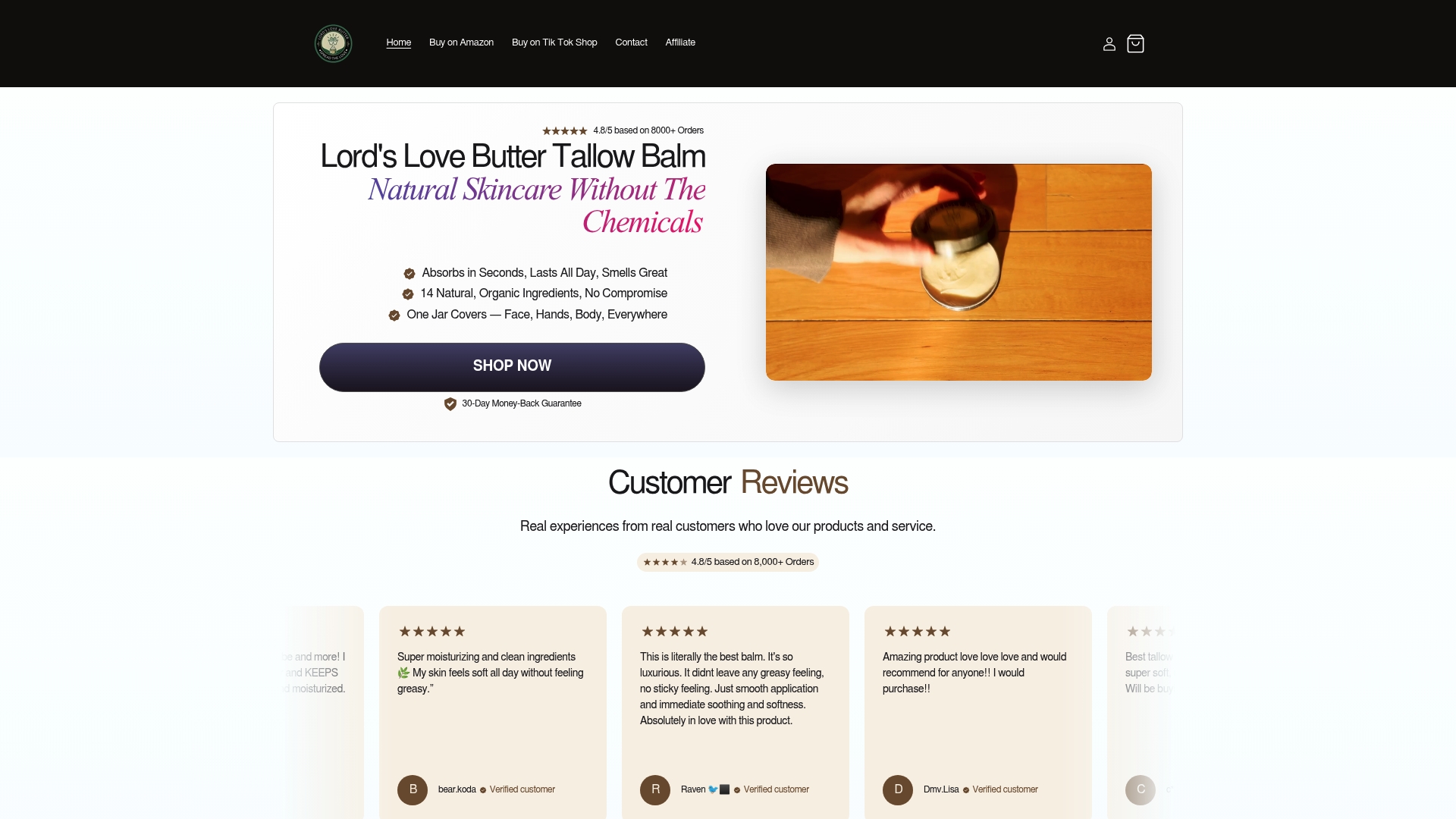
If you are looking for a genuinely simple, short-ingredient formula for your child’s sensitive skin, Lordslovebutter’s whipped beef tallow balm is worth a close look. It is made from grass-fed beef tallow and manuka honey, two ingredients with strong emollient and antimicrobial properties and no synthetic additives. The formulation is designed for whole-body use, absorbs without a greasy residue, and is gentle enough for skin prone to eczema or dryness. Lordslovebutter is a veteran-owned business that keeps its ingredient list short by design. Parents who have used it report noticeable improvements in skin texture within days, which aligns with what the research says about consistent barrier support.
FAQ
What does “chemical-free” actually mean in kids skincare?
“Chemical-free” is a marketing term, not a scientific one, since all matter is made of chemicals. In practice, it signals that a product avoids specific synthetic irritants like sulfates, parabens, and synthetic fragrances that are known to cause reactions in children’s sensitive skin.
Is natural skincare always safer for children?
No. Some natural ingredients like lavender essential oil and citrus extracts can irritate skin or disrupt hormones in children. Safety depends on specific ingredients, their concentrations, and whether the product is formulated for children’s skin.
How often should I moisturize my child’s skin?
The European Dermatology Forum recommends twice-daily moisturizing and application after every bath as the most effective schedule for barrier support and eczema management in children.
What sunscreen is safest for kids?
Mineral sunscreens containing zinc oxide or titanium dioxide are the recommended choice for children. They sit on the skin’s surface rather than absorbing into it, avoiding the hormone disruption risks associated with chemical UV filters.
Can I use adult skincare products on my child if they are labeled natural?
No. Products formulated for children’s skin are specifically designed for its unique physiology. Adult products, even those labeled natural or clean, may contain actives at concentrations that are too strong for a child’s thinner, more permeable skin barrier.

