

Whole-Body Moisturizer One-Product Benefits Explained
A whole-body moisturizer is defined as a single formulation designed to hydrate, repair, and protect skin from head to toe, delivering what previously required multiple products in one application. The whole-body moisturizer one-product benefits go beyond convenience. When a formula combines ceramides, hyaluronic acid, and lipid-restoring occlusives, it addresses hydration, barrier function, and skin texture simultaneously. Research published in 2026 confirms that ceramide-and-oil body lotions applied once daily for four weeks measurably improve hydration, reduce transepidermal water loss (TEWL), and increase microbiome diversity. That is a meaningful result from a single product used consistently.
1. What are the top benefits of a single whole-body moisturizer?
A well-formulated all-in-one body lotion delivers four core benefits: hydration, barrier repair, skin smoothing, and microbiome support. These are not marketing claims. They reflect how the stratum corneum, the outermost skin layer, responds to the right combination of ingredients applied regularly.
- Deep hydration: Humectants like hyaluronic acid draw water into the stratum corneum and hold it there, increasing water content measurably within days of consistent use.
- Barrier restoration: Ceramides and intercellular lipids fill the microscopic gaps between skin cells, restoring the skin barrier and reducing water loss through the skin surface.
- Smoother texture: Emollients coat the skin surface and fill in rough patches, producing a visibly and tactilely smoother result without requiring a separate serum or treatment.
- Microbiome balance: Lipid-rich formulas support the skin’s microbial ecosystem. The same 2026 study that tracked TEWL also measured lipid and microbiome improvements, finding that essential lipids increased and microbial diversity improved after four weeks of daily application.
Pro Tip: Apply your moisturizer within three minutes of stepping out of the shower. Skin is still slightly damp at that point, and humectants like hyaluronic acid pull that surface moisture deeper into the stratum corneum instead of just sitting on top.
The practical advantage of getting all four benefits from one product is compliance. Shorter routines get done more consistently, and consistency is what produces measurable skin change.

2. How emollients, humectants, and occlusives work together
Every effective moisturizer relies on three functional ingredient categories working in sequence. Understanding what each one does explains why a properly formulated single product can replace a multi-step routine.
| Ingredient type | Primary function | Example ingredients |
|---|---|---|
| Humectants | Attract and bind water in the skin | Hyaluronic acid, glycerin, urea |
| Emollients | Smooth and soften by filling cell gaps | Shea butter, squalane, fatty acids |
| Occlusives | Seal moisture in by forming a surface film | Petrolatum, beeswax, beef tallow |
Humectants work first. They pull water from the dermis and from ambient humidity into the stratum corneum. Without an occlusive layer on top, that water evaporates quickly. Occlusives solve that problem by forming a physical barrier on the skin surface. Emollients sit between those two roles, softening the texture of the skin while supporting the lipid matrix that holds cells together.
The balance of these three categories determines whether a formula works for both face and body. A product too heavy in occlusives feels greasy on the face and can clog pores. A formula too light in occlusives fails to retain moisture on dry body areas like elbows and shins. The best whole-body formulas calibrate this ratio so the product absorbs well on the face while still delivering lasting moisture to thicker, drier body skin.
Pro Tip: If your all-in-one body lotion feels too heavy on your face, use a thinner layer there and a more generous application on your legs and arms. The same product works differently depending on how much you apply.
Formulation architecture with combined barrier lipids, humectants, and emollients allows a single product to deliver results across different skin zones without sacrificing performance in any area.
3. What features distinguish the best whole-body moisturizer formulas
The best moisturizer for full body use is not the same for every person. Skin type, existing conditions, and ingredient sensitivities all determine which formula will perform best for you.
- Dry or very dry skin: Look for ceramide-rich formulas with shea butter or tallow-based occlusives. CeraVe Moisturizing Cream, for example, provides 24-hour hydration using three essential ceramides plus hyaluronic acid and carries National Eczema Association acceptance.
- Sensitive or eczema-prone skin: Ceramide NP combined with beta-glucan offers both barrier repair and soothing properties. Formulas like the Klairs All-Over Lotion use ceramide NP with shea butter occlusives and are chosen by dermatologists specifically for reactive skin.
- Oily or combination skin: Choose lightweight emollient formulas with lower occlusive content. Squalane-based products absorb without leaving residue and still support the lipid matrix.
- Fragrance-sensitive skin: Fragrance is the leading cause of contact dermatitis from leave-on skincare products. Any formula intended for whole-body use should be fragrance-free if you have reactive skin or apply it to large surface areas daily.
- Aging or sun-damaged skin: Prioritize ceramide and fatty acid content. These ingredients address both barrier compromise and the lipid depletion that accelerates with age and UV exposure.
The ingredient label tells you more than the marketing copy. A formula that lists ceramides, glycerin, and a plant-based or animal-based occlusive in the first half of its ingredient list is formulated to deliver real barrier support, not just surface softness.
4. How consistent use improves skin over time
Skin barrier repair does not happen overnight. Clinical expectation for TEWL reduction and lipid restoration requires at least four weeks of consistent daily application. That timeline matters because it sets realistic expectations and explains why people who use a product for three days and declare it ineffective are measuring too early.
Here is what the research shows happens week by week:
- Week 1: Surface hydration increases. Skin feels softer and less tight immediately after application, but barrier metrics have not shifted yet.
- Week 2: Emollient and lipid ingredients begin integrating into the intercellular matrix. Scaling and roughness start to visibly reduce.
- Week 3: TEWL begins to decline measurably. The skin is losing less water between applications, which means the barrier is rebuilding.
- Week 4: Lipid restoration and microbiome diversity reach measurable improvement. Radiance, smoothness, and hydration scores all show statistically significant gains in clinical settings.
Timing your application also matters. Dermatologists recommend daily application immediately after bathing to lock in moisture before the skin surface dries. Applying to dry skin still works, but the hydration uptake is lower because there is less surface water for humectants to bind and drive inward.
The microbiome angle is worth noting separately. Lipid-microbiome interactions are central to long-term barrier health. A ceramide-enriched formula does not just moisturize. It creates the lipid environment that beneficial skin bacteria need to thrive, which in turn reduces inflammatory signals and supports overall skin resilience.
5. Practical tips for choosing and using an all-in-one body lotion
Getting the most from a multi-use skincare product comes down to a few consistent habits that most people skip.
- Apply to damp skin within three minutes of cleansing. This is the single highest-impact application habit for whole-body hydration.
- Use a thinner layer on the face and a more generous amount on the shins, elbows, and knees. Those areas have fewer sebaceous glands and lose moisture faster.
- For eczema-prone or psoriasis-affected skin, apply twice daily during flare periods. Daily moisturizing protects the skin barrier and reduces the frequency and severity of inflammatory episodes.
- When comparing budget versus premium options, focus on the ingredient list rather than the price. A mid-range formula with ceramides, glycerin, and a quality occlusive outperforms an expensive product built mostly on fragrance and filler emollients.
- For oil-based formulas, warm a small amount between your palms before applying. This reduces the occlusive weight and helps the formula spread more evenly across large body areas.
The advantages of multi-purpose creams are only realized when you use them correctly and consistently. A great formula applied sporadically will not outperform a good formula applied every day.
Key takeaways
A whole-body moisturizer with ceramides, humectants, and occlusives delivers measurable hydration, barrier repair, and microbiome improvement in a single product when used consistently for at least four weeks.
| Point | Details |
|---|---|
| Ingredient trio matters | Humectants, emollients, and occlusives must all be present for a formula to deliver full-body benefits. |
| Four-week minimum | Barrier lipid restoration and TEWL reduction require at least four weeks of daily application to become measurable. |
| Skin type drives selection | Dry skin needs ceramide-heavy occlusives; sensitive skin needs fragrance-free, beta-glucan formulas. |
| Application timing is critical | Applying to damp skin immediately after bathing maximizes humectant uptake and moisture retention. |
| Microbiome benefit is real | Lipid-rich formulas improve microbial diversity, which supports long-term skin resilience beyond surface hydration. |
Why I think most people underestimate what one product can actually do
I have spent years reviewing skincare research and watching people overcomplicate their routines with five, six, or seven products when the science consistently points to one well-formulated moisturizer doing the heavy lifting. The 2026 clinical data on ceramide-and-oil body lotions is not surprising to me. It confirms what the formulation science has been saying for over a decade. A product that combines barrier lipids, humectants, and occlusives in the right ratios does not need a supporting cast.
What I find more interesting is the microbiome finding. Most people think of moisturizer as a surface treatment. The data shows it is actually shaping the bacterial environment on your skin, which has downstream effects on inflammation and barrier integrity that no serum or toner addresses. That reframes the whole conversation about why a single product can outperform a multi-step routine.
My honest recommendation: give any well-formulated whole-body moisturizer a genuine four-week trial before judging it. One week tells you nothing about barrier repair. It only tells you how the product feels. The real results are happening at the lipid and microbiome level, and those take time. If you want medically guided guidance on building a routine around a single product, that kind of personalized assessment is worth pursuing before spending money on a complex multi-product system.
The people who get the best results from one-product moisturizing are not the ones who found the most expensive formula. They are the ones who picked a solid ceramide-based product and used it every single day without skipping.
— Michael
Try Lordslovebutter for natural whole-body hydration
If you want a whole-body moisturizer built from natural ingredients rather than synthetic fillers, Lordslovebutter is worth your attention. Their flagship formula uses whipped grass-fed beef tallow, a lipid profile that closely mirrors the fatty acids found in human skin, combined with Manuka honey for its soothing and antimicrobial properties. There are no synthetic fragrances, no chemical preservatives, and no ingredients you cannot pronounce.
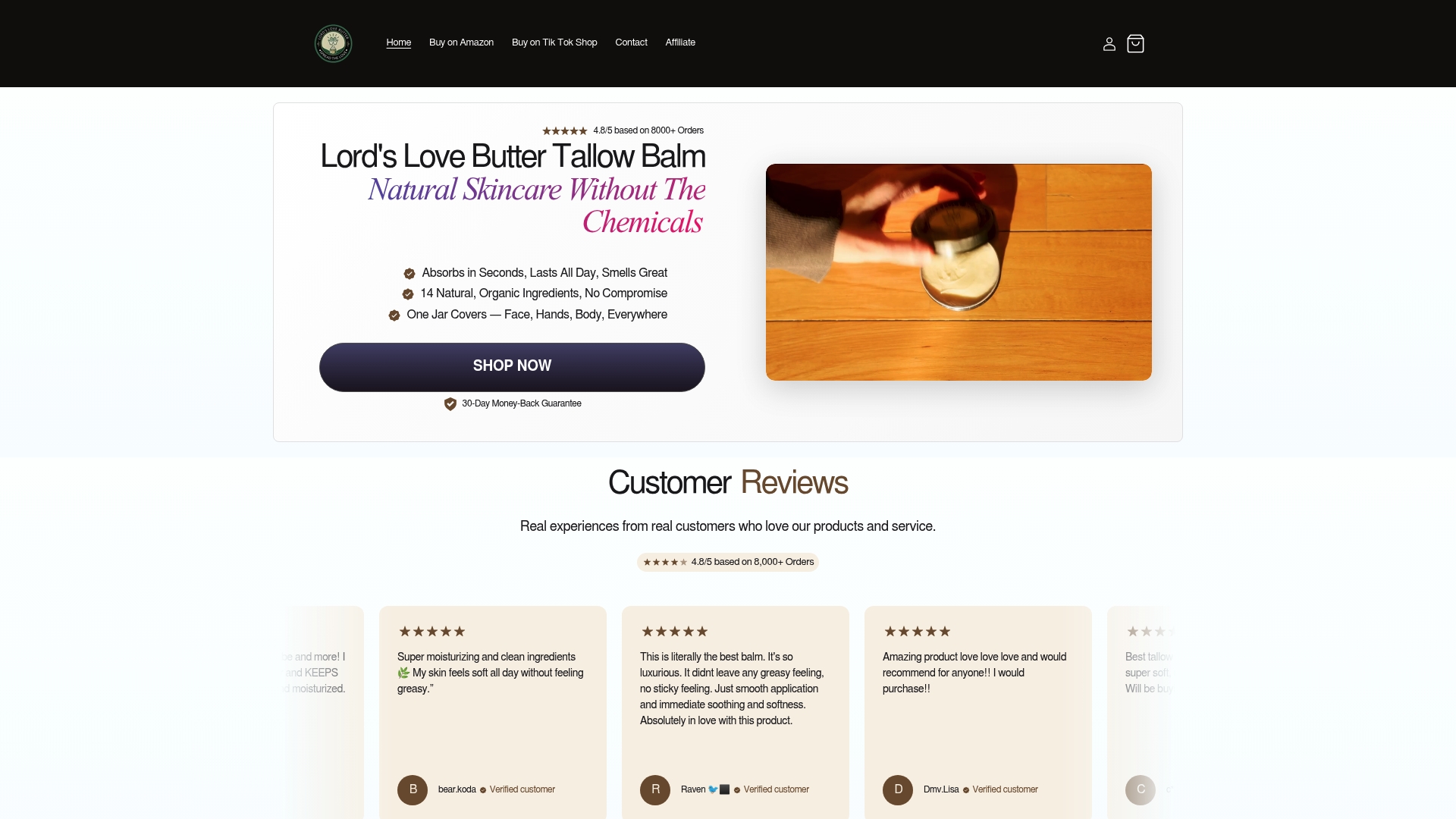
Lordslovebutter is a veteran-owned business that formulates for real skin concerns, including eczema and psoriasis, with a product designed for face and body use. Customers report improved skin texture within days, and the formula absorbs without a greasy finish. You can explore the whipped tallow balm in a tin or the jar version depending on your preference. Both deliver the same natural, barrier-supporting formula.
FAQ
What does a whole-body moisturizer actually do for skin?
A whole-body moisturizer increases water content in the stratum corneum, restores barrier lipids, and reduces transepidermal water loss. With consistent daily use, it also improves skin microbiome diversity and reduces scaling and roughness.
How long before I see real results from a one-product moisturizer?
Clinical research shows that measurable barrier repair, including TEWL reduction and lipid restoration, requires at least four weeks of daily application. Surface softness improves sooner, but structural skin changes take the full four weeks.
Can one moisturizer really work for both face and body?
Yes, when the formula balances occlusives and humectants correctly. Apply a thinner layer to the face and a more generous amount to drier body areas. Products with ceramides and hyaluronic acid are formulated to work across both zones without clogging pores.
Is beef tallow a legitimate moisturizing ingredient?
Grass-fed beef tallow contains fatty acids, including oleic, palmitic, and stearic acid, that closely match the lipid composition of human skin. This makes it an effective emollient and occlusive for barrier support, particularly for dry or sensitive skin types.
What ingredients should I look for in the best moisturizer for full body use?
Prioritize ceramides for barrier repair, hyaluronic acid or glycerin for humectant hydration, and a quality occlusive like shea butter or tallow to seal moisture in. Fragrance-free formulas are the safest choice for whole-body daily use.

