

Tallow vs Synthetic Moisturizer for Kids: 2026 Guide
Tallow is a rendered animal fat used as an occlusive moisturizer, while synthetic moisturizers are formulated with ceramides, humectants, and other compounds designed to rebuild the skin barrier at a molecular level. For parents weighing tallow vs synthetic moisturizer for kids, especially children with eczema or sensitive skin, the distinction matters more than most product labels suggest. Tallow seals moisture in. Ceramide creams repair the barrier that lets moisture escape in the first place. The Children’s Hospital of Philadelphia and dermatology sources both weigh in on this debate, and the evidence points in a clear direction for most kids.
How do tallow and synthetic moisturizers work differently on children’s skin?
Tallow acts as an occlusive agent. It sits on the skin surface and physically blocks water from evaporating. That makes it useful for locking in hydration, but it does not add moisture on its own. Because tallow lacks humectant properties, it works best when applied to slightly damp skin right after a bath, so there is actual moisture to trap.
Synthetic moisturizers work differently at a structural level. Products formulated with ceramides, glycerin, niacinamide, and dimethicone do not just sit on top of skin. Ceramide creams biochemically rebuild the lipid layers that hold skin cells together, which is the core mechanism behind barrier repair. Glycerin pulls water from the air into the skin. Dimethicone seals the surface. These ingredients work together in a way tallow cannot replicate alone.

Dermatology analysis rates ceramide creams at the top for barrier repair and scores tallow lower for that specific function. That gap matters most for children with eczema, where a damaged skin barrier is the root problem, not just surface dryness.
Pro Tip: Apply tallow to damp skin within two minutes of your child’s bath. Dry skin gets almost no benefit from an occlusive applied to a dry surface.
What are the benefits and risks of tallow for kids with sensitive skin?
Tallow offers real advantages for certain children. It is free from synthetic preservatives, artificial fragrances, and chemical fillers that commonly trigger reactions in sensitive skin. Grass-fed tallow contains fatty acids that closely resemble the lipids naturally found in human skin, which is why many parents report it feels compatible and non-irritating. For children in very dry or cold climates, a clean tallow balm can provide strong surface protection overnight.
The risks are specific and worth knowing before you apply it to your child’s face or body.
- Pore clogging. Tallow’s comedogenic rating sits at 2–3 on a scale of 5. That means mild to moderate pore-clogging potential. Children with oily or acne-prone skin should avoid it on the face.
- Eczema complications. The Children’s Hospital of Philadelphia reports that high oleic acid in tallow may actually increase water loss and worsen dryness in some eczema cases. This is the opposite of what most parents expect.
- Product quality variability. The FDA does not regulate cosmetic-grade tallow before it reaches shelves. Tallow product quality varies widely, and contamination risk from animal-origin ingredients is a real concern. Grass-fed, single-ingredient formulations from transparent brands reduce that risk significantly.
- Allergy potential. Animal-derived products carry a small but real risk of allergic reaction. A patch test on the inner arm before full application is non-negotiable.
The bottom line on tallow for kids: it works well as a surface sealant for dry, non-reactive skin. It is not a treatment for eczema, and medical consensus does not support it as one.
How do synthetic moisturizers compare in safety and efficacy for children?
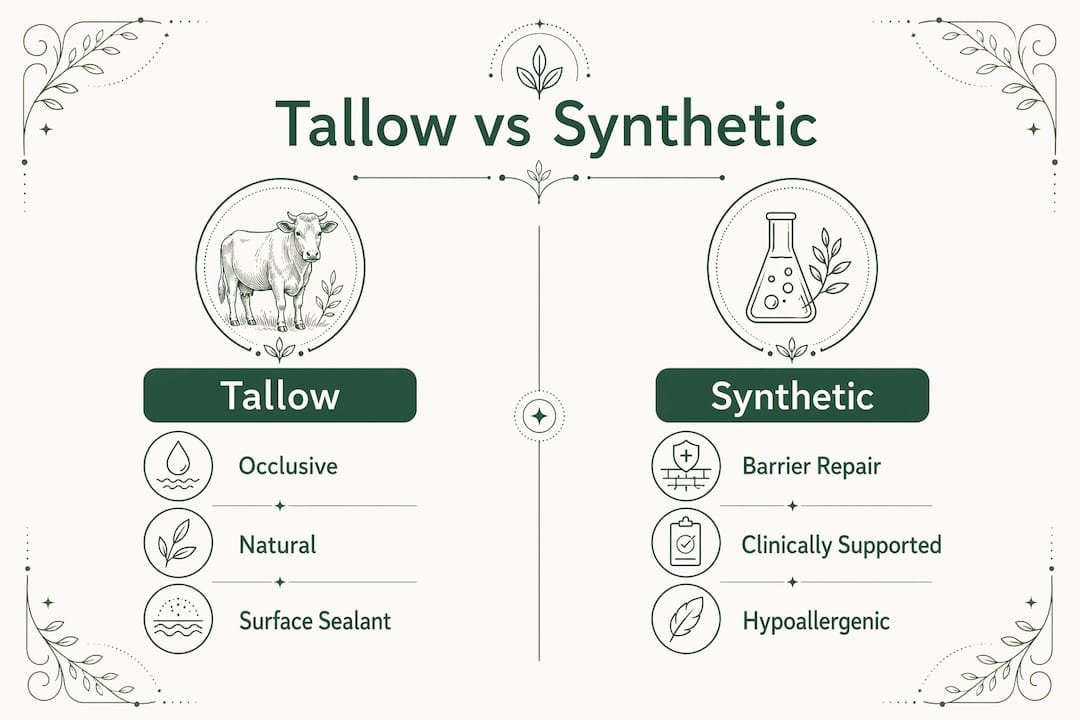
Synthetic moisturizers designed for children are the most clinically supported option for eczema and sensitive skin management. Dermatologists consistently recommend ceramide creams as the first choice for active barrier repair. The evidence behind ceramides is strong. They are the same lipids the skin barrier is made of, so replenishing them directly addresses the structural deficit that causes eczema flares.
Clean formulations for kids, such as those containing ceramides, glycerin, niacinamide, and dimethicone, balance safety and efficacy without relying on fragrances or harsh preservatives. Many are specifically labeled fragrance-free and hypoallergenic, which matters for children whose skin reacts to common irritants.
Some parents worry about synthetic ingredients as a category. That concern is understandable, but the word “synthetic” does not mean unsafe. Glycerin is a synthetic humectant with a decades-long safety record in pediatric skincare. Niacinamide reduces inflammation and supports barrier function. Dimethicone is one of the most inert, well-tolerated occlusives available.
- Ceramides: Rebuild the lipid barrier structurally. Best choice for eczema-prone skin.
- Glycerin: Draws moisture into the skin. Works in any climate.
- Niacinamide: Reduces redness and supports barrier recovery.
- Dimethicone: Seals the surface without clogging pores. Low comedogenic risk.
- Fragrance-free formulas: Reduce the risk of contact dermatitis, which is a common trigger in children with sensitive skin.
The main concern parents raise about synthetics is preservative content. Some preservatives, like methylisothiazolinone, are known sensitizers. Reading ingredient labels and choosing products without common allergens addresses this directly.
Pro Tip: Look for the National Eczema Association Seal of Acceptance on product packaging. It signals the formula has been reviewed for common irritants and is appropriate for sensitive or eczema-prone skin.
Which skin types are best suited for tallow vs. lotion for dry skin?
Matching the moisturizer to your child’s specific skin profile is the most practical decision you can make. Not every child with dry skin has eczema, and not every child with eczema needs the same approach. The table below maps common skin profiles to the better-suited option.
| Skin profile | Better choice | Why |
|---|---|---|
| Very dry, non-reactive, no eczema | Tallow balm | Strong occlusive, no synthetic additives |
| Eczema-prone or sensitive | Ceramide cream | Repairs barrier, clinically supported |
| Oily or acne-prone | Ceramide cream | Tallow’s comedogenic rating poses breakout risk |
| Babies and toddlers | Ceramide cream or plain petrolatum | Lowest irritant risk, well-studied safety |
| Dry climate, winter skin | Tallow or ceramide plus tallow layer | Occlusive protection from harsh conditions |
For children with eczema, consistent application of fragrance-free moisturizer matters more than which specific product you choose. Skipping applications or switching products frequently disrupts barrier recovery.
A layering approach works well for children with very dry skin in cold climates. Apply a ceramide cream first to repair the barrier, then seal it with a thin layer of tallow as the final step at night. Ceramide first, tallow as the final layer gives you both barrier repair and strong occlusion. This is not necessary for mild dryness, but it can make a real difference for children who wake up with cracked, tight skin despite regular moisturizing.
Pro Tip: Always patch test any new moisturizer on your child’s inner forearm for 48 hours before applying it to the face or large body areas. This applies to both tallow and synthetic products.
For parents exploring chemical-free kids skincare, the goal is the same regardless of the product type: consistent application, no fragrances, and a formula your child’s skin actually tolerates.
Key Takeaways
Ceramide creams are the first-line choice for children with eczema, while tallow works best as a natural occlusive for dry, non-reactive skin in children who tolerate animal-derived ingredients.
| Point | Details |
|---|---|
| Tallow is an occlusive, not a barrier repair agent | Apply it to damp skin to trap moisture; it does not rebuild damaged skin barrier lipids. |
| Ceramide creams lead for eczema | Dermatology analysis rates ceramide creams highest for barrier repair in sensitive and eczema-prone children. |
| Tallow carries a comedogenic risk | A rating of 2–3 means tallow can clog pores; avoid it on oily or acne-prone skin. |
| Product quality matters for tallow | The FDA does not pre-regulate cosmetic tallow; choose grass-fed, fragrance-free formulations from transparent brands. |
| Layering combines both benefits | Ceramide cream followed by tallow at night delivers barrier repair plus strong occlusion for very dry skin. |
What I actually tell parents when they ask me this question
Most parents come to this question already leaning one way. They either trust “natural” and want to avoid synthetics, or they trust their pediatrician and want the ceramide cream. My honest view is that both instincts miss the point.
Tallow is not a treatment. It is a sealant. If your child’s skin barrier is already compromised, sealing it without repairing it first is like putting a lid on a leaking bucket. The leak is still there. Ceramide creams address the actual structural problem, which is why dermatologists and the Children’s Hospital of Philadelphia recommend them for eczema management.
That said, I have seen children with very dry but non-eczema skin do well with a clean, grass-fed tallow balm, especially in winter. The absence of synthetic preservatives and fragrances genuinely reduces irritant exposure for some kids. The key word is “some.” Patch testing is not optional. Neither is watching your child’s skin for two weeks after introducing any new product.
The parents I trust most on this topic are the ones who stop asking “natural or synthetic” and start asking “what does my child’s skin actually need.” For eczema, the answer is ceramides, consistency, and fragrance-free everything. For general dry skin with no reactivity, a quality tallow balm can absolutely be part of the routine, especially as a nighttime occlusive layer. The grass-fed tallow benefits are real for the right skin type. They are just not universal.
— Michael
Try Lordslovebutter for a clean tallow option
Parents looking for a tallow-based moisturizer that meets the quality bar described in this article should take a close look at Lordslovebutter.
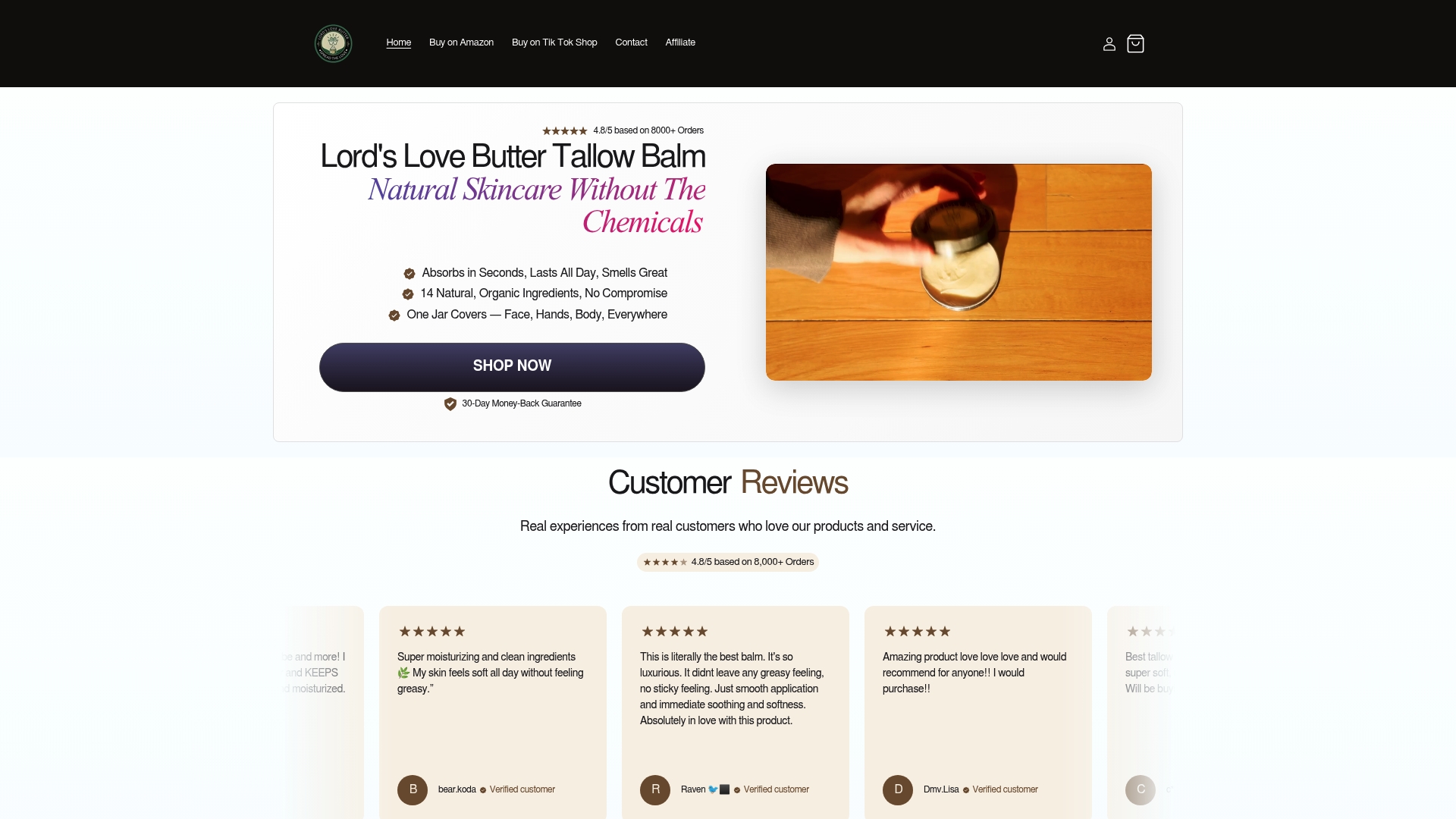
Lordslovebutter’s Whipped Beef Tallow Balm with Manuka Honey is made from grass-fed beef tallow with no synthetic chemicals, no added fragrances, and no fillers. It is designed for whole-body use and gentle enough for sensitive and eczema-prone skin. As a veteran-owned brand, Lordslovebutter prioritizes ingredient transparency and keeps the formula clean. Customers report improved skin texture within days of consistent use. For parents who want a natural occlusive they can actually trust, this is a strong starting point.
FAQ
Is tallow safe for kids with eczema?
Tallow is not recommended as a primary eczema treatment. High oleic acid levels in tallow may increase water loss and worsen dryness in some children with eczema, according to the Children’s Hospital of Philadelphia.
What is the best moisturizer for kids with sensitive skin?
Ceramide creams that are fragrance-free and hypoallergenic are the top choice for sensitive or eczema-prone children. They repair the skin barrier structurally, which tallow alone cannot do.
Can I use tallow and a ceramide cream together on my child?
Yes. Applying a ceramide cream first and then sealing it with a thin tallow layer at night combines barrier repair with occlusion. This layering method works well for very dry skin in cold or dry climates.
Does tallow clog pores in children?
Tallow has a comedogenic rating of 2–3, meaning it carries mild to moderate pore-clogging potential. Children with oily or acne-prone skin should avoid applying it to the face.
What should I look for in a child-safe tallow product?
Choose grass-fed, fragrance-free, single-ingredient or minimal-ingredient tallow formulations from brands with clear sourcing. The FDA does not pre-regulate cosmetic-grade tallow, so brand transparency is your primary safety filter.

