

How Tallow Works Under Makeup: a Natural Primer Guide
Tallow is rendered beef fat that functions as an occlusive moisturizer under makeup, sealing hydration into skin and creating a smooth, lipid-rich base that improves both application and wear. Understanding how tallow works under makeup starts with one fact: its fatty acid profile closely mirrors human skin lipids, which means it absorbs without fighting your skin’s natural chemistry. Applied correctly on slightly damp skin in pea-sized amounts, tallow acts as a natural primer alternative that delivers a dewy finish and locks in moisture before foundation. Natural skincare enthusiasts, makeup artists, and professionals exploring chemical-free routines have made it a go-to base product.
How tallow works under makeup as a natural primer
Tallow’s skin benefits come directly from its composition. It is rich in oleic acid, palmitic acid, and stearic acid, which are the same fatty acids your skin produces naturally. This structural similarity is why tallow absorbs effectively without leaving the kind of greasy film that many petroleum-based occlusives do. It also contains fat-soluble vitamins A, D, E, and K, all of which support skin barrier function and texture.
As an occlusive moisturizer, tallow works by forming a physical seal over the skin surface. It does not draw water into the skin the way humectants like hyaluronic acid or glycerin do. Instead, it traps whatever moisture is already present. This is why applying tallow on slightly damp skin is not optional. It is the mechanism. Dry skin plus tallow equals a sealed dry surface, which does nothing useful before foundation.
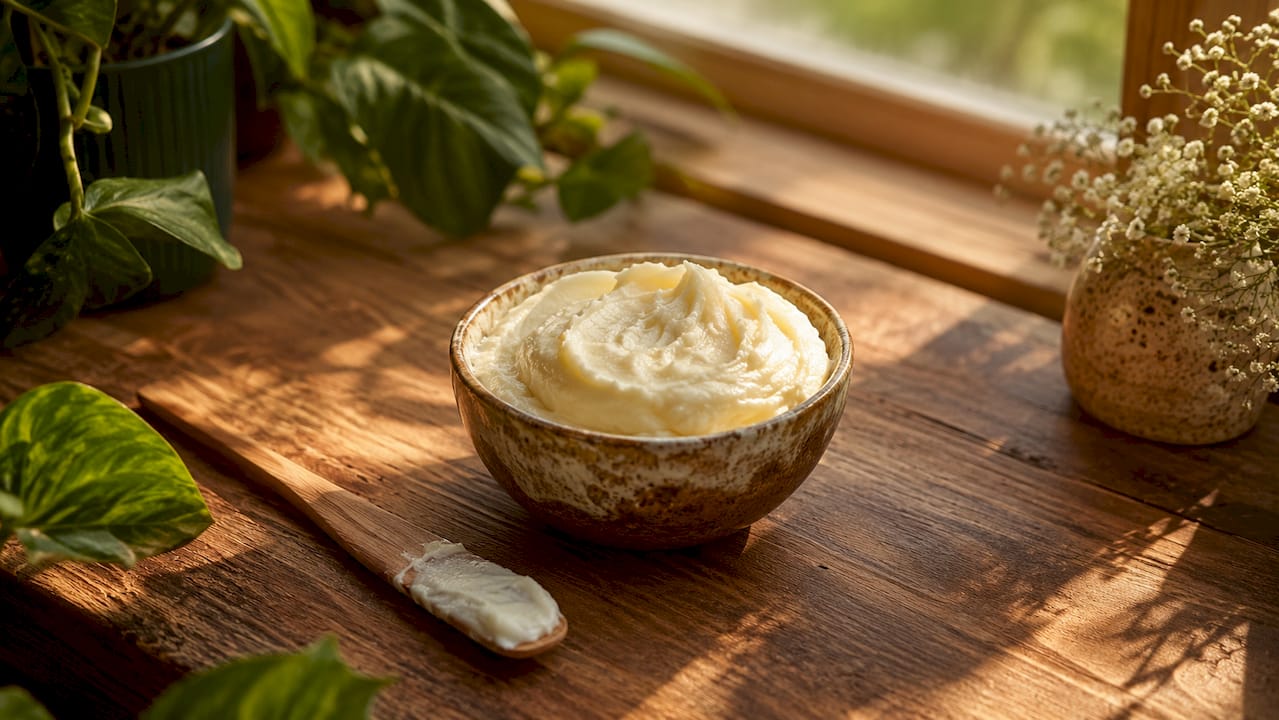
The result, when applied correctly, is a plumped, smooth skin surface that reduces the appearance of fine lines and dry patches. Foundation sits on top of this base rather than sinking into dry areas or clinging to flaky texture. Makeup longevity improves because the skin beneath stays hydrated throughout the day rather than drying out and causing foundation to crack or fade unevenly.
What skin benefits make tallow worth using before foundation
Tallow delivers three distinct benefits that matter specifically for makeup prep: emollient smoothing, occlusive sealing, and lipid replenishment. Unlike synthetic primers loaded with silicones, dimethicone, or parabens, tallow contains zero synthetic emulsifiers or preservatives. For dry, sensitive, or mature skin, this matters because those skin types often react to synthetic ingredients with redness, tightness, or irritation.
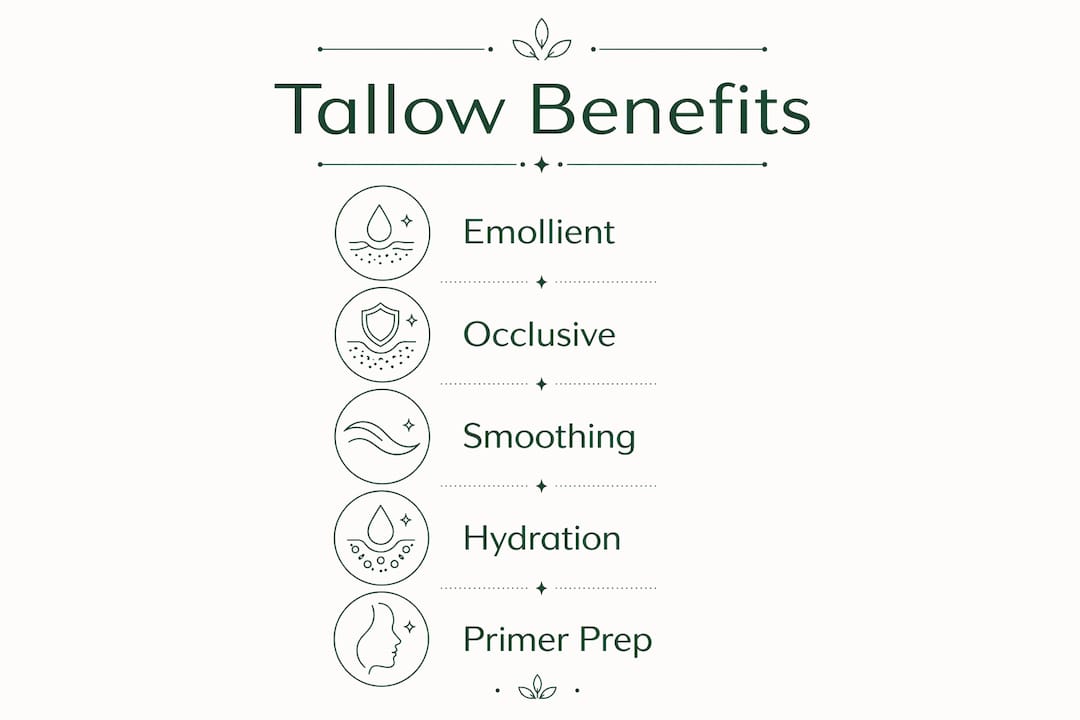
The emollient effect fills in micro-texture on the skin surface, softening rough patches and creating a more even canvas. This is particularly noticeable on mature skin where fine lines and dehydration lines are common. Tallow also works well as a spot treatment for dry patches on the nose, chin, or cheeks before applying foundation across the full face.
Pro Tip: Apply tallow only to dry patches rather than the entire face if you have combination skin. This gives you the emollient benefit where you need it without overloading oilier zones.
One important limitation: tallow contains no humectants, so it cannot hydrate skin that is already dehydrated at a cellular level. Use a hydrating toner or water-based serum first, let it absorb fully, then seal with tallow. This two-step approach maximizes the moisture-locking effect and gives you the best possible base for foundation.
Key tallow skin benefits for makeup prep include:
- Smooths dry patches and micro-texture without synthetic fillers
- Seals in hydration from water-based serums applied beforehand
- Provides fat-soluble vitamins that support skin barrier repair over time
- Creates a dewy, natural glow that reduces the need for heavy foundation coverage
- Free from synthetic preservatives, fragrances, and emulsifiers that can irritate sensitive skin
How to apply tallow under makeup without pilling
Pilling is the number one complaint from people who try tallow under foundation and get it wrong. Foundation pilling results from layering incompatible products without enough absorption time between steps. Tallow is a heavy occlusive, and if foundation goes on before it has settled, the two products physically resist each other and ball up on the skin surface.
Follow this sequence to prevent pilling and get a smooth finish:
- Cleanse skin thoroughly and pat it mostly dry, leaving a slight dampness on the surface.
- Apply any water-based serums or actives first and wait until they are fully absorbed, at least 3 to 5 minutes.
- Take a pea-sized amount of tallow, warm it between your fingertips until it melts into a thin oil.
- Press and pat the melted tallow onto skin. Do not rub or drag. Pressing distributes it evenly without disrupting the serum layer beneath.
- Wait a full 10 minutes before applying foundation. This is the step most people skip, and it is the most important one.
- If skin still feels slippery after 10 minutes, blot lightly with a clean tissue before applying foundation.
- Apply foundation by pressing or stippling with a damp sponge rather than buffing with a brush. Buffing disrupts the tallow layer and causes pilling.
Pro Tip: Warm tallow between your ring finger and thumb rather than your palms. Ring fingers apply the least pressure, which prevents over-application and dragging on delicate facial skin.
Professional makeup artists treat tallow as the final seal in skincare layers, skipping additional heavy products on top to avoid pilling and enhance foundation grip. The rule is simple: tallow goes on last in your skincare routine and first under your makeup, with nothing heavy layered between them.
The most common mistake is applying too much product. More tallow does not mean more hydration. A thin, even layer is all you need. Excess product sits on the surface, creates a slippery base, and guarantees pilling no matter how long you wait.
Who should use tallow under makeup, and who should avoid it
Tallow is not a universal product. Skin type determines whether it helps or harms your makeup routine.
Tallow works best for:
- Dry skin: Gets the full benefit of occlusive sealing and emollient smoothing.
- Sensitive skin: Responds well to the absence of synthetic preservatives and fragrances.
- Mature skin: Benefits from lipid replenishment and the reduction of dehydration lines before foundation.
- Skin with eczema or psoriasis: The barrier-supporting fatty acids and vitamins help calm reactive skin without chemical irritants.
Tallow is not recommended for:
- Oily skin: Adding an occlusive layer on already-oily skin increases shine and can cause product separation under foundation.
- Acne-prone skin: Tallow may clog pores for many people, especially those with acne-prone, oily, or combination skin, causing blackheads and breakouts.
- Combination skin (full face): Use only on dry zones as a spot treatment rather than all over.
Dermatologists at Scripps Health recommend using tallow only on very dry body areas rather than facial skin for most individuals. If you choose to use it on your face, patch test on the jawline for at least one week before incorporating it into your full makeup routine.
For reactive or sensitive skin, stop use immediately if redness, itching, burning, or bumps develop. Patch testing is not optional for this group. It is the only way to know whether your skin tolerates tallow before committing to daily use under makeup.
How tallow compares to traditional primers and other natural alternatives
Most conventional primers fall into two categories: silicone-based and water-based. Silicone primers like those using dimethicone fill pores and create a smooth surface, but they can trap debris and are difficult to remove fully. Water-based primers hydrate lightly but evaporate quickly and offer no occlusive protection. Tallow sits in a different category entirely: it is a lipid-based occlusive that mimics skin’s own sebum rather than sitting on top of it artificially.
| Feature | Tallow | Silicone primer | Water-based primer |
|---|---|---|---|
| Occlusive protection | Strong | Moderate | None |
| Skin lipid mimicry | High | None | None |
| Synthetic ingredients | None | High | Moderate |
| Absorption time needed | 10 minutes | 2 to 3 minutes | 1 to 2 minutes |
| Best skin type | Dry, mature, sensitive | All types | Oily, combination |
| Makeup finish | Dewy, natural glow | Matte, blurred | Natural |
| Pore-clogging risk | Moderate to high | Low to moderate | Low |
Compared to argan oil, another popular natural moisturizer, tallow is heavier and more occlusive. Argan oil absorbs faster and suits combination skin better, but it does not provide the same level of moisture sealing. For dry or mature skin specifically, tallow outperforms argan oil as a makeup base because it creates a more substantial barrier that keeps skin hydrated through a full day of wear.
The key advantage tallow holds over synthetic primers is its ingredient simplicity. A quality grass-fed tallow balm contains one ingredient. No parabens, no silicones, no synthetic fragrance. For makeup enthusiasts building a minimal, chemical-free routine, that simplicity is the point.
Expert tips for incorporating tallow into your makeup routine
Getting tallow to work consistently requires a few adjustments to how you think about skincare layering. These tips come from practical application experience rather than theory.
- Use a damp beauty sponge rather than a brush to apply foundation over tallow. The sponge presses product into skin without the friction that causes pilling.
- Mix a tiny amount of whipped tallow directly into your foundation for a dewy makeup finish. This works especially well with medium-coverage liquid foundations.
- Never layer silicone-based serums or heavy facial oils under tallow. Silicone and lipid layers do not bond well and will separate under foundation.
- Use tallow as a spot primer on dry patches around the nose and mouth while using a lighter moisturizer on the rest of the face.
- Remove tallow thoroughly at the end of the day using an oil cleanser or micellar water followed by a gentle foaming cleanser. Incomplete removal contributes to congestion over time.
- Introduce tallow gradually. Use it two to three times per week before makeup rather than daily for the first month, and monitor your skin’s response.
Pro Tip: If you notice your foundation oxidizing faster than usual after adding tallow, reduce the amount you use. Excess lipid on the skin surface can interact with foundation pigments and shift the color.
The whipped tallow texture from a quality balm like Lordslovebutter melts on contact with warm fingers, making thin, even application much easier than with a solid stick or bar format. This matters because even distribution is what separates a smooth makeup base from a patchy one.
Key takeaways
Tallow works best under makeup when applied in minimal amounts on damp skin, with a full 10-minute wait before foundation, making skin type and layering discipline the deciding factors in its success.
| Point | Details |
|---|---|
| Occlusive mechanism | Tallow seals existing moisture rather than adding it, so always apply on damp skin. |
| Application timing | Wait 10 minutes after applying tallow before foundation to prevent pilling. |
| Skin type suitability | Dry, sensitive, and mature skin benefit most; oily and acne-prone skin should avoid full-face use. |
| Layering order | Tallow goes last in skincare and first under makeup, with no heavy products stacked on top. |
| Ingredient advantage | Quality grass-fed tallow contains no synthetic preservatives, silicones, or fragrances. |
Why I think tallow deserves more credit in professional makeup prep
I have spent years watching makeup artists reach for the same silicone primers out of habit rather than intention. When I started testing tallow as a base, the results on dry and mature skin were genuinely better than most conventional options. The skin looked alive rather than filled in. Foundation moved with the skin instead of sitting on top of it.
That said, I have also seen tallow go wrong. People use too much, skip the wait time, and then blame the ingredient when their foundation pills. The product is not the problem. The technique is. Tallow rewards patience and precision in a way that forgiving silicone primers do not.
The trend toward simplified, minimal-ingredient routines is real, and tallow fits that direction well. But it is not a replacement for every skin type. For oily or acne-prone skin, the risk of congestion is genuine, and Scripps Health dermatologists back that caution with clinical reasoning. The honest answer is that tallow is a strong tool for the right skin type, used with the right technique. For dry and mature skin in particular, it is one of the most effective natural bases I have encountered. The whole-body versatility of a quality tallow balm also means you are not buying a single-use product. That efficiency matters in a minimal routine.
— Michael
Try Lordslovebutter whipped tallow balm as your natural primer
If you are ready to test tallow under your foundation, the formulation matters. Lordslovebutter’s whipped beef tallow balm is crafted from grass-fed beef tallow with no synthetic chemicals, preservatives, or fillers. The whipped texture melts instantly on warm fingertips, making thin, even application straightforward even for first-time users.
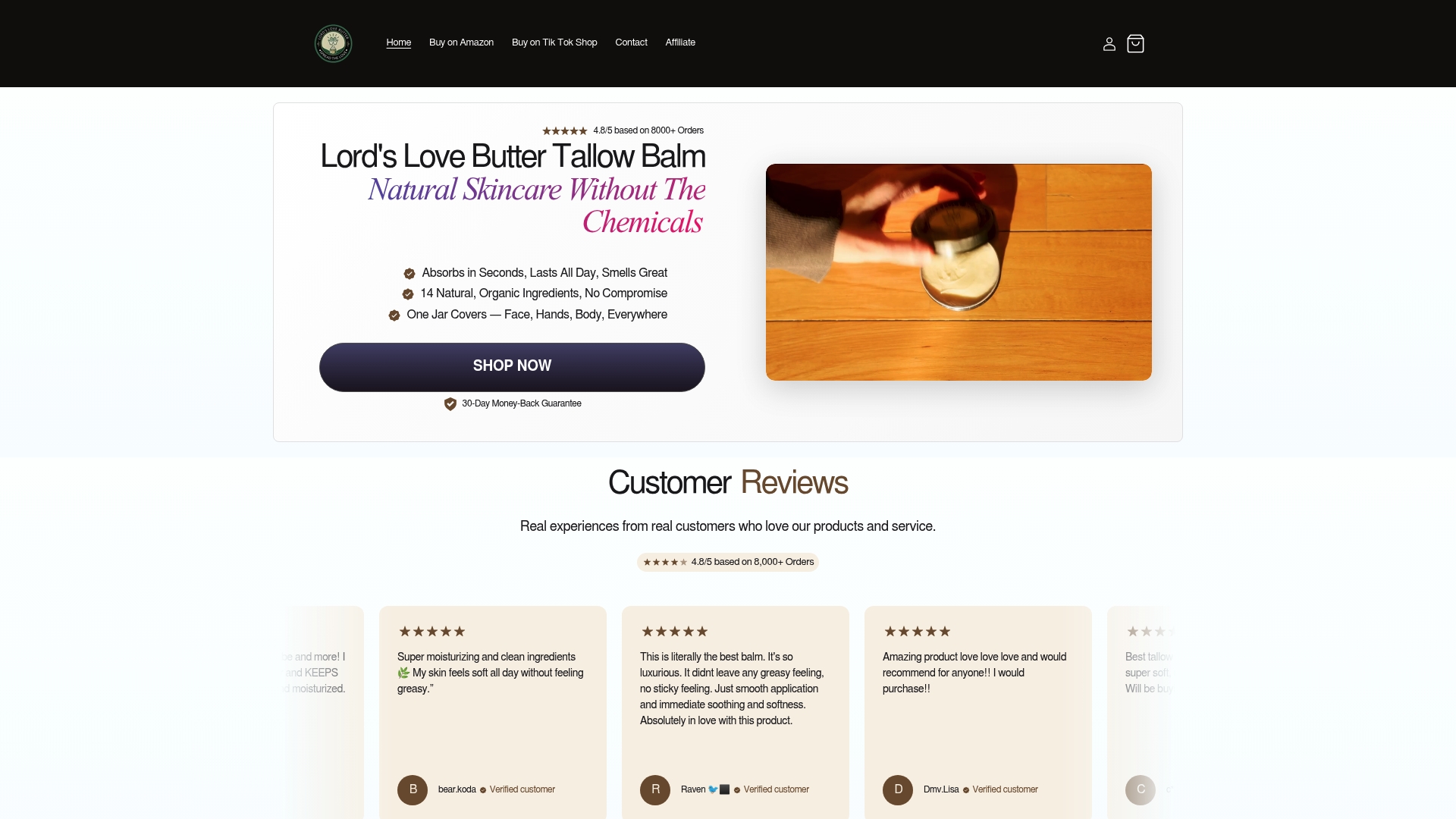
Customers report improved skin texture within days, and the balm works across the full body, making it a genuinely versatile addition to a minimal skincare routine. Whether you use it as a spot primer on dry patches or a full-face base before foundation, the tallow balm tin gives you a clean, single-ingredient option that replaces multiple synthetic products. Lordslovebutter is a veteran-owned business, and every batch reflects that commitment to quality and simplicity.
FAQ
Does tallow clog pores when used under makeup?
Tallow can clog pores, particularly for oily, acne-prone, or combination skin types. Dermatologists recommend limiting use to very dry areas rather than full-face application for most people.
How long should you wait after applying tallow before foundation?
Wait approximately 10 minutes after applying tallow before putting on foundation. This absorption time prevents pilling and gives tallow time to settle into the skin surface.
Is tallow good for oily skin under makeup?
Tallow is not recommended for oily skin under makeup. Its occlusive weight adds to existing surface oil, increases shine, and raises the risk of clogged pores and product separation.
Can you mix tallow directly into foundation?
Yes. Mixing a small amount of whipped tallow into liquid foundation creates a dewy finish and a creamier texture, which works well for dry or mature skin seeking natural-looking coverage.
What skin types benefit most from tallow under makeup?
Dry, sensitive, and mature skin types benefit most from tallow as a makeup base. These skin types respond well to tallow’s occlusive sealing and lipid-replenishing properties without the congestion risk that affects oilier skin.

