
A whipped beef tallow balm made with Manuka honey typically stays usable for 6 to 12 months at room temperature when kept in a sealed jar away from heat and light. Refrigeration can push that closer to 18 months, and freezing extends it past two years. The one rule that matters most: keep water and dirty fingers out of the jar, since honey’s moisture content makes contamination the real threat, not the tallow itself. Whipped beef tallow balms with honey and propolis typically follow this same shelf life window.
TL;DR:
- A whipped beef tallow balm made with Manuka honey remains effective for 6 to 12 months at room temperature if stored in a sealed jar away from heat and light.
- Refrigeration can extend its shelf life to approximately 18 months, with the balm firming up and requiring warming before spreading.
- Freezing preserves the balm beyond two years, especially if portioned into small containers to avoid repeated thawing.
- Using smaller jars, labeling opening dates, and rotating older products to the front helps maintain freshness and prevent spoilage.
- Signs of spoilage include sour odor, separation, discoloration, mold, or changes in texture and appearance, warranting disposal.
Table of Contents
- Beef Tallow Shelf Life: What the Timeframes Mean for Your Jar
- What Makes a Tallow-Honey Balm Last Longer or Shorter
- How to Store Your Balm to Maximize Its Shelf Life
- How Can You Tell if a Tallow Balm Has Gone Bad?
- The Case for Small-Batch, Grass-Fed Tallow Balms
- Why the Whipped Beef Tallow Balm With Manuka Honey Fits This Advice
- Sources
- FAQ
Beef Tallow Shelf Life: What the Timeframes Mean for Your Jar
Tallow is a saturated fat, and saturated fats resist oxidation far better than the seed oils found in most drugstore lotions. That’s the real reason makers commonly quote a 6 to 12 month room-temperature window for whipped tallow balm rather than the 2 to 3 months you’d expect from a plant-oil cream. Honey adds a mild preservative effect of its own, but it also carries trace moisture, so the clock still runs.
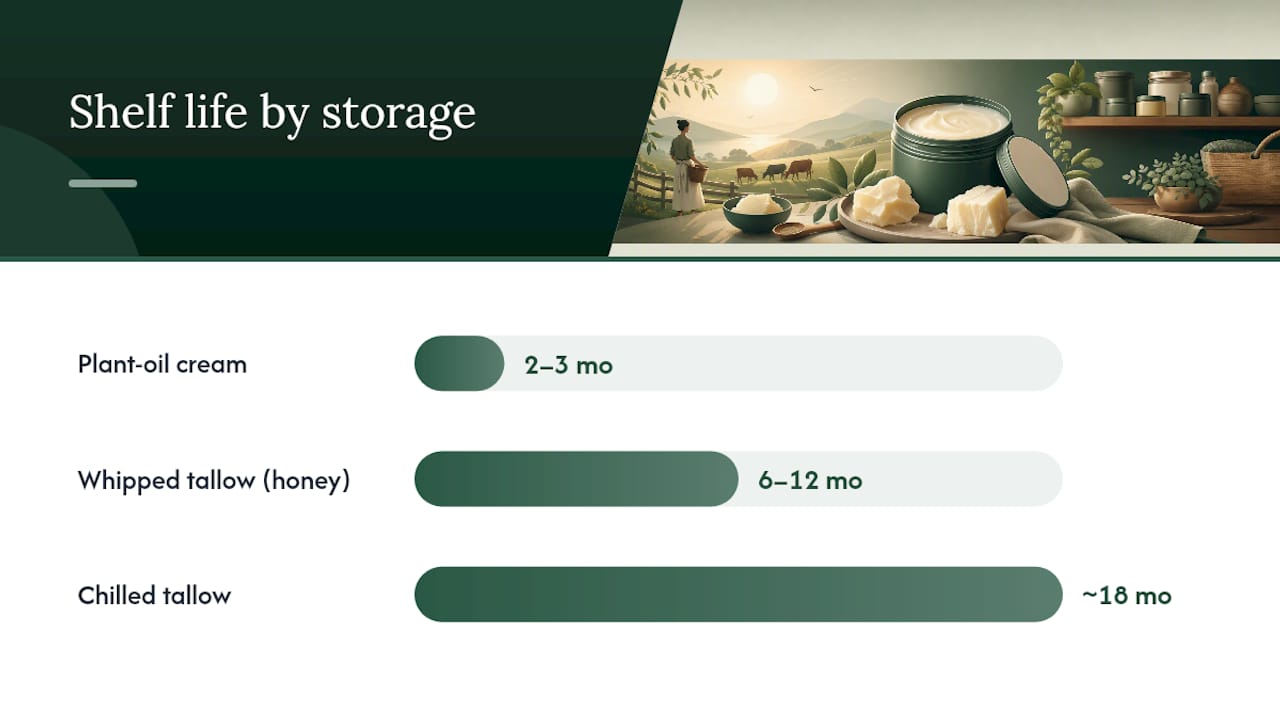
Refrigeration slows that clock further. A chilled jar can reportedly last up to about 18 months, though the balm firms up considerably. You’ll need a few seconds of warmth between your palms before it spreads the way it does at room temperature. Freezing goes further still, preserving the balm beyond two years, but it works best if you portion the balm into smaller containers before freezing so you’re not repeatedly thawing and refreezing one big batch.
For everyday use, three habits matter more than any calendar math:
- Buy or portion into smaller tins rather than one large jar you’ll have open for a year.
- Write the open date on the lid with a marker so you’re not guessing.
- Rotate older jars to the front of your bathroom cabinet and use them first.
A 2.4 oz tin, opened and used within a normal skincare rotation, rarely comes close to testing these limits. That’s part of why smaller sizes make more sense for anyone rotating multiple balms.
What Makes a Tallow-Honey Balm Last Longer or Shorter
Not every ingredient in a whipped tallow balm behaves the same way once the jar is opened, and the formula matters as much as the storage conditions.
Raw honey does double duty. It draws moisture into skin and contributes some preservative quality on its own, but it also introduces trace sugars and moisture that bacteria can exploit if a wet finger dips into the jar. The trade-off is worth it for skin benefits, but it raises the importance of clean scooping every single time.
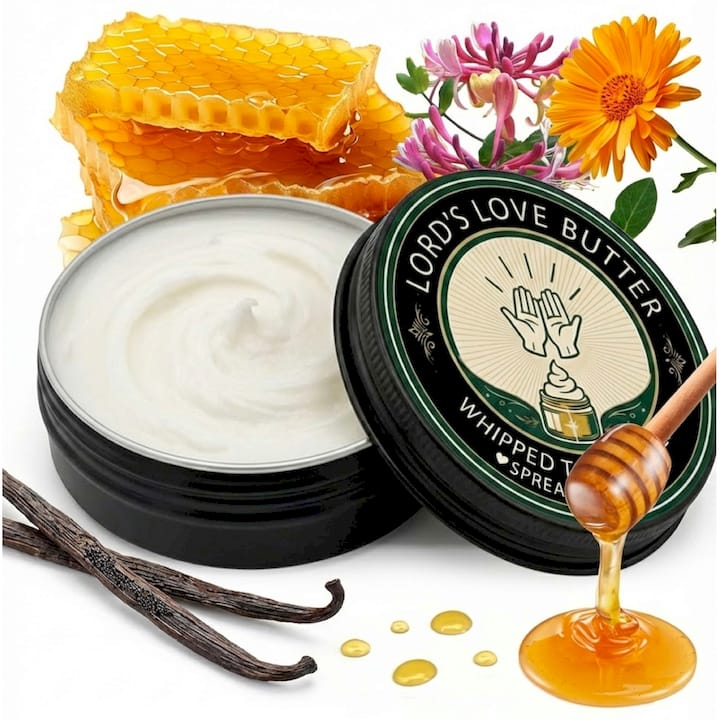
Beeswax and antioxidants work in the opposite direction, slowing spoilage rather than risking it. Beeswax forms a light barrier that limits air exposure inside the jar, and additives like Vitamin E or rosemary extract act as natural antioxidants that delay the oxidation process that eventually turns fats rancid. Formulators researching beeswax ratios generally find that even small amounts change texture and stability meaningfully.
Added plant oils are the wild card. Many carrier oils and essential oils have shorter shelf lives than tallow itself, so a balm loaded with extra botanical oils may not last as long as a simpler tallow-and-honey formula, even if it smells nicer on day one.
Processing matters too. Low-heat rendering, small-batch mixing, and minimal oxygen exposure during filling all affect how quickly a fat starts to break down. Rushed, high-heat rendering or long exposure to air during production can shorten shelf life before the jar ever reaches a shelf.
Pro Tip: Check the ingredient list before you buy. A shorter list with tallow, honey, and maybe beeswax or Vitamin E usually means a more predictable shelf life than a formula packed with multiple essential oils.
How to Store Your Balm to Maximize Its Shelf Life
Where and how you keep the jar matters as much as what’s inside it.
- Pick a cool, dark, low-humidity spot. A bedroom drawer or a linen closet beats a steamy bathroom cabinet, where daily shower humidity works against you. Avoid windowsills entirely. Direct sunlight and heat both speed up spoilage.
- Scoop with a clean tool, not a finger. A small cosmetic spatula or spoon keeps oils, bacteria, and skin residue out of the jar. This single habit does more to extend shelf life than any packaging choice.
- Refrigerate in warm climates or during slow use. If your house regularly runs warm or a jar sits mostly untouched, the fridge keeps it firmer and fresher longer. Expect a harder texture that softens after a minute of body heat.
- Freeze for long-term backup stock. Portion into smaller airtight containers first, then thaw only what you’ll use in the coming weeks.
- Label the jar the day you open it. A strip of tape with the date turns “when did I open this?” into a one-second answer.
Buying a smaller travel-sized tin for your first purchase makes all of this easier. You finish it before shelf life becomes a question, and you find out whether the formula suits your skin before committing to a larger jar.
How Can You Tell if a Tallow Balm Has Gone Bad?
Trust your nose first. A fresh whipped tallow balm smells mild, faintly earthy, or lightly of honey. Once it turns, you’ll notice a sour or unusually sharp odor, which is the clearest sign the fat has started to oxidize.
Beyond smell, check texture and appearance:
- Sticky or watery pockets separating from the whipped texture
- Any color shift, especially yellowing or darkening from the original shade
- Visible mold spots, even small ones
If you spot any of these, the safest move is to toss the jar. Sensitive skin and eczema-prone skin have less tolerance for a compromised product than average skin does, and a rancid fat can trigger irritation that has nothing to do with the formula’s original ingredients.
Before using a new jar on a large area, patch-test on a small patch of skin, like the inside of your forearm, and wait 24 hours. If irritation, redness, or itching shows up after normal use, stop applying it immediately. Persistent irritation is worth mentioning to a dermatologist, particularly for anyone managing eczema or psoriasis. When in doubt, throw it out. A jar of balm costs far less than a flare-up.
The Case for Small-Batch, Grass-Fed Tallow Balms
Ingredient sourcing shapes shelf life more than most shoppers realize. Grass-fed tallow rendered without synthetic additives tends to behave predictably: it’s a stable fat to begin with, and there’s nothing in the jar working against it chemically. That’s the logic behind this approach as a chemical-free skincare line. Fewer synthetic stabilizers means the honey, propolis, and beeswax carry the preservation work, exactly the ingredients this article has been discussing.
Small-batch production also matters. Batches made and filled in smaller runs spend less time sitting in bulk storage before reaching a jar, which limits oxygen exposure during the vulnerable window between rendering and packaging. Some users report visible skin improvement within days of consistent use, but that benefit only holds up if the balm stays clean and fresh. A jar handled with dirty fingers loses its edge no matter how good the formulation was on day one.
— Michael
Why the Whipped Beef Tallow Balm With Manuka Honey Fits This Advice
Everything in this guide points toward one kind of product: simple ingredients, careful handling, and a size you’ll actually finish before shelf life becomes a concern. The Whipped Beef Tallow Balm with Manuka Honey & Propolis is built on that logic. It skips synthetic stabilizers, leans on grass-fed tallow’s natural stability, and comes in a 2.4 oz tin sized for a normal rotation, not a jar that sits open for a year.
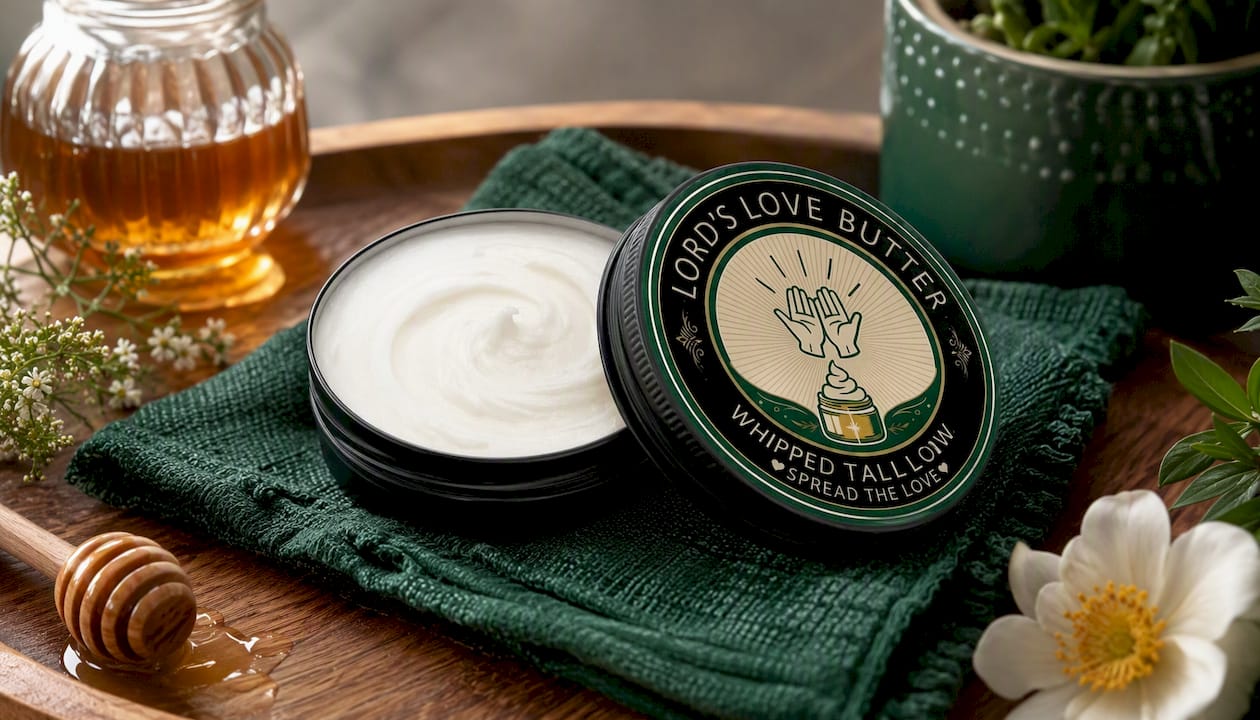
If you’re new to whipped tallow balms, start with the tin size rather than a bulk jar. It’s small enough to test on sensitive skin, easy to keep clean with a spatula instead of fingers, and simple to tuck into a cool drawer away from bathroom humidity. Once you know how your skin responds, the full collection of tallow-based balms, including the mint lip balm and zinc sun balm, gives you room to expand without guessing at storage rules all over again. Order the tin, follow the same clean-scoop habit outlined above, and you’ve got a jar that performs the way it’s supposed to for months.
Sources
- DIY Whipped Tallow & Honey Balm (Nourishing Recipe) - Her Country Roots
- Homemade Whipped Tallow and Honey Recipe - EatHealthy365
- How to Tell If Beef Tallow Is Rancid – PLAINVIEW BEEF CO.
FAQ
How Long Does Tallow Balm Last Once Opened?
An opened whipped tallow balm with honey generally stays usable for 6 to 12 months at room temperature if kept sealed, cool, and away from direct sunlight.
Does Refrigerating Tallow Balm Change How It Feels?
Yes. Refrigeration firms the texture considerably and can extend usable life to around 18 months, but the balm needs a minute of warmth in your hands before it spreads smoothly again.
Does Beef Tallow Balm Go Rancid?
It can, though grass-fed tallow’s saturated fat profile resists oxidation better than many plant oils. Watch for a sour smell, sticky separation, color changes, or visible mold as the signs it’s time to discard the jar.
What’s in Lord’s Love Butter’s Whipped Beef Tallow Balm?
The formula centers on beef tallow, honey, and propolis without synthetic chemicals or fillers, designed for whole-body use including sensitive areas.
When Should I Use Tallow Balm Instead of a Regular Lotion?
Tallow balm works well as a daily moisturizer for eczema-prone or very dry skin, since its fat structure closely resembles the skin’s own natural oils rather than sitting on top of it like many water-based lotions.