

How Whipped Balm Smooths Rough Skin Naturally
Whipped balm smooths rough skin by forming an occlusive, emollient layer that locks in moisture and fills the microscopic gaps between skin cells, restoring softness from the surface down. This process, known in dermatology as barrier repair, is the reason whipped balms outperform many lightweight lotions for chronically dry or rough areas. Whether you are dealing with rough elbows, cracked heels, or eczema-prone patches, the science behind how whipped balm works is both straightforward and compelling. This article breaks down the ingredients, the cellular mechanics, the best application methods, and how whipped balm compares to other moisturizers so you can get real results.
What ingredients in whipped balm smooth rough skin?
Whipped balm’s smoothing power comes directly from its ingredient profile. The best formulas combine occlusive lipids and emollient fatty acids that work together to soften texture and protect the skin barrier.
Key fatty acids and what they do:
- Oleic acid penetrates the upper skin layers and softens the intercellular matrix, making skin feel supple rather than stiff.
- Stearic acid reinforces the skin’s natural lipid barrier, reducing the cracking and flaking that cause rough texture.
- Palmitic acid contributes to the creamy, spreadable texture of whipped balm and supports barrier integrity.
- Linoleic acid is particularly valuable for eczema-prone skin because low levels of it are directly linked to a compromised barrier.
Grass-fed beef tallow, the base ingredient in Lordslovebutter’s whipped balm, contains all four of these fatty acids in ratios that closely mirror human sebum. That similarity is not cosmetic marketing. It means the skin recognizes and absorbs these lipids more readily than it does synthetic alternatives.
Occlusive ingredients like tallow create a thin, breathable film over the skin surface. A 54-participant clinical trial confirmed that occlusive lipids reduce transepidermal water loss (TEWL) more effectively than plant oils like extra virgin olive oil. Lower TEWL means the skin retains more of its own moisture, which is the primary driver of long-term smoothness.

| Ingredient type | Example | Primary effect on rough skin |
|---|---|---|
| Occlusive lipid | Grass-fed beef tallow | Reduces TEWL, seals moisture in |
| Emollient fatty acid | Oleic, stearic, palmitic acids | Fills intercellular gaps, softens texture |
| Anti-inflammatory agent | Manuka honey | Calms irritation, supports barrier healing |
| Antioxidant | Vitamin E (in tallow) | Protects skin cells from oxidative damage |
Pro Tip: Look for whipped balms that list grass-fed tallow or a short list of recognizable fatty acids as the first ingredients. Formulas with long synthetic ingredient lists often dilute the occlusive effect that makes balms superior to lotions for rough skin.
How does whipped balm work at the skin cell level?
Rough skin is not just a surface problem. It is a sign that the stratum corneum, the outermost layer of skin, has lost its structural integrity. When the lipid matrix between skin cells (called corneocytes) breaks down, those cells lift and separate, creating the rough, flaky texture you feel.
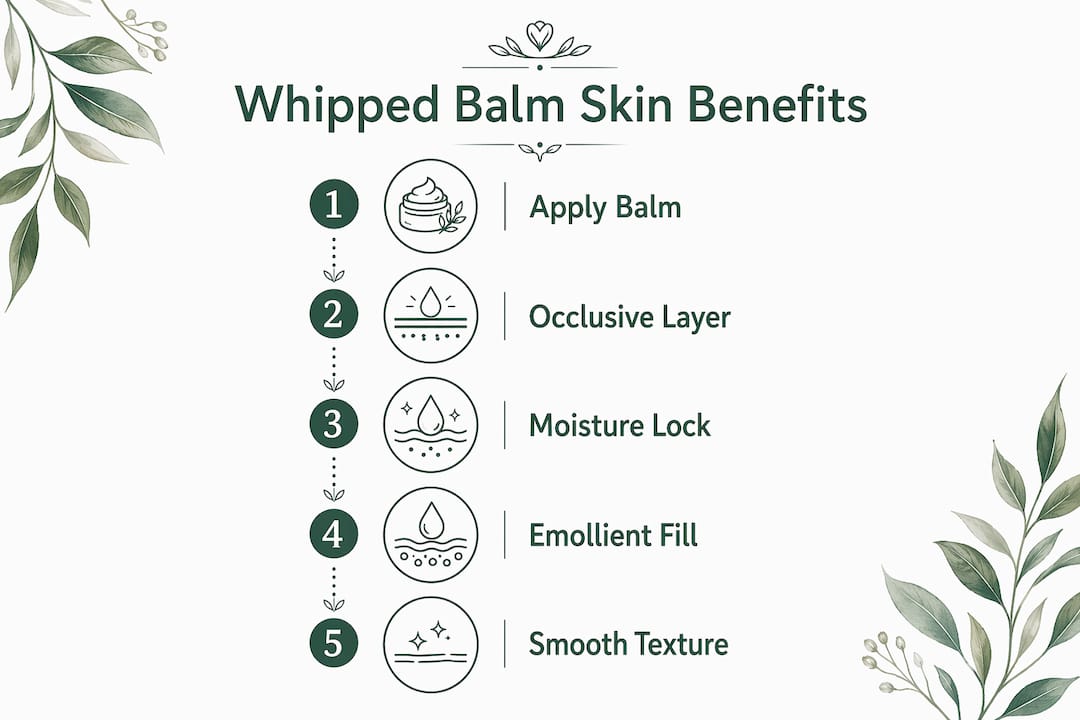
A 2026 dermatology review confirms that moisturizers smooth skin by replenishing intercellular lipids and restoring the stratum corneum’s ability to retain water. Whipped balm does this through two simultaneous mechanisms: emollient action and occlusion.
Emollients fill the spaces between corneocytes, physically smoothing the surface and reducing flaking. Emollients improve skin texture primarily through lipid content and surface effects, not by driving water deep into the dermis. This is a critical distinction. Whipped balm conditions the surface and upper barrier layers. It does not function like a humectant serum that pulls water from deeper tissue.
The occlusive film formed by tallow-based balm then holds everything in place. It slows water evaporation from the skin surface, giving the barrier time to repair itself naturally. Over repeated applications, this cycle of sealing and repairing produces lasting smoothness rather than a temporary fix.
“Smoothing rough skin is largely about restoring the skin’s lipid barrier and reducing water loss, not just exfoliating or adding instant moisture.” — Beyond emollients: A review of moisturizers in dermatology
| Mechanism | What it does | Result on rough skin |
|---|---|---|
| Emollient action | Fills gaps between skin cells | Reduces flaking, improves texture |
| Occlusion | Forms a film over skin surface | Locks in moisture, slows TEWL |
| Lipid replenishment | Restores intercellular matrix | Supports long-term barrier repair |
How to use whipped balm for maximum smoothing results
Application technique matters as much as the product itself. Most people under-apply balm and apply it at the wrong time, which is why they do not see the results they expect.
- Shower or wash first. Cleansing removes dead cell buildup that blocks balm absorption and prepares the skin surface for maximum contact.
- Apply while skin is slightly damp. The “soak and seal” method traps water against the skin before the balm’s occlusive layer seals it in. This produces noticeably faster smoothing and less post-application tightness than applying to completely dry skin.
- Use enough product. Clinical guidance for adults with eczema recommends approximately 250 g per week applied twice daily. Most people use a fraction of that. For rough patches on elbows, knees, or heels, apply a generous layer rather than a thin smear.
- Press, do not rub aggressively. Press the balm into the skin with your palm rather than rubbing vigorously. Aggressive rubbing can disrupt the occlusive film before it sets.
- Apply twice daily for the first two weeks. Morning and evening applications build up the lipid layer faster and produce visible texture improvement within days rather than weeks.
For sensitive or eczema-prone skin, apply balm immediately after bathing while the skin is still slightly moist. This timing is the single most effective adjustment you can make. The soak and seal approach is a cornerstone of eczema management precisely because it maximizes moisture retention without requiring additional products.
Pro Tip: If you are layering whipped balm with a prescription topical treatment, apply the medication first and let it absorb for five minutes before applying the balm on top. The balm’s occlusive layer can enhance penetration of topical actives, so always follow your dermatologist’s guidance on sequencing.
How does whipped balm compare to other moisturizers for rough skin?
Not all moisturizers work the same way, and the differences matter when your skin is genuinely rough rather than just slightly dry.
Lotions are water-based with a small percentage of emollients. They absorb quickly and feel light, but they evaporate fast and provide minimal occlusion. For rough, compromised skin, lotions often feel good for 30 minutes and then leave the skin feeling tight again.
Oils like jojoba or argan are pure emollients with no water content. They soften skin well but provide less occlusion than a tallow-based balm. The clinical comparison of extra virgin olive oil and petrolatum showed that the occlusive lipid reduced TEWL and improved surface smoothness more effectively. Tallow behaves similarly to petrolatum in its occlusive properties while also delivering the emollient fatty acids that oils and petrolatum lack.
Whipped body butter, the broader category that includes whipped tallow balm, sits between a thick cream and a pure oil in texture. The whipping process aerates the fat, making it lighter and easier to spread without reducing its occlusive strength. This is why whipped balm application feels less greasy than applying straight tallow or a dense petroleum-based product.
| Moisturizer type | Occlusion level | Emollient effect | Best for |
|---|---|---|---|
| Lotion | Low | Low to moderate | Normal to slightly dry skin |
| Plant oil | Moderate | Moderate | Dry skin, not severely rough |
| Whipped tallow balm | High | High | Rough, dry, eczema-prone skin |
| Petroleum jelly | Very high | Low | Severely cracked skin, short-term use |
Key differences that matter for rough skin:
- Whipped balm provides both occlusion and emollient action in a single product.
- It absorbs without leaving the heavy residue associated with petroleum jelly.
- It suits whole-body use, including sensitive areas, without synthetic fragrance or preservative concerns.
What should sensitive and eczema-prone skin users know?
For people with eczema or sensitive skin, whipped balm is not a luxury add-on. Emollient balms are foundational therapies for compromised skin barriers, not optional extras. Dermatology guidelines place frequent, liberal emollient use at the center of eczema management because barrier repair is the primary goal.
Several considerations apply specifically to this group:
- Ingredient purity matters more. Synthetic fragrances, preservatives like methylisothiazolinone, and certain plant extracts are common irritants. A short, clean ingredient list reduces the risk of a reaction.
- Frequency beats quantity in a single application. Two moderate applications daily outperform one heavy application because the occlusive film degrades throughout the day.
- Avoid applying balm to actively weeping or infected skin. Balm seals the surface, which can trap bacteria if an infection is present. Consult a dermatologist before using any occlusive product on broken or infected skin.
- Patch test on a small area first. Even natural ingredients can cause reactions in highly sensitive individuals. Apply a small amount to the inner arm and wait 24 hours before full use.
“Moisturizers, especially emollient balms, are foundational therapies for eczema and sensitive skin, not optional luxury products.” — Atopic Eczema, Topical Treatment and Prevention: 2022 EDF Guideline Summary
The grass-fed tallow balm benefits for sensitive skin are well-supported by the fatty acid profile of tallow itself. Because it mirrors the skin’s own lipid composition, it is less likely to trigger the immune response that synthetic emollients sometimes provoke in eczema-prone individuals.
Key takeaways
Whipped balm smooths rough skin by combining occlusive and emollient actions that restore the lipid barrier, reduce moisture loss, and fill the gaps between skin cells that cause flaking and rough texture.
| Point | Details |
|---|---|
| Occlusion is the core mechanism | Whipped tallow balm seals the skin surface to reduce TEWL and lock in moisture. |
| Apply on slightly damp skin | The soak and seal method produces faster smoothing and less post-application tightness. |
| Use enough product | Clinical guidance recommends approximately 250 g per week for adults with eczema-prone skin. |
| Ingredient quality drives results | Grass-fed tallow with natural fatty acids outperforms synthetic emollients for barrier repair. |
| Balms are foundational for eczema | Frequent liberal use of emollient balm is a clinical recommendation, not optional skincare. |
What I have learned from years of watching people use whipped balm wrong
Most people who try a whipped balm and declare it “didn’t work” made two mistakes: they applied too little, and they applied it to dry skin. Those two errors alone account for the majority of disappointing results I have seen. The product is not the problem. The method is.
The other misconception I keep encountering is that whipped balm should feel like it disappears into the skin instantly. It should not. A slight sheen after application means the occlusive layer is doing its job. If your skin absorbs it completely in 60 seconds, you either applied too little or your skin was so depleted it consumed the lipids immediately. In the second case, apply a second layer.
For anyone with eczema or sensitive skin, I would push back against the instinct to use as little product as possible to avoid a greasy feel. The clinical data is clear: under-application is the most common reason barrier repair fails. Commit to twice-daily applications for two full weeks before evaluating whether a product works. Skin barrier repair is not instant. It is cumulative.
Formulation quality also shapes the experience more than most people realize. A well-formulated whipped balm spreads evenly, absorbs without pilling, and leaves a comfortable rather than sticky finish. If a balm feels tacky or separates in the jar, the formulation is off regardless of the ingredient list.
— Michael
Try a natural whipped tallow balm that actually delivers
If the science in this article resonates with you, the next step is finding a balm that lives up to it. Lordslovebutter’s whipped beef tallow balm is made from grass-fed beef tallow with no synthetic chemicals, fragrances, or preservatives. It is formulated specifically for people who need real barrier repair, including those with eczema, psoriasis, or chronically rough skin.
Customers report visible texture improvement within days, which aligns with what the clinical evidence predicts when a high-quality occlusive emollient is applied correctly and consistently. Lordslovebutter is a veteran-owned business that sources ingredients with the same care it puts into every tin. If you are ready to stop guessing and start seeing results, the whipped beef tallow balm is the place to start.
FAQ
How does whipped balm smooth rough skin?
Whipped balm smooths rough skin by forming an occlusive layer that reduces moisture loss and delivering emollient fatty acids that fill the gaps between skin cells. This dual action restores the skin’s lipid barrier and reduces the flaking and rough texture caused by a compromised stratum corneum.
When is the best time to apply whipped balm?
Apply whipped balm immediately after bathing while skin is still slightly damp. The soak and seal method traps water against the skin before the balm’s occlusive film seals it in, producing faster and more lasting smoothness.
Is whipped balm safe for eczema-prone skin?
Yes. Emollient balms are a foundational clinical recommendation for eczema management. A tallow-based balm with a short, clean ingredient list is particularly suitable because its fatty acid profile closely mirrors the skin’s own lipids, reducing the risk of irritation.
How much whipped balm should I use?
Clinical guidance for adults with eczema recommends approximately 250 g per week applied twice daily. Most people significantly under-apply, which is the primary reason they do not see results. Use a generous layer on rough patches rather than a thin smear.
How is whipped balm different from a regular lotion?
Whipped balm provides a much higher level of occlusion and emollient action than a standard lotion. Lotions are water-based and evaporate quickly, while whipped tallow balm seals the skin surface and delivers lipids that actively support barrier repair over time.

