

Vitamin C AM, Retinol 2 to 3 Nights: A Barrier Safe Routine
Both belong in most anti-aging routines, and they work better as a pair than as rivals. Use vitamin C in the morning for antioxidant protection and brightening, and retinol at night for cell turnover and collagen support. If your skin is reactive, sensitive, or you’re pregnant or breastfeeding, lean on vitamin C and gentler retinol alternatives instead, and let barrier repair do more of the work.
TL;DR:
- Starting with a patch test and using retinol only two to three nights per week helps prevent irritation and build tolerance safely.
- Separate application of vitamin C in the morning and retinol at night enhances their benefits without reducing efficacy due to pH conflicts.
- Using gentle barrier-support products like balm-based moisturizers can significantly reduce irritation and improve long-term results.
- People with reactive skin, active eczema, rosacea, or pregnancy should prioritize vitamin C and barrier repair over retinol.
- Consistent, slow introduction and avoiding aggressive layering are more effective than pushing for fast results through irritation.
Table of Contents
- Vitamin C vs Retinol: A Quick Comparison
- How Do Vitamin C and Retinol Actually Work?
- What Does Each One Actually Improve?
- Should You Use Vitamin C and Retinol Together?
- How Should You Introduce Retinol and Vitamin C Safely?
- What Are the Best Retinol Alternatives for Sensitive Skin?
- What Does the Research Actually Say?
- Getting Both Right Without Wrecking Your Barrier
- A Barrier-Support Balm for Retinol and Vitamin C Routines
- Sources
Vitamin C vs Retinol: A Quick Comparison
Vitamin C and retinol solve different problems, which is exactly why dermatologists tend to recommend both rather than picking a winner. Vitamin C is a daytime antioxidant that brightens and defends. Retinol is a nighttime renewer that resurfaces and rebuilds. Dermatologists commonly describe the two as complementary rather than competing, with vitamin C handling daytime defense while retinol handles nighttime renewal.
- Vitamin C: best for dullness, dark spots, uneven tone, and general environmental protection.
- Retinol: best for fine lines, rough texture, clogged pores, and acne.
- Tolerability: vitamin C is usually gentler; retinol almost always causes an adjustment period.
- Who should be cautious: anyone with a compromised barrier, active eczema, rosacea, or a pregnancy should treat retinol as off limits and favor vitamin C.
If your main concern is prevention and glow, start with vitamin C. If it’s texture and lines, retinol earns its place too, just more slowly.
How Do Vitamin C and Retinol Actually Work?
Vitamin C works as an antioxidant. It neutralizes free radicals from UV exposure and pollution, supports collagen synthesis, and inhibits tyrosinase, the enzyme responsible for excess melanin production and dark spots, a mechanism confirmed across multiple clinical reviews. You’ll see it formulated as L-ascorbic acid (the gold standard, but unstable and acidic), or as gentler derivatives like tetrahexyldecyl ascorbate (THD), sodium ascorbyl phosphate (SAP), or magnesium ascorbyl phosphate (MAP).
Retinol is a vitamin A derivative. Once absorbed, skin cells convert it to retinoic acid, the active form that binds retinoid receptors and speeds up cell turnover while stimulating collagen production. That mechanism is well established in dermatology literature, and it’s also why retinoids reliably improve texture and fine lines over time.
Formulation matters more than the label suggests. L-ascorbic acid needs a low pH (around 3.5) to stay effective, which is part of why it can sting on compromised skin. Encapsulated retinol releases more slowly, cutting irritation without giving up potency. Packaging matters too: both ingredients degrade with light and air exposure, so opaque, airless pump bottles outperform jars.
What Does Each One Actually Improve?
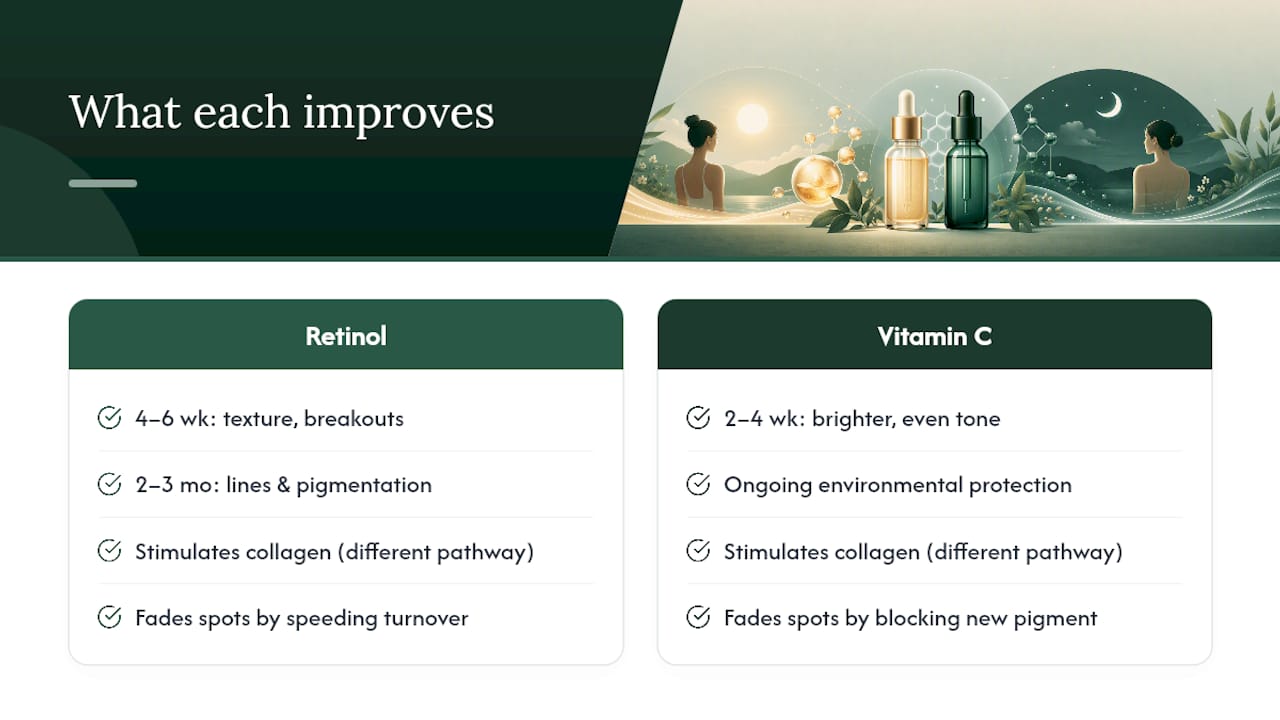
Retinol’s strengths show up gradually. Expect smoother texture and fewer breakouts within four to six weeks, with visible improvement in fine lines and pigmentation usually taking two to three months of consistent use. Vitamin C works faster on the surface. Many people notice a brighter, more even tone within two to four weeks, alongside ongoing protection against the environmental damage that causes premature aging.
Where they overlap is collagen. Both stimulate its production, just through different pathways, which is one reason combining them is popular rather than redundant. Both can also fade dark spots, vitamin C by blocking new pigment formation, retinol by speeding the turnover of pigmented cells to the surface.
The trap is assuming more irritation means more results. It doesn’t. Dermatologists specifically warn that redness and peeling aren’t a sign of a product working harder, just a sign your skin is stressed. Slower, consistent use beats aggressive layering almost every time.
Should You Use Vitamin C and Retinol Together?
Yes, and the standard approach is simple: vitamin C in the morning, retinol at night. This isn’t just a convenient rule. Research on topical actives shows that pH differences between the two don’t cause them to cancel each other out; spacing them by time of day preserves the benefits of both while cutting the odds of irritation.
Morning routine: cleanser, vitamin C serum, moisturizer, broad-spectrum SPF. Never skip the SPF. Vitamin C makes skin more resilient to UV stress, but it isn’t a sunscreen replacement.
Night routine: cleanser, retinol, moisturizer. Skip strong chemical exfoliants (AHAs, BHAs) on retinol nights until your skin has adjusted, since stacking multiple actives raises irritation risk fast.
If you’d rather use both in one sitting, apply vitamin C first, since it works best at a lower pH, then wait 20 to 30 minutes before retinol so the two don’t interact on damp, reactive skin. Choosing stabilized vitamin C and encapsulated retinol lowers the odds of a reaction either way.
- Apply vitamin C first if using both in the same routine, then wait before retinol.
- Prefer separate AM and PM use if your skin reacts to layering.
- Avoid AHAs or BHAs on retinol nights until you’ve built tolerance.
- Always finish the morning routine with SPF, no exceptions.
Pro Tip: Layering order matters less than most people think, once you’re using vitamin C and retinol at separate times of day. The bigger variable is barrier health, so a plain moisturizer or a barrier-repair balm before either active goes a long way toward preventing irritation.
How Should You Introduce Retinol and Vitamin C Safely?
Start slowly and treat the first month as a trial run, not a routine you’ve committed to for life.
- Patch test first. Apply a small amount on your inner forearm for 7 to 10 days and watch for redness, burning, or breakouts before using either product on your face, a step experts recommend before any new active.
- Introduce retinol at 2 to 3 nights per week. Increase frequency only if skin tolerates it well after two weeks.
- Try the sandwich method. Apply moisturizer, then retinol, then another layer of moisturizer to blunt dryness without diluting the active.
- Add vitamin C daily in the morning once your skin is calm, starting with a gentler derivative like THD or SAP if you’re prone to reactivity.
- Reduce frequency or pause if you see persistent redness, flaking, or stinging that doesn’t settle within a few days, and see a board-certified dermatologist if irritation is severe or doesn’t resolve.
What Are the Best Retinol Alternatives for Sensitive Skin?
If retinol consistently irritates you, or you’re pregnant or breastfeeding, you have real options, not just watered-down substitutes. Bakuchiol, a plant-derived compound, has shown anti-aging results comparable to retinol with notably less irritation in clinical comparisons. Peptides, niacinamide, and azelaic acid all support texture and tone with a much gentler profile.
During pregnancy or breastfeeding, dermatology guidance is consistent: avoid topical retinoids and prioritize antioxidants like vitamin C along with daily SPF. Pick a gentle vitamin C formula and pair it with a barrier-supporting moisturizer to keep skin calm while it does the work.
What Does the Research Actually Say?
The AM vitamin C, PM retinol split isn’t a trend. It reflects how dermatologists consistently frame the two as a “dream team” when barrier health is respected. Retinoid literature backs measurable gains in texture and fine lines over weeks to months, while separate reviews support bakuchiol as a smaller but real body of evidence for sensitive skin. The consistent thread across sources: patch test for 7 to 10 days, and start retinol at just 2 to 3 nights per week, before pushing frequency higher.
Getting Both Right Without Wrecking Your Barrier
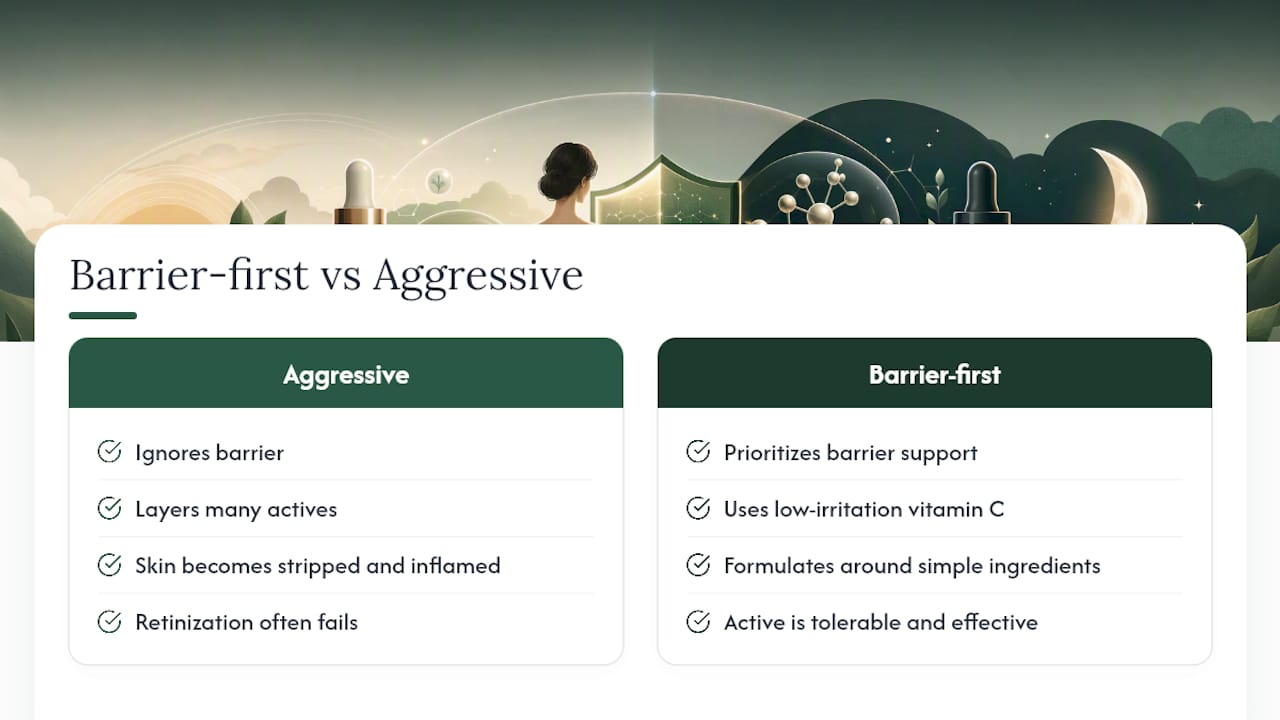
The mistake I see most often isn’t choosing the wrong ingredient. It’s ignoring the skin barrier while chasing results from either one. Retinization fails for a lot of people not because retinol doesn’t work, but because they layer it onto skin that’s already stripped and inflamed from too many actives at once. A low-irritation vitamin C paired with real barrier support does more for long-term results than an aggressive routine that burns out in three weeks.
That’s the philosophy behind formulating around simple, barrier-first ingredients rather than chasing potency for its own sake. If your skin can’t tolerate the active, the active isn’t helping you.
— Michael
A Barrier-Support Balm for Retinol and Vitamin C Routines
Retinization gets easier when your barrier isn’t fighting you at the same time. This balm is a chemical-free complement to your actives, not a replacement for them: whipped tallow with honey that restores moisture without the synthetic fillers found in many moisturizers.
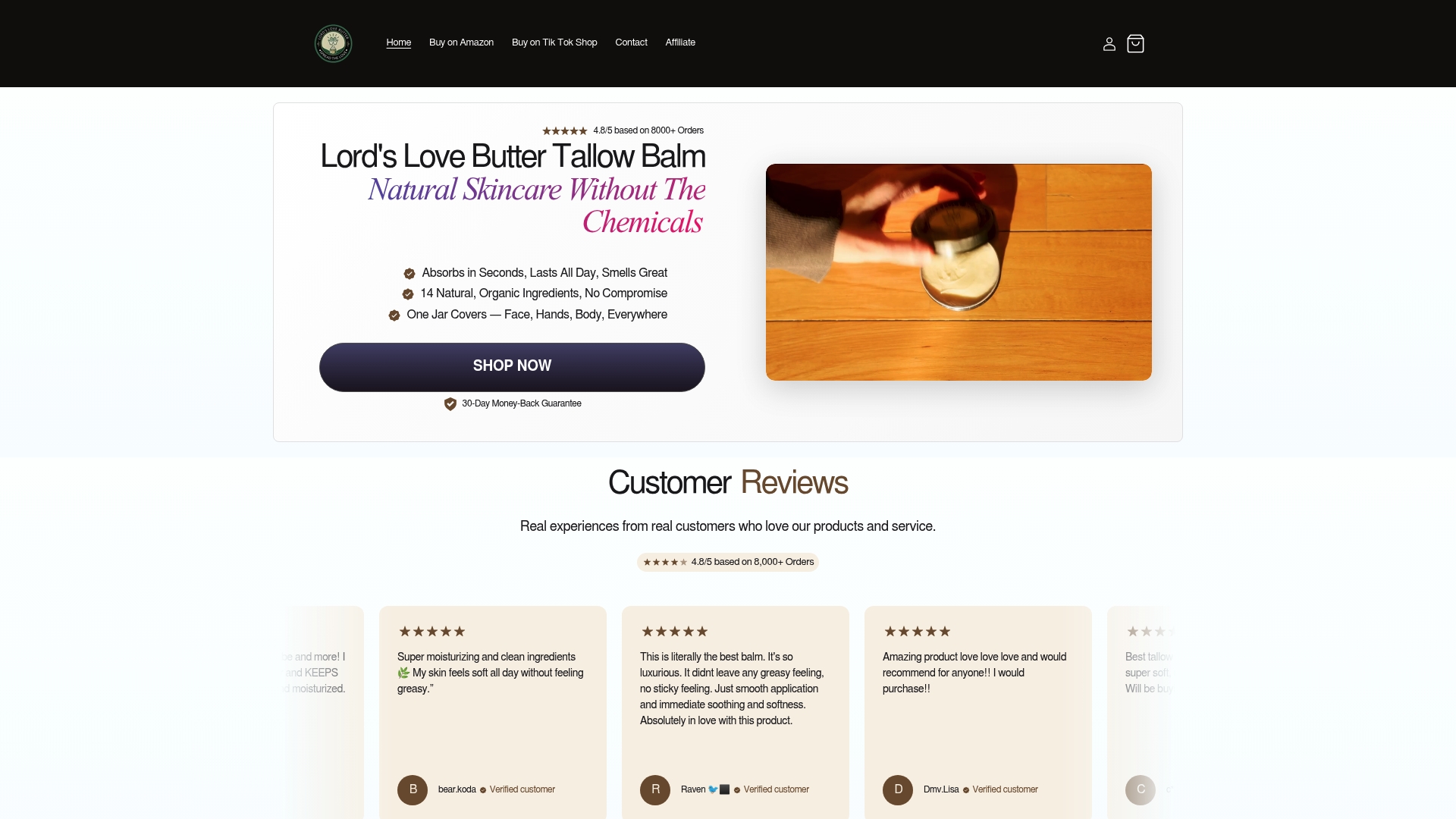
Use the Beef Tallow Balm Lite on retinol nights as your “sandwich” moisturizer, or reach for the Whipped Beef Tallow Balm whenever flaking or dryness shows up. If you’re combining vitamin C and retinol in the same routine, the Face Duo bundle pairs a vitamin C balm with a barrier-support balm, built specifically for that split routine. Keep the Mint Tallow Lip Balm nearby too, since lip corners are among the first places retinol irritation shows up. Try starting with combined balms and see how your skin responds within the first two weeks.
Sources
- How and When to Use Retinol and Vitamin C, According to Experts
- Topical vitamin C and its role in skin health (review)
- Retinoids in dermatology: mechanisms and clinical use (review)
- Bakuchiol: Retinol Alternative for Sensitive Skin
- Safety considerations for topical agents in pregnancy (review)

