

Oil Based Low Irritation Vitamin C That Won't Sting for Sensitive Skin
The lowest-irritation vitamin C comes from pH-independent derivatives, not classic L-ascorbic acid. Look for tetrahexyldecyl ascorbate (THDA), ascorbyl glucoside, sodium ascorbyl phosphate (SAP), or 3-O-ethyl ascorbic acid in an oil-based or neutral-pH formula. These skip the acidity that makes traditional vitamin C sting. Patch test first, start two to three times a week, then layer with a barrier-repair moisturizer and daily sunscreen.
TL;DR:
- Derivatives like tetrahexyldecyl ascorbate, ascorbyl glucoside, sodium ascorbyl phosphate, and 3-O-ethyl ascorbic acid offer low-irritation options because they do not require low pH for stability or penetration.
- Vitamin C products with high pH, stability issues, or improper packaging tend to oxidize faster, increasing irritation and reducing effectiveness, especially on reactive skin.
- Introducing vitamin C gradually, through patch tests and infrequent application, helps prevent barrier disruption and chronic sensitivity in sensitive skin.
- Formulation ingredients like vitamin E, ferulic acid, glycerin, squalane, and ceramides support stability, reduce oxidation, and protect barrier function, especially in sealed, airless packaging.
- Using a barrier-first, oil-based delivery system built around gentle derivatives generally provides better tolerability than high-percentage, low-pH serums for reactive skin.
Table of Contents
- Why Some Vitamin C Products Sting: L-Ascorbic Acid, pH, and Oxidation
- Low-Irritation Vitamin C Forms: THDA, Ascorbyl Glucoside, SAP, and 3-O-Ethyl Ascorbic Acid
- How Do You Introduce Vitamin C to Reactive Skin Safely?
- Formulation Cues: Ingredients, Packaging, and Red Flags for Sensitive Skin
- Why a Minimal, Barrier-First Formulation Works
- What Actually Matters When You Pick a Vitamin C for Reactive Skin
- Try a Gentle Vitamin C Balm Built for Reactive Skin
- Sources
Why Some Vitamin C Products Sting: L-Ascorbic Acid, pH, and Oxidation
L-ascorbic acid is the most researched form of vitamin C, and also the most likely to irritate. It only stays stable and penetrates skin effectively at a low pH, often below 3.5. That acidity is the whole problem for reactive skin.
At that pH, hydrogen ion activity on the skin’s surface rises sharply. This disrupts the lipid lamellae that hold your outer skin layer together, which raises transepidermal water loss and leaves skin more permeable to everything else it touches, including environmental irritants and product residue. That is the mechanical reason so many people feel a stinging or hot sensation within seconds of applying a bright orange vitamin C serum.
The instability problem compounds the pH problem. L-ascorbic acid oxidizes fast once exposed to air, light, or water, degrading into compounds that no longer act as an effective antioxidant and often become more irritating than the original ingredient.
A few signs your vitamin C has already turned:
- The serum has shifted from clear or pale yellow to amber, brown, or orange.
- It smells sharp, metallic, or vaguely like bacon grease.
- The texture feels gritty or has separated.
- It stings noticeably more than it did when the bottle was new.
Barrier disruption from low pH and oxidation does not just cause a few uncomfortable minutes. Repeated insult to the barrier is linked to chronic sensitivity over time, and for people with darker skin tones, that inflammation carries a real risk of post-inflammatory hyperpigmentation that can outlast the original irritation by months. Sensitive skin does not get more resilient with repeated exposure to acidic actives. It usually gets more reactive.
Low-Irritation Vitamin C Forms: THDA, Ascorbyl Glucoside, SAP, and 3-O-Ethyl Ascorbic Acid
Formulators have spent years engineering around the pH problem, and four derivatives now dominate the gentle-vitamin-C category for good reason.
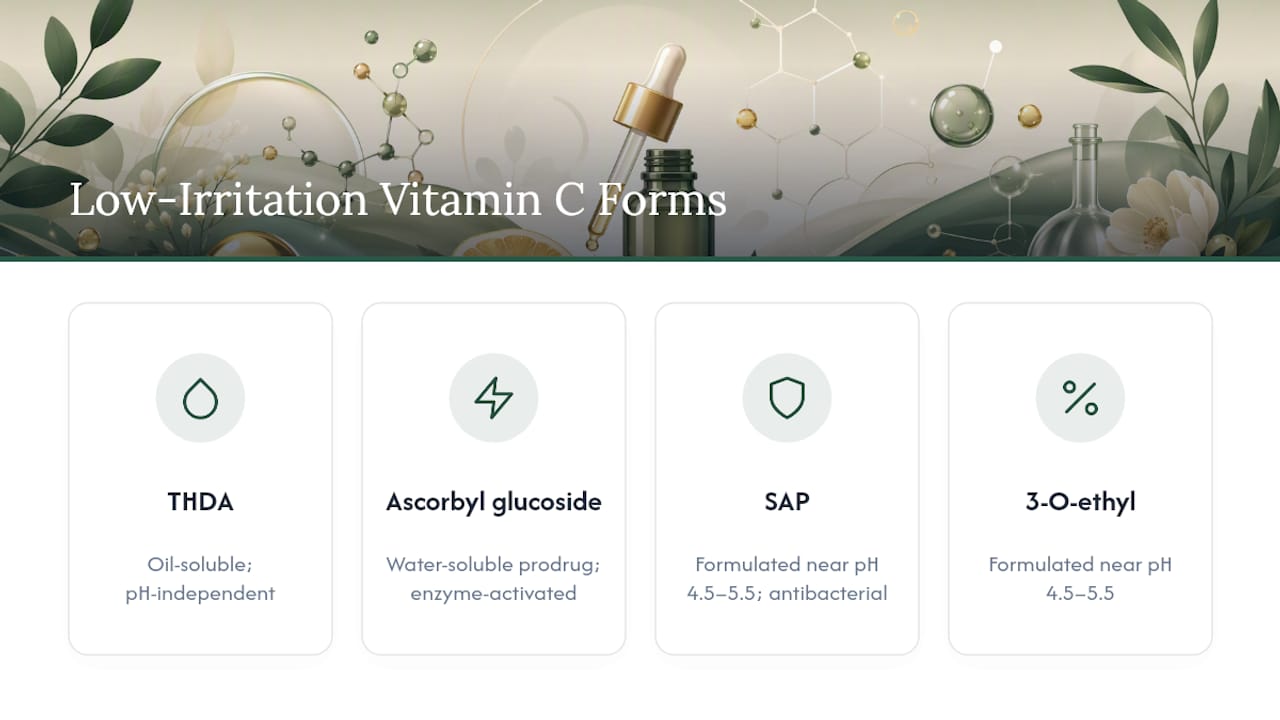
Tetrahexyldecyl ascorbate (THDA) is oil-soluble and pH-independent, so it can sit in a neutral, skin-friendly base instead of a harsh acidic one. Because it is lipophilic, it moves through the skin’s lipid layers efficiently and converts to active vitamin C once inside. Dermatology sources point to THDA as a preferred option for sensitive and melanin-rich skin precisely because it delivers the antioxidant benefit without the acidic vehicle that triggers irritation.
Ascorbyl glucoside takes a different route. It is water-soluble and functions as a prodrug, meaning it stays inert and stable in the bottle, then converts into active vitamin C once enzymes in the skin process it after application. That delayed conversion is what makes it so tolerable. It never needs an aggressive pH to work.
Sodium ascorbyl phosphate (SAP) and 3-O-ethyl ascorbic acid round out the list. Both are formulated at pH ranges much closer to skin’s natural 4.5 to 5.5, which keeps them stable on the shelf and calm on application. SAP has the added benefit of some antibacterial activity, making it a common pick in formulas also targeting congestion-prone skin.
One insight dermatologists keep repeating: irritation tracks more closely with formulation pH and vehicle than with vitamin C concentration.
Pro Tip: If a vitamin C serum lists its percentage prominently but says nothing about pH or the specific form used, that omission is itself a clue. Gentle formulas tend to advertise their derivative by name.
L-ascorbic acid still has a place, mainly in lower concentrations or buffered preparations for people without reactive skin who want the fastest possible brightening results. It is simply a tradeoff between speed and tolerability, and for sensitive skin, tolerability should win almost every time.
How Do You Introduce Vitamin C to Reactive Skin Safely?
Rushing a new active onto compromised skin is the single most common reason people write off vitamin C entirely. A slower approach almost always works better.
- Patch test first. Apply a small amount to your inner forearm or behind your ear and wait 24 to 72 hours. Redness, itching, swelling, or persistent stinging after that window means the product is not a match, even if it is labeled gentle.
- Start at two to three applications per week. Give your skin a rest day between uses for the first two to three weeks rather than committing to daily use immediately.
- Move to every other day, once week one and two pass without redness or tightness.
- Progress to daily use only after several weeks of consistent tolerance, and only if your skin shows no cumulative irritation.
- Apply in the correct order: cleanse, then a thin layer of vitamin C, then moisturizer, then sunscreen in the morning. If your vitamin C is oil-based, you can mix a drop into your moisturizer instead of applying it as a separate step, which dilutes exposure and softens the introduction further.
Watch for the difference between normal, brief tingling and an actual reaction. Mild warmth that fades in under a minute is common with active ingredients. Persistent burning, visible redness that lingers, swelling, or flaking is not normal and means you should stop.
If a reaction happens, pull the product immediately. Focus on barrier repair with ceramides and panthenol, skip exfoliating acids and retinoids until skin calms down, and give it several days before reintroducing any actives. A minimal-ingredient moisturizer built for barrier repair can shorten that recovery window considerably. If redness, swelling, or discomfort persists beyond a few days, or if you notice blistering or spreading irritation, see a dermatologist rather than continuing to self-treat.
Formulation Cues: Ingredients, Packaging, and Red Flags for Sensitive Skin
Reading a vitamin C label takes about thirty seconds once you know what to look for, and it saves weeks of trial and error on your face.
Favor formulas built around a neutral or skin-like pH, oil-based delivery, or encapsulation technology that protects the vitamin C from air and light until the moment of use. Stabilizing partners matter too. Vitamin E and ferulic acid both slow oxidation and add their own antioxidant contribution, while glycerin, squalane, and ceramides support the barrier the vitamin C is supposed to be protecting in the first place.
Red flags to skip:
- High alcohol denat content, which strips lipids and amplifies whatever irritation the active ingredient causes on its own.
- Heavy fragrance or essential oils used at meaningful concentrations, both common triggers for reactive skin.
- Clear glass packaging with wide-mouth openings, which invites the light and air exposure that degrades vitamin C fastest.
Packaging is not a cosmetic detail. Opaque, airless pump bottles or single-use capsules protect the antioxidant from the oxidation cycle that turns a gentle formula into an irritating one within weeks of opening. Stable, protected packaging is one of the more reliable predictors of whether a vitamin C product stays non-irritating through its entire shelf life, rather than just in the first few uses. If you deal with fungal acne alongside sensitivity, check the oil and ester base too. Some fatty esters common in rich, oil-based formulas can feed Malassezia yeast regardless of which vitamin C derivative sits on top of them, so the delivery system deserves the same scrutiny as the active itself.
Why a Minimal, Barrier-First Formulation Works
The research supports a specific pattern: derivatives like THDA sidestep irritation by avoiding the acidic environment and oxidation cycle that make L-ascorbic acid so unpredictable on reactive skin. That is not a marketing claim. It reflects how oil-soluble, pH-independent vitamin C behaves on skin at a mechanistic level, and it is backed by broader evidence that stable topical antioxidants meaningfully reduce UV-driven oxidative damage when the delivery system keeps them intact.
A gentle vitamin C formula is not simply a weaker version of a strong one. It is a different chemical strategy entirely, built to deliver the same antioxidant payload without demanding your skin tolerate an acidic assault to get there.
Michael’s writing on gentle vitamin C forms for sensitive skin and on tallow’s role in eczema-prone skin both reflect this same formulation-first logic that guides Lordslovebutter’s own product development.
None of this replaces professional care. If you deal with persistent rosacea, active dermatitis, or a reaction that will not settle, a dermatologist needs to see it before you keep experimenting with new actives.
What Actually Matters When You Pick a Vitamin C for Reactive Skin
Most vitamin C advice online still fixates on percentage, as if 20% automatically outperforms 10%. That framing misses what actually predicts irritation: the vehicle and the pH, not the concentration printed on the front label. A high-percentage derivative sitting in a neutral, oil-based cream will almost always outperform a lower-percentage acidic serum on tolerability, and tolerability is the entire game for reactive skin.
The overlooked piece is packaging and delivery system. People obsess over the active ingredient and ignore that a beautifully formulated serum degrades into an irritant the moment it sits in a clear jar under bathroom light for six weeks. Format is not a footnote here.
If your skin reacts to everything, the smartest move is not chasing a stronger antioxidant. It is choosing a delivery system, like an oil-based tallow balm, that was already built to calm and protect the barrier before you ever introduce an active ingredient into the mix. Start there, and vitamin C tolerance tends to follow.
— Michael
Try a Gentle Vitamin C Balm Built for Reactive Skin
Whipped beef tallow already mimics skin’s own lipid structure, which is why pairing it with a gentle vitamin C derivative works so well for reactive skin. Squalane and rosehip oil add slip and additional antioxidant support, keeping the whole formula oil-based and far from the low-pH territory that triggers most vitamin C complaints.
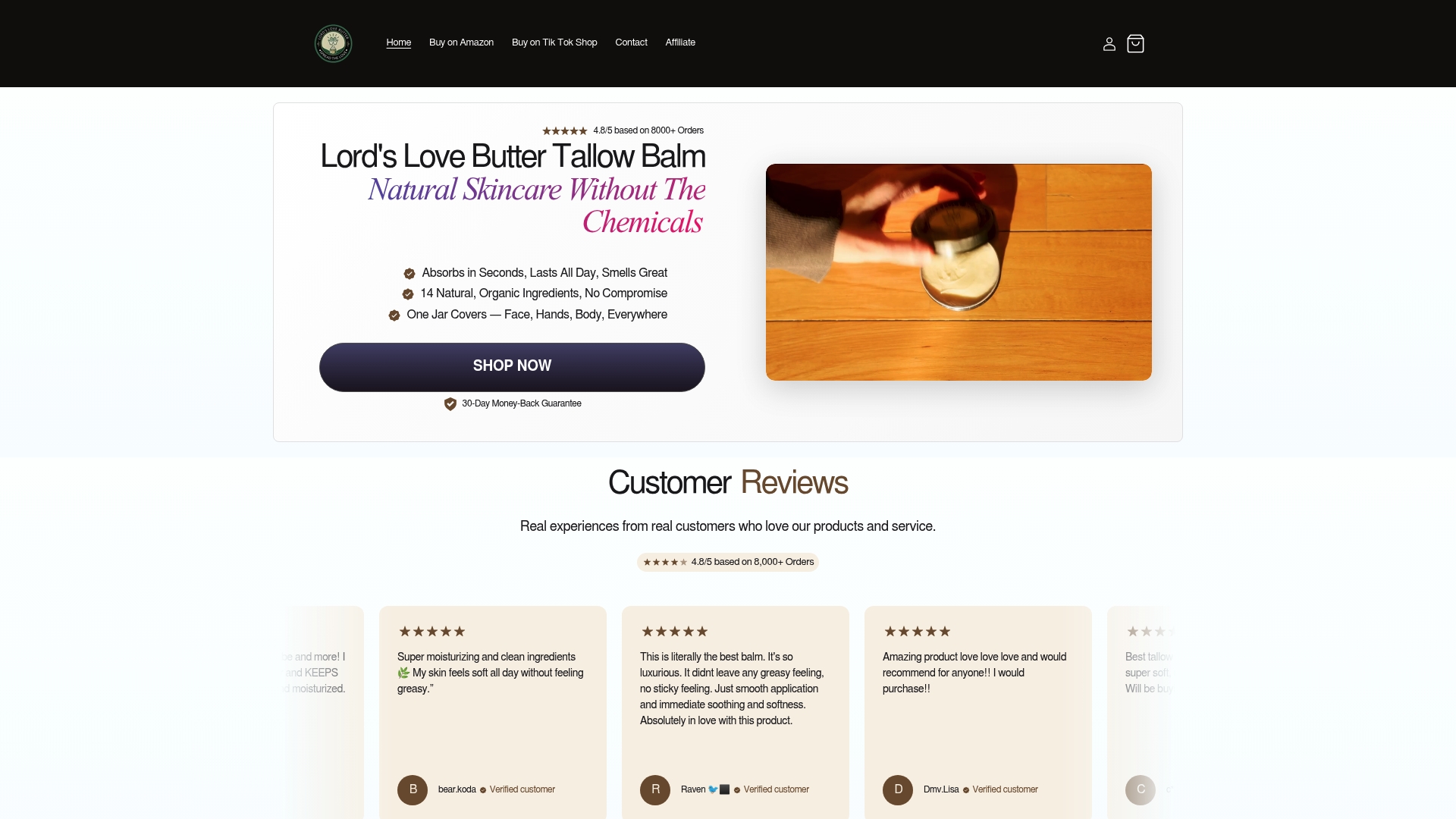
Lordslovebutter’s Vitamin C Whipped Beef Tallow Balm with Manuka Honey & Squalane is the flagship option for daily use on the face, formulated to deliver antioxidant benefits without the sting. Want to try it before committing to daily use? Start with the Whipped Beef Tallow Balm with Manuka Honey - 2.4 oz Tin, a travel-friendly size that works well for a patch-test period. For a fuller home routine, the 2.4 oz Jar gives you more product to pair with your existing moisturizer.
If your skin needs targeted support alongside the vitamin C balm, the Tallow Face Duo with Vitamin C, Squalane, and Rosehip Oil pairs the active balm with a complementary moisturizing tallow balm for barrier repair. Prefer to sample both formats at once? The Tin & Jar Bundle covers travel and home use in a single order. For a lighter, whole-body option that skips vitamin C entirely and focuses on barrier repair, the Original Beef Tallow Balm Lite with Manuka Honey is worth checking out too, especially for readers newer to active ingredients on sensitive skin.
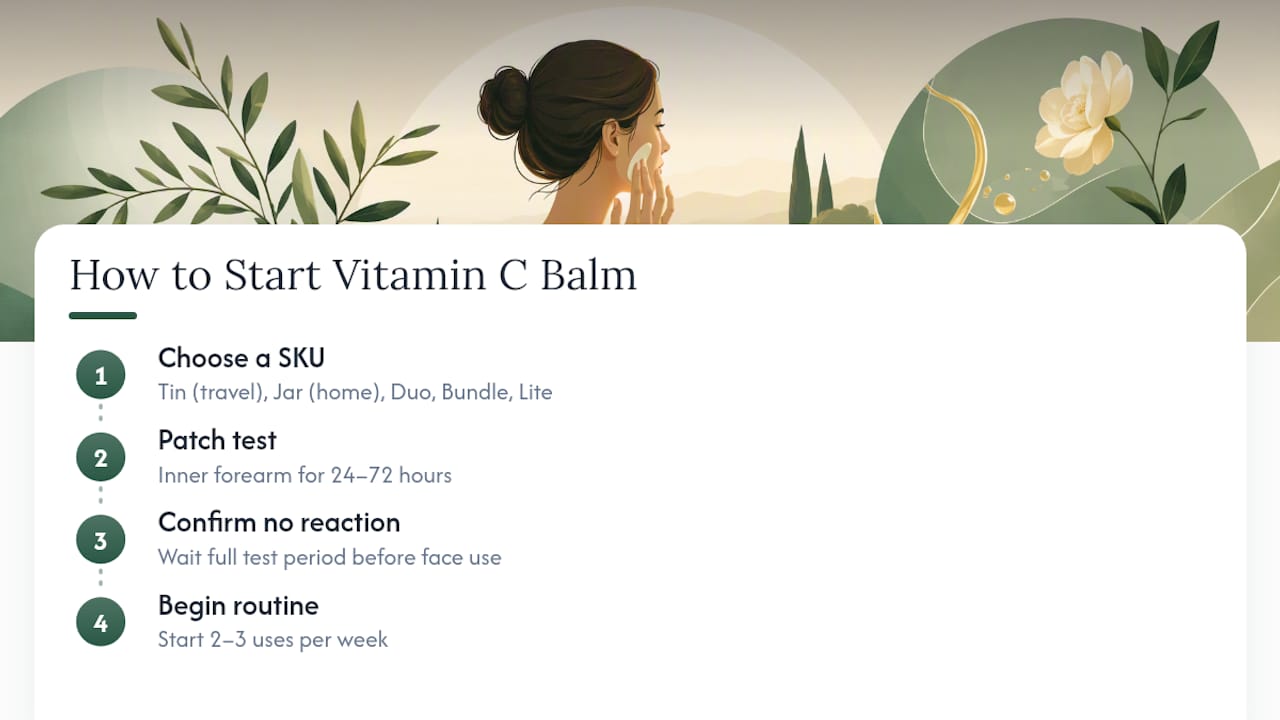
Patch test whichever SKU you choose on your inner forearm for 24 to 72 hours before applying to your face, then start at two to three uses a week. Head to the vitamin C balm product page to check current availability and place your first order.
Sources
- If You Have Sensitive Skin, This Form of Vitamin C Is for You | Allure
- PMC article on topical antioxidants (review)

