

Grass-Fed Tallow Eczema Skin Examples: 2026 Guide
Grass-fed tallow is a natural, nutrient-rich animal fat that supports eczema skin barrier repair by supplying fatty acids nearly identical to human sebum. Rendered from the fat of grass-fed cattle, it delivers palmitic acid, stearic acid, and fat-soluble vitamins A, D, E, and K directly to the skin. Eczema disrupts the skin’s protective barrier, causing moisture loss, redness, and persistent itching. Parents and individuals managing eczema are turning to natural remedies like tallow balms as alternatives to synthetic moisturizers. These grass-fed tallow eczema skin examples show how real people use this ingredient and what dermatologists say about its risks and rewards.
1. How grass-fed tallow mimics the skin’s natural barrier
Grass-fed tallow’s fatty acid profile closely mirrors the lipids found in human skin sebum. That similarity matters because eczema skin is deficient in exactly those barrier lipids, which leads to dryness, cracking, and inflammation. Palmitic and stearic acids in tallow help reinforce the skin’s outer layer, reducing moisture escape.
The main goal of eczema management is barrier repair. Tallow’s fatty acids may support this, but efficacy varies depending on each person’s skin response. Oleic acid is where things get complicated. High oleic acid content can actually increase transepidermal water loss in some sensitive skin types, which means tallow could worsen dryness for certain eczema sufferers rather than help it.

Tallow also works as an occlusive moisturizer. It sits on top of the skin and physically blocks water from evaporating. That is useful for very dry, intact skin but creates problems if the skin is broken or weeping.
Pro Tip: Apply a thin layer of grass-fed tallow balm immediately after bathing, while skin is still slightly damp. This traps moisture before it evaporates and maximizes the occlusive effect.
2. Practical examples of using tallow for eczema relief
These five examples reflect how parents and individuals actually use grass-fed tallow in daily eczema care routines.
-
Dry patches on elbows and knees. Apply a pea-sized amount of whipped tallow balm directly to thickened, scaly patches after showering. Users report softer skin within two to three days of consistent use.
-
Cracked hands from frequent washing. Rub a small amount of tallow into hands before bed and cover with cotton gloves overnight. This method locks in moisture through hours of minimal movement.
-
Baby cradle cap and scalp dryness. Some parents apply a tiny amount of tallow balm to a baby’s scalp to soften flaky patches. Anecdotal reports note reduced redness and scaling within days, though pediatric dermatologist approval is advised first.
-
Whipped tallow with manuka honey. Products that combine grass-fed tallow with manuka honey add antibacterial properties to the moisturizing base. Manuka honey is recognized for its wound-supportive and soothing qualities, making the combination appealing for inflamed but intact eczema skin.
-
Patch testing before full application. Apply a small amount to the inner forearm and wait 24–48 hours before using it on a larger area. This step catches irritant or allergic reactions early and is the single most important precaution for eczema-prone skin.
Pro Tip: Start with one application every other day for the first week. Gradual introduction gives your skin time to adjust and makes it easier to identify any reaction.
3. How tallow compares to other eczema moisturizers
Understanding where grass-fed tallow fits among other options helps you make a smarter choice for your skin type.
| Moisturizer | Barrier support | Irritation risk | Clinical validation | Best for |
|---|---|---|---|---|
| Grass-fed tallow | High (occlusive) | Moderate | Low | Very dry, intact skin |
| Ceramide creams | High (active repair) | Low | Strong | Most eczema types |
| Petroleum jelly | High (occlusive) | Very low | Strong | Dry, sensitive skin |
| Argan oil | Moderate | Low to moderate | Limited | Mild dryness |
| Shea butter | Moderate | Low | Limited | General dry skin |
Compared to ceramide creams and petroleum jelly, grass-fed tallow offers a unique fatty acid profile with some fat-soluble vitamins but less clinical validation. Ceramide creams actively rebuild the skin barrier at a structural level, which is why dermatologists consistently recommend them as a first-line eczema treatment. Tallow works chiefly as an occlusive moisturizer rather than an active skin repair agent.
Plant oils like argan oil and jojoba are lighter and less likely to clog pores, making them better choices for combination or oily skin types. Shea butter sits between tallow and plant oils in terms of weight and occlusion. For animal-based skincare enthusiasts who prefer to avoid synthetic ingredients, tallow is the most nutrient-dense option in this category.
The honest comparison: tallow is not a replacement for ceramide therapy in moderate to severe eczema. It is a strong supplemental moisturizer for dry, intact skin that tolerates rich, fatty products.
4. Safety considerations before you use tallow on eczema skin
The Children’s Hospital of Philadelphia advises caution with tallow for eczema patients, noting it may worsen skin sensitivity in some cases. That warning deserves serious attention, especially for parents considering tallow on young children.
Key safety rules to follow:
- Never apply tallow to broken, weeping, or infected skin. Tallow is highly occlusive and can trap bacteria against open wounds, worsening infections.
- Avoid use on acne-prone or oily skin. Dr. E. Victor Ross at Scripps Health notes tallow may be tolerated on dry skin without a history of breakouts but carries real risk for sensitive or acne-prone skin.
- Source carefully. Commercial tallow balms often lack standardized purity testing. Minimalist, single-ingredient formulas from verified grass-fed sources reduce the risk of synthetic irritants and contaminants.
- Use caution on the face. Hands, elbows, knees, and body patches are lower-risk application areas. The face, especially around the nose and forehead, is more prone to clogged pores.
- Store properly. Tallow is an animal fat and can go rancid if stored in warm or humid conditions. Keep it sealed and cool to preserve quality.
- Consult a dermatologist for moderate to severe eczema. Tallow provides temporary moisture for very dry skin but lacks the safety testing for clinical dermatological endorsement as a primary eczema treatment.
5. Real-life reports from parents and individuals using tallow
User experiences with tallow for eczema are genuinely mixed, which makes them more credible than uniformly positive testimonials.
- A parent on Reddit described applying a grass-fed tallow balm to their toddler’s arm creases every night for one week. They reported reduced redness and less scratching by day four, though they noted the improvement plateaued after two weeks.
- Several adults with chronic dry skin on their hands report that tallow outperforms standard drugstore lotions for overnight repair, particularly during winter months when skin loses moisture rapidly.
- One user with a history of eczema flares on the shins found that whipped tallow balm reduced scaling and itchiness within three days of twice-daily application to intact skin.
- Not all reports are positive. Some users with sensitive or combination skin reported small breakouts after applying tallow to the chest and upper back. This aligns with dermatologist warnings about pore clogging on oilier skin areas.
- Parents using tallow on baby soft skin note it absorbs without a heavy residue when whipped, which makes application easier on wiggly infants.
“I was skeptical, but after two nights of applying tallow balm to my daughter’s elbow creases, the redness was visibly reduced. We still use her prescribed cream for flares, but tallow has become our daily maintenance moisturizer.”
These reports reflect a consistent pattern: tallow works best as a daily maintenance moisturizer on dry, intact skin rather than as a treatment for active flares. Medical institutions find no robust clinical evidence supporting tallow as superior to conventional ceramide creams. That gap between user experience and clinical data is worth keeping in mind.
Key takeaways
Grass-fed tallow works best as a daily occlusive moisturizer for dry, intact eczema skin, not as a replacement for clinically validated ceramide treatments.
| Point | Details |
|---|---|
| Barrier lipid similarity | Tallow’s fatty acids mirror human sebum, supporting moisture retention on dry, intact skin. |
| Oleic acid caution | High oleic acid content can worsen dryness in some eczema skin types; patch test first. |
| Never on broken skin | Tallow traps bacteria against open wounds; restrict use to intact, non-infected skin only. |
| Source quality matters | Choose minimalist, grass-fed, single-ingredient formulas to avoid contaminants and irritants. |
| Supplement, not replace | Tallow supports ceramide creams and prescription treatments; it does not replace them for moderate to severe eczema. |
My take on tallow as an eczema remedy
I have spent a lot of time reading through dermatology literature, user forums, and product reviews on this topic. My honest assessment is that grass-fed tallow occupies a legitimate but narrow role in eczema care.
The appeal is real. Tallow is free from synthetic preservatives, fragrance, and emulsifiers that trigger reactions in many eczema sufferers. For people who have cycled through every lotion on the pharmacy shelf and still wake up with cracked, itchy skin, a clean, fatty, nutrient-dense balm is worth trying. The fatty acid argument is not just marketing. The similarity to skin sebum is a genuine biochemical rationale.
Where I get cautious is the gap between anecdotal enthusiasm and clinical evidence. The Children’s Hospital of Philadelphia does not endorse tallow as an eczema treatment, and that matters. Eczema is not a single condition. It ranges from mild seasonal dryness to severe, barrier-compromised skin that needs prescription intervention. Applying an occlusive fat to the wrong type of eczema skin can make things worse.
My recommendation: use grass-fed tallow as a daily moisturizer on dry, intact skin if you tolerate it well after patch testing. Pair it with, not instead of, whatever your dermatologist has prescribed. Choose a product with minimal ingredients from a verified grass-fed source. And if you are applying it to a child, get a pediatric dermatologist’s input first. Natural does not automatically mean safe for every skin type, and the best eczema care is always individualized.
— Michael
Try Lordslovebutter’s whipped tallow balm for eczema-prone skin
If you are ready to test grass-fed tallow on your own skin, product quality is everything. Lordslovebutter’s Whipped Beef Tallow Balm with Manuka Honey is made from 100% grass-fed beef tallow with no synthetic chemicals, fragrances, or preservatives. The added manuka honey brings natural antibacterial and soothing properties that complement tallow’s moisturizing base, making it a strong option for sensitive and eczema-prone skin.
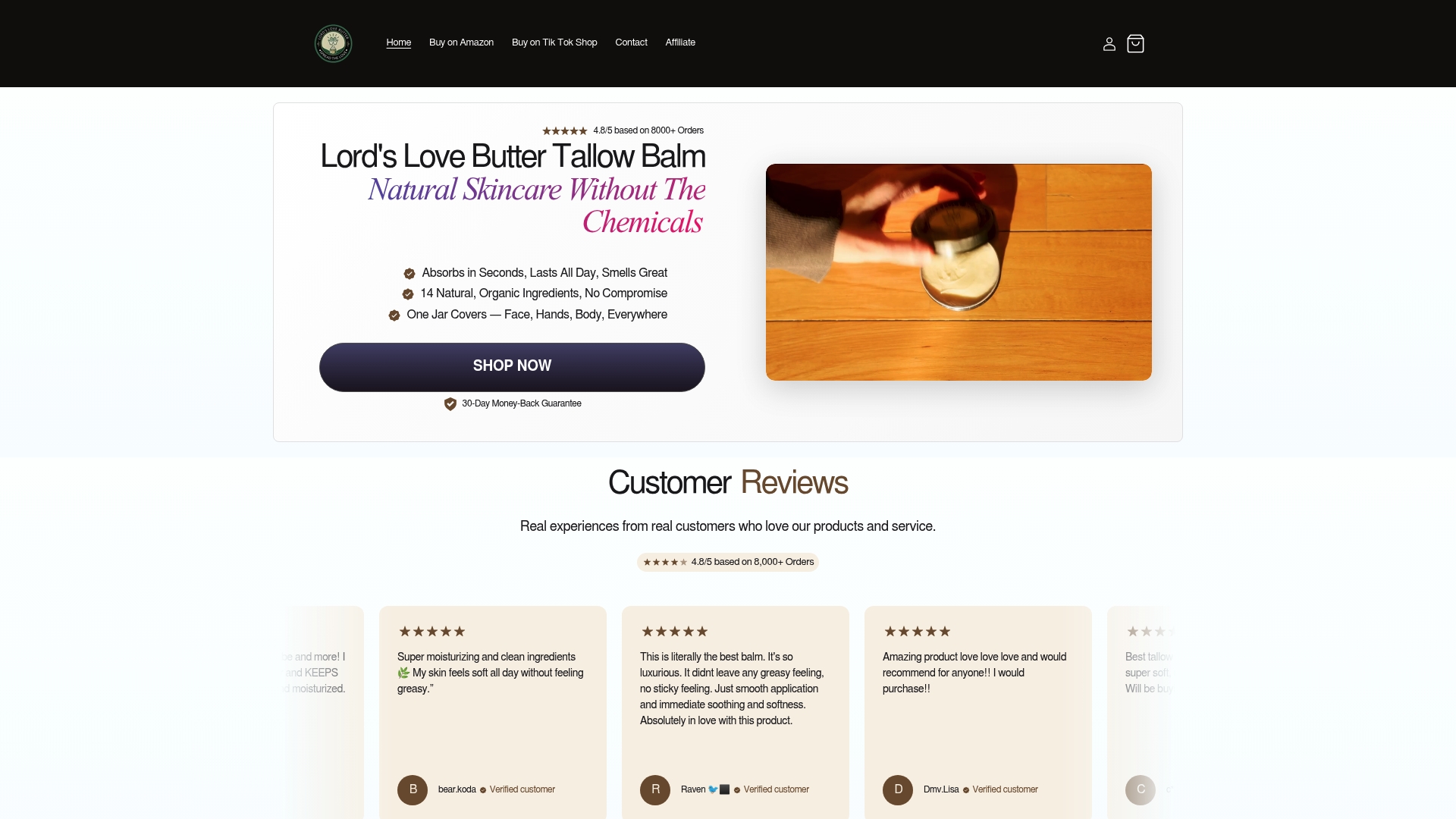
Lordslovebutter is a veteran-owned business that small-batch produces each tin with quality control built in. The whipped texture absorbs without a greasy feel, which makes it practical for daily use on hands, elbows, knees, and body patches. If you are transitioning to natural skincare, this balm is a straightforward starting point with a clean ingredient list you can actually read.
FAQ
What is grass-fed tallow and why does it matter for eczema?
Grass-fed tallow is rendered fat from cattle raised on grass rather than grain. Grass-fed sourcing increases the concentration of fat-soluble vitamins and beneficial fatty acids, which are the compounds most relevant to skin barrier support in eczema-prone skin.
Is grass-fed tallow safe for babies with eczema?
Tallow can be used cautiously on intact baby skin, but pediatric dermatologist approval is strongly advised first. The Children’s Hospital of Philadelphia recommends caution, as tallow may worsen skin sensitivity in some eczema patients.
How do I apply tallow balm for eczema relief?
Apply a thin layer to clean, dry, intact skin immediately after bathing to lock in moisture. Patch test on the inner forearm for 24–48 hours before applying to larger areas, especially for sensitive or eczema-prone skin.
Can tallow replace ceramide creams for eczema?
Tallow works as an occlusive moisturizer but does not actively rebuild the skin barrier the way ceramide creams do. Dermatologists recommend ceramide-based products as the primary treatment for most eczema types, with tallow as a possible supplement.
What should I look for when buying a tallow balm for eczema?
Choose a minimalist formula from a verified grass-fed source with no synthetic additives, fragrances, or preservatives. Single-ingredient or short-ingredient-list products carry the lowest risk of irritation for sensitive skin types.

