

Minimal Ingredient Moisturizer Advantages for Sensitive Skin
A minimal ingredient moisturizer is defined as a skincare product formulated with a small number of essential, high-quality ingredients designed to hydrate and protect skin gently and effectively. The minimal ingredient moisturizer advantages are not cosmetic marketing. They are backed by dermatological research showing that fewer ingredients reduce irritation risk, support skin barrier repair, and improve routine consistency. For people with sensitive skin, eczema, or psoriasis, this approach is not a trend. It is the most effective path to lasting skin health.
1. Minimal ingredient moisturizer advantages: fewer ingredients, less irritation
Every ingredient carries potential irritation risk, active or inactive. That single fact is the foundation of the minimalist skincare case. The more ingredients a formula contains, the higher the statistical chance that one of them will trigger a reaction in your skin.
Common irritants found in complex moisturizers include:
- Synthetic fragrances and parfum blends
- Preservatives such as methylisothiazolinone and formaldehyde releasers
- Botanical extracts including lavender, tea tree, and citrus oils
- Alcohol denat and other drying solvents
- Artificial dyes and colorants
Sensitive skin, compromised skin, and skin recovering from a flare are especially vulnerable. Medical-grade skincare products used in clinical wound care and post-procedure recovery almost always use minimal formulations. That is not a coincidence. It reflects decades of evidence that short ingredient lists reduce sensitization and inflammation.
Pro Tip: When reading an ingredient list, focus on the first five to seven ingredients. Those make up the bulk of the formula. If you see a fragrance or alcohol in that top tier, the product likely carries higher irritation risk for sensitive skin.

2. How simple moisturizers protect and repair your skin barrier
The skin barrier, technically called the stratum corneum, is the outermost layer of skin. It keeps moisture in and environmental aggressors out. When it is damaged, skin becomes dry, reactive, and prone to infection.
Dermatologist Fátima Tubini puts it directly:
“Consistent use of a simple skincare routine protects and strengthens the skin barrier better than multiple, poorly coordinated products. Layering too many actives disrupts the barrier rather than supporting it.”
Minimal moisturizers work because they deliver the right agents without creating barrier stress. The table below shows key ingredients common in well-formulated simple moisturizers and what each one does.
| Ingredient | Primary Benefit |
|---|---|
| Glycerin | Draws water into the skin from the environment |
| Urea | Softens and hydrates dry, thickened skin |
| Bisabolol | Calms redness and supports barrier repair |
| Allantoin | Soothes irritation and promotes cell renewal |
| Petrolatum | Seals moisture in by forming an occlusive layer |
Over-layering active products weakens the barrier, causing irritation, sensitization, and inflammation. A simple formula with two or three of the ingredients above delivers measurable hydration without that risk. You can also learn more about why fewer ingredients produce better outcomes from a skin biology perspective.
3. Better routine compliance through simplicity
Simplified skincare routines focusing on three to five products improve long-term adherence by reducing decision fatigue compared to complex ten-step routines. Adherence matters more than any single ingredient. A product you use every day outperforms a superior formula you abandon after two weeks.
The benefits of simplicity in your daily routine include:
- Less time spent applying and layering products each morning and night
- Lower cost per routine when one product replaces three
- Reduced mental load in choosing what to apply and in what order
- Easier tracking of what is and is not working for your skin
Multifunctional minimal products can replace multiple specialized items, cutting your overall chemical exposure and monthly spending. A well-formulated balm can serve as a face moisturizer, hand cream, and lip treatment. That kind of efficiency is one of the most underrated minimalist beauty routine benefits.
Pro Tip: Audit your current routine by listing every product you use. If two or more serve the same function, replace them with one well-formulated minimal option. You will likely see better results within two weeks.
4. Easier allergen identification when reactions happen
Minimal ingredient moisturizers are the most practical tool for identifying the cause of a skin reaction. When a product contains thirty ingredients and your skin flares, finding the culprit is nearly impossible without patch testing every component individually.
A short ingredient list changes that equation entirely. If a five-ingredient moisturizer causes a reaction, you have five candidates to investigate instead of thirty. Dermatologists regularly recommend switching to minimal formulas as the first step in a process-of-elimination approach to diagnosing contact dermatitis or ingredient sensitivities.
This advantage is especially relevant for people managing eczema, rosacea, or post-procedure skin. Those conditions make the skin more reactive and less predictable. Keeping your formula simple gives you control. It also gives your dermatologist cleaner data to work with when they review your routine. For a practical reference, the clean ingredient checklist from Lordslovebutter walks through which ingredients to prioritize and which to avoid.
5. High-efficacy hydration does not require a long ingredient list
Minimal moisturizers deliver high-efficacy hydration using as few as nine ingredients, achieving barrier-supporting performance comparable to complex and costly products. That finding challenges the widespread assumption that more ingredients equal better results.
The lightweight moisturizer benefits here are real and measurable. A formula containing glycerin, allantoin, and a single occlusive can outperform a thirty-ingredient luxury cream in terms of transepidermal water loss reduction. Price and complexity are not reliable proxies for performance. Knowing how to minimize your skincare ingredient list is a skill that saves money and protects your skin at the same time.
6. Debunking common myths about minimal moisturizers
Misconceptions about simple formulas keep many people from making the switch. These are the most common myths, addressed directly.
-
“Fewer ingredients means less effective.” Efficacy depends on the right ingredients at the right concentrations, not on ingredient count. A two-ingredient formula with glycerin and petrolatum outperforms many complex creams for barrier repair.
-
“Mineral oil and petrolatum cause breakouts.” Mineral oil is inert and safe for sensitive skin. Experts confirm it rarely causes breakouts and effectively reduces moisture loss. The comedogenicity myth originated from impure industrial-grade mineral oil, not the cosmetic-grade version used in skincare.
-
“Natural ingredients are always safer than synthetic ones.” Natural botanical extracts are among the most common contact allergens in skincare. Lavender, citrus, and ylang-ylang oils all appear regularly on dermatology patch test panels. Synthetic ingredients like allantoin and bisabolol are often gentler.
-
“A minimal routine cannot address multiple skin concerns.” A single well-chosen moisturizer can hydrate, soothe, and protect simultaneously. Multifunctional formulas are the point, not a compromise.
-
“Simple products are only for people with skin problems.” The advantages of few ingredients apply to all skin types. Healthy skin benefits from reduced chemical exposure just as reactive skin does.
Understanding harmful skincare chemicals to avoid helps you evaluate any product, minimal or complex, with confidence.
7. Choosing the right minimal moisturizer for sensitive skin
Selecting a simple moisturizer for sensitive skin requires looking at three things: the ingredient list, the format, and the intended use. A good minimal formula for sensitive skin contains humectants to attract water, occlusives to seal it in, and optionally a soothing agent like bisabolol or allantoin.
Format matters because it affects how a product feels and how well it stays on skin. Lightweight water-based creams suit oily or combination skin. Balms and butters suit dry, compromised, or very sensitive skin because their occlusive base creates a stronger barrier seal. For whole-body use, a balm that absorbs without a greasy residue is the most practical choice.
Knowing how to choose gentle moisturizers for sensitive skin also means checking for fragrance-free labeling, which is different from “unscented.” Unscented products can still contain masking fragrances. Fragrance-free means no fragrance compounds were added at all. That distinction matters for reactive skin.
For people who want sustainable skin hydration without cycling through multiple products, a minimal formula applied consistently is the most effective long-term strategy.
Key Takeaways
Minimal ingredient moisturizers outperform complex formulas for sensitive skin because they reduce irritation risk, support barrier repair, and make consistent daily use far more likely.
| Point | Details |
|---|---|
| Fewer ingredients, less risk | Every added ingredient raises the chance of irritation; short lists protect reactive skin. |
| Barrier support is the priority | Ingredients like glycerin, urea, and petrolatum repair the barrier without stressing it. |
| Simplicity drives compliance | Three-to-five-product routines improve adherence better than complex multi-step systems. |
| Easier reaction troubleshooting | Short ingredient lists make allergen identification faster and more accurate. |
| Myths do not hold up | Mineral oil and petrolatum are safe, effective, and non-comedogenic for sensitive skin. |
Why I think the skincare industry overcomplicates moisturizing on purpose
After years of reviewing skincare formulations and watching people struggle with reactive skin, one pattern stands out clearly. The people who see the most consistent improvement are almost never the ones with the most elaborate routines. They are the ones who found two or three products that worked and stuck with them.
The skincare industry profits from complexity. New actives, new delivery systems, and new ten-step protocols generate sales. But the dermatological evidence points in the opposite direction. Clinical settings use minimal formulas because they work reliably and do not introduce new variables. That is not a limitation. It is the whole point.
What I find most convincing is the compliance data. A routine you actually follow beats a perfect routine you abandon. Sensitive skin in particular needs consistency above all else. Barrier repair is a slow process. Disrupting it every few weeks with a new product resets the clock.
My practical advice is this: pick a moisturizer with under ten ingredients, use it twice a day for at least four weeks, and resist the urge to add anything else during that period. If your skin improves, you have your answer. If it does not, you have a clean baseline to troubleshoot from. That process is far more useful than any trending ingredient.
— Michael
Lordslovebutter: a minimal ingredient moisturizer worth trying
Lordslovebutter was built on the principle that skin does not need a long ingredient list to thrive. It needs the right ones.
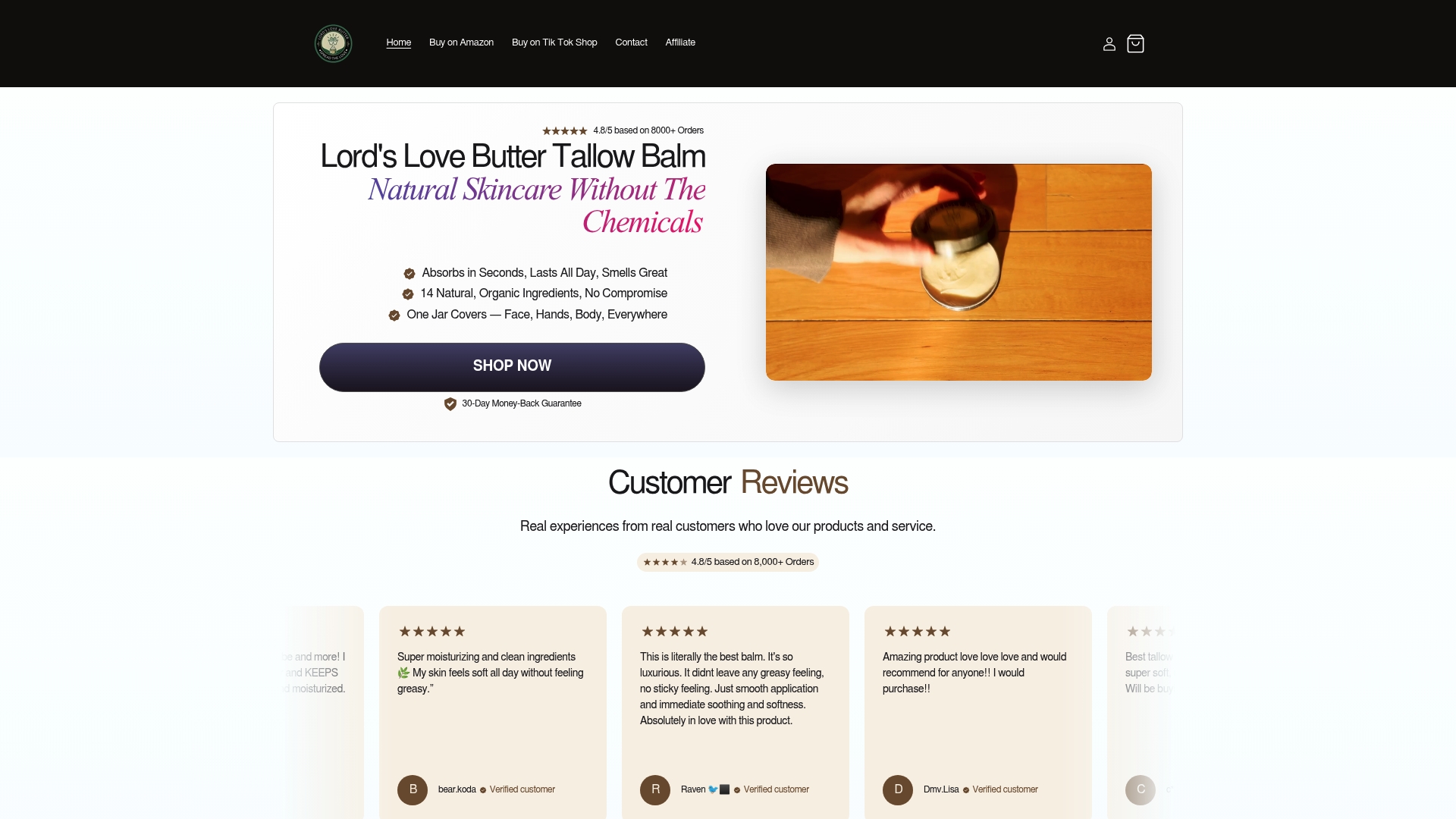
The Whipped Beef Tallow Balm from Lordslovebutter is crafted from grass-fed beef tallow and Manuka honey, with no synthetic chemicals. It works as a face moisturizer, body balm, and targeted treatment for dry or inflamed areas, including skin affected by eczema or psoriasis. Customers report improved skin texture within days. Lordslovebutter is a veteran-owned business that puts ingredient integrity first, and the formula reflects that commitment. If you want a real-world example of minimal ingredient skincare done right, this is a practical place to start.
FAQ
What is a minimal ingredient moisturizer?
A minimal ingredient moisturizer is a skincare product formulated with a small number of essential ingredients, typically under fifteen, designed to hydrate and protect skin without unnecessary additives or fillers.
Are minimal moisturizers effective for dry skin?
Yes. Formulas containing glycerin, urea, and petrolatum deliver clinically measurable hydration and barrier repair, often outperforming complex products with far longer ingredient lists.
Why are simple moisturizers better for sensitive skin?
Fewer ingredients mean fewer opportunities for irritation or allergic reaction. Dermatologists recommend minimal formulas for sensitive, reactive, or compromised skin because they reduce sensitization risk while still delivering effective hydration.
Can a minimal moisturizer replace multiple skincare products?
A well-formulated balm or butter can serve as a face moisturizer, hand cream, and lip treatment simultaneously, reducing both chemical exposure and routine cost.
Is mineral oil safe in a minimal moisturizer?
Mineral oil is inert, non-comedogenic at cosmetic grade, and one of the safest occlusive ingredients available for sensitive or inflamed skin. The comedogenicity concern comes from industrial-grade mineral oil, not the purified version used in skincare products.

