
Fewer ingredients in skincare products directly lower your risk of irritation and give your skin’s natural barrier the space it needs to function properly. This principle, known in dermatology as “skinimalism” or minimalist skincare, is backed by clinical evidence showing that simpler formulas improve tolerance and reduce sensitization for all skin types. Dermatologists like Dr. Sharma consistently point to ingredient overload as a primary driver of chronic skin inflammation. Understanding why fewer ingredients mean better skin outcomes is the first step toward building a routine that actually works.
Why fewer ingredients are better for your skin
The core reason fewer ingredients benefit skin is simple: every ingredient you add to a formula is another potential trigger for an adverse reaction. Preservatives, synthetic fragrances, emulsifiers, and even some active compounds each carry a sensitization risk. When you stack ten or twelve of them in a single product, or layer five products on top of each other, the cumulative exposure adds up fast.
Clinical data confirms this directly. Each added ingredient increases the likelihood of sensitization, meaning your skin becomes reactive not because it is inherently fragile, but because it is overwhelmed. This is especially true for people managing eczema, rosacea, or psoriasis, where the skin barrier is already compromised and has less tolerance for chemical load.

Minimalist skincare also improves compliance. Research shows that simpler routines improve adherence to topical treatments, which translates directly to better outcomes. A routine you actually stick to beats a ten-step regimen you abandon after two weeks.
Here is what ingredient overload typically triggers:
- Contact dermatitis from preservatives like methylisothiazolinone or formaldehyde-releasing agents
- Fragrance sensitization, one of the most common causes of allergic skin reactions
- Barrier disruption from surfactants and alcohol-based toners used in excess
- Rebound oiliness or dryness when the skin’s natural regulation is constantly interrupted
Pro Tip: When your skin flares up, strip your routine back to three products maximum: a gentle cleanser, a fragrance-free moisturizer, and sunscreen. This approach isolates the irritant faster than any patch test.
What does a minimalist skincare routine actually look like?
A minimalist routine is not about doing less for the sake of it. It is about choosing each product with a specific, defensible purpose. The core minimalist routine recommended by dermatologists includes four components: a gentle pH-balanced cleanser at approximately pH 5.5, one targeted active ingredient, a simple moisturizer, and a broad-spectrum sunscreen.
The pH 5.5 cleanser matters because your skin’s acid mantle sits at roughly the same level. Using a cleanser that is too alkaline, like many traditional bar soaps, disrupts this balance and weakens the barrier before you have even applied anything else. Brands like CeraVe and La Roche-Posay have built their reputations on this principle, formulating cleansers that clean without stripping.
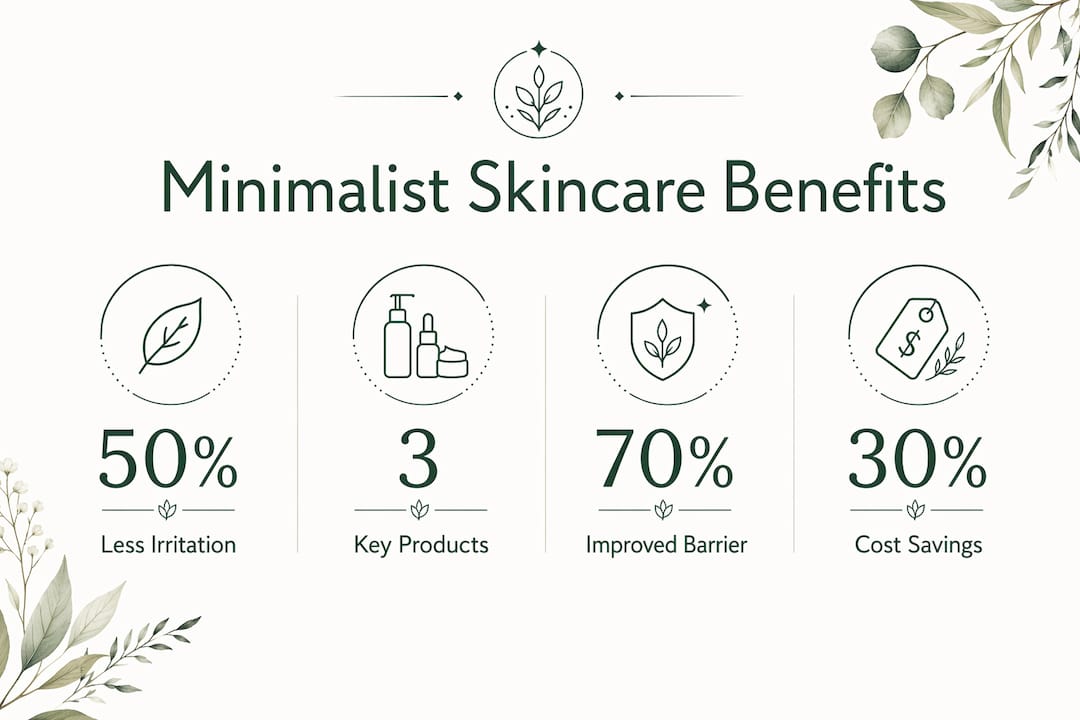
Layering six or more products compounds the problem. Complex routines cause barrier dysfunction by overwhelming the skin’s repair mechanisms and introducing competing chemical interactions. The skin cannot process unlimited inputs simultaneously, and the excess does not just wash off. It sits on the surface and contributes to low-grade inflammation.
| Routine Type | Products Used | Average Ingredient Count | Irritation Risk |
|---|---|---|---|
| Minimalist (3-4 products) | Cleanser, moisturizer, SPF | 15-30 total | Low |
| Moderate (5-6 products) | Above plus serum and toner | 40-70 total | Moderate |
| Complex (8+ products) | Multiple actives, masks, mists | 100+ total | High |
The table above illustrates why the importance of fewer ingredients is not abstract. The ingredient count compounds with every product you add, and so does your exposure risk.
How do ingredient interactions affect what your skin actually absorbs?
Your skin has a finite absorption capacity, and most people dramatically overestimate how much it can take in at once. Over-layering leaves unused chemicals sitting on the skin’s surface, where they create what dermatologists describe as “background noise,” a state of chronic low-level inflammation that undermines the benefits of every product in your routine.
Active ingredients suffer the most from this dynamic. Vitamin C, for example, is pH-sensitive and degrades quickly when it contacts alkaline compounds. Retinoids lose efficacy when layered with certain AHAs, and the combination also increases peeling and irritation beyond what either ingredient would cause alone. The idea that more actives equal more results is one of the most persistent and damaging myths in skincare.
The key conflicts to watch for include:
- Retinoids and AHAs/BHAs used together, which accelerates skin cell turnover beyond the skin’s recovery rate
- Vitamin C and niacinamide in high concentrations, which can reduce the efficacy of both
- Multiple exfoliants in the same routine, which strips the barrier faster than it can rebuild
- Alcohol-based products layered under occlusive moisturizers, which traps irritants against the skin
Pro Tip: If you use more than one active ingredient, apply them on alternating nights rather than stacking them. Your skin gets the benefit of each without the compounding irritation.
What are the benefits of choosing quality over quantity in skincare?
Minimalist formulation is intentional design, not a shortcut. The best simple skincare products are built around multi-tasking ingredients that deliver multiple benefits without requiring additional products. Niacinamide addresses hyperpigmentation, regulates sebum, and strengthens the skin barrier simultaneously. Ceramides restore the lipid matrix that holds skin cells together. Hyaluronic acid draws moisture into the skin at multiple molecular weights.
Multi-tasking ingredients like niacinamide, ceramides, and hyaluronic acid reduce the number of products you need without sacrificing results. A single well-formulated moisturizer containing all three can replace a serum, a barrier cream, and a hydrating toner. That consolidation cuts your ingredient exposure by half while delivering the same or better outcomes.
There is also a financial and environmental argument. Minimalist skincare saves money and reduces packaging waste without compromising effectiveness. Spending more on one high-quality product beats spending the same amount across four mediocre ones. The whole-body moisturizer approach takes this further, using a single product from face to feet and eliminating the need for separate body lotions, hand creams, and facial moisturizers entirely.
| Ingredient | Primary Benefit | Secondary Benefit | Products It Can Replace |
|---|---|---|---|
| Niacinamide | Brightening | Barrier repair | Serum + toner |
| Ceramides | Barrier restoration | Moisture retention | Barrier cream + moisturizer |
| Hyaluronic acid | Deep hydration | Plumping | Hydrating serum + essence |
| Grass-fed tallow | Moisture and barrier support | Anti-inflammatory | Body lotion + face cream |
What common mistakes do people make with too many skincare ingredients?
The most damaging mistake is frequent product switching. When you change products every few weeks because you are not seeing instant results, your skin never stabilizes. Frequent switching increases sensitivity and reduces the skin’s moisture retention capacity, creating a cycle where you keep buying new products to fix problems the previous products caused.
Over-exfoliation is the second most common error. Physical scrubs, chemical exfoliants like glycolic acid, and enzyme masks all remove the outer layer of skin cells. Used once or twice a week, they improve texture and clarity. Used daily or in combination, they strip the barrier faster than it regenerates, leading to redness, tightness, and breakouts that look like acne but are actually barrier damage.
Redundant products like unnecessary toners and eye creams add complexity and cost without clinical justification. Facial mists, non-active toners, and most eye creams have limited evidence supporting their unique benefits. The skin around your eyes responds to the same moisturizing ingredients as the rest of your face. A separate eye cream is rarely necessary unless it contains a specific active like retinol at a concentration your regular moisturizer does not.
Complex routines are often driven by marketing rather than clinical necessity. The beauty industry profits from complexity. Simpler, targeted routines respect your skin’s biological limits and your budget.
Pro Tip: Before adding any new product, ask yourself one question: what specific, measurable problem does this solve that my current routine does not? If you cannot answer that clearly, the product does not earn a place in your routine.
Key takeaways
Fewer ingredients in skincare reduce irritation, support barrier recovery, and improve long-term skin health more reliably than complex, multi-product routines.
| Point | Details |
|---|---|
| Fewer ingredients reduce irritation | Each added ingredient raises sensitization risk; simpler formulas lower cumulative exposure. |
| Minimalist routines improve compliance | Easier routines are followed consistently, which produces better results over time. |
| Ingredient interactions reduce efficacy | Retinoids, AHAs, and vitamin C can conflict when layered, reducing benefits and increasing irritation. |
| Multi-tasking ingredients replace multiple products | Niacinamide, ceramides, and hyaluronic acid each address several skin concerns in one formula. |
| Frequent switching destabilizes skin | Constantly changing products prevents the skin from stabilizing its barrier and moisture balance. |
Why I think the skincare industry has overcomplicated something simple
I have watched people spend hundreds of dollars on ten-step routines and end up with worse skin than when they started. The pattern is consistent: they add a new product, their skin reacts, they add another product to fix the reaction, and the cycle compounds. What they needed from the beginning was less, not more.
The skin’s natural barrier is genuinely capable of regulating itself when you stop overwhelming it. I have seen people with chronic redness and breakouts clear their skin in three weeks by doing nothing more than switching to a gentle cleanser, a fragrance-free moisturizer, and an SPF. No serums. No actives. Just space for the skin to reset.
The skinimalism movement is not a trend. It is a correction. Dermatologists have been saying this for years, but the marketing machine is loud. When you look at the pH balance research and the clinical data on barrier function, the conclusion is the same every time: targeted, purposeful products outperform complex regimens for the vast majority of people.
My honest advice is to cut your routine in half and give your skin 30 days to respond. You will likely spend less money, experience fewer flare-ups, and understand your skin better because you can actually identify what is working. Simplicity is not a compromise. It is the strategy.
— Michael
Lordslovebutter: minimalist skincare that actually delivers
If you have been looking for a product that embodies everything discussed in this article, Lordslovebutter is worth your attention.
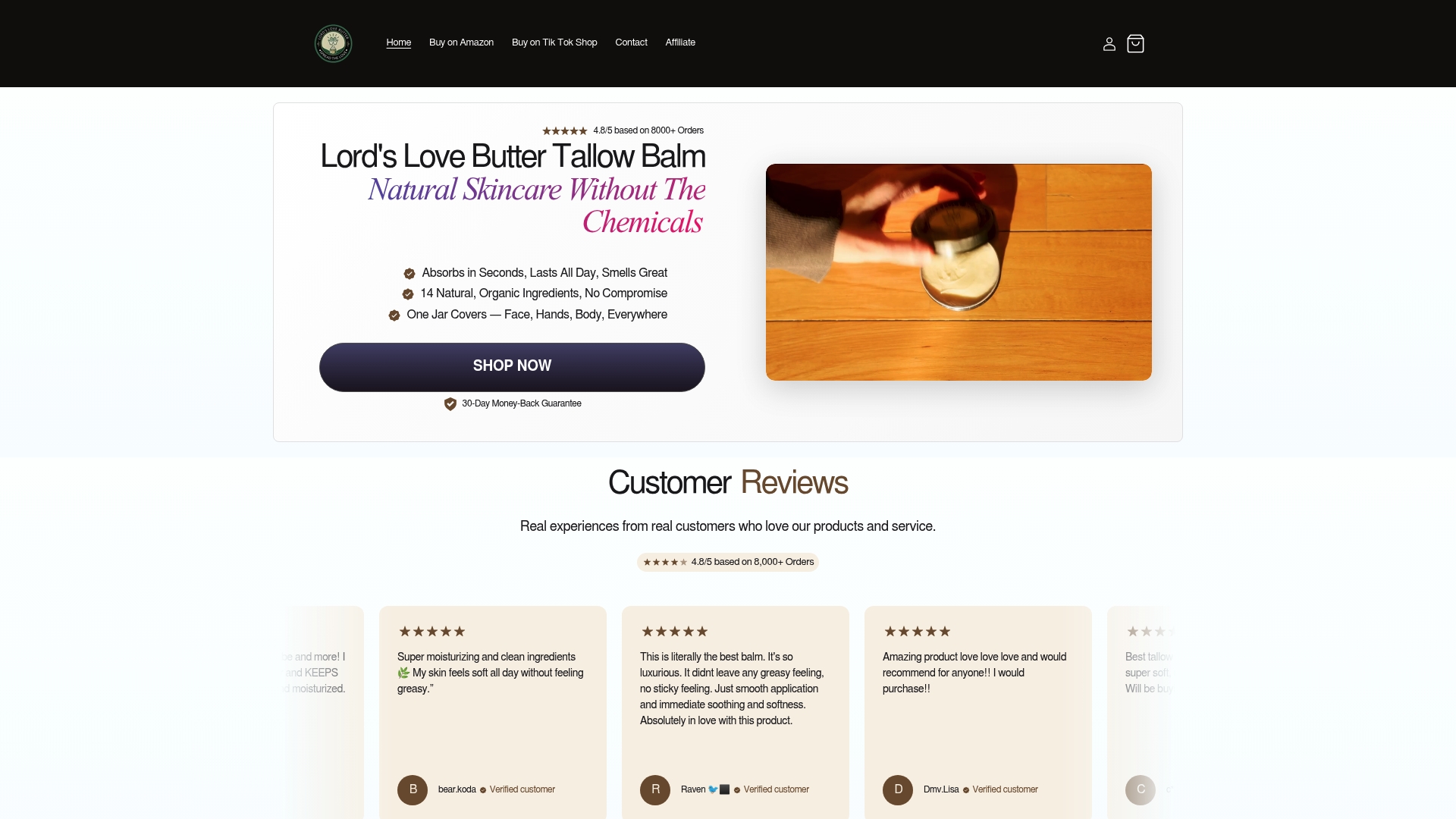
Lordslovebutter’s Whipped Beef Tallow Balm with Manuka Honey is built on the exact principle that fewer, better ingredients produce better skin. Grass-fed beef tallow closely mirrors the skin’s natural lipid profile, supporting barrier repair without synthetic additives. Manuka honey adds antimicrobial and humectant properties in a single ingredient. No parabens, no synthetic fragrances, no unnecessary fillers. Customers with eczema and psoriasis report improved texture within days, which is exactly what you expect when you stop overwhelming the skin and start supporting it. Lordslovebutter is a veteran-owned brand that puts ingredient integrity first, and it shows.
FAQ
Why do fewer ingredients reduce skin irritation?
Each ingredient in a skincare product carries a sensitization risk. Fewer ingredients mean lower cumulative exposure, which directly reduces the likelihood of allergic reactions and contact dermatitis.
What is the best simple skincare routine for sensitive skin?
A gentle pH-balanced cleanser at approximately pH 5.5, a fragrance-free moisturizer with ceramides or hyaluronic acid, and a broad-spectrum SPF covers the core needs of most sensitive skin types without unnecessary complexity.
Can layering skincare products reduce their effectiveness?
Yes. The skin has a limited absorption capacity, and over-layering leaves unused chemicals on the surface that promote chronic low-level inflammation and reduce the efficacy of active ingredients.
Is a minimalist skincare routine suitable for aging skin?
Minimalist routines work well for aging skin when they include one targeted active like retinol or a peptide complex. Adding multiple actives simultaneously increases irritation without proportionally increasing results.
How long does it take to see results from a simpler skincare routine?
Most people notice reduced redness and improved texture within two to four weeks of simplifying their routine, as the skin’s barrier stabilizes and its natural repair processes resume without constant chemical interference.