

Clean Skincare Ingredient Checklist for Adults: 2026 Guide
A clean skincare ingredient checklist for adults is defined as a curated list of clinically proven, non-toxic ingredients that support skin health without causing harm or irritation. Dermatologists recommend four core pillars for adult skin: retinoids, vitamin C (L-ascorbic acid), niacinamide, and broad-spectrum SPF 30+. These four ingredients address the most common adult skin concerns, from collagen loss to UV damage. The term “clean beauty” is unregulated, so adults need a practical, evidence-based framework rather than marketing labels. This guide gives you exactly that.
1. What are the four essential clean skincare ingredients for adults?
Dermatologists recommend four core ingredients as the foundation of any adult skincare routine: retinoids, vitamin C, niacinamide, and broad-spectrum sunscreen. These are not trends. They are backed by decades of clinical research and represent the strongest evidence base in adult skincare.
- Retinoids stimulate collagen production and accelerate cell turnover. They reduce fine lines, improve skin texture, and fade dark spots. Start with a low concentration (0.025%–0.05% retinol) and increase gradually to avoid irritation.
- Vitamin C (L-ascorbic acid) neutralizes free radicals and brightens uneven skin tone. The most effective concentration range is 10%–20%. Vitamin C is unstable, so look for formulas in opaque or airless packaging.
- Niacinamide strengthens the skin barrier, reduces redness, and fades hyperpigmentation. Niacinamide is effective at 2%–5%, making it one of the most accessible and well-tolerated actives on the market.
- Broad-spectrum SPF 30+ is non-negotiable. UV exposure causes up to 80% of visible aging. Daily sunscreen use is the single most effective anti-aging step available.
Pro Tip: Apply vitamin C in the morning, retinoids at night, and niacinamide in either routine. Layering them at the wrong time reduces efficacy and increases irritation risk.
The four pillars for adult skincare outperform trending alternatives because they address root causes of skin aging rather than surface symptoms. Adults who build around these four ingredients first see faster, more consistent results.

2. Which ingredients support hydration, barrier repair, and gentle exfoliation?
Beyond the four pillars, a complete adult skincare essentials list includes humectants, emollients, ceramides, and exfoliating acids. These ingredients work alongside the core four to maintain moisture, restore the skin barrier, and improve texture.
- Humectants draw water into the skin. Glycerin, hyaluronic acid, and aloe vera are the most effective and well-tolerated options. Hyaluronic acid works best in humid environments or when applied to damp skin.
- Emollient oils and butters soften skin and reduce surface roughness. Squalane (derived from olives or sugarcane) and jojoba oil mimic the skin’s natural sebum. Grass-fed beef tallow, the base of Lordslovebutter’s whipped balm, is a traditional emollient rich in fatty acids that closely match human skin lipids.
- Ceramides restore the skin barrier by filling gaps between skin cells. Adults with eczema, psoriasis, or chronically dry skin benefit most from ceramide-rich formulas.
- Alpha hydroxy acids (AHAs) like lactic acid and glycolic acid exfoliate by loosening bonds between surface skin cells. They improve skin tone and texture over time. AHAs increase sun sensitivity, so daily sunscreen is mandatory when using them.
Pro Tip: If you use an AHA exfoliant, apply it at night only and follow with a ceramide moisturizer to reduce post-exfoliation dryness.
Skin type determines which of these ingredients belong in your routine. Oily skin benefits from lightweight humectants like glycerin. Dry or mature skin needs richer emollients and ceramides. Sensitive skin should start with lactic acid (gentler than glycolic) before advancing to stronger AHAs.
3. How to identify and avoid harmful or irritating ingredients
Reading a skincare ingredient list is a skill. The first 5–10 ingredients tell you the formula base and account for the majority of the product’s composition. Ingredients are listed in descending order of concentration down to the 1% threshold. Below that threshold, order is not regulated.
Common irritants to watch for:
- Synthetic fragrances are the leading cause of contact dermatitis in skincare. They appear on labels as “fragrance,” “parfum,” or “aroma.”
- Essential oils like lavender, peppermint, and citrus oils are natural but frequently cause skin irritation and allergies. Natural does not mean safe.
- Botanical extracts vary widely in quality and concentration. Some are beneficial; others are filler or potential allergens.
- Comedogenic oils like coconut oil and cocoa butter clog pores in acne-prone adults. Check comedogenicity ratings before using any new oil.
- Certain preservatives like methylisothiazolinone (MI) are known sensitizers and appear in rinse-off and leave-on products alike.
How to audit a product label in four steps:
- Read the first five ingredients. These form the base of the formula.
- Check the list against EWG’s Skin Deep database or Credo’s restricted substances list.
- Look for fragrance or parfum anywhere in the list, not just at the top.
- Search for any ingredient you do not recognize before applying the product to your face.
Patch testing new products prevents contact dermatitis. Apply the product to your inner forearm or behind the ear for 24–48 hours before using it on your face. This step is especially critical for botanically rich or fragranced formulas.
Pro Tip: A ‘clean’ label does not guarantee safety. A clean ingredient can still irritate depending on dose, product form, and your individual skin type.
4. Why “natural” vs. “synthetic” is the wrong question to ask
The natural versus synthetic debate misses the point entirely. Synthetic ingredients like peptides and niacinamide are often more stable and effective than raw botanicals, which vary in potency by season and source. Lab-created ingredients deliver consistency and measurable concentration. Raw plant extracts do not.
The right question is: does this ingredient have clinical evidence behind it? Retinol is synthetic. It works. Poison ivy is natural. It does not belong on your face. The origin of an ingredient matters far less than its safety profile and evidence base.
Ingredient concentration order does not always reflect efficacy. Potent actives like retinol or niacinamide can appear lower on a list yet remain highly effective at small percentages. The first 5–7 ingredients usually form the base (water, glycerin, emollients). Actives often follow. Do not dismiss a product because an active appears in the middle of the list.
The term “clean” is unregulated in the United States. Brands can use it freely without meeting any verified standard. Rely instead on third-party verified lists like EWG’s Skin Deep or Credo’s restricted substances list when evaluating products. These provide a consistent, science-backed benchmark that marketing language cannot match.
5. How to build a clean skincare routine using this checklist
A simple, consistent routine built around the four core ingredients outperforms complex multi-step routines in both safety and efficacy. Fewer products mean fewer potential irritants and better compliance. Adults who use six or more products daily increase their exposure to potential allergens with each additional formula.
Use this table to match ingredient types to their roles, benefits, and key cautions:
| Ingredient type | Primary role | Key benefit | Main caution |
|---|---|---|---|
| Retinoids | Cell turnover | Reduces fine lines and dark spots | Start low; causes initial dryness |
| Vitamin C (L-ascorbic acid) | Antioxidant protection | Brightens and evens skin tone | Unstable; use opaque packaging |
| Niacinamide | Barrier support | Reduces redness and hyperpigmentation | Avoid very high concentrations with vitamin C |
| Broad-spectrum SPF 30+ | UV protection | Prevents up to 80% of visible aging | Reapply every two hours outdoors |
| Humectants (glycerin, hyaluronic acid) | Hydration | Draws water into skin | Apply to damp skin for best results |
| Ceramides | Barrier repair | Restores skin integrity | Best for dry, sensitive, or compromised skin |
| AHAs (lactic, glycolic acid) | Exfoliation | Improves texture and tone | Increases sun sensitivity; use at night |
| Emollient oils and butters | Softening | Reduces roughness and seals moisture | Check comedogenicity for acne-prone skin |
When building your routine, prioritize fewer ingredients for better results. Start with cleanser, moisturizer, and SPF. Add one active at a time, spaced two to four weeks apart. This approach lets you identify what works and what causes irritation without guessing.
Adults with sensitive skin should minimize their ingredient list and avoid layering multiple actives until their skin barrier is stable. Patch test every new product before full use, regardless of how “clean” the label claims to be.
Key takeaways
A clean skincare ingredient checklist for adults works best when it centers on four clinically proven pillars and eliminates unproven or irritating ingredients regardless of their natural or synthetic origin.
| Point | Details |
|---|---|
| Four core pillars | Retinoids, vitamin C, niacinamide, and SPF 30+ form the evidence-based foundation. |
| Read the first 10 ingredients | The formula base and primary actives appear in the first 5–10 listed ingredients. |
| “Clean” is unregulated | Use EWG Skin Deep or Credo lists to verify safety claims independently. |
| Patch test every new product | Apply to inner forearm for 24–48 hours before using on your face. |
| Simpler routines win | Fewer products reduce irritation risk and improve long-term compliance. |
What I’ve learned after years of watching adults navigate clean beauty
The clean beauty space rewards skeptics. I have watched adults spend hundreds of dollars on botanically rich, “all-natural” formulas only to develop contact dermatitis from lavender oil or citrus extract. The irony is consistent. The products marketed most aggressively as “safe” and “gentle” often contain the highest concentration of known irritants.
The adults who get the best results share one habit: they read labels before they read reviews. They cross-reference ingredients against EWG’s Skin Deep database. They patch test. They add one new product at a time. They do not chase trends.
The four pillars, retinoids, vitamin C, niacinamide, and sunscreen, are not exciting. They do not come in beautiful packaging with poetic ingredient stories. But they work. The clinical evidence is not ambiguous. Adults who build their routine around these four ingredients and resist the urge to add more see real, measurable improvement in skin texture, tone, and resilience.
My honest advice: treat your skincare routine like a controlled experiment. Change one variable at a time. Give each new ingredient six to eight weeks before judging it. And remember that a shorter ingredient list is almost always a sign of a more thoughtful formula, not a cheaper one.
— Michael
Lordslovebutter: a clean, minimal skincare option worth knowing
Adults who want to simplify their routine without sacrificing skin health have a strong option in Lordslovebutter. The brand’s whipped beef tallow balm uses grass-fed tallow as its primary emollient, a single-origin ingredient with a fatty acid profile that closely mirrors human skin lipids.
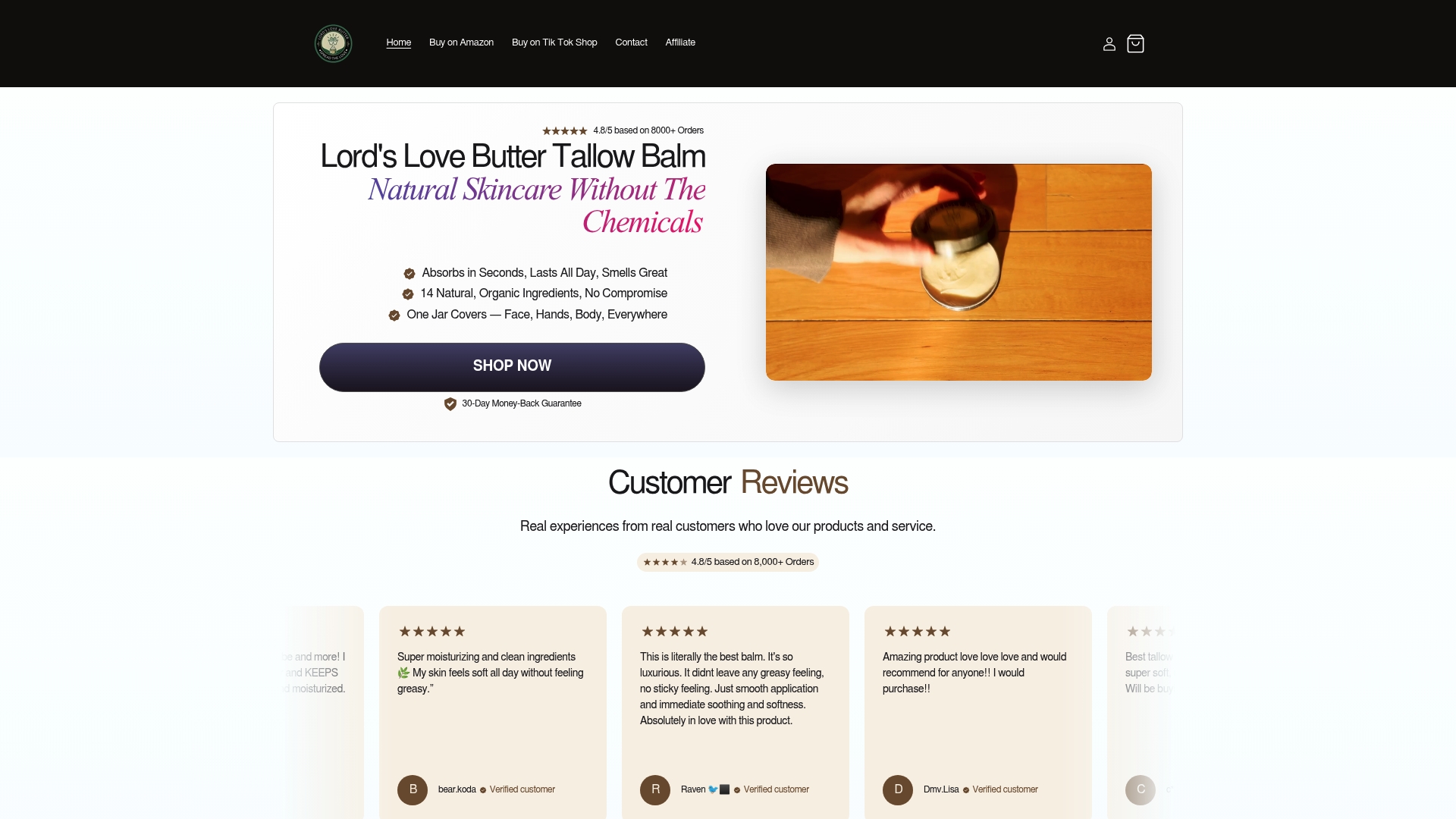
The formula is free from synthetic fragrances, preservatives, and filler ingredients. That minimal approach aligns directly with the clean skincare principles covered here. Lordslovebutter’s whipped tallow balm is designed for whole-body use and works particularly well for adults managing eczema, psoriasis, or chronically dry skin. Customers report improved skin texture within days. For adults who want a chemical-free balm with a transparent ingredient list, this is a practical starting point.
FAQ
What does “clean skincare” actually mean?
“Clean skincare” is an unregulated marketing term with no legal definition in the United States. Consumers should verify product safety using third-party standards like EWG’s Skin Deep database or Credo’s restricted substances list rather than relying on label claims.
Which four ingredients do dermatologists recommend for adult skin?
Dermatologists consistently recommend retinoids, vitamin C (L-ascorbic acid), niacinamide, and broad-spectrum SPF 30+ as the core of an adult skincare routine. These four ingredients address collagen loss, UV damage, hyperpigmentation, and barrier function.
Are natural skincare ingredients safer than synthetic ones?
Natural ingredients are not automatically safer than synthetic ones. Fragrances, essential oils, and botanical extracts frequently cause irritation and allergic reactions despite being plant-derived. Efficacy and safety depend on the ingredient’s evidence base, concentration, and formula type.
How do I read a skincare ingredient list correctly?
Ingredients are listed in descending order of concentration down to the 1% threshold. The first 5–10 ingredients form the formula base. Actives may appear lower on the list but remain effective at small percentages. Check any unfamiliar ingredient against EWG’s Skin Deep before use.
How do I patch test a new skincare product?
Apply a small amount of the product to your inner forearm or behind the ear and leave it for 24–48 hours without washing. If no redness, itching, or swelling appears, the product is likely safe for facial use.

