

Best Aging Skin Texture Improvement Ingredients in 2026
Aging skin texture improvement ingredients are skincare actives scientifically proven to smooth, firm, and renew skin by stimulating collagen production, accelerating cell turnover, and reinforcing the skin barrier. The most effective options include retinoids, niacinamide, vitamin C, alpha hydroxy acids, peptides, and hyaluronic acid. Brands like Medik8, SkinCeuticals, and Cosmedica Skincare have built entire product lines around these clinically validated actives. Whether you are 35 and noticing the first signs of roughness or 55 and looking to restore firmness, the right ingredient choices make a measurable difference. This guide breaks down exactly what each active does, how to use it, and what the research actually shows.
1. Retinoids: the gold standard for aging skin texture
Retinoids are vitamin A derivatives that stimulate collagen and elastic fiber production while accelerating cell turnover, producing significant improvements in fine lines, wrinkles, and overall skin texture. A 2025 Delphi consensus ranked retinoids as the top anti-aging ingredient category across dermatology. No other topical active has a longer or stronger clinical track record for texture renewal.
The most potent prescription form is tretinoin, but over-the-counter retinol delivers real results at lower concentrations with a gentler adjustment curve. The key challenge is the retinization phase, a period of redness, dryness, and flaking that occurs as skin adapts. Managing retinization requires gradual dose escalation and consistent moisturizer use alongside the retinoid.
- Start with retinol 0.025% to 0.05% two nights per week
- Increase frequency only after four weeks of tolerance
- Apply to dry skin to reduce irritation intensity
- Always follow with a barrier-supporting moisturizer
- Expect visible texture improvements after 8 to 12 weeks of consistent use
Bakuchiol is the most credible plant-based alternative for those who cannot tolerate retinoids. It activates similar skin receptors with significantly less irritation, making it a practical option for sensitive skin types.
Pro Tip: Apply retinol on top of a thin layer of plain moisturizer, a technique called buffering, to cut irritation without sacrificing efficacy. This works especially well during the first month of use.
2. Niacinamide: the barrier-building multi-tasker
Niacinamide, the active form of vitamin B3, reduces inflammation, strengthens the skin barrier, and enhances collagen production for better texture and tone. Clinical trials confirm it improves hydration, reduces redness, and brightens uneven pigmentation simultaneously. That combination of benefits in a single, well-tolerated ingredient is rare.
The standard effective concentration is 5% to 10%. Cosmedica Skincare’s 10% Niacinamide + Zinc serum is a widely used example of this concentration range in a lightweight, daily-use format. Niacinamide is also uniquely compatible with nearly every other active in a routine, including retinoids and acids, making it a reliable supporting player.
- Use 5% to 10% niacinamide morning or evening
- Apply after cleansing and before heavier moisturizers
- Pair with retinoids at night to counteract dryness and irritation
- Pair with vitamin C in the morning to support antioxidant defense and barrier health
- Suitable for oily, dry, and sensitive skin types without adjustment periods
For anyone dealing with a compromised barrier from overusing stronger actives, niacinamide is the fastest route back to stable, smooth skin.
3. Vitamin C: collagen’s structural cofactor
Vitamin C is more than a brightening agent. It acts as a cofactor for enzymes that stabilize and cross-link collagen fibers, directly supporting skin firmness and texture improvement. Without adequate vitamin C, newly synthesized collagen fibers cannot form properly. That makes it a structural necessity, not just an antioxidant bonus.
L-ascorbic acid is the most bioavailable form and the most studied. Concentrations between 10% and 20% deliver the strongest results, though they also carry the highest risk of irritation on sensitive skin. Stabilized derivatives like ascorbyl glucoside and sodium ascorbyl phosphate are gentler options that still deliver measurable collagen support.
- Apply vitamin C serum every morning before sunscreen
- Store in a dark, cool location to prevent oxidation
- Look for formulas with a pH below 3.5 for maximum L-ascorbic acid absorption
- Do not combine with retinoids in the same application step
- Pair with vitamin E and ferulic acid for enhanced antioxidant stability
Pro Tip: If your vitamin C serum has turned orange or brown, it has oxidized and lost most of its efficacy. Discard it and replace with a fresh bottle. Airtight, opaque packaging is worth the premium.
Daily broad-spectrum sunscreen SPF 30+ prevents up to 80% of visible UV-induced aging, and vitamin C amplifies that protection by neutralizing free radicals that sunscreen alone cannot block.
4. Alpha hydroxy acids and peptides: exfoliation meets collagen signaling
Alpha hydroxy acids (AHAs) and peptides address aging skin texture from two different angles. AHAs dissolve the bonds holding dead skin cells together, accelerating surface renewal. Peptides send biochemical signals that prompt the skin to produce more collagen from within.
Glycolic acid at approximately 10% concentration is the most effective AHA for reducing skin roughness and promoting cell renewal, according to a 2025 meta-analysis of randomized controlled trials. Glycolic acid has the smallest molecular size of all AHAs, allowing it to penetrate more deeply and work faster. Lactic acid is a gentler alternative that also delivers hydration alongside exfoliation.
Peptides work on a longer timeline but with no irritation risk. Peptides signal collagen synthesis and support skin structure, with clinical studies showing firmness and texture improvements over 8 to 12 weeks. Copper peptides additionally promote wound healing and tissue repair.
| Ingredient | Primary action | Best for | Timeline |
|---|---|---|---|
| Glycolic acid 10% | Surface exfoliation, cell renewal | Rough texture, dullness | 4 to 6 weeks |
| Lactic acid 5% to 10% | Gentle exfoliation, hydration | Sensitive or dry skin | 4 to 8 weeks |
| Matrixyl (Palmitoyl Pentapeptide-4) | Collagen signaling | Firmness, fine lines | 8 to 12 weeks |
| Copper peptides | Collagen and elastin support | Texture, wound repair | 8 to 12 weeks |
Do not combine AHAs with retinoids in the same application step. Both are effective, but using them together increases the risk of barrier disruption. Alternate nights or use AHAs in the morning and retinoids at night.
5. Hyaluronic acid and oral supplements: hydration inside and out
Hyaluronic acid (HA) is the skin’s primary water-binding molecule, capable of holding up to 1,000 times its weight in water. Topical HA serums plump the skin surface, temporarily reducing the appearance of fine lines and rough texture. The effect is immediate but requires consistent daily use to maintain.
A serum containing 0.1% biomimetic collagen tripeptide (Tripeptide-29) improved skin texture by 36.8% and reduced dryness by 93.7% after four weeks in a clinical study of 47 women aged 36 to 65. That level of dryness reduction in four weeks reflects how powerfully barrier-supporting peptides and hydrating actives work together.
Oral supplementation is an emerging and underutilized strategy. Daily oral piceatannol for 8 weeks significantly increased skin hydration and reduced wrinkle severity in a randomized, double-blind, placebo-controlled trial with 82 participants. Piceatannol is a stilbenoid found in passion fruit seeds, and its systemic hydration effect complements topical routines in a way that no single serum can replicate.
Ceramides are another hydration-layer essential. They make up roughly 50% of the skin’s lipid barrier and decline with age. Topical ceramide moisturizers from brands like CeraVe restore this barrier, reducing transepidermal water loss and keeping active ingredients working more effectively.
6. Sunscreen: the non-negotiable texture protector
Sunscreen is not a treatment ingredient, but it is the single highest-impact intervention for preserving the results of every other active you use. Daily SPF 30+ prevents up to 80% of visible UV-induced skin aging. Skipping sunscreen while using retinoids or vitamin C is like repainting a wall while leaving the roof leaking.
UV radiation degrades collagen and elastin fibers directly, undoing the structural improvements that retinoids and peptides work to build. Mineral sunscreens with zinc oxide or titanium dioxide are the most stable options and are well tolerated by sensitive skin. Chemical filters like avobenzone offer lighter textures but require more careful formulation to remain stable.
Apply sunscreen as the final step in your morning routine, after vitamin C serum and moisturizer. Reapply every two hours during sun exposure. No other step in an anti-aging routine delivers a better return on investment for preserving skin texture long term.
Key takeaways
The most effective strategy for improving aging skin texture combines retinoids for collagen stimulation, niacinamide for barrier repair, vitamin C for structural collagen support, AHAs for surface renewal, and daily sunscreen to protect every gain.
| Point | Details |
|---|---|
| Retinoids lead the evidence | Retinoids are the most clinically proven actives for collagen stimulation and texture renewal. |
| Introduce actives gradually | Adding one active at a time prevents barrier disruption and lets you identify what works. |
| Layer strategically | Apply vitamin C in the morning and retinoids at night to maximize efficacy and minimize irritation. |
| Oral supplements add a new dimension | Piceatannol supplementation improves hydration and reduces wrinkles from within, complementing topical routines. |
| Consistency drives results | Retinoids and AHAs require 8 to 12 weeks of regular use before visible texture improvements appear. |
What I’ve learned about realistic expectations with these ingredients
I have spent years watching people load up on every trending active at once and then quit after three weeks because their skin was red and peeling. The ingredients in this article work. The problem is almost never the ingredient. It is the impatience and the overloading.
Retinoids take time. Peptides take time. Even glycolic acid needs a few weeks before the surface renewal becomes visible. The readers who see the best results are the ones who pick two or three actives, introduce them one at a time, and stick with the routine for at least three months before evaluating. That is not a marketing line. That is what the clinical timelines actually show.
The other mistake I see constantly is skipping barrier support. A compromised barrier makes every active ingredient more irritating and less effective. A simple ceramide moisturizer or a nourishing balm applied after actives is not optional. It is what keeps the routine sustainable. I have also found that people underestimate how much a clean, chemical-free moisturizer matters as the base layer. When the barrier is healthy, actives penetrate better and the skin responds faster.
Start simple. Build slowly. Protect what you build with sunscreen every single day. That is the entire strategy.
— Michael
A natural barrier base that works with your active routine
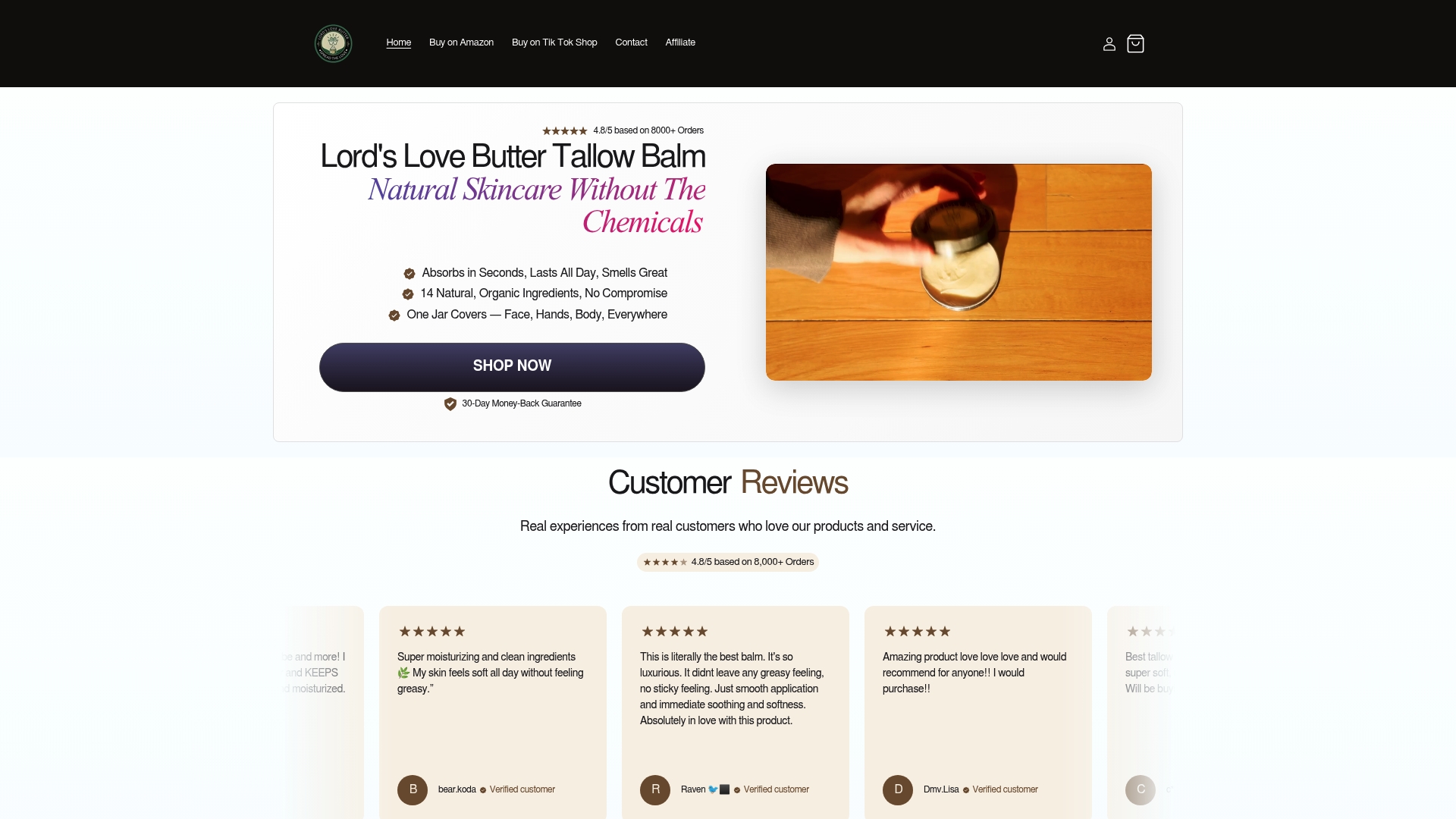
Active ingredients like retinoids and AHAs do the heavy lifting for texture renewal, but they also stress the skin barrier. That is where Lordslovebutter comes in. The Whipped Beef Tallow Balm with Manuka Honey uses grass-fed beef tallow and Manuka honey with zero synthetic additives, making it one of the cleanest barrier-support options available. Customers report noticeably softer skin within days, and the formula absorbs without a greasy finish. For a deeper look at how natural fats compare to conventional moisturizers, the tallow vs. argan oil breakdown on the Lordslovebutter blog is worth reading. If you are building a serious anti-aging routine, your moisturizer should never be the weak link.
FAQ
What are the best ingredients for aging skin texture?
Retinoids, niacinamide, vitamin C, glycolic acid, peptides, and hyaluronic acid are the most clinically supported ingredients for improving aging skin texture. Each targets a different mechanism, including collagen production, cell turnover, hydration, and barrier repair.
How long does it take to see results from anti-aging ingredients?
Most active ingredients require 8 to 12 weeks of consistent use before visible texture improvements appear. Hyaluronic acid provides immediate plumping, but structural changes from retinoids and peptides develop over months.
Can you use retinoids and vitamin C together?
Retinoids and vitamin C should not be applied in the same step. The standard approach is to apply vitamin C in the morning with sunscreen and retinoids at night, which maximizes the efficacy of both without increasing irritation risk.
What is piceatannol and does it improve skin texture?
Piceatannol is a natural compound found in passion fruit seeds. A randomized controlled trial with 82 participants found that daily oral piceatannol supplementation for 8 weeks significantly increased skin hydration and reduced wrinkle severity.
How do you build a skincare routine for aging skin without irritation?
Introduce one active ingredient at a time and support the skin barrier with a ceramide or tallow-based moisturizer throughout. Avoid combining retinoids, AHAs, and vitamin C in the same application step, and always finish your morning routine with SPF 30 or higher.

