


Harmful Skincare Chemicals to Avoid in 2026
Harmful skincare chemicals to avoid are substances found in everyday beauty products that cause toxicity, hormonal disruption, allergic reactions, or long-term organ damage. The FDA has identified over 50 PFAS types intentionally added to cosmetics, and the EU bans more than 1,400 cosmetic ingredients while the US restricts fewer than 20. That gap puts the responsibility squarely on you. Knowing which toxic skincare ingredients to watch for is the most direct way to protect your health, and this guide gives you exactly that knowledge.
1. Which harmful skincare chemicals to avoid most urgently
The industry term for this category is “cosmetic contaminants and restricted substances,” though most people simply call them toxic skincare ingredients. Five groups cause the most documented harm: PFAS, talc with asbestos contamination, mercury, parabens and phthalates, and formaldehyde-releasing preservatives. Each one appears in products sold legally in the US right now.
-
PFAS (“forever chemicals”): These synthetic compounds resist breaking down in the body or the environment. The FDA found 1,744 cosmetic products containing intentionally added PFAS across 51 individual types. Eye shadow and facial skincare products show the highest concentrations.
-
Talc with asbestos risk: Talc is a naturally occurring mineral that can be contaminated with asbestos during mining. Powder products carry a 62% higher asbestos risk than cream formulas and a 120% higher risk than liquids. That makes loose powders, dry shampoos, and baby powders the highest-risk formats.
-
Mercury: Skin-lightening creams are the most common source. One recalled product, Faiza Beauty Cream, contained mercury at 19,170 mg/kg, far above any safe threshold. Mercury absorbs through skin and causes irreversible neurological damage.
-
Parabens and phthalates: Parabens preserve products; phthalates fix fragrance. Both disrupt the endocrine system by mimicking estrogen. Reproductive harm and developmental risks in fetuses are the primary concerns.
-
Formaldehyde releasers: Preservatives like DMDM hydantoin and quaternium-15 slowly release formaldehyde over time. Formaldehyde is a known carcinogen and a leading cause of allergic contact dermatitis in skincare users.
Pro Tip: Scan the INCI (International Nomenclature of Cosmetic Ingredients) list on any product for the words “fluoro,” “PTFE,” or “perfluoro” to spot PFAS before you buy.
2. What are the specific health risks from these chemicals?

The risks are not theoretical. Each chemical group produces documented, measurable harm in the body.
| Chemical | Primary Health Risk | Exposure Route |
|---|---|---|
| PFAS | Immune suppression, cancer, fetal harm | Skin absorption, inhalation |
| Talc/asbestos | Lung disease, mesothelioma | Inhalation of powder particles |
| Mercury | Neurological damage, kidney failure | Skin absorption |
| Parabens/phthalates | Endocrine disruption, reproductive harm | Skin absorption |
| Formaldehyde releasers | Allergic contact dermatitis, sensitization | Skin contact |
PFAS accumulate in blood and tissue over years. Immune suppression, thyroid disruption, and elevated cancer risk are the most studied outcomes. Fetal exposure during pregnancy is especially dangerous because PFAS cross the placental barrier.
Asbestos from talc is inhaled, not absorbed through skin. Once asbestos fibers lodge in lung tissue, the body cannot remove them. The result, over years or decades, is mesothelioma or asbestosis. The 92% of powder products that scored high or critical risk in recent testing represent a real and ongoing exposure for daily makeup users.
Mercury causes kidney damage and neurological decline with repeated skin application. The Faiza Beauty Cream recall in february 2026 confirmed that dangerous products still reach consumers. Parabens and phthalates work more slowly, but long-term daily exposure near eyes and lips creates cumulative risk that compounds over a lifetime of use.
3. How to identify harmful chemicals in cosmetics on a label
Reading an ingredient label is a skill, and it takes about ten minutes to learn the basics. The payoff is significant.
Step 1: Check for PFAS keywords. Look for “fluoro,” “PTFE,” “perfluoro,” or “polyfluoro” anywhere in the INCI list. These terms always signal a PFAS compound, regardless of how the product is marketed.
Step 2: Decode fragrance listings. The word “fragrance” or “parfum” on a label is a legal catch-all. It can hide dozens of undisclosed phthalates. Fragrance labels mask phthalates that never appear by name. If a product lists “fragrance” without specifying individual components, treat it as a potential phthalate source.
Step 3: Recognize formaldehyde releasers. DMDM hydantoin, imidazolidinyl urea, diazolidinyl urea, and quaternium-15 all release formaldehyde slowly. None of them say “formaldehyde” on the label.
Step 4: Understand the limits of “clean” labels. Terms like “clean,” “natural,” and “non-toxic” carry no legal definition in the US. A product labeled clean can still contain PFAS, heavy metals, or asbestos-contaminated talc. Only certifications like EWG Verified and MADE SAFE require independent contaminant testing for asbestos and heavy metals. Most other certifications do not.
Step 5: Use databases carefully. The EWG Skin Deep database is a useful starting point for researching ingredients. However, app-based ingredient scores can reflect outdated data and lack context about concentration or formulation. Use them as a first filter, not a final verdict.
Pro Tip: When in doubt, choose products with shorter ingredient lists. Fewer ingredients mean fewer opportunities for harmful chemicals to hide. A guide on minimizing your ingredient list can help you build that habit.
4. Safer alternatives and practices to protect your skin
Switching away from unsafe beauty products does not require giving up effective skincare. It requires knowing what to replace and what to replace it with.
-
Choose fragrance-free formulas. Fragrance-free products eliminate the single biggest source of hidden phthalates and allergens. “Unscented” is not the same thing. Unscented products can still contain masking fragrances.
-
Switch to mineral sunscreens. Mineral sunscreens use zinc oxide or titanium dioxide as active ingredients. Chemical UV filters like oxybenzone and octinoxate have raised endocrine disruption concerns. Mineral options sit on top of skin rather than absorbing into it.
-
Avoid powder formats when possible. Given the asbestos contamination risk in powder products, switching from loose powder to cream or liquid formulas meaningfully reduces inhalation exposure.
-
Look for phenoxyethanol as a preservative. Phenoxyethanol is a widely accepted alternative to formaldehyde-releasing preservatives. It does not degrade into carcinogenic byproducts under normal storage conditions.
-
Store products correctly. Heat and light degrade active ingredients and can create harmful byproducts. Benzene, for example, can form when certain ingredients break down under heat. Keep products away from direct sunlight and out of hot cars or bathrooms with poor ventilation.
-
Consider tallow-based balms for moisture. Ingredients like grass-fed beef tallow are biocompatible with human skin and contain no synthetic preservatives, PFAS, or fragrance. This matters especially for people with eczema, psoriasis, or sensitive skin who apply products daily to compromised skin barriers. Understanding skin barrier function helps explain why ingredient purity matters more for damaged skin.
-
Patch test new products. Apply a small amount to the inner arm and wait 48 hours before full use. This catches contact dermatitis reactions before they spread.
Key Takeaways
Avoiding harmful chemicals in cosmetics requires ingredient literacy, not just label trust. “Clean” marketing means nothing without independent certification.
| Point | Details |
|---|---|
| PFAS are widespread | The FDA found PFAS in 1,744 cosmetic products, including eye shadow and facial skincare. |
| Powder products carry the highest asbestos risk | Powder makeup is 120% riskier than liquid formulas for asbestos contamination. |
| “Clean” labels are not enough | Only EWG Verified and MADE SAFE certifications require independent testing for heavy metals and asbestos. |
| Fragrance hides phthalates | “Fragrance” or “parfum” on a label can conceal dozens of undisclosed endocrine-disrupting compounds. |
| Fewer ingredients reduce exposure | Shorter, simpler formulas limit cumulative chemical exposure, especially for daily-use products. |
Why ingredient literacy beats clean beauty marketing every time
The regulatory gap between the US and EU is the most underreported story in skincare. The EU bans over 1,400 cosmetic ingredients. The US restricts fewer than 20. That is not a small difference in philosophy. It is a structural gap that leaves American consumers exposed to ingredients that European regulators have already ruled out.
I have watched the clean beauty movement grow for years, and I respect the intent behind it. But the movement has a serious flaw: it replaced one form of trust (trust in conventional brands) with another form of trust (trust in clean labels). Neither form of trust is grounded in ingredient knowledge.
The consumers who actually protect themselves are the ones who learn to read INCI lists. They know that “fluoro” means PFAS. They know that “fragrance” can mean phthalates. They know that a product can be certified organic and still contain asbestos-contaminated talc. That knowledge is not hard to acquire. It takes a few hours of focused reading, and it pays off for a lifetime of safer choices.
My honest recommendation is to go minimal. A shorter ingredient list is not just easier to read. It is genuinely safer, because fewer ingredients mean fewer risks from interactions, degradation, and hidden contaminants. Patch test everything new. Trust certifications that require third-party testing. And treat any product with “fragrance” as a question mark until you can verify what it contains.
— Michael
A chemical-free option worth knowing about
Consumers who want to step away from synthetic preservatives, PFAS, and fragrance compounds entirely have a real alternative in Lordslovebutter.
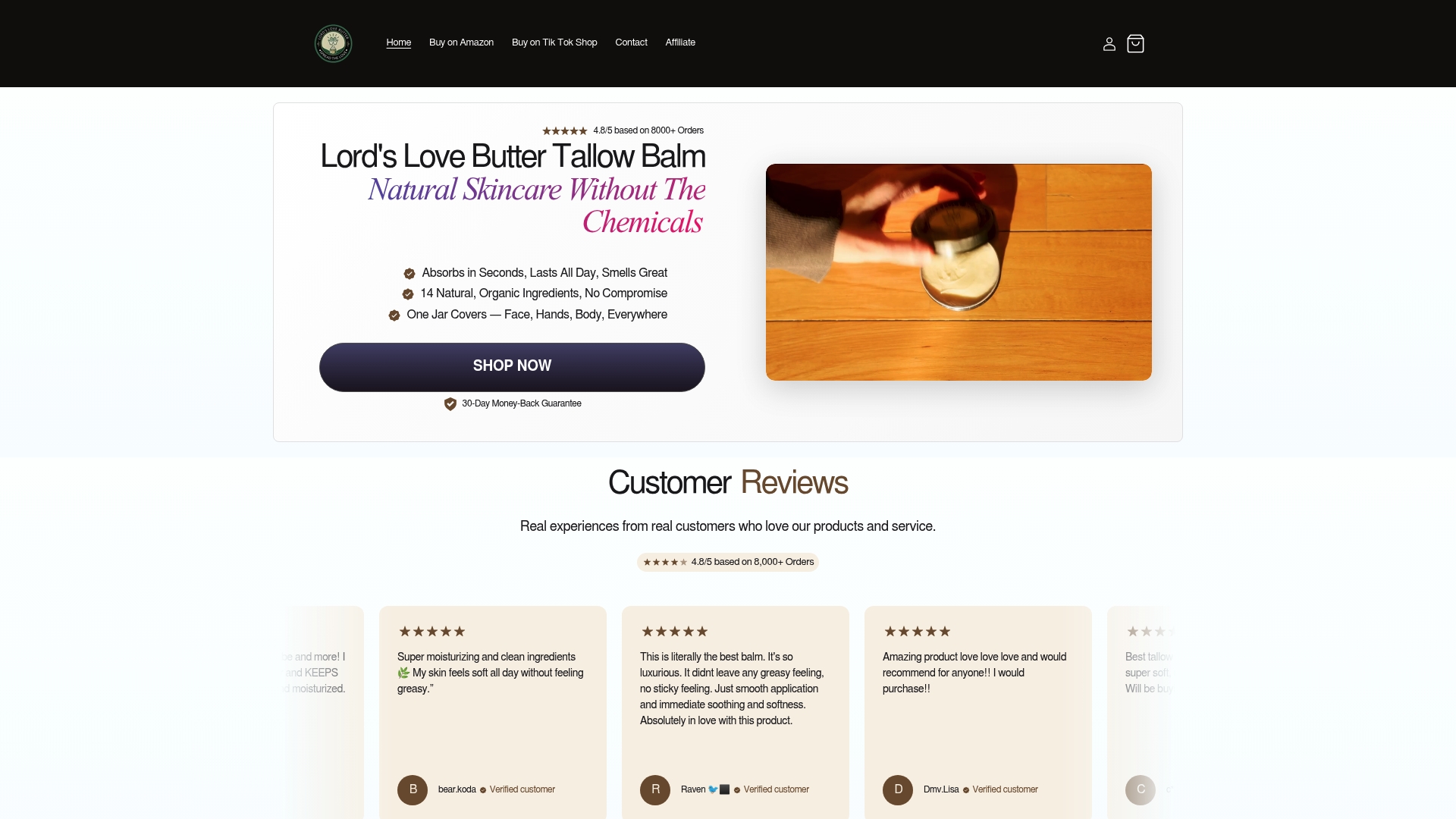
Lordslovebutter’s Whipped Beef Tallow Balm with Manuka Honey contains no parabens, no PFAS, no synthetic fragrance, and no formaldehyde releasers. The formula uses grass-fed beef tallow and manuka honey, two ingredients with long histories of skin compatibility and none of the regulatory red flags covered in this article. It is designed for whole-body use, absorbs without a greasy feel, and works particularly well for people managing eczema, psoriasis, or chronically dry skin. Lordslovebutter is a veteran-owned business, and every batch reflects that commitment to simplicity and quality. If you are rebuilding your skincare routine around safer ingredients, this is a practical place to start.
FAQ
What are the most dangerous chemicals in skincare products?
PFAS, mercury, asbestos-contaminated talc, parabens, phthalates, and formaldehyde-releasing preservatives are the most documented harmful chemicals in cosmetics. Each causes distinct health effects ranging from endocrine disruption to neurological damage.
How do I know if my skincare product contains PFAS?
Check the INCI ingredient list for terms like “fluoro,” “PTFE,” “perfluoro,” or “polyfluoro.” The FDA confirmed that 51 individual PFAS types appear in cosmetics, primarily in eye shadow and facial skincare.
Are “clean” or “natural” beauty products automatically safe?
No. “Clean” and “natural” carry no legal definition in the US, so products with these labels can still contain PFAS, heavy metals, or asbestos-contaminated talc. Only EWG Verified and MADE SAFE certifications require independent contaminant testing.
Why are powder makeup products riskier than creams or liquids?
Powder products are 62% riskier than creams and 120% riskier than liquids for asbestos contamination, because talc-based powders are inhaled during application. Switching to cream or liquid formulas significantly reduces that inhalation risk.
What is a safe preservative alternative to formaldehyde releasers?
Phenoxyethanol is a widely used preservative that does not release formaldehyde. It is accepted by both US and EU regulators and does not degrade into carcinogenic byproducts under normal storage conditions.

