

Why Greasy Skincare Slows Down Busy Mornings
Greasy skincare products slow your morning because they sit on the skin as an oil-rich film instead of soaking in, which delays drying time, keeps sunscreen and makeup from adhering right, and rubs off onto your collar or sleeve on the way out the door. That combination is what turns a five-minute routine into fifteen. The fix isn’t skipping moisturizer, it’s picking a formula built to disappear fast.
- Try this now: swap your morning jar for a pea-sized dab of a lightweight or “lite” balm, then pat instead of rub.
- Ointments and thick balms are the greasiest category because they’re mostly oil with little to no water, according to Healthline’s breakdown of ointments versus creams and lotions.
- Lightweight gels can absorb in as little as 30 to 60 seconds, which is the benchmark worth chasing before 7 a.m.
Key Takeaways
Greasy skincare slows mornings because occlusive, oil-heavy formulas resist absorption, transfer to fabric, and interfere with sunscreen and makeup application.
| Point | Details |
|---|---|
| Occlusion is the culprit | Oil-heavy balms and ointments sit on skin instead of absorbing, which delays drying and setting. |
| Absorption speed varies by formula | Gels absorb in 30 to 60 seconds; rich creams and pure oils can take several minutes. |
| Transfer and pilling are avoidable | Waiting one to two minutes between layers reduces makeup pilling and sunscreen slip. |
| Save heavy balms for night | Occlusives work best for eczema repair and overnight barrier support, not daytime wear. |
| A whipped, lite formula fits mornings | Lord’s Love Butter’s Whipped Beef Tallow Balm and Original Lite version are built to absorb faster for daytime use. |
Table of Contents
- Why Some Skincare Feels Greasy: Absorption vs. Occlusion
- How Exactly Does a Greasy Balm Slow Your Routine?
- What to Look for Instead: Fast-Absorbing Formulas
- Application Tricks That Cut Morning Time in Half
- When a Heavier, Occlusive Balm Is Actually the Right Call
- A Practical Note on What Actually Works Fast
- Which Lord’s Love Butter Product Fits a Fast Morning?
- Frequently Asked Questions
- Sources
Why Some Skincare Feels Greasy: Absorption vs. Occlusion
The greasy feeling comes down to a formula’s job: does it soak into skin or does it sit on top of it? Absorption means water and lightweight oils move into the skin’s outer layers and stop feeling wet or slick. Occlusion means a product forms a physical barrier on the surface, trapping moisture underneath rather than delivering it inward. Both have their place, but only one is compatible with a fast morning.
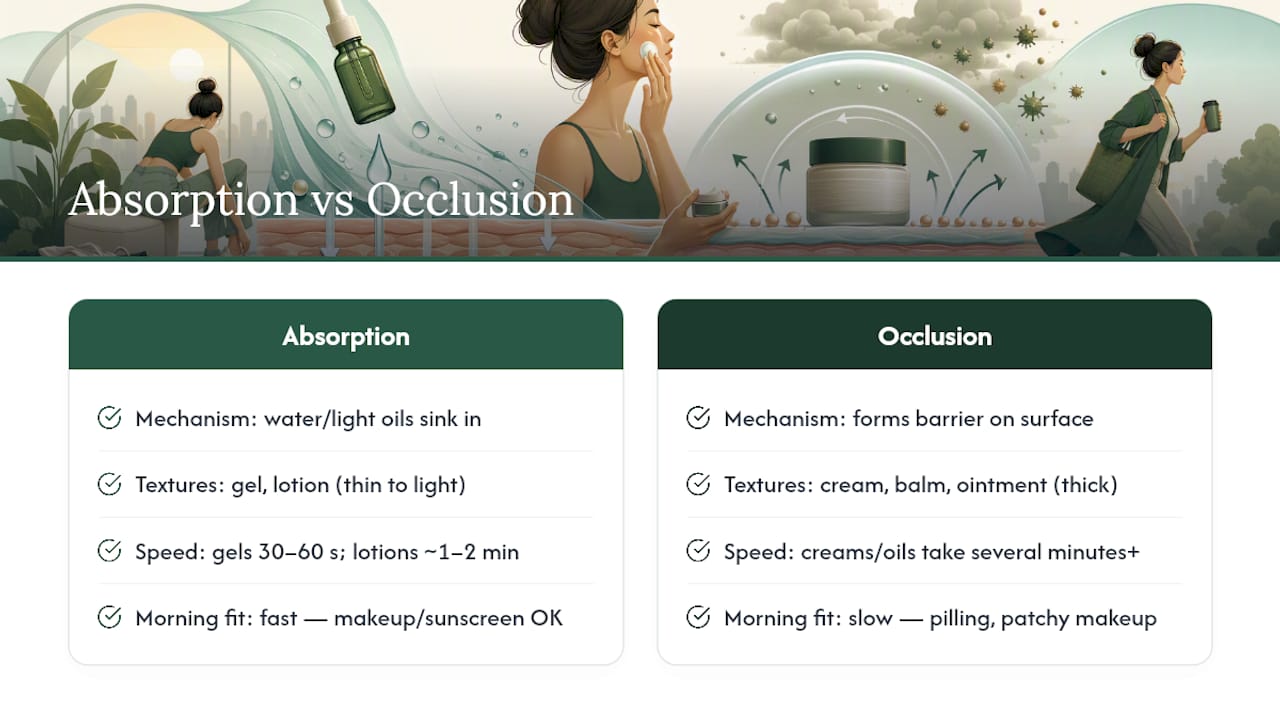
Picture a line running from thin to thick: gel, then lotion, then cream, then balm or ointment. Absorption speed drops as you move right, while occlusion, and greasiness, climbs. Ointments are built almost entirely from oil with little to no water, which is exactly why they feel heaviest and cling longest, according to Healthline. Heavy oils, petrolatum, and thick waxes create that occlusive barrier. Squalane, glycerin, and lightweight plant esters do the opposite. They mimic the skin’s own oils closely enough to absorb quickly without leaving residue.
Timing backs this up. Most moisturizers feel absorbed within one to two minutes, but that range splits sharply by formula: gels lead at 30 to 60 seconds, standard lotions land around one to two minutes, and rich creams or pure oils can take several minutes or longer to stop feeling greasy.
Practitioners reach for occlusive ointments deliberately for eczema and barrier repair, but the same trait that makes them therapeutic at night, a slick surface that never fully disappears, is what causes pilling and patchy makeup during the day, according to National Custom Compounding.
That’s the trade-off in one sentence: occlusion helps skin heal, but it fights against a routine that needs to move fast.
How Exactly Does a Greasy Balm Slow Your Routine?
The damage isn’t abstract. It shows up in specific, annoying moments that stack up minute by minute.
- Transfer: balm residue lifts onto pillowcases, collars, and phone screens for hours after application.
- Makeup pilling: foundation applied over a thick, unabsorbed layer clumps into visible flakes instead of blending smooth.
- Sunscreen sliding: mineral or chemical SPF applied on top of leftover oil can slip or clump rather than form an even film.
- Visible shine: skin that hasn’t finished absorbing looks slick under bathroom lighting and worse under office fluorescents.
- Extra touch-ups: blotting sheets, powder, and re-applying lipstick after it smears all add steps you didn’t plan for.
A few real scenarios: lipstick sliding off within an hour because a heavy lip balm never fully set. Foundation pilling into tiny gray rolls the moment a brush touches a barely-absorbed balm. Sunscreen beading up because it landed on top of oil that hadn’t sunk in yet, an effect made worse the heavier the underlying oil, since thicker oils leave more surface residue than lighter ones like jojoba.
This trade-off cuts deeper for sensitive skin and eczema. Nighttime often calls for a true occlusive to lock in repair while you sleep, but that same product applied at 7 a.m. becomes a liability, fighting your sunscreen and foundation for the next eight hours.
What to Look for Instead: Fast-Absorbing Formulas
Reading a label for thirty seconds before checkout saves you minutes every single morning after. Here’s what actually matters.
Ingredients that tend to absorb fast:
- Squalane, a lightweight oil that mimics skin’s natural sebum.
- Glycerin and hyaluronic acid, which pull in water without leaving film.
- Lightweight plant esters, common in “fast-absorbing” formulas.
- Small amounts of dimethicone, which smooths without heavy buildup.
- Silica, added specifically for a mattifying, shine-control finish.
Ingredients better saved for nighttime:
- Petrolatum and heavy mineral oils.
- Thick waxes like beeswax in high concentration.
- Pure, unblended plant oils applied generously.
- High percentages of butters or lanolin in a single layer.
Packaging and label language tell you a lot before you even open the jar. Words like “gel,” “lotion,” “fast-absorbing,” and “non-comedogenic” signal a daytime-friendly formula. A pump or squeeze tube usually means a thinner, water-forward base; a dense jar often signals something heavier, which isn’t a flaw, just a cue for when to use it.
For sensitive skin and eczema specifically, the decision rule is straightforward: reach for a true occlusive when the skin is actively cracked, flaring, or needs overnight repair. Reach for a “lite” or whipped version, one formulated to absorb faster while still nourishing, when you’re headed into a workday with makeup and sunscreen on the schedule. A chemical-free, natural approach to daily skincare doesn’t require choosing between gentle and fast. It requires choosing the right format for the hour.
Application Tricks That Cut Morning Time in Half
The right product still wastes time if it’s applied wrong. Small technique changes matter as much as the formula itself.
- Cleanse and pat skin mostly dry, leaving it slightly damp, since balm spreads thinner and absorbs faster on damp skin than bone-dry skin.
- Warm a small amount between your fingertips for a few seconds before applying. Warmth softens balm into a thinner layer that sinks in rather than sitting on top.
- Pat instead of rub. Rubbing pushes product around the surface; patting encourages it into the skin.
- Wait before layering. Light creams generally need one to two minutes before the next step, while oil-based products benefit from a longer 10 to 15 minute gap before sunscreen to avoid pilling.
- Apply sunscreen and makeup last, following the same water-before-oil layering logic that dermatology guides recommend for any routine.
Pro Tip: If your face still feels greasy 10 minutes after application, you likely used too much. Press a clean tissue lightly over the T-zone to lift excess oil without stripping the moisture that’s already absorbed.
For anyone using a whipped tallow product specifically, the step-by-step guide to applying whipped tallow without greasy residue walks through the warm-and-pat method in more detail.
When a Heavier, Occlusive Balm Is Actually the Right Call
None of this means occlusive products are bad. They’re the correct tool in specific situations, and using one at the right time is what keeps your skin, and your mornings, working.
- Overnight barrier repair for eczema flare-ups, when skin needs hours of uninterrupted moisture lock-in.
- Targeted spot treatment on cracked knuckles, heels, or elbows where cosmetic finish doesn’t matter.
- Weekend mornings or post-cleanse evenings with no makeup or sunscreen on the agenda.
Compounding pharmacists note that a greasy ointment base is sometimes the most effective option for a treatment, even when it’s cosmetically unpopular, because it keeps active ingredients in contact with skin longer, according to National Custom Compounding. The smartest approach for sensitive skin is keeping two products on hand: one rich, one light, and using each at the hour it was built for.
A Practical Note on What Actually Works Fast
Most advice about “non-greasy” skincare treats absorption speed like it’s purely a formulation trick, more silicone, more alcohol, less oil. That’s the easy answer, and it’s often the wrong one for people with eczema or reactive skin, since those quick-absorbing formulas frequently rely on the synthetic fillers that trigger irritation in the first place.
The better fix isn’t stripping oil out of a formula. It’s changing its structure. Whipping beef tallow physically incorporates air into the fat, which is why a whipped balm spreads thinner and sets faster than the same tallow in a dense, unworked block, without changing a single ingredient. That’s a texture solution to a chemistry problem, and it’s the piece most morning-routine advice skips entirely.
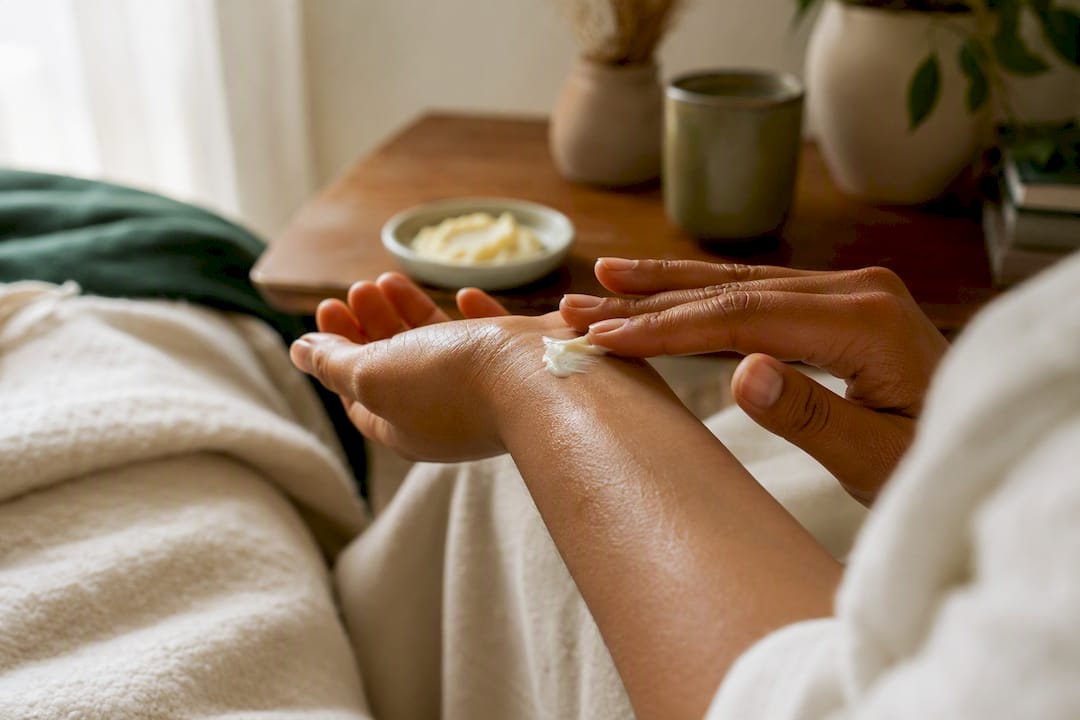
I’ve found that busy mornings reward products that do less thinking for you: fewer steps, faster set, no second-guessing whether it’ll pill under sunscreen. A veteran-owned brand built around single-ingredient, grass-fed tallow formulas has an advantage here, because there’s no synthetic filler to react to, just fat, and fat behaves predictably once you understand how whipping and “lite” ratios change its set time.
Which Lord’s Love Butter Product Fits a Fast Morning?
If your routine needs to move quickly, texture and format matter more than the ingredient list alone. The Whipped Beef Tallow Balm with Manuka Honey uses that whipping process to cut set time noticeably compared to a dense balm, while still carrying Manuka honey and squalane for skin that needs real barrier support. For anyone who wants an even faster morning finish, the Original Beef Tallow Balm Lite with Manuka Honey is formulated specifically to absorb quicker, making it the better pick right before makeup or sunscreen. Lips need the same logic: the Mint Beef Tallow Lip Balm Stick sets fast enough to avoid the lipstick-smear problem entirely, and it fits in a pocket for a midday reapplication with zero mess.
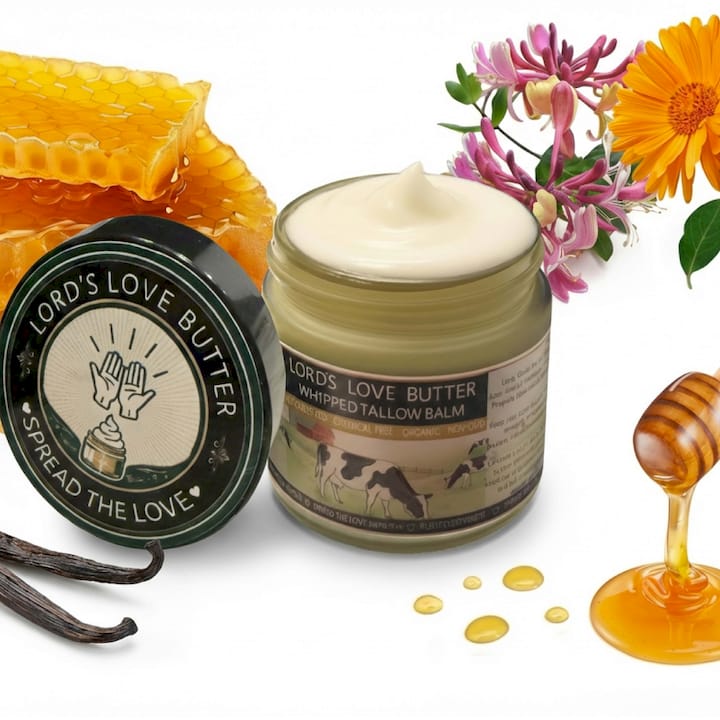
Application matters as much as the SKU. Warm a fingertip-sized amount between two fingers for a few seconds, pat it onto damp skin, and let it sit 60 to 90 seconds before moving on to sunscreen. Lord’s Love Butter builds every formula from grass-fed tallow with no synthetic fillers, a detail that matters if you’ve reacted to conventional lotions before, and customers report smoother, more hydrated skin within days of switching. If you want to try the full lineup in one order, the Daily Ritual Kit pairs the balm jar, lip stick, and a sun balm for a complete morning setup without hunting for separate products.
Frequently Asked Questions
Why do greasy products slow mornings more than other skincare steps? They delay the entire routine downstream, since sunscreen and makeup can’t be applied cleanly until the base layer finishes absorbing, which can take several minutes for oil-heavy formulas.
How can I tell if a product will feel greasy before I buy it? Check the label for words like “gel,” “lotion,” or “fast-absorbing,” and look at the ingredient list for squalane or glycerin near the top rather than heavy oils or petrolatum.
Is it bad to use a thick balm every morning if I have eczema? Not necessarily, but consider switching to a “lite” or whipped version for daytime and saving the richer formula for overnight repair, when occlusion actually helps.
How long should I wait before applying sunscreen over a balm? Roughly one to two minutes for lighter creams; closer to 10 to 15 minutes if the product is oil-heavy, to avoid pilling underneath sunscreen.
Do whipped formulas really absorb faster than regular balms? Yes. Whipping incorporates air into the fat, which thins the texture and speeds absorption without changing the underlying ingredients.
Sources
- Ointment vs. Cream, Lotion, and Gel: What Makes Them Different? | Healthline
- How Long Does Moisturizer Take to Absorb? The Science | Layered Skincare
- Can You Layer Face Oil with Sunscreen? — Clean Beauty Market
- Why does some cream feel greasy while others absorb quickly? | National Custom Compounding

