

Layering Natural Skincare Products Correctly in 2026
Layering natural skincare products correctly is defined as applying each product in sequence from the lightest to the heaviest consistency, so every ingredient reaches the skin layer where it works best. Get this order wrong and your most expensive serum may sit on top of a thick cream, never absorbing at all. The principle is not a trend. It is grounded in molecular weight, pH compatibility, and skin barrier science. Follow the right sequence and your natural skincare routine delivers noticeably better hydration, texture, and protection.
What is the correct order to layer natural skincare products?
The foundational rule for skincare product layering is thinnest to thickest, allowing water-soluble products to absorb before occlusive barriers seal them in. This is not personal preference. Layering order is governed by physical and chemical principles, including molecular weight, penetration depth, and pH compatibility. A low-pH vitamin C serum applied after a thick moisturizer cannot penetrate the skin barrier. Sequence determines whether your products work or cancel each other out.
The standard sequence for a natural skincare routine runs as follows:
- Cleanser. Removes dirt, oil, and residue so subsequent products absorb cleanly.
- Toner or essence. Rebalances skin pH and preps the surface for active ingredients.
- Water-based serum. Delivers concentrated actives like vitamin C, niacinamide, or hyaluronic acid directly to skin cells.
- Eye cream. Applied before heavier products so its lighter formula is not blocked.
- Moisturizer. Locks in the hydration delivered by the serum layer.
- Facial oil. Seals everything beneath it because oil molecules sit on top of water-based layers.
- Sunscreen (morning only). Broad-spectrum sunscreen is always the final morning step to preserve its UV-protective barrier.
The science behind this sequence matters. Smaller molecules in water-based serums penetrate the skin’s outer layer easily. Oils have larger molecules and form a physical seal. Applying oil first blocks every product that follows. Sunscreen must stay on top because mixing it into other layers breaks down its protective film.
Pro Tip: Wait 15–30 seconds between lighter layers and up to 2 minutes after thicker creams. Short wait times between steps improve absorption and prevent pilling.
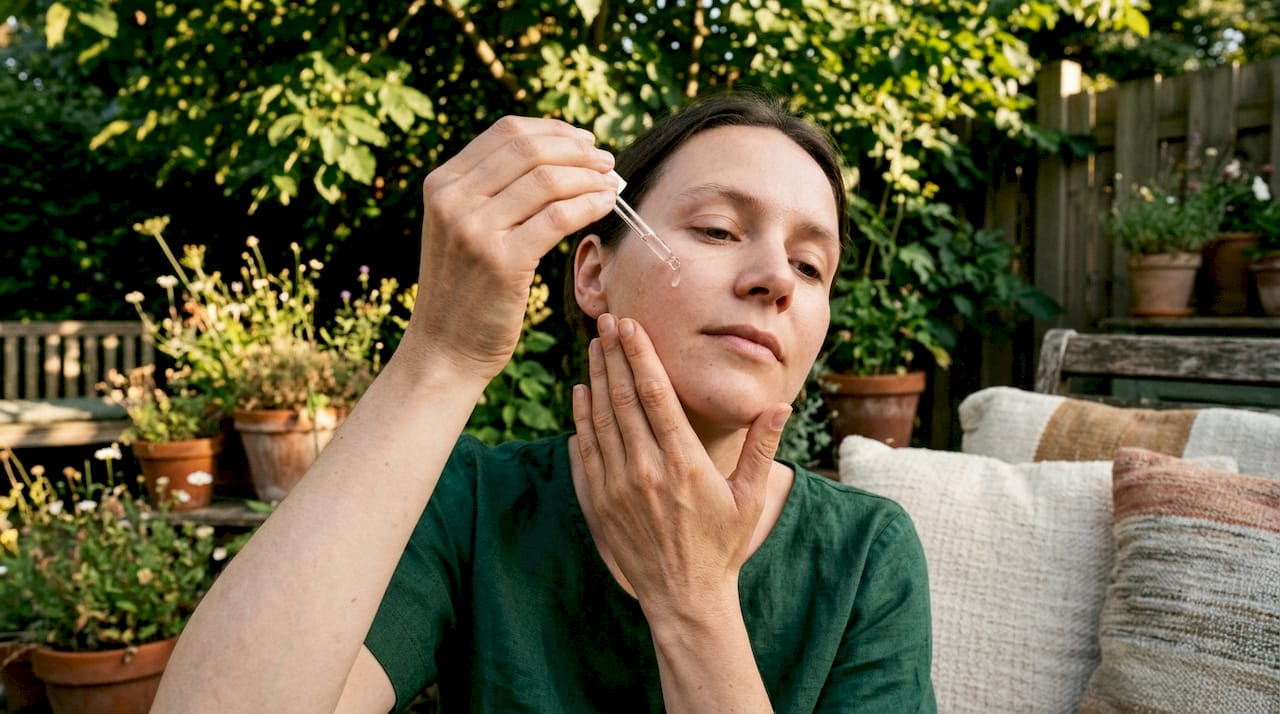
How do you adjust layering for different skin types?
Not every skin type needs every step. Adjusting product types and step count based on your skin type is the most direct way to get better results without adding more products.
- Dry skin benefits from extra hydration layers. Add a hydrating toner, a hyaluronic acid serum, and finish with a rich occlusive like a whipped tallow balm to prevent moisture loss overnight. Facial oils are a strong addition for dry skin because they reinforce the lipid barrier.
- Oily skin needs lighter formulas at every step. Skip heavy creams and facial oils. A water-based gel moisturizer after a niacinamide serum is usually enough. Adding too many layers clogs pores and triggers more oil production.
- Sensitive skin requires a minimal approach. Stick to a gentle cleanser, one calming serum, and a fragrance-free moisturizer. Introduce any new active ingredient gradually, one product at a time, and watch for redness or tightness. Barrier-supporting ingredients like ceramides and squalane work well here.
- Aging skin benefits from targeted treatment serums, such as peptides or retinol, placed directly after cleansing and toning so they reach the skin before heavier layers block them. Check out aging skin texture ingredients to identify which actives pair well in a layered routine.
- Acne-prone skin does best with non-comedogenic products at every layer. Salicylic acid serums go on before moisturizer. Avoid occlusive oils on breakout-prone areas.
The organic skincare routine checklist from Fundamental Skin offers a practical framework for building a layered routine around your specific skin goals. Simpler routines with fewer products also promote better skin barrier health and make it easier to spot what is and is not working.
What are the most common layering mistakes?
Most layering problems come down to three errors: wrong order, too many products, and incompatible actives. Fixing these alone improves most routines immediately.
- Applying thick creams before serums. A heavy moisturizer creates a physical barrier. Any serum applied on top cannot penetrate. Always apply serums first.
- Using facial oil before water-based products. Oil repels water. Applying it before a serum means the serum sits on the skin’s surface and evaporates instead of absorbing.
- Overloading with too many products. Effective routines typically include 3–5 core steps. More products block absorption and increase sensitivity. Pilling, the small balls of product that form on skin, is almost always a sign of too many layers applied too quickly.
- Mixing incompatible actives. Retinol and AHA or BHA acids used together in the same session cause significant irritation for most people. Ingredient compatibility depends on pH and molecular behavior. Alternate actives on different nights instead of stacking them.
- Skipping wait times. Applying the next product immediately after the previous one causes pilling and reduces absorption. Patience between steps is part of the technique.
- Applying retinol to damp skin. Retinol applied to dry skin and buffered with moisturizer afterward reduces irritation significantly. Damp skin speeds penetration and increases the chance of redness.
Pro Tip: Limit to one active ingredient per session. Dermatologists recommend this to avoid pH imbalance and skin barrier disruption. Pick your active, use it consistently, and add a second only after your skin has fully adjusted.
Step-by-step morning and evening routines
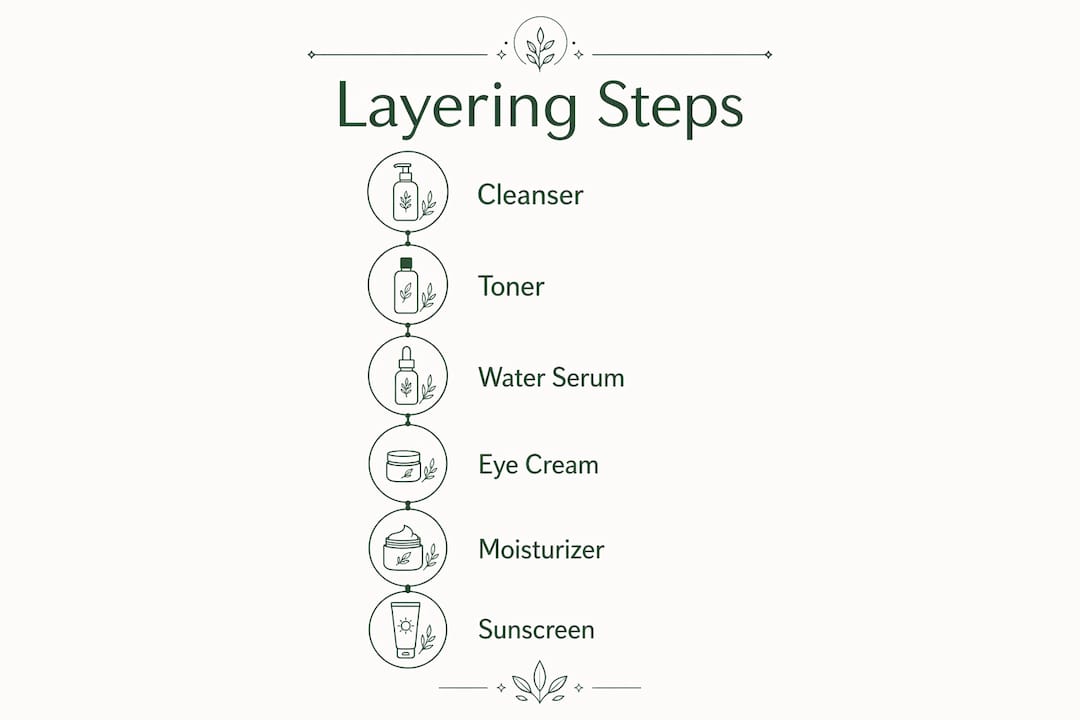
A clear routine removes the guesswork from skincare application techniques. These two routines cover the full day using natural products in the correct sequence.
Morning routine
- Gentle cleanser. Rinse away overnight oils and any residue from evening products.
- Hydrating toner. Restore pH balance and add a first layer of moisture.
- Antioxidant serum. Vitamin C is the gold standard here. Apply it while skin is slightly damp for better absorption.
- Eye cream. Pat gently around the orbital bone with your ring finger.
- Moisturizer. Choose a lightweight formula for daytime. A chemical-free moisturizing routine helps you select the right product type for each layer.
- Sunscreen (SPF 30 or higher). Apply last, every morning, regardless of weather or season.
Evening routine
- Oil or balm cleanser. Breaks down sunscreen and makeup effectively.
- Water-based cleanser. The second cleanse removes any remaining residue.
- Treatment serum. This is where retinol, peptides, or AHA exfoliants go. Use only one active per session.
- Eye cream. Same technique as the morning application.
- Moisturizer. A richer formula works well at night when skin repair is most active.
- Facial oil or occlusive balm. The final layer seals in everything beneath it.
| Routine | Key Active Step | Final Layer |
|---|---|---|
| Morning | Antioxidant serum (vitamin C) | Broad-spectrum sunscreen |
| Evening | Treatment serum (retinol or AHA) | Facial oil or occlusive balm |
Timing matters throughout both routines. Give lighter layers 15–30 seconds before applying the next product. After a treatment serum or retinol, wait a full 1–2 minutes before moisturizer. For a practical guide to simplifying your ingredient list, fewer well-chosen products consistently outperform a crowded shelf.
Key Takeaways
Layering natural skincare products correctly requires applying products from thinnest to thickest, using one active per session, and finishing every morning routine with broad-spectrum sunscreen.
| Point | Details |
|---|---|
| Thinnest to thickest rule | Always apply water-based serums before oils and creams to allow proper absorption. |
| Sunscreen is always last | Apply broad-spectrum SPF as the final morning step to preserve its UV protection. |
| One active per session | Limit actives to one per routine to prevent pH imbalance and skin barrier disruption. |
| Adjust for your skin type | Dry skin needs more occlusive layers; oily skin benefits from lighter, fewer steps. |
| Wait between layers | Allow 15–30 seconds for light products and up to 2 minutes for thicker formulas before the next step. |
Why I think most people overcomplicate their natural skincare routine
After years of paying close attention to what actually works on real skin, the clearest pattern I see is this: more products do not mean better skin. The people with the healthiest, most consistent results are almost always using five products or fewer, applied in the right order, every single day.
The skincare industry profits from complexity. New serums, boosters, and “step 2.5” products create the impression that more layers equal more results. They rarely do. What actually moves the needle is consistency, correct sequencing, and choosing products with clean, compatible ingredients.
I also think the obsession with actives is overblown for most people. Retinol, AHAs, BHAs, and vitamin C are genuinely useful. But stacking them in one routine, or switching between them every few weeks, prevents your skin from ever stabilizing. Pick one. Use it for 8–12 weeks. Then assess.
The most underrated step in any natural routine is the final occlusive layer at night. Sealing in your hydration with a quality balm or facial oil is what separates a routine that works from one that just feels like a routine. Skin repairs itself overnight. Give it the moisture it needs to do that job.
— Michael
Lordslovebutter as your final occlusive layer
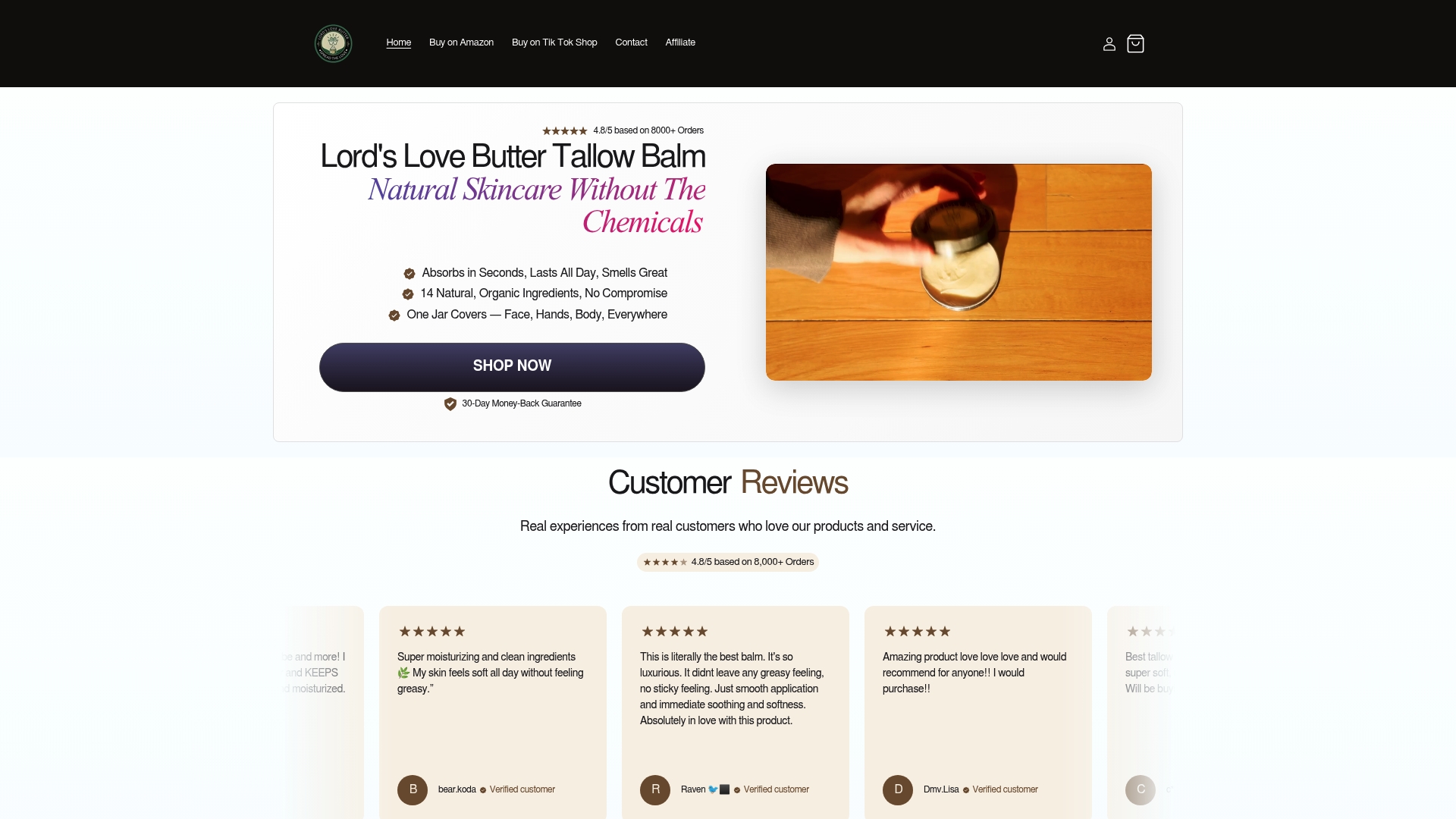
The last step in any evening routine is the one that holds everything together. Lordslovebutter’s Whipped Beef Tallow Balm is made from grass-fed beef tallow and Manuka honey, with no synthetic ingredients. It works as a true occlusive finish, sealing in the serums and moisturizers beneath it without a greasy feel. Customers with eczema and psoriasis report improved skin texture within days. Lordslovebutter is a veteran-owned brand built around one principle: clean ingredients that actually work. The Tin & Jar Bundle gives you both sizes so you can use it on your face and body as part of a complete natural routine.
FAQ
What is the correct order for layering natural skincare products?
Apply products from thinnest to thickest consistency: cleanser, toner, water-based serum, eye cream, moisturizer, facial oil, and sunscreen last in the morning.
Why does sunscreen always go on last?
Sunscreen forms a protective film on the skin’s surface. Applying other products on top of it breaks down that film and reduces UV protection.
Can you mix retinol and vitamin C in the same routine?
Dermatologists recommend against it. Use vitamin C in the morning and retinol in the evening to avoid pH conflicts and irritation.
How many products should a natural skincare routine include?
Effective routines typically include 3–5 core steps. More products increase the risk of pilling, blocked absorption, and skin sensitivity.
How long should you wait between skincare layers?
Allow 15–30 seconds after lighter products and up to 2 minutes after thicker creams or treatment serums before applying the next layer.
Recommended
- Clean Skincare Ingredient Checklist for Adults: 2026 Guide – Lord’s Love Butter
- Multi-Use Skincare Product Examples for Simpler Routines – Lord’s Love Butter
- Whole Body Chemical-Free Moisturizing Routine Guide – Lord’s Love Butter
- Minimize Your Skincare Ingredient List: A Clear Guide – Lord’s Love Butter

