

Minimalist Skincare Routine: Simple, Effective Steps
A minimalist skincare routine is a simplified daily practice built on three dermatologist-backed non-negotiables: cleanse, moisturize, and protect with SPF, with one optional targeted active added only when needed. That’s it. The philosophy, sometimes called “skinimalism,” treats fewer well-chosen products as a feature, not a compromise.
Your TL;DR:
- AM: Gentle cleanser → moisturizer with barrier lipids → broad-spectrum SPF 30+
- PM: Gentle cleanser → one active (optional, 2–3x per week) → moisturizer or occlusive balm
- Both: Skip anything that isn’t earning its place on your skin
Table of Contents
- Why does a simpler routine actually produce better skin?
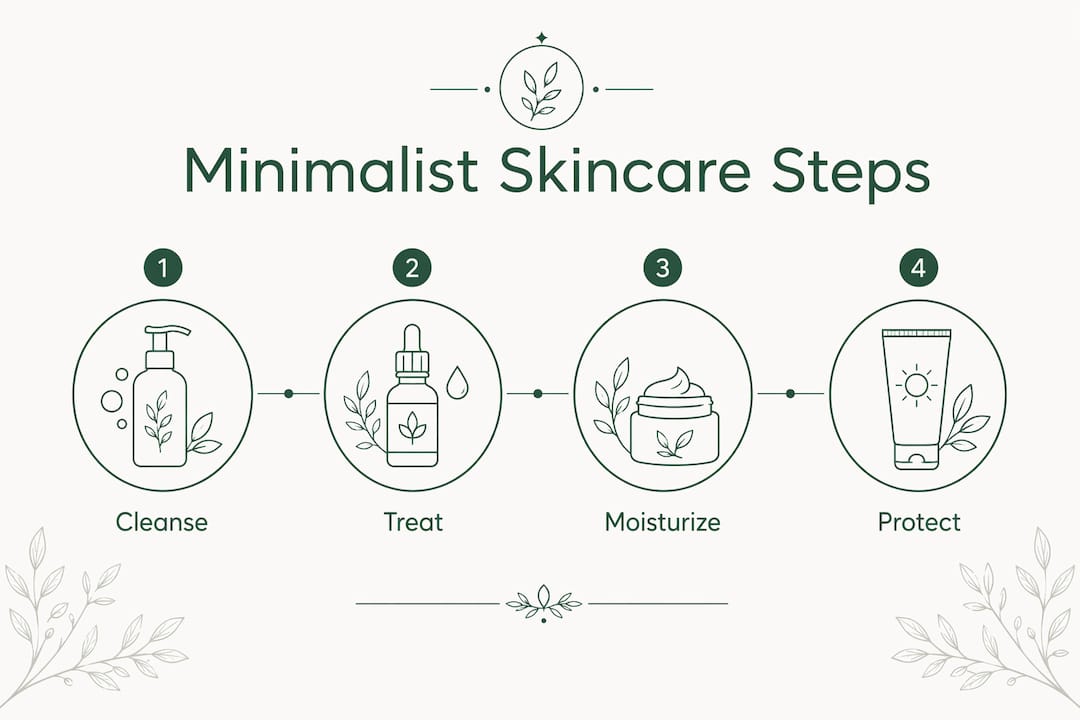
- What are the essential steps in a minimalist skincare routine?
- How do you adapt the routine for your skin type?
- What mistakes do people make with minimalist skincare?
- What is the 4-2-4 rule in skincare?
- How do you add a single active safely?
- Copy-and-paste AM and PM routines you can start tonight
- How long until you see results, and what does it cost?
- Key Takeaways
- Why Lord’s Love Butter believes less is genuinely more
- Lordslovebutter’s whipped tallow balm fits your minimalist routine
- Useful sources and further reading
Why does a simpler routine actually produce better skin?
The counterintuitive truth is that most skin problems aren’t solved by adding more products. They’re caused by too many. Every additional formula introduces new preservatives, fragrances, and emulsifiers, each one a potential irritant or allergen. A simplified routine focused on cleanser, moisturizer, SPF, and one active has been observed to improve hydration and texture with low irritation. That’s not a fluke.
When you strip the routine back, two things happen. First, your skin barrier gets a chance to stabilize because you’ve stopped bombarding it with competing actives and surfactants. Second, if something goes wrong, you actually know which product caused it. With a 10-step routine, troubleshooting is guesswork. With four products, it’s obvious.
There’s also an adherence argument. A routine you’ll actually do every morning beats a perfect routine you abandon by Wednesday. Dermatologists consistently point to barrier integrity over product quantity as the real driver of healthy skin. Restoring lipids and reducing transepidermal water loss matters more than how many serums you layer.
One more thing worth clearing up: the improvements people notice after “skin fasting” aren’t from some mystical detox. According to DermApproved, those results come from removing irritants and letting a good barrier moisturizer do its job. The skin isn’t detoxing. It’s finally getting a break.
Pro Tip: Don’t quit your whole routine at once. Remove one product every few days and watch what happens. This slow-subtraction method is the fastest way to find what your skin actually needs.
What are the essential steps in a minimalist skincare routine?
A 3–4 product routine covers everything healthy skin needs: a cleanser, a moisturizer, SPF, and one targeted treatment if you have a specific concern. Here’s how each step works and what to look for.
Step 1: Cleanse
Goal: Remove dirt, oil, sunscreen, and dead cells without stripping the skin’s acid mantle.

Look for a gentle, pH-balanced formula, ideally between pH 4.5 and 6.5. Avoid heavy sulfates like sodium lauryl sulfate if your skin runs dry or sensitive. A gel or cream cleanser works for most skin types.
Double-cleansing (an oil-based cleanser first, then a water-based one) is worth doing in the PM if you wear SPF or makeup. In the AM, a splash of water or a single gentle cleanse is often enough.
Step 2: Treat (optional, one active only)
Goal: Address one specific concern, whether that’s hyperpigmentation, texture, acne, or early aging.
Pick one active and commit to it. Vitamin C in the morning for antioxidant protection and brightening. Retinol or a retinoid at night for cell turnover. A single chemical exfoliant (AHA like glycolic acid, or BHA like salicylic acid) for congestion. Not all three at once.
Always patch-test a new active on your inner forearm for 48 hours before applying it to your face. Start at the lowest available concentration and use it every third night before increasing frequency.
Step 3: Moisturize
Goal: Seal in hydration and support the skin barrier with lipids that mimic its natural structure.
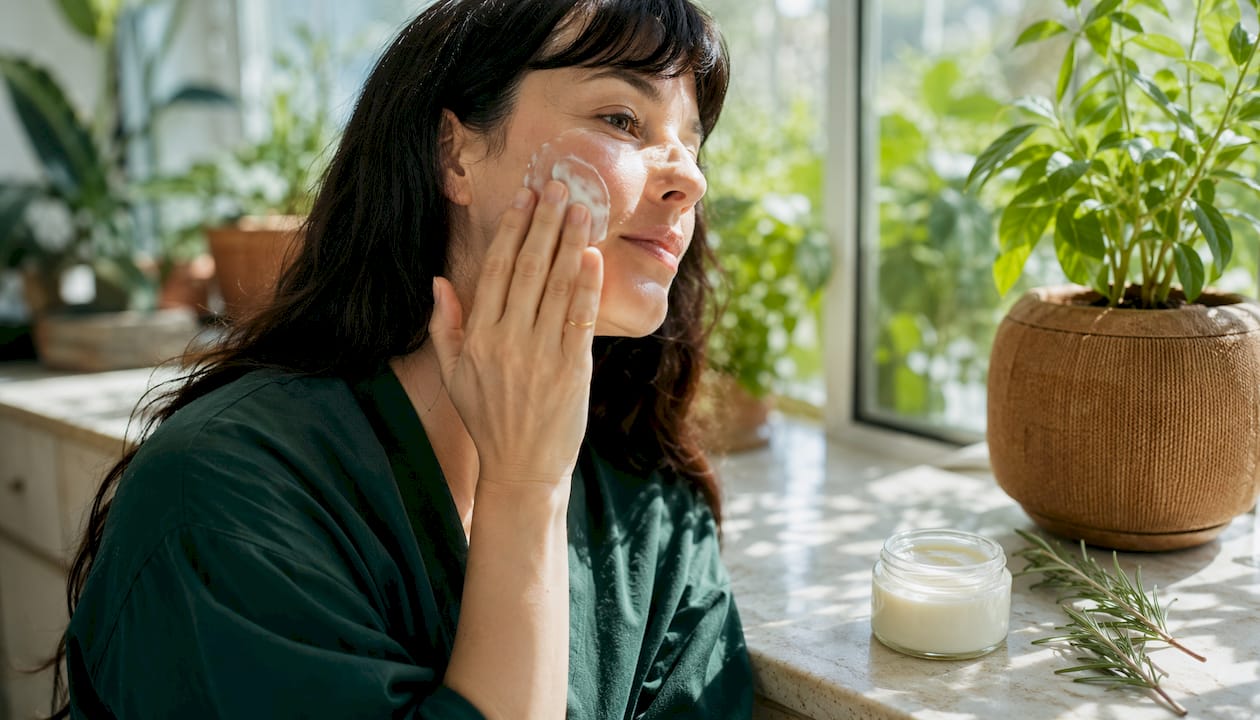
The best barrier-repair moisturizers contain ceramides, cholesterol, and free fatty acids, the three components that make up the skin’s lipid matrix. A lipid-rich formulation that mimics skin sebum can accelerate barrier repair and reduce the need for multiple separate products.
This is where a multifunctional balm earns its place in a minimalist routine. Lordslovebutter’s whipped beef tallow balm, made from grass-fed tallow and Manuka honey, supplies skin-compatible fatty acids and can replace a separate moisturizer, occlusive, and body lotion in one step. For very dry or sensitive skin, it’s a genuine simplifier.
Step 4: Protect (AM only)
Goal: Prevent UV-induced damage, the single biggest driver of premature aging and barrier compromise.
Daily broad-spectrum SPF 30+ is non-negotiable, even on cloudy days, even if you work indoors. Mineral options (zinc oxide, titanium dioxide) tend to be better tolerated on sensitive skin. Chemical filters are lighter and more cosmetically elegant for oily skin.
Pro Tip: Choose a moisturizer with SPF or an SPF balm to consolidate two steps into one. Lordslovebutter’s beef tallow sun balm with zinc oxide does exactly that, combining mineral protection with tallow’s barrier-repair lipids.
Quick layering rule: Apply products thinnest to thickest. Serums and actives go on before moisturizer. SPF always goes on last in the morning, after moisturizer.
How do you adapt the routine for your skin type?
The core steps stay the same for everyone. What changes is texture, active choice, and how much moisture you need. Here’s a quick guide by skin type.
Dry skin: Prioritize a cream or oil cleanser, a lipid-dense moisturizer, and consider an occlusive balm as your final PM step. Avoid foaming cleansers and alcohol-based toners. A single humectant like hyaluronic acid can layer under your balm for extra draw.
Oily or combination skin: A gel cleanser and a lightweight, non-comedogenic moisturizer work best. Don’t skip moisturizer thinking it’ll reduce oil. Dehydrated skin overproduces sebum to compensate. One BHA (salicylic acid) is your best active option for managing congestion.
Sensitive or reactive skin: Fewer products, full stop. Fragrance-free, dye-free, and as few ingredients as possible. Minimalist routines reduce allergen exposure significantly, which is why they’re particularly effective for eczema and psoriasis. A lipid-rich balm can replace multiple products and lower your total ingredient count in one move.
Acne-prone skin: One active only, either salicylic acid or benzoyl peroxide, not both. A gentle, non-stripping cleanser is critical because over-cleansing worsens acne by damaging the barrier. Moisturize even if your skin feels oily.
Aging or mature skin: Retinol or a prescription retinoid is your highest-evidence active for cell turnover and collagen support. Pair it with a rich moisturizer to offset dryness. SPF is non-negotiable here because UV exposure is the primary driver of visible aging.
A lipid-rich balm can often replace your moisturizer, body lotion, and occlusive layer for very dry or sensitive skin. For people managing eczema or psoriasis, cutting the product count this way isn’t just convenient — it directly reduces the number of potential irritants touching compromised skin every day.
When your barrier is compromised (tight, flaky, stinging after cleansing), pause all actives immediately. Go back to cleanser and moisturizer only for one to two weeks. Reintroduce products one at a time, waiting several days between additions, so you can isolate what caused the reaction.
What mistakes do people make with minimalist skincare?
Cutting your routine down to four products doesn’t automatically make it a good routine. These are the errors that trip people up most often.
-
Skipping SPF. This is the most common and most damaging mistake. Minimalism doesn’t mean removing protection. Daily SPF is the single highest-return step in any routine, minimal or not. Skipping it undoes everything else.
-
Over-relying on one active. Using a single exfoliant every day because “it’s just one product” is still over-exfoliating. Frequency matters as much as product count. Most actives work best used two to three times per week, not daily.
-
Assuming ‘natural’ means safe. Essential oils, plant extracts, and botanicals are among the most common contact allergens in skincare. Natural origin doesn’t equal low irritation potential. Always check the ingredient list and patch-test regardless of how clean a product sounds.
-
Not patch-testing. Skipping this step is how people end up with a full-face reaction to a product they could have tolerated on a small area. Forty-eight hours on the inner forearm before going full-face is a small investment.
-
Thinking skin fasting is the goal. Removing cleansing or moisturizing entirely isn’t minimalism. It’s neglect. The evidence is clear: improvements from “fasting” come from removing irritants and using a good barrier moisturizer, not from going product-free.
Pro Tip: When troubleshooting a reaction, remove the newest product first. Wait three to seven days before reintroducing anything. This one rule saves most people weeks of confusion.
What is the 4-2-4 rule in skincare?
The 4-2-4 rule is a cleansing method, not a routine structure. It refers to a specific double-cleanse timing protocol: massage an oil-based cleanser onto dry skin for four minutes, emulsify with water for two minutes, then rinse with a water-based cleanser for four minutes. The extended massage time is meant to dissolve sunscreen, sebum, and makeup more thoroughly than a quick wash.
In practice, most people don’t need a full ten minutes of cleansing. The useful part of the 4-2-4 rule for a minimalist routine is the underlying principle: give your cleanser enough contact time to actually work, especially in the PM when you’re removing SPF. A 60-second massage with an oil cleanser followed by a gentle water-based cleanser accomplishes the same goal without the time commitment.
Where the rule earns its keep is for people who wear heavy sunscreen or full-coverage makeup and find their skin still feels congested after a single cleanse. For everyone else, a thorough single cleanse in the AM and a double-cleanse in the PM is sufficient.
The 4-2-4 rule is a useful framework for PM cleansing, but don’t let it add complexity where none is needed. A minimalist routine should feel sustainable, not like a timed lab procedure.
How do you add a single active safely?
The case for limiting yourself to one active is simple: when two actives interact badly, you can’t tell which one caused the problem. One active means clean data. If your skin reacts, you know exactly why.
Here’s a conservative introduction protocol that works for retinoids, vitamin C, and chemical exfoliants:
- Patch test first. Apply a small amount to your inner forearm. Wait 48 hours. No reaction means you can proceed to the face.
- Start every third night. For the first two weeks, apply your active every third evening only. This gives your barrier time to adapt.
- Use it alone. While introducing a new active, stop all other exfoliants. Don’t layer a retinol with an AHA on the same night.
- Increase slowly. After two weeks with no irritation, move to every other night. After another two weeks, assess whether daily use is appropriate for your skin and the specific product.
- Moisturize after. Always follow an active with your barrier moisturizer. For retinoids specifically, applying moisturizer first (the “sandwich method”) reduces irritation without significantly reducing efficacy.
Layering rules by active type:
- Vitamin C (L-ascorbic acid): AM use, after cleansing, before moisturizer and SPF. Don’t layer with niacinamide at high concentrations in the same step.
- Retinol/retinoids: PM use only. Apply to dry skin after cleansing. Follow with moisturizer.
- AHAs/BHAs: PM use, two to three times per week. Don’t use on the same night as retinol.
Pro Tip: If you want a single product that delivers an active without the layering complexity, Lordslovebutter’s Vitamin C Whipped Beef Tallow Balm combines antioxidant vitamin C with grass-fed tallow in one step, so you get barrier support and a targeted active without adding a separate serum.
Copy-and-paste AM and PM routines you can start tonight
These templates are designed to be used as-is or adjusted by one product for your skin type.
Basic protection AM routine (all skin types)
- Rinse with water or use a gentle gel cleanser
- Apply a lightweight moisturizer with ceramides or a thin layer of tallow balm
- Apply broad-spectrum SPF 30+ as the final step
Minimal active AM routine (brightening or antioxidant focus)
- Gentle cleanser
- Vitamin C serum or a vitamin C-infused balm
- Moisturizer
- SPF 30+
Sensitive reset PM routine
- Gentle cream or oil cleanser (double-cleanse if you wore SPF)
- Lipid-rich balm or ceramide moisturizer, applied generously
Treatment-focused PM routine (one goal: texture, acne, or aging)
- Gentle cleanser
- One active (retinol, salicylic acid, or glycolic acid), every second or third night
- Moisturizer or occlusive tallow balm to seal
For very dry or sensitive skin, the Original Beef Tallow Balm Lite works well as the final PM step. It’s lighter than the full balm but still delivers the fatty acids your barrier needs overnight.
Pro Tip: In winter or when traveling to a dry climate, swap your lightweight moisturizer for a richer balm as your final step. In humid summer months, the lighter formulation is usually enough. Let your skin tell you, not the calendar.
How long until you see results, and what does it cost?
Realistic timelines matter because most people abandon a routine right before it starts working.
- Barrier repair: You’ll typically notice reduced tightness and less reactivity within two to four weeks of a simplified, lipid-focused routine.
- Hydration and texture: Visible improvement in smoothness and plumpness usually appears within four to eight weeks of consistent use.
- Actives (retinol, vitamin C, AHAs): Meaningful changes in pigmentation, fine lines, or acne take eight to twelve weeks minimum. A year-long observation of a simplified stackable regimen showed continued improvement over that full period.
Don’t judge a routine at two weeks. Judge it at eight.
Starter cost brackets:
- Budget ($15–$40 total): A drugstore gentle cleanser, a basic ceramide moisturizer, and a mineral SPF. This covers all three non-negotiables.
- Mid-range ($50–$100 total): A higher-quality cleanser, a multifunctional balm (like Lordslovebutter’s tallow balm, which replaces moisturizer and body lotion), and a well-formulated SPF.
- Higher ($100+ total): Prescription retinoid, a premium SPF, and a multifunctional active balm. The prescription active is usually the biggest cost driver.
Three ways to spend less:
- Buy multifunctional products. One balm that covers face, body, and occlusive use costs less than three separate products.
- Use sample sizes to test actives before committing to a full bottle.
- Prioritize SPF and moisturizer first. These two products deliver the most return per dollar in any minimalist routine.
Key Takeaways
A minimalist skincare routine works because fewer products mean less irritation, clearer troubleshooting, and better long-term adherence — the core steps are cleanse, moisturize, and SPF daily, with one optional active.
| Point | Details |
|---|---|
| Three non-negotiables | Cleanser, moisturizer, and daily SPF 30+ are the foundation every skin type needs. |
| One active maximum | Limit targeted treatments to one at a time to avoid ingredient conflicts and identify reactions clearly. |
| Barrier repair first | Choose moisturizers with ceramides, fatty acids, or a lipid-rich balm to restore the skin barrier before adding actives. |
| Results take time | Barrier improvement appears in two to four weeks; meaningful changes from actives take eight to twelve weeks. |
| Lordslovebutter’s role | The whipped beef tallow balm with Manuka honey replaces moisturizer, occlusive, and body lotion in one step, fitting a minimalist routine for sensitive or dry skin. |
Why Lord’s Love Butter believes less is genuinely more
Most skincare marketing runs in the opposite direction of what skin actually needs. Add this serum. Layer that essence. Stack five actives and call it a routine. The result, for a lot of people, is a compromised barrier, a drawer full of half-used bottles, and skin that’s more reactive than when they started.
The minimalist approach isn’t a trend. It’s what dermatologists have recommended for decades: cleanse gently, restore the barrier, protect from UV. Everything else is optional and should be introduced slowly, one product at a time, with clear evidence it’s working. Lordslovebutter was built around that same principle. Grass-fed beef tallow is one of the most skin-compatible lipid sources available, and pairing it with Manuka honey keeps the ingredient list short without sacrificing function. A veteran-owned brand that prioritizes fewer, higher-quality ingredients isn’t making a marketing choice. It’s making a formulation choice that happens to align with what the evidence actually supports.
The readers who get the most out of a minimalist routine are the ones who stop chasing complexity and start paying attention to how their skin responds. That feedback loop, cleanser, barrier support, one active, SPF, is the whole game.
Lordslovebutter’s whipped tallow balm fits your minimalist routine
If you’ve been using four separate products for moisture, you can probably replace them with one. Lordslovebutter’s whipped beef tallow balms are formulated from grass-fed tallow and Manuka honey, with no synthetic fillers, to deliver the fatty acids your skin barrier actually uses. They work as a daily face moisturizer, an overnight occlusive, and a whole-body hydrator in a single jar.
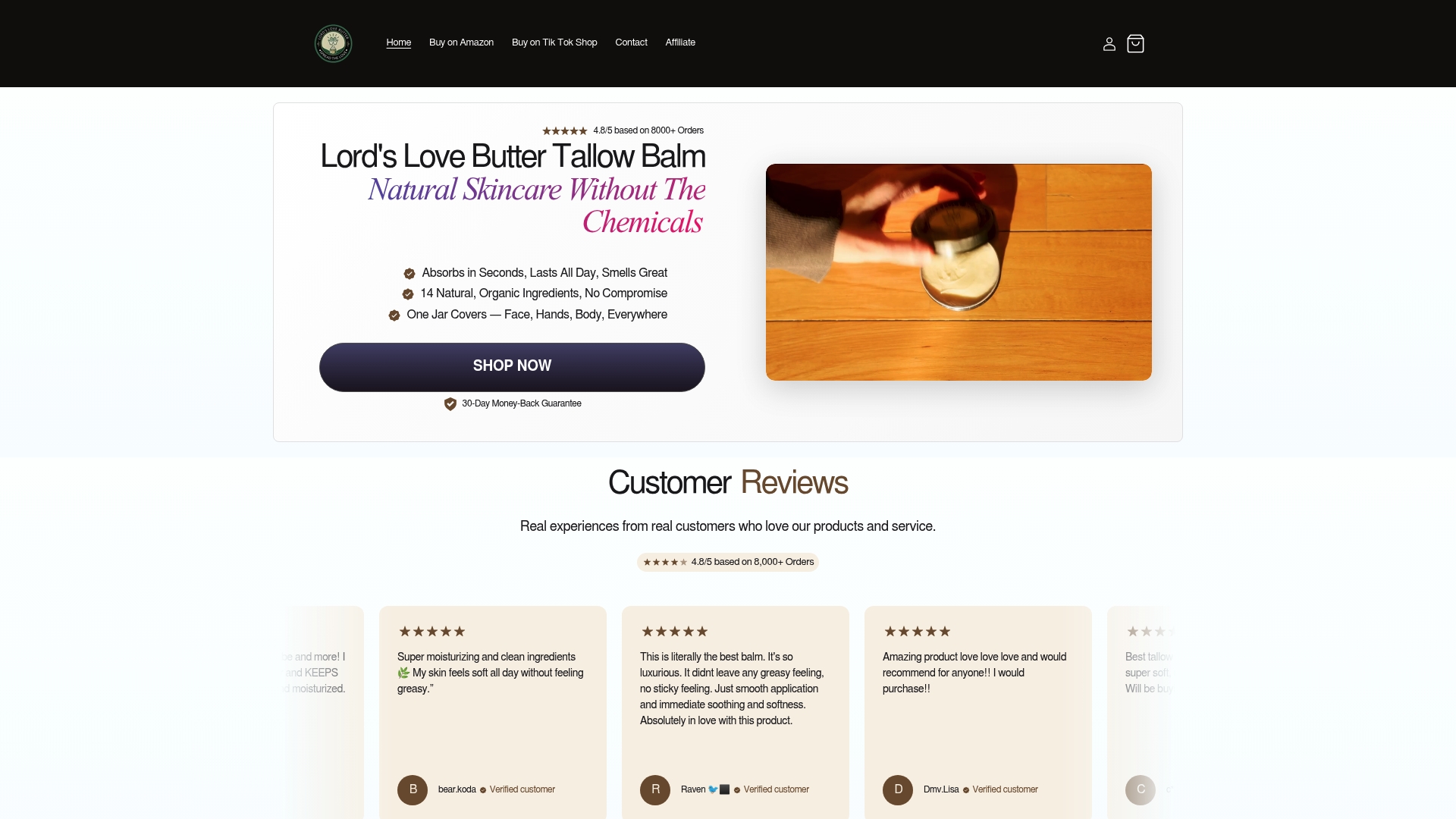
For a routine built around one active, the Vitamin C Whipped Beef Tallow Balm with Manuka Honey & Squalane combines antioxidant support with barrier repair so you don’t need a separate serum. The Whipped Beef Tallow Balm in the 2.4 oz tin is the straightforward option for sensitive or very dry skin that needs lipid support without any actives. Both are suitable for face and body, which means one product genuinely covers multiple steps. Visit the product pages for the full ingredient list and usage directions, and find the formulation that fits your skin.
Useful sources and further reading
- Minimalist Skincare: The Evidence-Based Routine Your Skin Actually Needs — FoxHall Dermatology
- The Minimalist Routine for Maximal Control — Curology
- Skin Fasting & Skinimalism: Does Doing Less Work? — DermApproved
- Minimalist Skincare: The Evidence-Based Routine Your Skin Actually Needs — Skincare.com
- The Minimalist Skin Care Routine That Works: A Complete Guide — Preventive Medicine Daily
- Your Minimalist Skin Care Routine — Ulta Beauty
- Minimize Your Skincare Ingredient List: A Clear Guide — Lordslovebutter
- Clean Skincare Ingredient Checklist for Adults: 2026 Guide — Lordslovebutter
- Minimal Ingredient Moisturizer Advantages for Sensitive Skin — Lordslovebutter
- National Library of Medicine — PMC: Skincare and Barrier Research

