

How Tallow Restores Skin Texture: a Natural Guide
Tallow restores skin texture by delivering fatty acids that act as emollients and occlusives, smoothing rough patches and locking in moisture at the skin’s surface. Beef tallow contains oleic, stearic, and palmitic acids that soften the skin and reduce water loss, making it one of the more biologically compatible fats used in natural skincare. Its lipid profile closely resembles human sebum, which means the skin absorbs it more readily than many synthetic alternatives. Tallow also carries fat-soluble vitamins A, D, E, K, and B12, though the evidence on how well skin absorbs these in tallow form remains limited. For people dealing with dryness, roughness, or sensitivity, tallow offers a straightforward, ingredient-minimal path to improved skin feel.
How tallow restores skin texture through fatty acids
Tallow’s fatty acids work in two distinct ways on the skin surface. As emollients, they fill the gaps between skin cells, smoothing out rough or flaky texture. As occlusives, they form a physical barrier that slows water from evaporating off the skin.
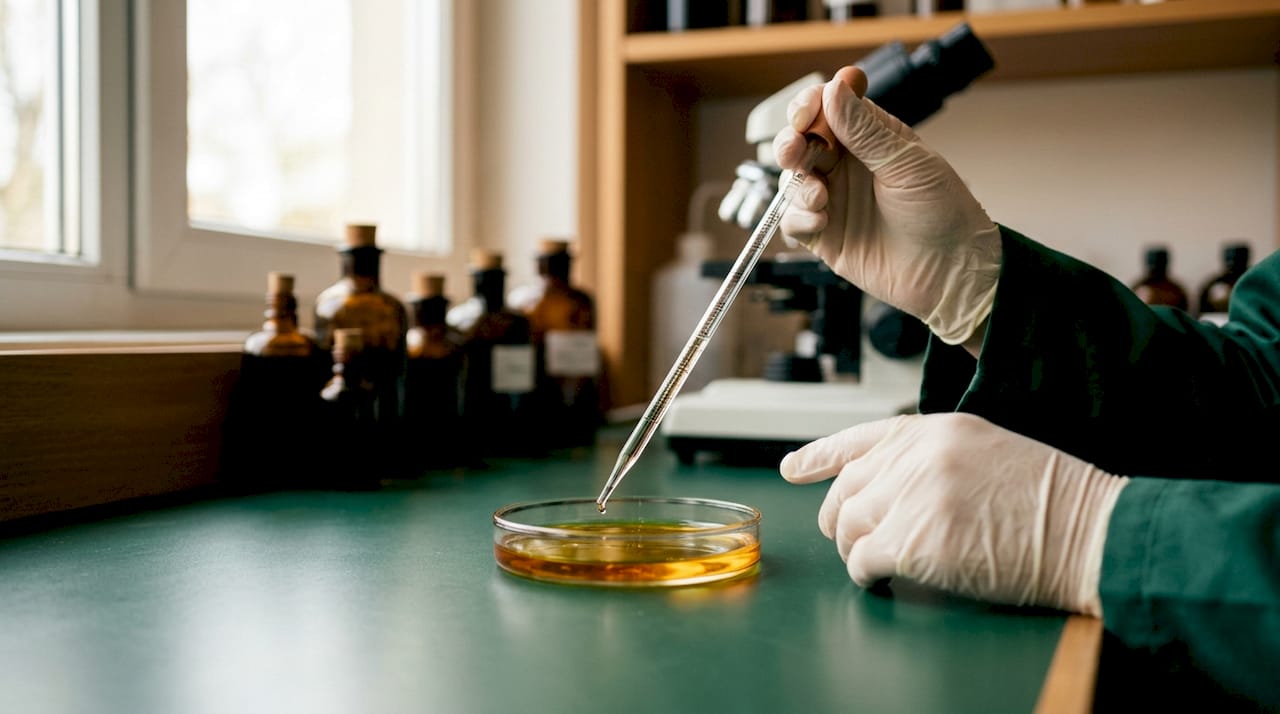
Oleic acid, which makes up a large share of tallow’s fat content, penetrates the outer skin layer and softens it from within. Stearic acid reinforces the skin’s own lipid structure, helping it hold together and feel firmer. Together, these two acids reduce transepidermal water loss, which is the main driver of dry, uneven skin texture.
Linoleic acid in tallow adds another benefit: it carries anti-inflammatory properties that can calm redness and reduce minor swelling. This is why tallow sometimes soothes irritated skin faster than plain petroleum-based products. The lipid replenishment also supports the skin barrier, which is the layer responsible for keeping irritants out and moisture in.
- Oleic acid: softens and penetrates the outer skin layer
- Stearic acid: reinforces the skin’s lipid structure and improves firmness
- Palmitic acid: acts as an emollient to smooth surface texture
- Linoleic acid: reduces redness and supports barrier repair
- Fat-soluble vitamins (A, D, E, K): may support cell turnover and healing, though absorption from tallow is not confirmed
Pro Tip: Warm a small amount of tallow between your palms for 10–15 seconds before applying. The heat softens the fat and helps it spread evenly, improving absorption and reducing any greasy feel.
What does the science actually say about tallow for skin?
The honest answer is that clinical evidence on tallow is limited. Clinical studies do not confirm that beef tallow outperforms standard moisturizers for healing skin texture. Ceramide-rich formulations, for example, have more consistent research behind them for repairing the skin barrier. That does not make tallow ineffective. It means the research simply has not caught up with the widespread anecdotal use.
Dermatologists raise specific cautions worth knowing. Tallow can clog pores in people with acne-prone or oily skin, leading to breakouts or irritation. Its heavy occlusive nature, which is a benefit for dry skin, becomes a liability when pores are already prone to congestion.
“Patch testing is essential before widespread use. Discontinue immediately if you notice redness, bumps, or increased irritation.” — Scripps Health dermatology guidance
There is also a nuance around eczema. High oleic acid concentration may actually disrupt an already compromised skin barrier in some eczema sufferers, potentially worsening dryness rather than relieving it. This is counterintuitive, since tallow is often marketed as an eczema remedy. The reality is more individual. Some people with eczema respond well; others do not. Consulting a dermatologist before using tallow on actively inflamed or broken skin is the safer path. For a closer look at how tallow compares to prescription options, the tallow vs. prescription creams breakdown covers the key differences.
One more risk to flag: added fragrances in tallow products are a common source of contact dermatitis. Fragrance-free formulations significantly reduce that risk. If a tallow product lists essential oils or botanical extracts, treat it with the same caution you would any scented moisturizer.
How to use tallow for skin texture improvement
Getting results from tallow depends heavily on technique. Applying it incorrectly leads to a greasy, heavy feel that most people dislike and abandon quickly.
- Cleanse first. Apply tallow only to clean skin. Residue, sunscreen, or makeup left on the skin creates a barrier that blocks absorption.
- Apply on slightly damp skin. Damp skin maximizes absorption and reduces the greasy residue that puts many people off tallow. Pat skin dry but leave it slightly moist before applying.
- Use a small amount. A pea-sized amount covers the face. More is not better with tallow. Excess product sits on top of the skin rather than absorbing.
- Warm it in your palms. Rub the tallow between your hands until it melts slightly, then press it gently into the skin rather than rubbing aggressively.
- Layer it last. If you use a serum or lighter moisturizer, apply those first. Tallow goes on top as the final occlusive layer. This approach, sometimes called the “sandwich method,” gives you hydration from the lighter product and moisture retention from the tallow.
- Patch test before full use. Apply a small amount to the inner forearm or behind the ear and wait 1–2 days before applying it to your face or body. This catches allergic or irritant reactions early.
Pro Tip: Mix a small amount of tallow with your regular lightweight moisturizer in your palm before applying. This cuts the heaviness and lets you customize the texture to your skin’s needs on any given day.
For a detailed walkthrough on avoiding residue, the guide on applying whipped tallow covers the technique step by step.
How does tallow affect different skin types?
Tallow does not work the same way for every skin type. Understanding where it fits and where it does not saves a lot of frustration.
| Skin type | How tallow typically performs | Key consideration |
|---|---|---|
| Dry skin | Strong benefit; occlusive hydration reduces flaking and roughness | Apply on damp skin for best results |
| Sensitive skin | Generally well tolerated; lipid similarity reduces reactivity | Choose fragrance-free, grass-fed tallow only |
| Normal skin | Useful as a targeted treatment for dry patches | Avoid daily full-face use to prevent heaviness |
| Oily skin | High risk of clogged pores and breakouts | Not recommended for full-face use |
| Acne-prone skin | Likely to worsen congestion and breakouts | Avoid; use non-comedogenic alternatives |
| Eczema-affected skin | Mixed results; may help or worsen depending on barrier status | Consult a dermatologist before use |
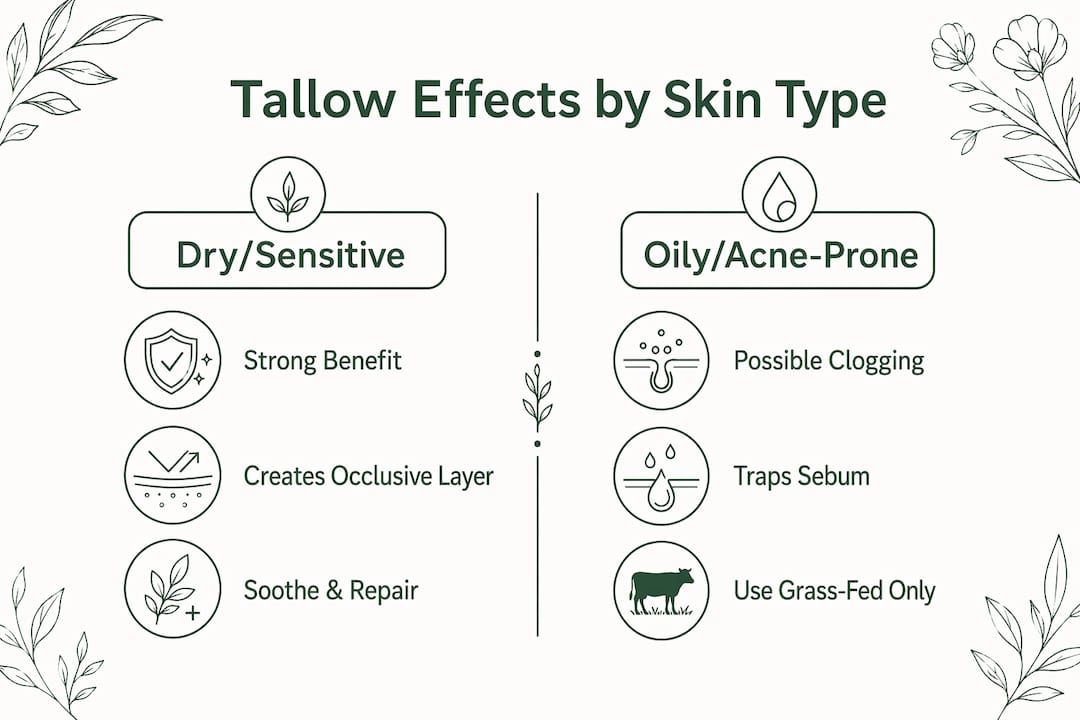
Dry and sensitive skin types get the most consistent benefit from tallow. The occlusive layer it creates is exactly what these skin types need to stop moisture from escaping. People with sensitive skin often find that tallow’s minimal ingredient list reduces the chance of a reaction compared to products with long ingredient decks.
Oily and acne-prone skin types face the opposite problem. Tallow’s heavy occlusion traps sebum and dead skin cells inside pores. That environment encourages breakouts. For these skin types, lighter, non-comedogenic moisturizers are a better fit. For those managing eczema specifically, the tallow eczema guide walks through real examples of how different people respond.
Grass-fed tallow products are preferable across all skin types that do choose to use tallow. Proper sourcing reduces contaminants and produces a more consistent fat profile. Tallow quality varies significantly depending on how the animal was raised and how the fat was rendered.
Key Takeaways
Tallow restores skin texture by replenishing the skin’s lipid layer with fatty acids that smooth, seal, and support the barrier, but results depend on skin type, product quality, and application technique.
| Point | Details |
|---|---|
| Fatty acids drive results | Oleic, stearic, and linoleic acids smooth texture, reduce water loss, and calm inflammation. |
| Lipid similarity aids absorption | Tallow’s fat profile resembles human sebum, making it easier for skin to absorb than many synthetic fats. |
| Clinical evidence is limited | Tallow has not been proven superior to ceramide-rich moisturizers in controlled studies. |
| Technique matters significantly | Apply on damp skin, warm first, and use small amounts to avoid greasiness and improve absorption. |
| Skin type determines suitability | Dry and sensitive skin benefit most; oily and acne-prone skin should avoid tallow or test cautiously. |
What I have learned from using tallow on real skin
I have watched people try tallow and get wildly different results, and the gap almost always comes down to two things: sourcing and technique. People who buy cheap, unrendered, or heavily processed tallow and slather it on dry skin in large amounts tend to quit within a week. People who warm a small amount of quality, grass-fed tallow and press it into damp skin often stick with it for months.
The part most people miss is that tallow is not a replacement for a full skincare routine. It is an occlusive layer. If your skin is dehydrated, tallow will lock in that dehydration just as effectively as it locks in moisture. You need water in the skin first, which is why the damp-skin application step is not optional.
I am also cautious about the eczema claims circulating online. Tallow can genuinely help some people with eczema, but it can make others significantly worse. The oleic acid content is the variable. High oleic acid is great for intact skin barriers and rough for compromised ones. If your skin barrier is already damaged, start with a patch test and give it a full two days before drawing conclusions.
The sourcing question matters more than most people realize. Grass-fed tallow has a cleaner fat profile and fewer processing byproducts. Lordslovebutter uses grass-fed beef tallow specifically for this reason, and the difference in texture and skin feel compared to generic rendered fat is noticeable. If you are going to try tallow, start with a product you can trust.
— Michael
Lordslovebutter whipped tallow balm for skin texture
If you are ready to try tallow on dry or rough skin, the formulation matters as much as the ingredient itself.
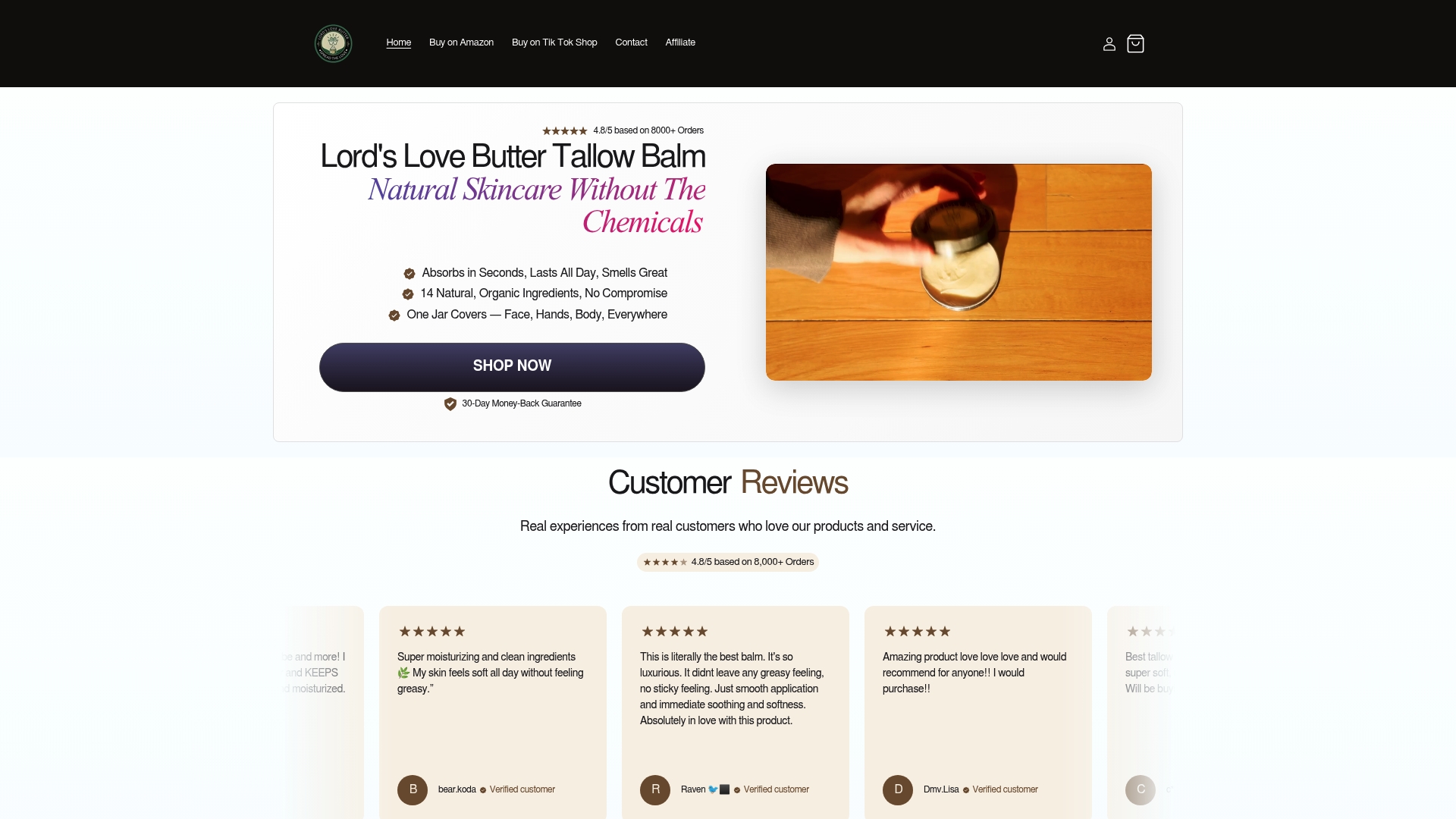
Lordslovebutter’s Whipped Beef Tallow Balm with Manuka Honey is made from grass-fed beef tallow with no synthetic chemicals or added fragrances. The whipped texture makes it easier to warm and apply in small amounts, which is exactly the technique that gets results. Manuka honey adds a layer of hydration that complements tallow’s occlusive action. The formula is designed for whole-body use, including sensitive areas, and customers report noticeable texture improvement within days. Lordslovebutter is a veteran-owned business that keeps the ingredient list short and the quality high.
FAQ
What does tallow do to skin texture?
Tallow smooths skin texture by filling gaps between skin cells with fatty acids that act as emollients and by forming an occlusive layer that reduces water loss. The result is softer, more even skin over consistent use.
Can tallow heal irritated or inflamed skin?
Tallow may soothe mildly irritated skin through the anti-inflammatory properties of linoleic acid, but it is not recommended for actively broken or inflamed skin without dermatologist guidance. People with eczema should patch test first, as high oleic acid content can worsen a compromised barrier.
How long does tallow take to improve skin texture?
Results vary by skin type and application consistency. Some Lordslovebutter customers report improved texture within a few days of regular use. Dry skin types tend to see faster results than those with normal or combination skin.
Is tallow better than regular moisturizer for dry skin?
Tallow has not been proven superior to ceramide-rich moisturizers in clinical studies. It works well as an occlusive layer for dry skin, but clinically tested moisturizers with ceramides and humectants have stronger research support for barrier repair.
How do you apply tallow without a greasy feel?
Apply a small, pea-sized amount to slightly damp skin after warming it between your palms. Using less product and applying it to damp rather than dry skin are the two steps that eliminate most of the greasy residue people associate with tallow.

