
Topical medical-grade Manuka honey can hydrate psoriasis plaques and calm some local inflammation for certain people, but it is not a proven treatment on its own. The strongest human evidence, a small pilot trial, found honey performed about the same as basic aqueous cream, not better than it. Talk to your dermatologist before swapping out any prescribed regimen, and treat honey as a possible add-on rather than a replacement.
TL;DR:
- Small clinical trials show Manuka honey performs similarly to basic moisturizers in treating psoriasis, with no significant improvement over placebo.
- Honey’s anti-inflammatory properties are supported by laboratory studies, but large-scale, well-controlled trials are lacking to prove clinical effectiveness.
- Using medical-grade honey with standardized MGO content and occluding it overnight is essential for consistent results and safety.
- Honey should be considered an adjunct for mild psoriasis or dry patches and not a substitute for prescribed topical treatments or systemic therapies.
- Formulated balms with Manuka honey provide a cleaner, more stable, and more practical option than raw honey for nightly application.
Table of Contents
- What The Research Says About Manuka Honey And Psoriasis
- How To Use Manuka Honey On Psoriasis Plaques
- Safety, Allergies, And When To Stop
- Manuka Honey Versus Standard OTC Psoriasis Treatments
- Where Formulated Balms Fit Into The Bigger Picture
- Try A Formulated Manuka Balm Instead Of Messy Raw Honey
- Sources
- FAQ
What The Research Says About Manuka Honey And Psoriasis
The best available clinical evidence comes from a 2014 pilot study that tested medical-grade Kanuka honey, a close relative of Manuka, against plain aqueous cream on matched plaques on opposite sides of the same patients’ bodies. Fifteen adults applied one product to one plaque and the comparator to the mirror-image plaque nightly for two weeks under occlusive dressings. Investigator-rated lesion intensity improved in both groups, and there was no statistically significant difference between honey and the cream. That result is worth sitting with. It does not say honey failed. It says honey performed on par with a bland moisturizer under tightly controlled, blinded conditions, in a randomized controlled trial that was too small to detect anything short of a dramatic effect.
By the numbers: 15 participants, two weeks of nightly application, high treatment adherence, and zero treatment-related adverse events. Small, but clean.
Beyond that trial, a broader clinical review of raw honey’s anti-inflammatory properties points to smaller case series where patients saw short-term plaque improvement using honey under occlusion, though the authors are blunt about needing well-designed, double-blind, placebo-controlled trials before drawing firm conclusions.
The biological argument for why honey might help is more convincing than the clinical trial data so far:
- Manuka honey carries unusually high levels of methylglyoxal (MGO), a compound tied to its antimicrobial punch.
- Its flavonoid content has documented anti-inflammatory activity in laboratory and animal models.
- Some components appear to activate the aryl hydrocarbon receptor (AHR), a signaling pathway involved in skin barrier repair and local inflammation control.
None of that proves honey changes the course of psoriasis, which is a systemic autoimmune condition, not a surface infection. It just means there’s a plausible mechanism behind the anecdotal reports, which is more than most kitchen-cabinet remedies for psoriasis natural remedies can claim. The honest summary: small samples, short durations, inconsistent honey grades between studies, and a real need for larger, better-controlled trials before anyone calls this a treatment rather than a comfort measure.
How To Use Manuka Honey On Psoriasis Plaques
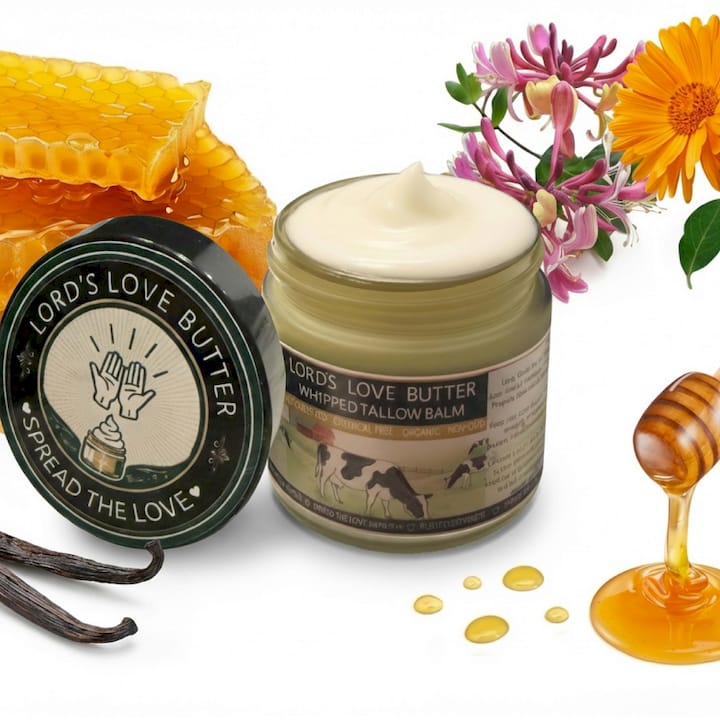
Not all honey on a store shelf is created equal, and that distinction matters more here than almost anywhere else in skincare. Medical-grade Manuka honey, standardized for MGO content and sterility, is what clinical studies actually use. Raw honey from a farmers market jar may still contain the same active compounds, but it also carries a small risk of contamination and offers no batch consistency, and it is genuinely messy to work with on a plaque you’re trying to keep covered overnight.
Here’s roughly how the trials structured application, adapted for home use:
- Wash and pat dry the plaque you’re treating.
- Apply a thin, even layer of medical-grade honey or a honey-based balm directly to the affected skin.
- Cover with a non-stick dressing or wrap if you’re trying to replicate trial-level occlusion.
- Leave in place overnight, roughly the same 8 to 10 hour window researchers used.
- Remove in the morning, rinse gently, and follow with a plain moisturizer.
- Repeat nightly for two to four weeks before judging results.
That occlusion step is the part most people skip, and it’s probably the part that matters most for manuka honey skin treatment to have any real contact time with the plaque. Raw honey under a loose bandage tends to shift, dry out, or leak onto sheets, which is exactly why a formulated balm, one that blends whipped tallow with Manuka honey for a stable, non-greasy vehicle, tends to stay put and get used consistently night after night.
Pro Tip: Track your plaques with a weekly photo under the same lighting. Psoriasis improvement is slow and subjective enough that your memory will lie to you before your camera roll does.
Safety, Allergies, And When To Stop
Honey is a bee product, and bee product allergies are real, so patch-test before treating anything larger than a coin-sized area. Apply a small amount to your inner forearm, cover it, and wait 48 to 72 hours, watching for redness, itching, or swelling beyond the test site.
Stop immediately and contact a dermatologist if you notice:
- Increased redness, warmth, or swelling around a treated plaque
- Yellow drainage, crusting, or a foul odor, which can signal secondary infection
- Hives, facial swelling, or any systemic reaction after topical use
If you have diabetes, be cautious about oral honey consumption, though topical application on intact or plaque-affected skin is a separate question your prescribing clinician should weigh in on directly. The same goes for anyone using prescribed topical steroids, calcineurin inhibitors, or vitamin D analogs. Layering honey underneath or alongside those products without checking first can affect absorption or irritate already sensitive skin. A hypoallergenic formulation with fewer added ingredients lowers your allergy risk compared to multi-active honey serums, and a proper patch test protocol is worth following exactly, not approximating.
Manuka Honey Versus Standard OTC Psoriasis Treatments
Honey earns a reasonable spot in a symptom-management routine, but it isn’t competing in the same weight class as prescription-strength options. Here’s how it stacks up on the factors that actually matter to someone managing plaques day to day:
- Hydration: Honey is a natural humectant and performs well here, comparable to plain aqueous cream in the pilot trial.
- Anti-inflammatory strength: Modest and mechanism-based; salicylic acid keratolytics and topical corticosteroids have far stronger, better-documented effects on plaque thickness and scaling.
- Evidence base: Thin. A handful of small trials and case series versus decades of dermatology research behind topical steroids and vitamin D analogs.
- Practicality: Raw honey is messy and hard to keep in contact with skin; a stable balm format solves that but hasn’t itself been trial-tested at scale.
Honey makes the most sense as an adjunct for mild plaques, dry patches, or fissuring, layered in after your prescribed treatment rather than instead of it. If you’re managing moderate to severe plaques, prioritize what your dermatologist has already prescribed, and treat honey as a hydrating add-on you apply on nights off from stronger topicals. Pairing it with a realistic 8 to 12 week evaluation window, the same kind of timeline researchers use for other topical actives, keeps expectations grounded.
Where Formulated Balms Fit Into The Bigger Picture
I run editorial content for Lord’s Love Butter, a veteran-owned skincare company that makes a whipped tallow balm blended with Manuka honey and propolis. Our own 7-night trial on eczema-prone skin showed improved hydration and good tolerability, though that was a small internal trial, not a peer-reviewed study, and I won’t pretend otherwise. What it taught us is that people stick with a product that doesn’t slide off overnight, which is exactly where raw honey tends to fail and a stable balm tends to succeed.
— Michael
Try A Formulated Manuka Balm Instead Of Messy Raw Honey
If the occlusion research above convinced you that contact time matters more than the honey itself, a formulated vehicle solves the actual problem raw honey creates. The [Whipped Beef Tallow Balm with Manuka Honey & Propolis](https://blend. Grass-fed tallow with Manuka honey in a balm format designed to stay put on skin overnight and avoid synthetic fillers that may irritate sensitive skin.
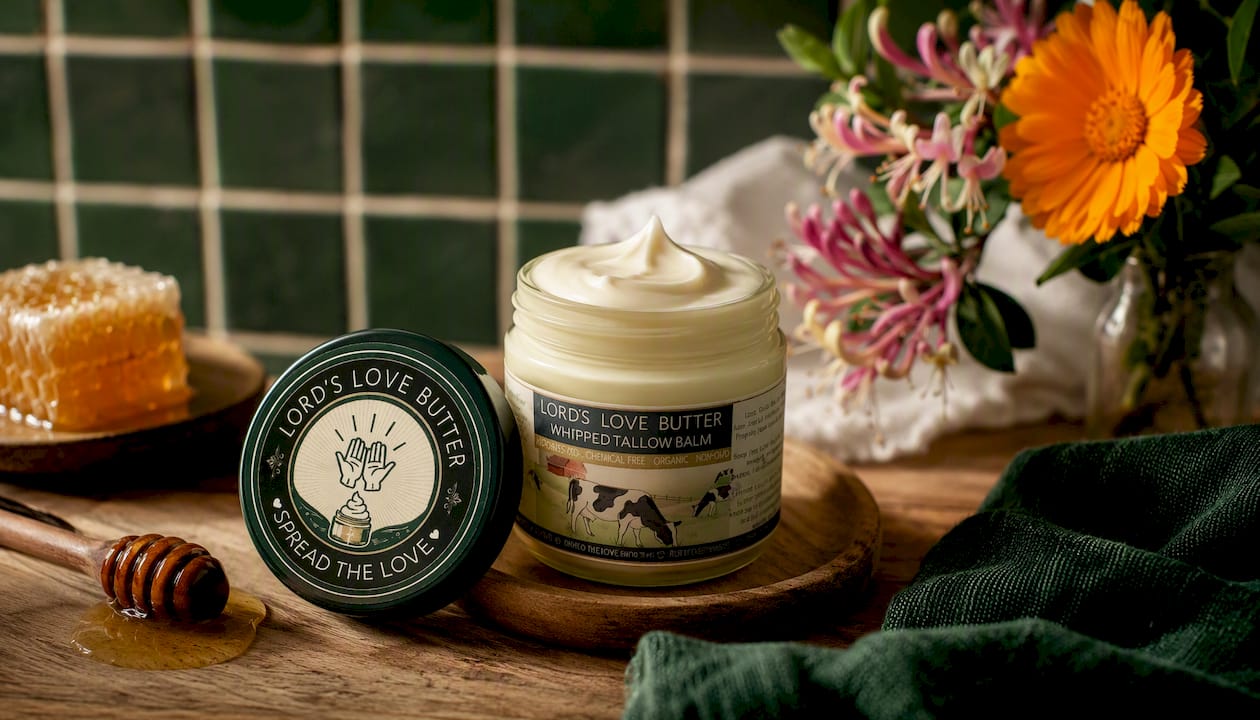
The whipped texture spreads thin and absorbs without the sticky residue raw honey leaves behind, making the nightly routine easier to follow. It can be applied broadly and may serve as a daily moisturizer between treatment nights. If you’re curious how it fits into a broader skin routine, the Daily Ritual Kit bundle pairs it with complementary balms for a full routine. Order the 2.4 oz jar and give it a two to four week trial alongside whatever your dermatologist has already recommended.
Sources
- A randomised controlled trial of topical Kanuka honey for the treatment of psoriasis
- Anti-inflammatory properties of raw honey and its clinical applications in daily practice - PubMed
This article is general information, not a substitute for advice from a qualified doctor. Consult a qualified healthcare professional about your own circumstances before acting on anything here.
FAQ
Can Manuka Honey Ointment Treat Psoriasis?
It can help hydrate plaques and may ease mild local inflammation, but the only real trial data shows it performing about the same as basic moisturizer, not curing or clearing psoriasis outright.
What Do The Japanese Use For Psoriasis?
Dermatology practice in Japan follows the same evidence-based framework used globally, centered on topical corticosteroids, vitamin D analogs, phototherapy, and systemic biologics for moderate to severe cases, not a single national home remedy.
What Does Kim Kardashian Use For Her Psoriasis?
Celebrity skincare routines are not clinically documented treatments, and no verified medical source confirms a specific product regimen; readers should rely on dermatologist-guided care rather than celebrity anecdotes.
How Can I Get Rid Of Psoriasis Holistically?
There’s no verified holistic cure for psoriasis since it’s a chronic autoimmune condition, but combining prescribed treatment with hydration, stress management, and gentle products like a Manuka honey balm can support symptom relief alongside medical care.