

Use SPF 30+ Mineral Zinc Balm to Protect Lips From Sun
Grab a broad-spectrum SPF 30+ lip product and make zinc oxide your go-to filter if your lips are sensitive or prone to burning. Lips have thinner skin and less melanin than the rest of your face, and UV exposure hits them year-round, even under clouds. The bottom lip takes the worst of it because of its angle toward the sun, making it significantly more vulnerable to sunburn.
Before you head out, check that your lip balm covers these basics:
- SPF 30 or higher
- Broad-spectrum labeling (blocks both UVA and UVB)
- Zinc oxide or titanium dioxide as the active ingredient
- Reapplied every couple of hours, more if you’re eating, drinking, or swimming
Table of Contents
- What Makes a Lip Sunscreen Actually Work?
- How Do You Apply and Reapply Lip Sunscreen Correctly?
- What Should You Avoid When Protecting Your Lips?
- How Do You Treat Sunburned Lips?
- Why a Zinc-Oxide Tallow Balm Makes Sense for Daily Protection
- How Do Lifestyle and Location Change Your Lip Sun Risk?
- What Other Protective Measures Help Beyond Lip Balm?
- What matters most when protecting your lips from sun damage?
- Why Mineral Zinc Deserves More Credit Than It Gets
- Get Daily Lip Protection With Lordslovebutter’s Zinc Balm
- Sources
What Makes a Lip Sunscreen Actually Work?
Not every lip product marked “SPF” does the same job. The number tells you how much UVB radiation it blocks. SPF 15 blocks about 93% of UVB rays, while SPF 30 pushes that to roughly 97%, which matters more than it sounds given how thin lip skin is. That 4 percent gap adds up fast on a long day outside.
SPF alone doesn’t guarantee full coverage. “Broad spectrum” on the label means the product also blocks UVA rays, the wavelengths tied to long-term skin aging and deeper tissue damage. A high SPF without broad-spectrum coverage is like a good raincoat with no hood.
Here’s how the two main filter types compare:
- Mineral filters (zinc oxide, titanium dioxide) sit on top of the skin and physically deflect UV rays. They tend to work immediately and rarely irritate sensitive or reactive skin, which is why dermatologists frequently point to mineral formulas for people prone to burning.
- Chemical filters absorb UV radiation and convert it to heat. They can feel lighter but occasionally sting broken or peeling lips, and some ingredients are more likely to trigger allergic reactions.
Water resistance matters if you’re swimming or sweating heavily. Even a “water resistant” balm needs reapplying right after you towel off, not hours later.
Pro Tip: Look for balms that pair zinc oxide with a moisturizing base like shea butter, beeswax, or tallow. These support the lip barrier while the mineral does the blocking. Skip petroleum jelly if your lips are already burned, since it can trap heat against the skin instead of releasing it.
How Do You Apply and Reapply Lip Sunscreen Correctly?
Timing matters as much as the product itself. Most sunscreen labels instruct applying about 15 minutes before sun exposure, giving it time to bind to the skin before UV rays hit.
Liberal application means a visible layer, not a light swipe. Cover the entire lip surface, including the corners of the mouth and the skin just under the nose, which people routinely miss.
- Reapply at least every 2 hours as a baseline
- Reapply immediately after eating, drinking, or swimming
- Layer over lipstick or gloss by patting the balm on rather than dragging it, which preserves the color underneath
- For children, use a mineral formula and check with a pediatrician before applying anything to infants under 6 months
The bottom lip deserves extra attention. It’s up to 12 times more likely to burn than the top lip simply because of the angle it faces the sun.
What Should You Avoid When Protecting Your Lips?
A few common habits quietly undo your sun protection or slow down healing once damage happens.
- Skip petroleum-based balms right after a burn. They can trap heat against already-inflamed skin instead of letting it dissipate.
- Avoid topical anesthetics containing “-caine” ingredients (like benzocaine or lidocaine) on lips. They carry ingestion risk, especially for young children, and can mask worsening symptoms.
- Check labels carefully if kids are using lip products nearby. Small children put things in their mouths, and flavored balms make that more tempting.
- Remember that lips have thinner skin and far less melanin than the rest of your face, which is exactly why they burn faster and heal slower.
How Do You Treat Sunburned Lips?
Damage happened anyway? Move fast on relief and slow on healing expectations.
- Apply a cold, damp compress for 10 to 15 minutes at a time to calm swelling and pain.
- Use pure aloe vera (100% aloe, no added fragrance or alcohol) in a thin layer for cooling relief.
- Take an oral anti-inflammatory like ibuprofen if pain or swelling is significant.
- Moisturize with a gentle, non-petroleum balm as skin recovers; avoid anesthetic “-caine” products.
Most lip sunburns from this approach ease within a few days. See a doctor if you notice blisters, oozing, fever, or pain that hasn’t improved after a week. Sunburned lips also raise the odds of a cold sore flare, since the compromised barrier gives the virus an opening.
Why a Zinc-Oxide Tallow Balm Makes Sense for Daily Protection
A stick-format mineral sunscreen solves the two biggest complaints people have about lip SPF: it feels heavy, or they forget to reapply it. Zinc oxide works as a physical blocker sitting on the surface of the lip, which means it’s active the moment it touches skin and rarely causes the stinging some chemical filters do on already-dry or cracked lips.
What goes underneath the zinc matters too. A base built on whipped beef tallow and Manuka honey supports the skin barrier while it’s exposed, rather than just sitting on top of it. Tallow’s fatty acid profile resembles the lipids naturally found in human skin, so it absorbs without leaving the greasy film some sun sticks are known for.
This format earns its keep in a few specific situations:
- Daily wear under makeup, since a stick applies quickly without disturbing lip color
- Outdoor sports and hiking, where sweat-proof reapplication needs to happen without a mirror
- Travel, where a solid stick survives a bag better than a tube of gloss
Lordslovebutter’s Beef Tallow Sun Balm Stick with Zinc Oxide follows this exact formula: mineral zinc for the block, tallow and Manuka honey for the barrier support. If you want to understand the mechanics behind why tallow and zinc pair well together, this breakdown goes into more depth.
Where This Guidance Comes From
Lordslovebutter builds its formulas around whipped, grass-fed beef tallow with no synthetic fillers, gentle enough for eczema-prone and sensitive skin across the whole body. The brand is veteran-owned, and its customers report visible improvement in skin texture within days of regular use.
Sensitive lips need a product that blocks UV without adding another irritant to skin that’s already thin and reactive. That’s the standard a barrier-supporting mineral balm has to meet.
That standard is exactly why zinc oxide paired with a nourishing fat base, rather than a chemical filter with a long ingredient list, fits the guidance above.
How Do Lifestyle and Location Change Your Lip Sun Risk?
Where you live and how you spend your time outside change your risk more than most people realize. Someone who hikes, skis, or sails regularly gets a double dose of UV: direct sunlight plus reflected light bouncing off snow, water, or pale sand. Snow reflects a striking share of UV back at your face, which is why skiers get lip and nose burns on overcast days just as often as sunny ones.

Altitude plays a role too. UV intensity increases the higher you go, so mountain hikers and skiers face stronger exposure per hour outdoors than someone at sea level. Anyone living or vacationing closer to the equator deals with a consistently higher UV index across the year, while people in northern climates still need protection during summer months when the sun sits higher in the sky.
Occupation matters just as much as geography. Landscapers, lifeguards, farmers, and construction workers spend entire shifts under direct sun, often without shade breaks, which stacks daily exposure in a way weekend beachgoers never experience. Runners and cyclists face a similar issue: workouts often happen during peak UV hours, and the wind and sweat involved strip lip balm faster than casual wear does.
None of this means the person with the highest UV index needs a different product. It means they need to reapply on a tighter schedule and treat lip SPF as part of their gear, not an afterthought they remember halfway through the hike.
What Other Protective Measures Help Beyond Lip Balm?
Sunscreen does the heavy lifting, but it works better paired with a few physical barriers. A wide-brimmed hat, ideally with at least a 3-inch brim, casts shade over your whole face and cuts down how much direct UV reaches your lips. Baseball caps help less here since they leave the lower face exposed.
Seeking shade during the strongest UV hours, generally late morning through mid-afternoon, reduces total exposure without you having to think about reapplication timing as often. Beach umbrellas, trees, and even a car windshield (UVA still passes through side windows more than most people expect) all cut cumulative dose.
A few habits round out the picture:
- Turn your face slightly away from direct overhead sun during long outdoor stretches
- Choose a scarf or buff that covers the lower face during extended exposure, useful for skiing or open-water activities
- Time outdoor workouts for early morning or early evening when UV intensity drops
- Keep lip balm in a pocket or gear bag you actually open, not buried at the bottom of a beach bag
None of these replace sunscreen. They buy you time between applications and reduce how much damage accumulates on days when reapplying every two hours isn’t realistic, like a long trail run or a day on a boat.
What matters most when protecting your lips from sun damage?
Consistent, correctly formulated protection matters more than reaching for sunscreen only on obviously sunny days, since lips burn from cumulative UV exposure that happens year-round regardless of cloud cover.
| Point | Details |
|---|---|
| Choose SPF 30+ | Broad-spectrum SPF 30 blocks about 97% of UVB rays, noticeably more than SPF 15’s 93%. |
| Prefer mineral zinc | Zinc oxide or titanium dioxide physically blocks UV and suits sensitive or reactive lips better than chemical filters. |
| Reapply every 2 hours | Reapply sooner after eating, drinking, or swimming, since lips lose product faster than facial skin. |
| Treat burns gently | Use cold compresses and pure aloe vera; skip petroleum and “-caine” anesthetics while healing. |
| Consider a tallow zinc stick | Lordslovebutter’s Beef Tallow Sun Balm Stick with Zinc Oxide pairs mineral protection with barrier-supporting tallow and Manuka honey. |
Why Mineral Zinc Deserves More Credit Than It Gets
Most sun advice treats lips as an afterthought, a quick swipe of leftover face sunscreen if you remember. That’s backward. Lips burn faster, heal slower, and get less melanin protection than almost any other exposed skin on your body, yet they’re usually the last thing covered and the first thing forgotten mid afternoon.
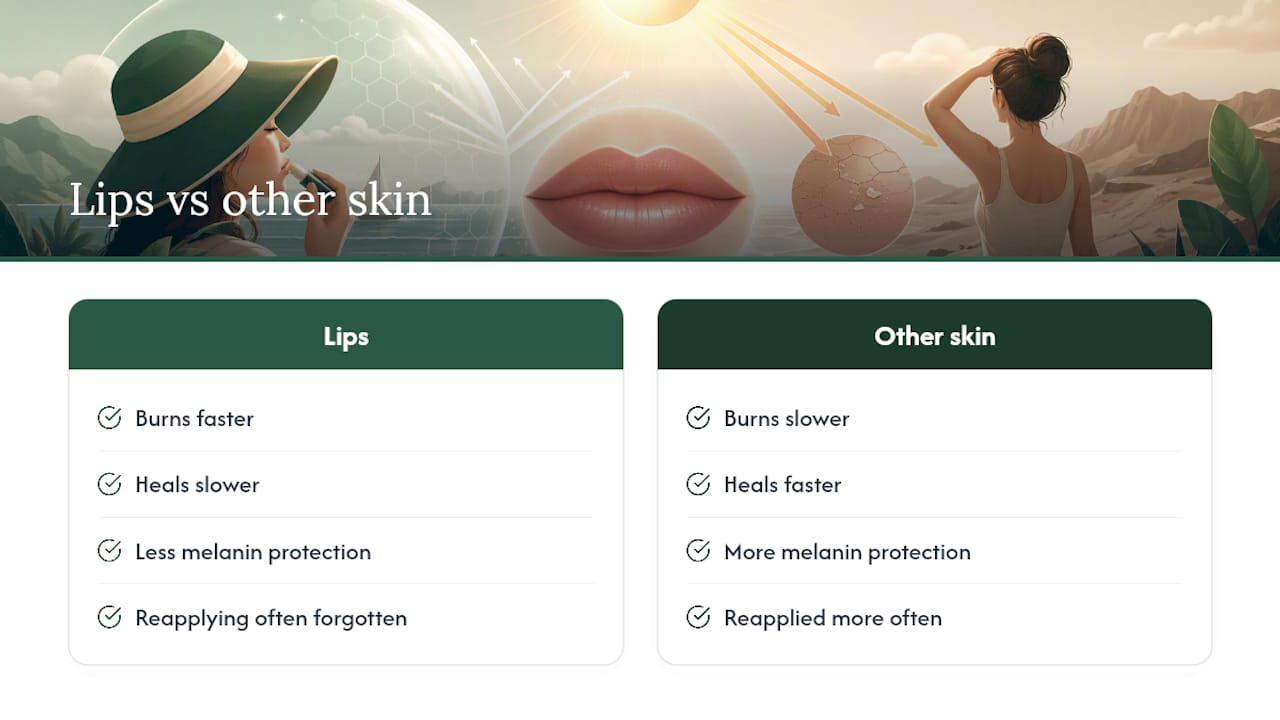
The bigger blind spot is reapplication, not initial application. People remember to put balm on before they leave the house and then forget it exists for the next six hours, even though eating, drinking, and wind strip lip product faster than anything on your cheeks. If there’s one habit worth building, it’s tying reapplication to something you already do, like right after a meal or right after toweling off from a swim.
Mineral zinc gets underrated because chemical sunscreens dominate shelf space and marketing, but for anyone with reactive, cracked, or already sensitive lips, the physical block is simply the gentler mechanism. A tallow-based zinc balm doesn’t just block UV; it moisturizes while it does the job, which matters far more on lips than it does anywhere else on your body.
— Michael
Get Daily Lip Protection With Lordslovebutter’s Zinc Balm
Lordslovebutter’s Beef Tallow Sun Balm Stick with Zinc Oxide gives you broad-spectrum mineral protection in a formula built on grass-fed tallow and Manuka honey instead of synthetic fillers, so sensitive or eczema-prone lips get sun protection and barrier repair in one swipe.
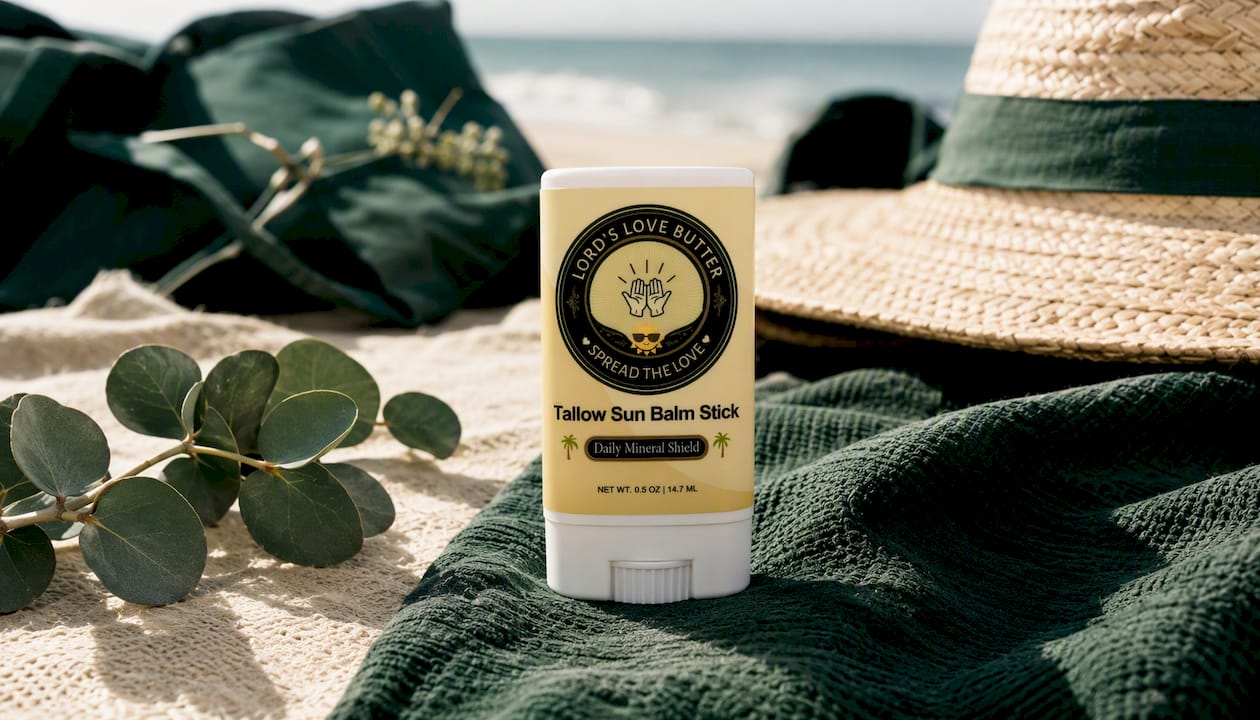
The stick format solves the reapplication problem this article keeps circling back to: no fingers, no mess, just a quick reapply after lunch or a swim. If you already use a minimalist routine or you’re layering it with other natural products, it fits the same simple, multipurpose approach Lordslovebutter builds its whole line around, and pairs easily into your existing layering routine without adding extra steps.
Check the Beef Tallow Sun Balm Stick page to see sizing and add it to your kit before your next day outside.
This article is general information, not a substitute for advice from a qualified doctor. Consult a qualified healthcare professional about your own circumstances before acting on anything here.
Sources
- Sunburned lips: swelling, healing time, and more | Cleveland Clinic
- How to treat sunburned lips | Healthline
- All Good SPF product labeling excerpt | DailyMed
Recommended
- Beef Tallow Sun Balm Stick with Zinc Oxide | Daily Mineral Shield – Lord’s Love Butter
- Tallow and Zinc Sunscreen: Does It Actually Protect You? – Lord’s Love Butter
- Mint Beef Tallow Lip Balm Stick | Natural Lip Relief | Water-Free – Lord’s Love Butter
- The Daily Ritual Kit | Tallow Balm Jar + Lip Balm + Sun Balm Bundle – Lord’s Love Butter

