

3–7 Days to Tell Parents If Tallow Helps Your Baby's Diaper Rash
Tallow can genuinely help mild, non-infected diaper rash by acting as a moisturizing barrier over irritated skin, but it isn’t an antifungal or antibacterial, so it won’t treat yeast or bacterial infections. Standard barrier products like zinc oxide or petroleum jelly remain the first line for most rashes. If you want to try tallow, patch-test it first, and see a pediatrician if the rash doesn’t improve within 3 to 7 days or looks infected.
TL;DR:
- Tallow is suitable only for mild irritation caused by moisture and friction, not for yeast or bacterial infections with satellite redness or discharge.
- Patch-testing is essential before application, and any rash lasting more than a week or showing signs of infection requires pediatric medical attention.
- Tallow’s fatty acids resemble the skin’s natural lipids, supporting skin repair, but clinical evidence for diaper rash effectiveness is limited.
- Proper skin preparation, frequent diaper changes, and diaper-free time are more critical than product choice alone in treating or preventing diaper rash.
- Choose tallow balms with short ingredient lists, no fragrances, and grass-fed sources, and avoid home remedies that may irritate broken skin or carry health risks.
Table of Contents
- What the Evidence Says About Treating Diaper Rash
- How to Use Tallow Safely for Diaper Rash
- When Tallow Is Not the Right Call
- How to Choose a Tallow Balm for Babies
- Why We Formulate the Way We Do
- Where the Conventional Advice Falls Short
- Try a Simple, Short-Ingredient Option
- Sources
What the Evidence Says About Treating Diaper Rash
Pediatric guidance hasn’t changed much in decades, and for good reason. The Mayo Clinic recommends keeping the diaper area clean and dry, changing diapers frequently, and applying a barrier cream at each change. If the rash doesn’t clear up within about a week of home care, it’s time to call a pediatrician. The Cleveland Clinic points caregivers toward simple occlusive barriers first, like petroleum jelly, before stepping up to higher concentration zinc oxide products.
Tallow fits into this picture as an emollient, not a replacement for either. Rendered grass-fed beef tallow contains oleic, palmitic, and stearic acids, roughly the same fatty acids found in the skin’s own natural lipid barrier. That overlap is why tallow has a long history of use for skin repair, and why parents drawn to short-ingredient products gravitate toward it. But the clinical research on tallow specifically for diaper rash is thin. Most of what supports it is biochemical reasoning and formulation science, not large controlled trials.
Here’s where tallow makes sense, and where it doesn’t:
- Good fit: mild redness, chafing, or irritation from moisture and friction
- Poor fit: rashes with satellite red dots, yellow discharge, or a beefy red appearance typical of yeast
- Not a substitute: medical literature is clear that emollients like tallow work for irritant dermatitis but aren’t a treatment for fungal or bacterial infections
The core distinction: tallow moisturizes and helps seal in the skin’s own barrier. Zinc oxide physically blocks moisture and forms a protective layer over broken skin. They’re doing different jobs, and for a rash that’s already infected, only one of those jobs matters.
How to Use Tallow Safely for Diaper Rash
Getting this right is less about the tallow itself and more about the steps around it. Skip the prep work and you risk trapping moisture against skin that’s already struggling.
- Patch-test first. Apply a small amount to the inside of your own forearm and wait 24 hours for any irritation. If clear, apply a small amount to your baby’s thigh and wait another 24 to 48 hours before using it in the diaper area.
- Clean the area with water and a soft cloth or fragrance-free wipe, then pat completely dry. Skipping this step is the single most common mistake, because sealing moisture under an occlusive layer can make a rash worse, not better.
- Apply a thin layer over the affected skin at each diaper change. A little goes further than you’d expect since tallow spreads easily once it warms against skin.
- Give diaper-free time whenever you can, ideally a few minutes several times a day. Air exposure combined with a barrier speeds healing more than the barrier alone, since it cuts down on prolonged moisture contact.
- At night, apply a slightly thicker layer before a fresh diaper, since overnight stretches mean longer exposure to moisture.
Pro Tip: Keep a small, dedicated container of balm near the changing table so you’re not double dipping fingers into your main jar. Cross-contamination shortens shelf life and introduces bacteria you don’t want anywhere near irritated skin.
Store tallow balm in a cool, dry spot away from direct sunlight. Because it’s anhydrous, meaning it contains no water, it doesn’t need heavy preservatives and tends to hold up well at room temperature for months. If it ever smells off or changes color, toss it.
When Tallow Is Not the Right Call
Home care, tallow included, has a ceiling. Knowing where that ceiling is matters more than any ingredient choice.
Watch for these signs that a rash has moved past what any barrier cream can fix:
- Fever or the baby seeming unusually fussy or lethargic
- Rash that spreads beyond the diaper area or gets worse instead of better
- Yellow crusting, pus, or blistering
- Bleeding or cracked skin that won’t close
- An unusual or foul odor from the affected area
If you’ve been treating a rash for 3 to 7 days with no improvement, contact your pediatrician. A clinician may recommend a short course of mild hydrocortisone for inflammation or an antifungal cream if yeast is involved. Neither of those is something tallow or any home remedy can replace.
While you’re troubleshooting, avoid baking soda, vinegar, and essential oils on broken or inflamed skin. Clinics warn these common “natural” fixes tend to irritate already compromised skin rather than heal it. Skip talc and cornstarch powders too, since they carry respiratory risks for infants and don’t address the underlying moisture problem anyway.
How to Choose a Tallow Balm for Babies
Not all tallow balms belong anywhere near a diaper area. The label tells you almost everything you need to know before you even open the jar.
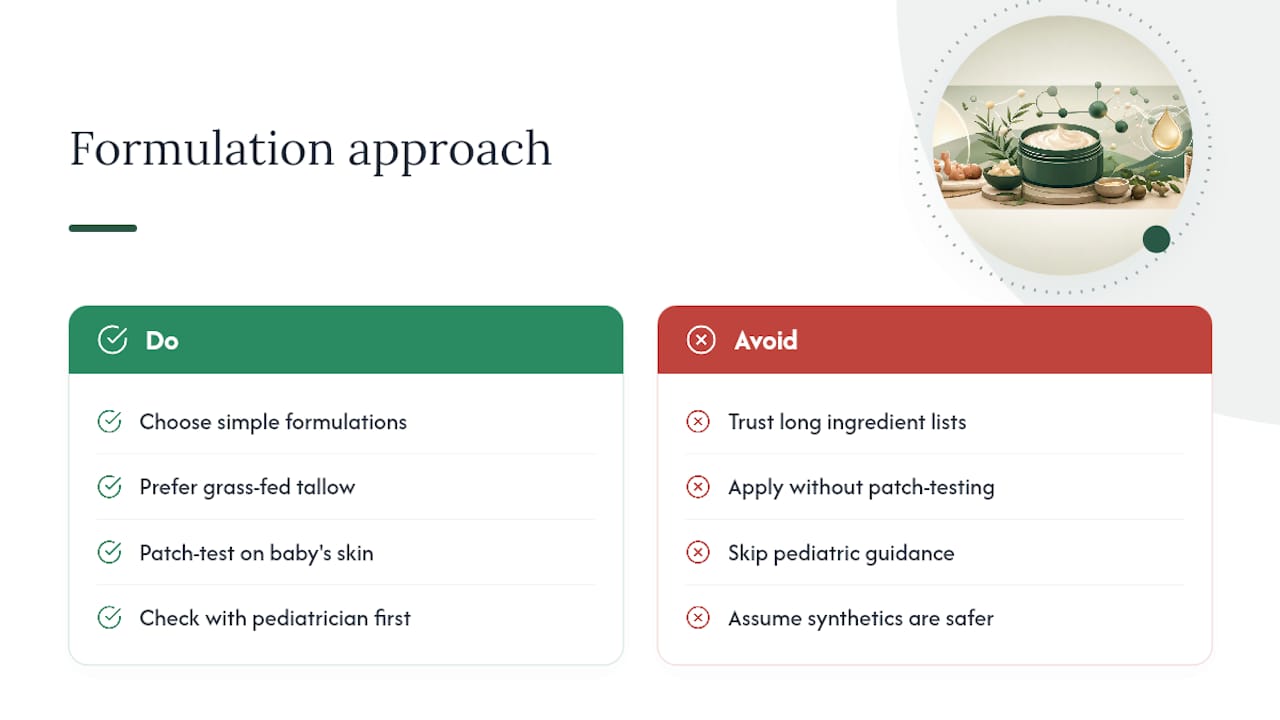
- Short ingredient list. Look for anhydrous formulas with tallow as the primary or sole base. Fewer ingredients generally mean fewer chances for sensitization on skin that’s already inflamed.
- No fragrance, no essential oils. Botanical additives smell nice but are a common source of irritation on compromised skin, regardless of how “natural” they’re marketed as.
- Grass-fed sourcing. Grass-fed tallow tends to carry a richer fat-soluble vitamin content than conventional tallow, though this is a nutritional distinction more than a clinical one.
- Manuka honey, viewed cautiously. Some formulations pair tallow with Manuka honey for its humectant properties. It can help with hydration, but it’s a supporting ingredient, not a treatment, and anyone managing a bee product allergy should check for pollen traces before use.
Pro Tip: If a jar’s ingredient list reads like a smoothie recipe, that’s usually a red flag for baby skin, not a selling point. Compare that against our breakdown of grass-fed tallow baby balm benefits for a closer look at what belongs in a formula built for sensitive skin.
Why We Formulate the Way We Do
I started Lord’s Love Butter because most skincare aisles are full of ingredient lists longer than the label itself. For baby skin, that’s backwards. Our approach leans on grass-fed tallow because its fatty acid profile lines up closely with what skin already produces, and we keep the formulations simple on purpose. Users often notice quick absorption and a non-greasy feel after use, which matters when applying something multiple times a day.
None of that replaces pediatric guidance. Compare tallow’s lipid profile against synthetic moisturizer options if you’re weighing choices, but always patch-test first and check with your pediatrician before using anything new on a baby with broken or irritated skin.
Where the Conventional Advice Falls Short
Most articles on this topic split into two camps: zinc oxide loyalists who dismiss anything else, and natural-remedy enthusiasts who oversell tallow as a cure. Both miss the actual point. Tallow’s fatty acid similarity to skin lipids is a real, defensible reason to consider it for mild irritation. It is not a reason to treat it as interchangeable with a medically studied barrier like zinc oxide.
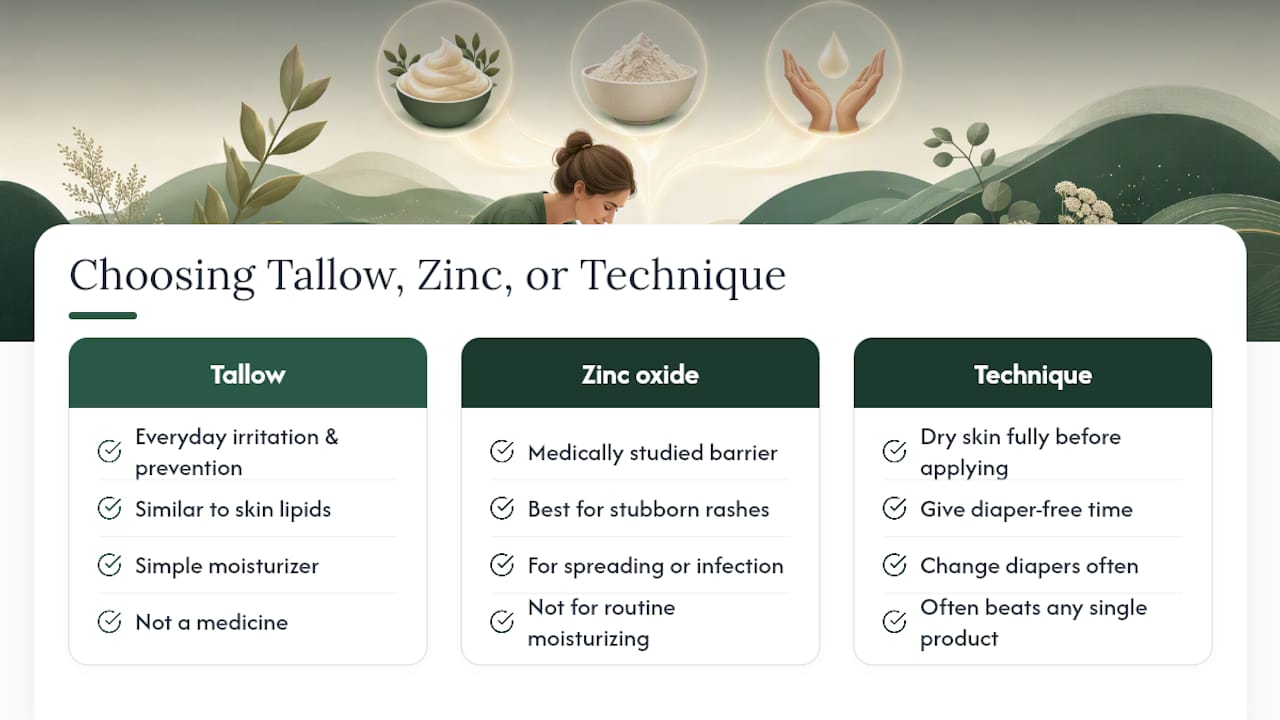
What gets underestimated is technique, not ingredient. Parents obsess over which product to buy and skip the boring parts, drying skin fully before applying anything, giving diaper-free time, changing diapers often enough that no barrier cream has to work overtime. Those habits do more for a rash than any single product on the shelf.
My honest take: use tallow for the everyday irritation and prevention cases, where you want something simple and moisturizing. Trust zinc oxide or medical treatment when a rash is stubborn, spreading, or looks infected. Don’t ask an emollient to do a medicine’s job.
— Michael
Try a Simple, Short-Ingredient Option
If you’re ready to try tallow, our Whipped Beef Tallow Balm with Manuka Honey comes in a 2.4 oz tin built for exactly this kind of use: grass-fed tallow as the base, a touch of Manuka honey for added moisture, and no fragrance or fillers added.
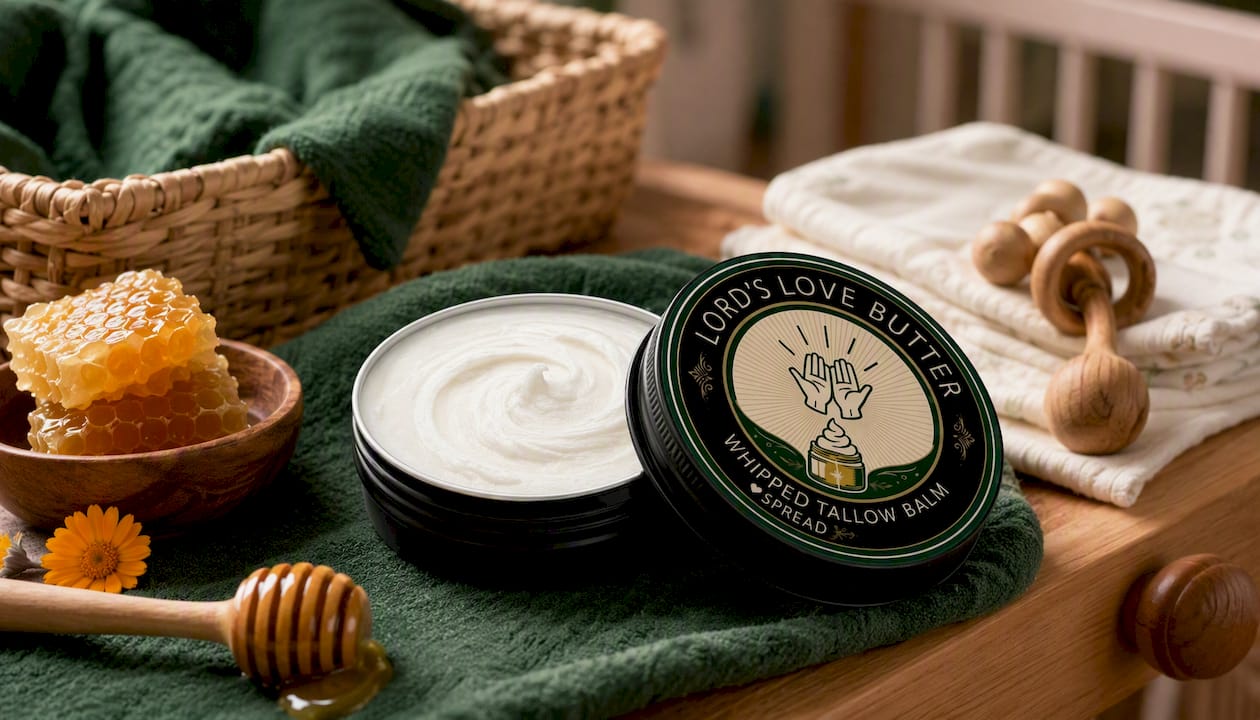
It’s whipped to a light texture that spreads thin and absorbs fast, which matters when you’re applying it several times a day on delicate skin. It’s best suited for babies without broken or infected skin, and for parents who’d rather check three ingredients than thirty. Patch-test on a small area first, and if your baby has an existing rash that looks infected or isn’t improving, talk to your pediatrician before adding anything new to the routine. For comparison shopping, zinc oxide ointment remains a reasonable medical-grade option worth having on hand alongside it. When you’re ready, head to the product page to check current stock and order a tin.
Sources
- Diaper rash - Symptoms and causes - Mayo Clinic
- 3 Ways to Soothe and Get Rid of Diaper Rash - Cleveland Clinic
- PMC article (2024–2026 literature review on emollients/tallow and skin compatibility)

