

Evil Goods Whipped Tallow Honey Balm: Full Review
The Evil Goods Whipped Tallow & Manuka Honey Balm is worth buying if you want a short, recognizable ingredient list and don’t mind paying a premium for a grass-fed tallow base. It’s available on the Evil Goods website, at Ulta, Amazon, and Walmart. If you’d prefer a veteran-owned alternative with the same grass-fed tallow and Manuka honey formula, Lordslovebutter’s whipped tallow balm is the one to check first.
Table of Contents
- What does the Evil Goods whipped tallow honey balm contain, and where can you buy it?
- What does each ingredient actually do for your skin?
- Who gets the most out of this balm, and who should be careful?
- How to apply whipped tallow honey balm for best results
- What do dermatologists say about tallow, and what are the safety limits?
- Where can you buy Evil Goods balm in the U.S., and what does it cost?
- What do customers say about Evil Goods balm?
- How does Evil Goods compare to Lordslovebutter’s whipped tallow + Manuka balm?
- Key Takeaways
- Why Lordslovebutter makes a whipped tallow + Manuka balm
- Lordslovebutter’s whipped tallow balm: where to get it
- Useful sources
What does the Evil Goods whipped tallow honey balm contain, and where can you buy it?
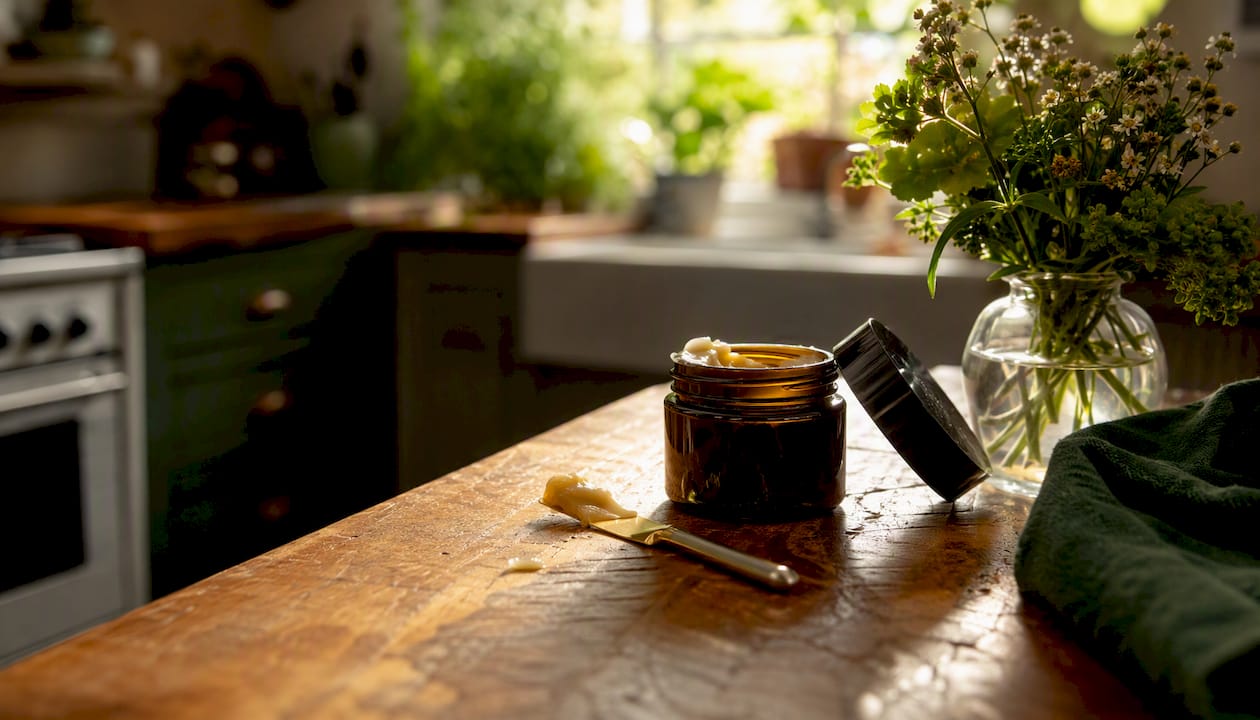
Evil Goods makes a whipped beef tallow balm built around a handful of ingredients: grass-fed beef tallow, Manuka honey, cold-pressed olive oil, and calendula (marigold) extract. The whipping process matters more than it sounds. Whipping tallow creates a lighter, airier texture that melts on contact with skin and spreads far more easily than raw tallow pressed straight from the rendering pot.
Available variants and sizes:
Where to buy in the U.S.:
- Evil Goods website — (evilgoods.com) — direct, full SKU selection
What does each ingredient actually do for your skin?
The ingredient list on Evil Goods products is short by design, and each component pulls real weight.
Grass-fed beef tallow is the base. Its fatty-acid profile closely mirrors human sebum, which is why it tends to absorb without sitting on top of skin the way mineral oil does. Tallow’s dual action works at the surface level (occlusion that slows water loss) and structurally (supporting the skin barrier itself). Grass-fed sourcing matters because the fat composition from pasture-raised cattle differs from grain-fed; the sebum-mimicking properties are more pronounced with higher-quality tallow.
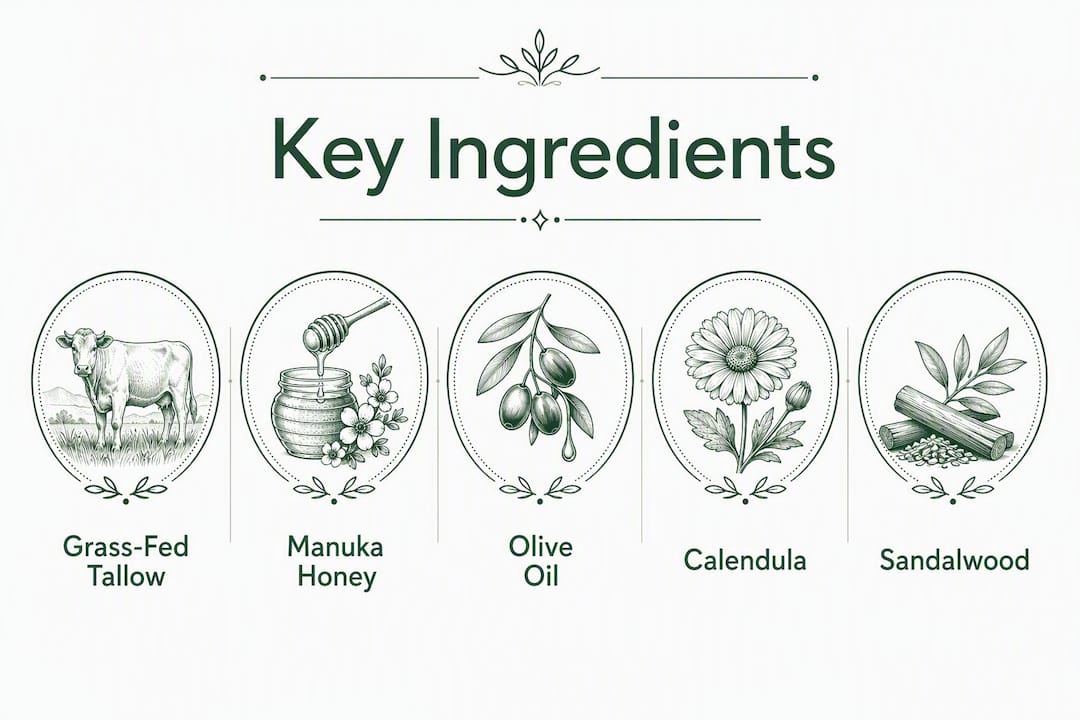
Manuka honey functions as a humectant, drawing moisture toward the skin rather than simply sealing it in. It also carries natural antimicrobial properties, which is part of why honey-infused balms get recommended for minor irritation and dry patches.
Cold-pressed olive oil adds oleic acid and squalene, both of which support softening and barrier function. It’s a lightweight carrier that helps the balm spread without feeling heavy.
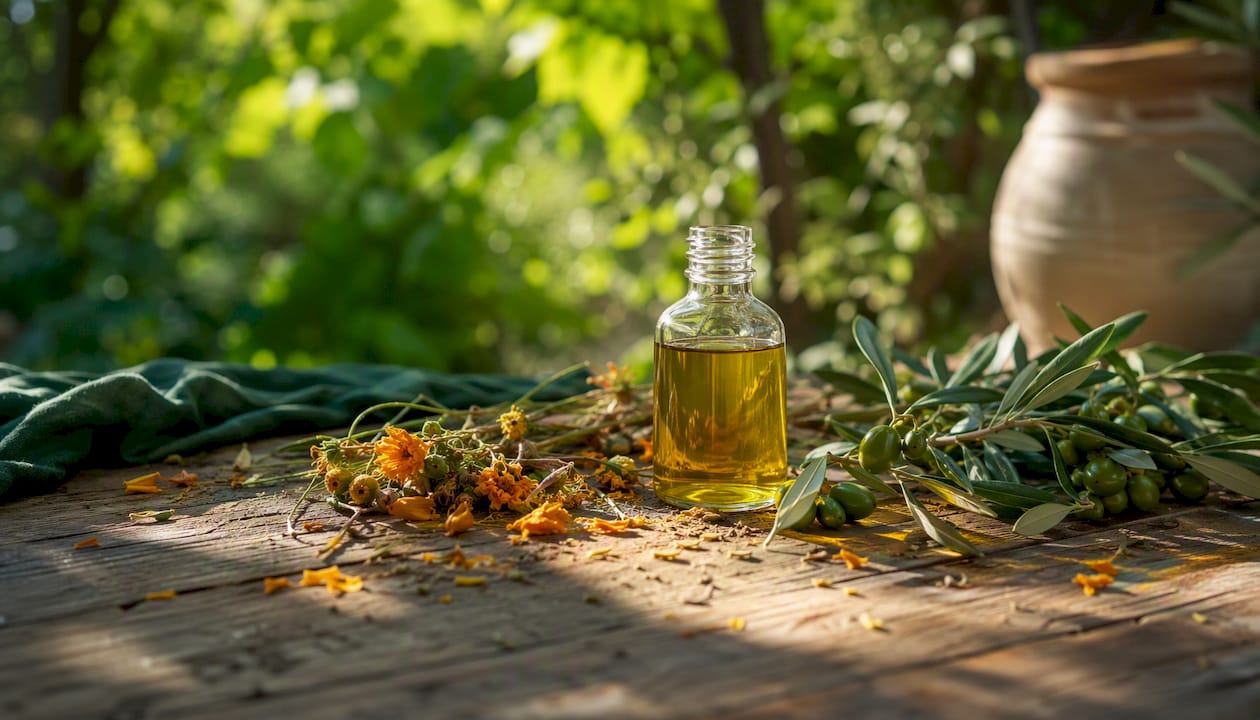
Calendula (marigold) extract rounds out the formula with anti-inflammatory plant compounds. It’s a common addition in balms marketed for sensitive or reactive skin, and it has a long track record in botanical skincare.
Pro Tip: Apply the balm to slightly damp skin right after a shower. Tallow is occlusive, so layering it over a thin film of water locks in that moisture rather than just sitting on dry skin. A pea-sized amount covers the full face; a little more for elbows or heels.
The scented sandalwood variant adds fragrance, which is worth noting if your skin runs sensitive. Fragrance is one of the more common contact allergens in skincare, and even natural fragrance compounds can cause reactions in reactive skin types.
Who gets the most out of this balm, and who should be careful?
This balm works best for people with dry, mature, or combination skin who want a simple, food-grade ingredient list and don’t need SPF or active ingredients. It’s also a reasonable option for postpartum skin, rough patches on elbows and heels, and baby skin when used carefully and in unscented form.
Best-fit use cases:
- Dry or very dry skin on the face, body, and lips
- Eczema and psoriasis patches where barrier repair is the goal
- Pregnancy and postpartum stretch marks or dry belly skin (unscented only)
- Cracked heels, rough elbows, and cuticles
- Sensitive skin that reacts to synthetic preservatives or fragrance
Who should patch test first: Acne-prone skin is the main caution. Tallow is occlusive, and for some people that means clogged pores, especially on the face. If you break out easily, test on a small area for a few days before applying to your full face. The sandalwood scented version carries additional fragrance risk for anyone with reactive or rosacea-prone skin.
Who should avoid or consult a professional: Anyone with a known beef or lanolin allergy should skip tallow products entirely. If you’re managing a chronic skin condition like severe eczema or psoriasis with prescription treatments, check with your dermatologist before adding an unregulated tallow product to the routine.
How to apply whipped tallow honey balm for best results
Getting the most from a whipped tallow balm is mostly about timing and amount. Too much product, applied to dry skin, is where the greasy complaints come from. Applying tallow without greasy residue is genuinely simple once you adjust the quantity.
- Cleanse first. Apply to clean skin. Layering over sunscreen, makeup, or other products reduces absorption.
- Apply to damp skin. Pat dry after washing but leave skin slightly moist. This is the single biggest factor in how well the balm performs.
- Use less than you think. For the face, a pea-sized amount is enough. For the body, a small coin-sized scoop covers a large area. The balm melts quickly and spreads far.
- Warm it between your fingers. Scoop a small amount and press it between your fingertips for a few seconds before applying. This softens the texture and helps it spread evenly.
- Press, don’t rub. Press the balm into skin rather than rubbing aggressively. This reduces pilling and helps it absorb faster.
- Wait before applying makeup. Give it 3–5 minutes to absorb before layering foundation or powder. Tallow under makeup can work well as a primer base, but only when the balm has had time to settle.
- For lips and under eyes: Use your fingertip to dab a tiny amount. These areas need very little product.
- For cracked heels: Apply generously at night and cover with cotton socks. The occlusion overnight makes a noticeable difference within a few days.
Frequency depends on your skin. Twice daily (morning and night) works for most dry skin types. Oily or combination skin may only need it once a day or as a spot treatment.
What do dermatologists say about tallow, and what are the safety limits?
The honest answer is that clinical evidence for tallow is thin. The Cleveland Clinic notes that current research is limited and that tallow products vary widely in formulation and safety controls. Dermatology resident Angela Wei points out that while tallow can function as a moisturizer, there isn’t enough research to prove it delivers meaningful dermatological benefits beyond basic occlusion.
“There’s currently not enough evidence to say beef tallow is definitively good for your skin. It may work as a moisturizer, but it also carries risks like clogged pores, irritation, and allergic reactions — and formulations aren’t standardized.” — Cleveland Clinic / Angela Wei, dermatology resident
That’s a fair summary of where the science sits. Tallow advocates point to the sebum-similarity argument, and that logic holds up mechanically. But “similar to sebum” doesn’t automatically mean “clinically proven to treat eczema or psoriasis.” For chronic conditions, tallow balm is a supportive option, not a replacement for prescribed treatment. See tallow vs. prescription creams for a fuller breakdown of where each fits.
Practical safety steps:
- Patch test on the inner arm for 24–48 hours before full-face use
- Check the full ingredient list for known allergens (beef, olive, calendula)
- Choose unscented for babies, pregnancy, and reactive skin
- Store in a cool, dry place away from direct sunlight; tallow can go rancid when exposed to heat or light
- Shelf life is typically 12–18 months unopened; once opened, use within 6–12 months and watch for any off smell or color change
This is general skincare information, not medical advice. If you’re managing a diagnosed skin condition, confirm product choices with a dermatologist.
Where can you buy Evil Goods balm in the U.S., and what does it cost?
Evil Goods products are available through several U.S. channels. Prices vary slightly by retailer, and the per-ounce cost shifts depending on size.
| Retailer | Size | Typical Price | Per Ounce |
|---|---|---|---|
| Evil Goods (direct) | 4 oz | Not publicly listed | — |
| Ulta Beauty | ~4 oz (sandalwood) | — | — |
| Amazon | 4 oz | — | — |
| Walmart | 4 oz (unscented) | ~$18 | — |
| Lordslovebutter (direct) | 2.4 oz tin | Listed on site | Competitive |
Prices fluctuate. Verify current pricing at checkout.
Buying tips worth knowing:
- On Amazon, check that the seller is the brand itself or a verified retailer. Third-party resellers occasionally list expired or improperly stored stock.
- Look for a batch or production date on the tin or jar. Tallow products have a finite shelf life, and older stock from warehouse storage can be close to expiration.
- Ulta sometimes runs loyalty point promotions that effectively reduce the price; worth checking if you’re already a member.
- Walmart’s online listing for the unscented 4 oz SKU is often the lowest price point for this product in the U.S.
What do customers say about Evil Goods balm?
Reviews across Ulta and Amazon are generally positive, with a few recurring themes on both sides.
Common praises:
- Deep, long-lasting hydration that outlasts conventional lotions
- Short, readable ingredient list with no synthetic preservatives or fillers
- Texture described as light and non-greasy when used in small amounts
- Noticeable improvement in dry patches, rough elbows, and cracked heels
- Positive feedback from users with eczema who found it calming on flare spots
Common complaints:
- Scent sensitivity: the sandalwood variant gets mixed reviews from people with reactive skin
- Greasy feel when too much product is applied, particularly on the face
- A small number of acne-prone users report breakouts after facial use
- Some buyers note the tin size feels small relative to the price
The overall rating trend on major retail platforms skews positive. The most consistent criticism is the scent in the sandalwood version, which is why the unscented SKU tends to get higher marks from sensitive-skin shoppers.
How does Evil Goods compare to Lordslovebutter’s whipped tallow + Manuka balm?
Both products share the same core concept: whipped grass-fed beef tallow with Manuka honey as a clean, short-ingredient moisturizer. The differences come down to sourcing transparency, size options, brand story, and a few formula details.
What’s similar: grass-fed tallow base, Manuka honey, clean ingredient philosophy, suitability for sensitive skin and whole-body use.
Key differences:
- Veteran-owned brand: Lordslovebutter is a veteran-owned business. For buyers who factor brand provenance into their purchase, that’s a meaningful distinction Evil Goods doesn’t share.
- Size options: Lordslovebutter offers a 2.4 oz tin and a 2.4 oz jar, plus a mint lip balm stick and a sun balm stick with zinc oxide. Evil Goods focuses primarily on the 4 oz format.
- Chemical-free positioning: Lordslovebutter explicitly markets its formula as chemical-free with no synthetic additives, a claim that matters to buyers with ingredient sensitivities.
- Lighter variant: Lordslovebutter’s Original Balm Lite with Manuka Honey gives oily or combination skin types a less occlusive option that Evil Goods doesn’t offer.
- Retail availability: Evil Goods has broader shelf presence at Ulta and Walmart. Lordslovebutter sells direct, which means fresher stock and no third-party reseller risk.
- Packaging: Both use tin and jar formats. Lordslovebutter’s direct-to-consumer model reduces the packaging chain compared to mass retail distribution.
Who should pick Lordslovebutter: Anyone who wants a direct relationship with the brand, values veteran-owned provenance, needs a lighter formulation option, or wants a lip balm or sun balm in the same product family.
When Evil Goods works fine: If you’re already shopping at Ulta or Walmart and want to grab a tallow balm in person, Evil Goods is a solid pick. The ingredient quality is comparable, and the 4 oz size offers good value per ounce at Walmart pricing.
Key Takeaways
Both Evil Goods and Lordslovebutter deliver a clean, grass-fed tallow and Manuka honey formula, but Lordslovebutter’s veteran-owned, direct-to-consumer model offers fresher stock, a lighter variant, and a broader product family including lip and sun balm.
| Point | Details |
|---|---|
| Core formula is solid | Grass-fed tallow, Manuka honey, olive oil, and calendula make a short, effective ingredient list. |
| Patch test before full use | Tallow is occlusive and can clog pores; acne-prone skin should test on a small area first. |
| Unscented is safer for sensitive skin | Fragrance in the sandalwood variant is a common irritant; choose unscented for reactive or baby skin. |
| Buy direct to avoid old stock | Third-party Amazon resellers may carry expired product; buying direct reduces that risk. |
| Lordslovebutter is the recommended alternative | Veteran-owned, chemical-free, with a lighter variant and a full product family including lip and sun balm. |
Why Lordslovebutter makes a whipped tallow + Manuka balm
The reason Lordslovebutter exists in this category is straightforward: most moisturizers on the market are built around water, synthetic emulsifiers, and preservatives. These work temporarily and require frequent reapplication. Tallow behaves differently because its fatty-acid structure is close to what your skin already produces. Paired with Manuka honey’s humectant and antimicrobial properties, the formula addresses both sides of dry skin: it seals moisture in and draws more in from the environment.
The grass-fed sourcing isn’t marketing language. Pasture-raised cattle produce tallow with a different fat profile than grain-fed, and that difference shows up in how the product feels and absorbs. Lordslovebutter’s commitment to a chemical-free formula means no synthetic preservatives, no fillers, and no fragrance unless you choose a scented variant. As a veteran-owned brand, the product line is built with a direct accountability to customers that mass-retail brands don’t always carry.
Lordslovebutter’s whipped tallow balm: where to get it
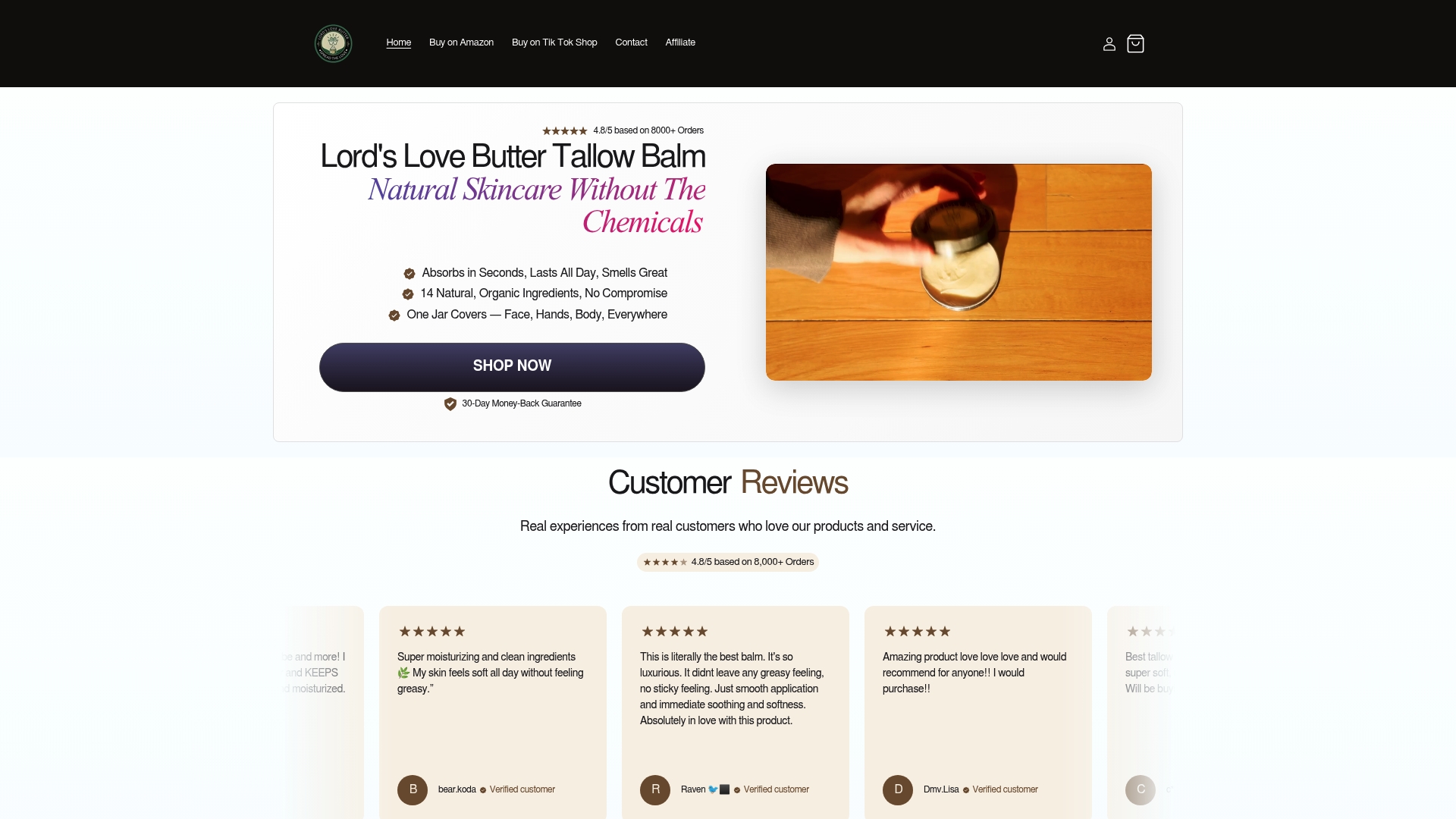
Lordslovebutter’s whipped beef tallow and Manuka honey balm ships direct from the brand, which means you get fresh product with no warehouse middleman. The current lineup includes the 2.4 oz jar, the 2.4 oz tin, the Original Balm Lite with Manuka Honey for lighter coverage, the Mint Beef Tallow Lip Balm Stick, and the Beef Tallow Sun Balm Stick with Zinc Oxide for daily mineral protection. All formulas are grass-fed, chemical-free, and suitable for sensitive skin. Visit lordslovebutter.com to pick your size and place an order directly with the brand.
Useful sources
| Source | Type |
|---|---|
| Evil Goods Whipped Tallow Balm — Ulta Beauty | Retail product page (ingredient list, scent variants) |
| EVILGOODS 4 oz Whipped Tallow and Honey Balm — Walmart | Retail product page (size and pricing) |
| Whipped Beef Tallow and Honey Balm — Amazon | Retail product page (use cases, customer Q&A) |
| Is Beef Tallow Good for Your Skin? — Cleveland Clinic | Clinical / dermatology caution |
| How to Use Tallow Balm in Your Daily Skincare Routine — INTEGRIS Health | Clinical / application guidance |
| Whipped Beef Tallow Balm with Manuka Honey, 2.4 oz Jar — Lordslovebutter | Publisher product page |
| Whipped Beef Tallow Balm with Manuka Honey, 2.4 oz Tin — Lordslovebutter | Publisher product page |
| How Tallow Mimics Skin Sebum for Deep Hydration — Lordslovebutter | Publisher blog / ingredient science |
| Whipped Tallow Balm — Tyme Soap | Texture and formulation context |
Recommended
- Whipped Beef Tallow Balm with Manuka Honey | 2.4 oz Travel Tin – Lord’s Love Butter
- Whipped Beef Tallow Balm with Manuka Honey | 2.4 oz Jar – Lord’s Love Butter
- Whipped Beef Tallow Balm with Manuka Honey - 2.4 oz Jar – Lord’s Love Butter
- Whipped Beef Tallow Balm with Manuka Honey - 2.4 oz Tin – Lord’s Love Butter

