

How Tallow Mimics Skin Sebum for Deep Hydration
Beef tallow is defined as rendered animal fat that closely replicates human sebum at the fatty acid level, making it one of the most skin-compatible moisturizers in natural skincare. The key factor is its lipid profile. Tallow contains oleic, palmitic, and stearic acids in proportions that parallel the oils your skin already produces. That biochemical similarity is why tallow absorbs without a heavy, synthetic feel and why it supports moisture retention rather than just sitting on the surface. Understanding how tallow mimics skin sebum explains why this ingredient has returned to skincare conversations after decades of being overlooked.
What is human sebum and why does its composition matter?
Human sebum is the oily substance your sebaceous glands produce to protect and hydrate skin. It is not a single compound. Sebum is a complex mixture of triglycerides, wax esters, squalene, and free fatty acids, each playing a specific role in skin barrier function.
The primary job of sebum is to seal moisture inside the skin while keeping environmental irritants out. Triglycerides make up the largest portion of sebum, and when skin enzymes break them down, they release free fatty acids including oleic acid, palmitic acid, and stearic acid. These fatty acids are the structural workers of your skin’s lipid barrier. They fill the gaps between skin cells in the outermost layer, the stratum corneum, preventing water from escaping.
When sebum production drops, whether from aging, cold weather, or harsh cleansers, the barrier weakens. Skin becomes dry, tight, and reactive. That is the gap a well-matched topical fat can fill. The closer a moisturizer’s fatty acid profile is to your own sebum, the more efficiently your skin can use it.
Sebum composition also shifts with age. Younger skin produces more squalene. Older skin produces less of everything, which is why mature skin tends toward dryness and sensitivity. A moisturizer that mirrors the lipid structure of natural sebum addresses this deficit more directly than one built around water, glycerin, or synthetic polymers.
How does tallow’s fatty acid profile compare to human sebum?
Tallow’s fatty acid composition contains approximately 40–50% oleic acid, alongside significant amounts of palmitic and stearic acids. That range maps closely onto the free fatty acid fraction of human sebum, which is why dermatology researchers describe tallow as sebum-compatible.

The table below shows how the major fatty acids in beef tallow align with those found in human sebum.
| Fatty acid | Role in skin | Present in tallow | Present in sebum |
|---|---|---|---|
| Oleic acid | Softens skin, aids absorption | High (40–50%) | High |
| Palmitic acid | Barrier repair, emollient | Moderate | Moderate to high |
| Stearic acid | Occlusive, stabilizes lipid layer | Moderate | Moderate |
| Myristic acid | Emulsifying, minor barrier role | Low | Low |
This alignment is not cosmetic. Skin lipid processing systems recognize tallow-derived fatty acids as familiar structures, allowing transport proteins and enzymes to incorporate them into the lipid matrix rather than treating them as foreign material. That is what biocompatibility means in practice: the skin works with the ingredient rather than around it.
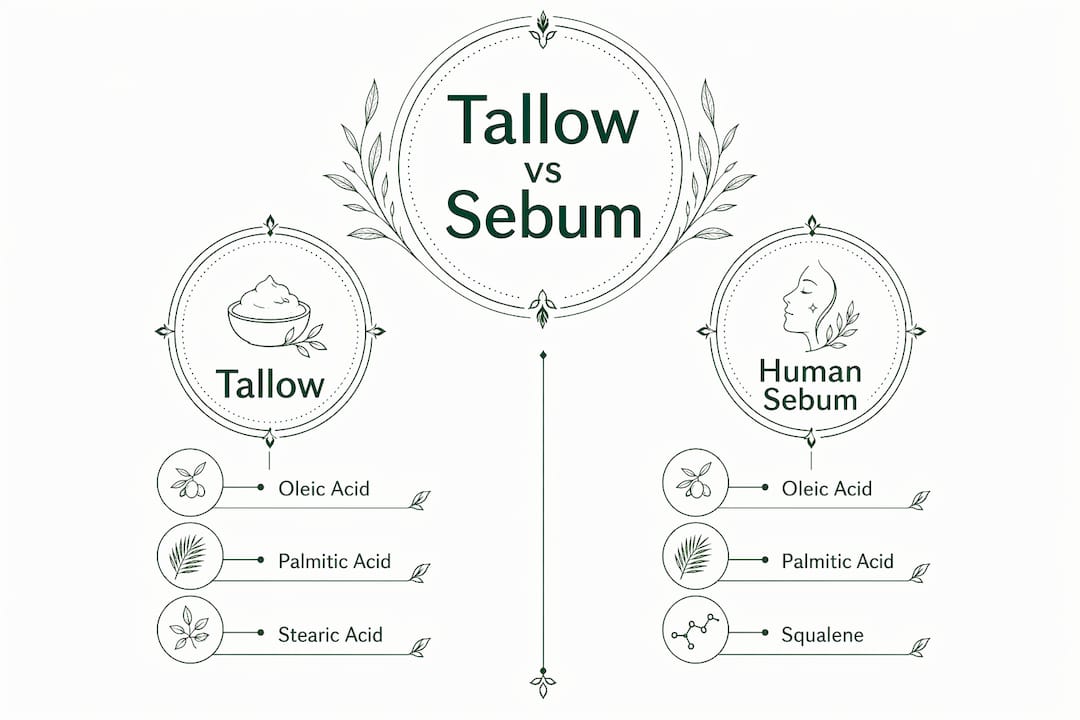
Tallow also contains triglycerides in a structure similar to those in sebum. When tallow is saponified, it forms sodium palmitate, stearate, and oleate, which act as mild cleansing agents that preserve the lipid barrier rather than stripping it. This is why traditional soap made from tallow has a long history of being gentler than many modern synthetic detergents.
Pro Tip: Apply tallow to skin that is still slightly damp after washing. Damp skin allows the fatty acids to spread more evenly and integrate into the lipid layer before the water evaporates, improving absorption and reducing any greasy residue.
What are the benefits and limitations of tallow as a moisturizer?
Tallow functions as both an emollient and an occlusive. As an emollient, it softens and smooths the skin surface by filling spaces between skin cells with compatible lipids. As an occlusive, it forms a physical layer that slows water loss. Most synthetic moisturizers do one or the other. Tallow does both, which is why people with dry or barrier-compromised skin often report fast results.
The tallow skin benefits most commonly reported include:
- Barrier repair: The oleic and palmitic acids directly replenish the lipid matrix in the stratum corneum, reducing transepidermal water loss.
- Rapid absorption: Because skin enzymes recognize tallow’s fatty acid structure, the fat integrates into the barrier rather than pooling on the surface.
- Vitamin content: Grass-fed tallow contains small amounts of fat-soluble vitamins A, D, E, and K, which support skin cell turnover and antioxidant activity. These levels are low compared to pharmaceutical-grade ingredients, but they are present in a bioavailable form.
- Suitability for sensitive skin: People managing eczema or psoriasis often find tallow less reactive than products containing fragrances, preservatives, or synthetic emulsifiers.
The limitations are real and worth stating clearly. Tallow carries a comedogenic rating of 2 on the standard scale, meaning it poses a moderate risk of clogging pores. For people with oily or acne-prone skin, that risk is significant. Tallow can worsen breakouts in oily skin types due to its occlusive properties. It soothes dryness caused by some acne treatments, but it does not treat hormonal or inflammatory acne causes.
Dermatologists also note that no rigorous clinical trials confirm tallow offers unique benefits beyond what well-formulated plant-based emollients provide. Quality and processing vary widely between products, which affects both safety and effectiveness. Grass-fed sourcing matters because vitamin content depends on the cattle’s diet, with pasture-raised animals producing richer fat-soluble vitamin profiles.
Pro Tip: If you have oily or combination skin and still want to try tallow, apply it only to dry patches rather than your full face. This limits comedogenic exposure while still delivering moisture where your skin actually needs it.
How should you use tallow in your skincare routine?
Getting the most from tallow requires attention to application method, frequency, and your skin’s response over time. The following steps give you a practical starting point.
-
Start with clean skin. Wash your face or body with a gentle, non-stripping cleanser. Tallow absorbs best when it does not have to compete with dirt, sunscreen, or other product residue.
-
Apply to slightly damp skin. Pat dry but leave a thin layer of moisture on the surface. This helps the fatty acids spread evenly and integrate into the lipid layer before the water evaporates.
-
Use a small amount. A pea-sized portion covers the full face. Tallow is dense. Using too much leads to the greasy feel that puts many people off. Learn how to apply tallow without residue by starting with less than you think you need.
-
Start once per week. Experts recommend introducing tallow gradually, beginning with one application per week to monitor how your skin responds before increasing frequency.
-
Mix with a lighter oil if needed. Blending tallow with jojoba oil or a similar lightweight plant oil reduces the occlusive weight and improves texture for people who find pure tallow too heavy. This is especially useful for normal to combination skin types.
-
Monitor for breakouts. Give your skin two to three weeks before drawing conclusions. Some initial purging is possible. Persistent breakouts or increased oiliness signal that tallow is not the right fit for your skin type.
-
Use it body-wide for dry skin. Tallow works well as a whole-body moisturizer for people with dry or sensitive skin. Apply after a shower while skin is still warm and slightly damp for maximum absorption.
For people managing eczema or psoriasis, tallow’s barrier-supporting fatty acids can reduce flare frequency when used consistently on affected areas. The key is sourcing a product made from grass-fed tallow without added fragrances or synthetic preservatives, since those additives are common irritant triggers.
Key takeaways
Tallow’s fatty acid profile mirrors human sebum closely enough that skin enzymes recognize and integrate its lipids into the barrier, making it a genuinely compatible moisturizer for dry and sensitive skin types.
| Point | Details |
|---|---|
| Fatty acid match | Tallow’s oleic, palmitic, and stearic acids parallel human sebum, enabling direct lipid barrier integration. |
| Biocompatibility mechanism | Skin transport proteins recognize tallow’s fatty acids as native, supporting barrier repair rather than surface coating. |
| Best skin type fit | Dry, sensitive, and barrier-compromised skin benefits most; oily and acne-prone skin faces comedogenic risk. |
| Application method | Apply sparingly to clean, damp skin; start once weekly and blend with jojoba oil to reduce heaviness. |
| Grass-fed sourcing matters | Pasture-raised tallow contains higher fat-soluble vitamin levels, though still insufficient for pharmacological effects. |
Why I think tallow deserves a more honest conversation
Most of the tallow debate lands in one of two camps: enthusiasts who call it a miracle and skeptics who dismiss it as a trend. Both miss the point.
The biochemical case for tallow is genuinely interesting. The fatty acid alignment with sebum is not marketing language. It is measurable chemistry. Skin does recognize these lipids as familiar, and for people with dry or compromised barriers, that recognition translates into real comfort and faster recovery. I have seen this pattern consistently in people who struggle with eczema or who have stripped their skin with over-cleansing.
Where I push back is on the overclaiming. Tallow is not a treatment. It does not address the root causes of acne, rosacea, or inflammatory skin conditions. Applying it to oily or acne-prone skin because someone online called it ancestral skincare is a reliable way to make breakouts worse. The comedogenic rating is real. The lack of clinical trials is real.
My honest view is that tallow earns its place as a moisturizer for dry and sensitive skin, particularly when sourced from grass-fed cattle and formulated without synthetic additives. For oily skin or active acne, it is the wrong tool. Knowing which category you fall into before you start is the difference between a product that works and one that frustrates you.
— Michael
A natural balm built on the same principles
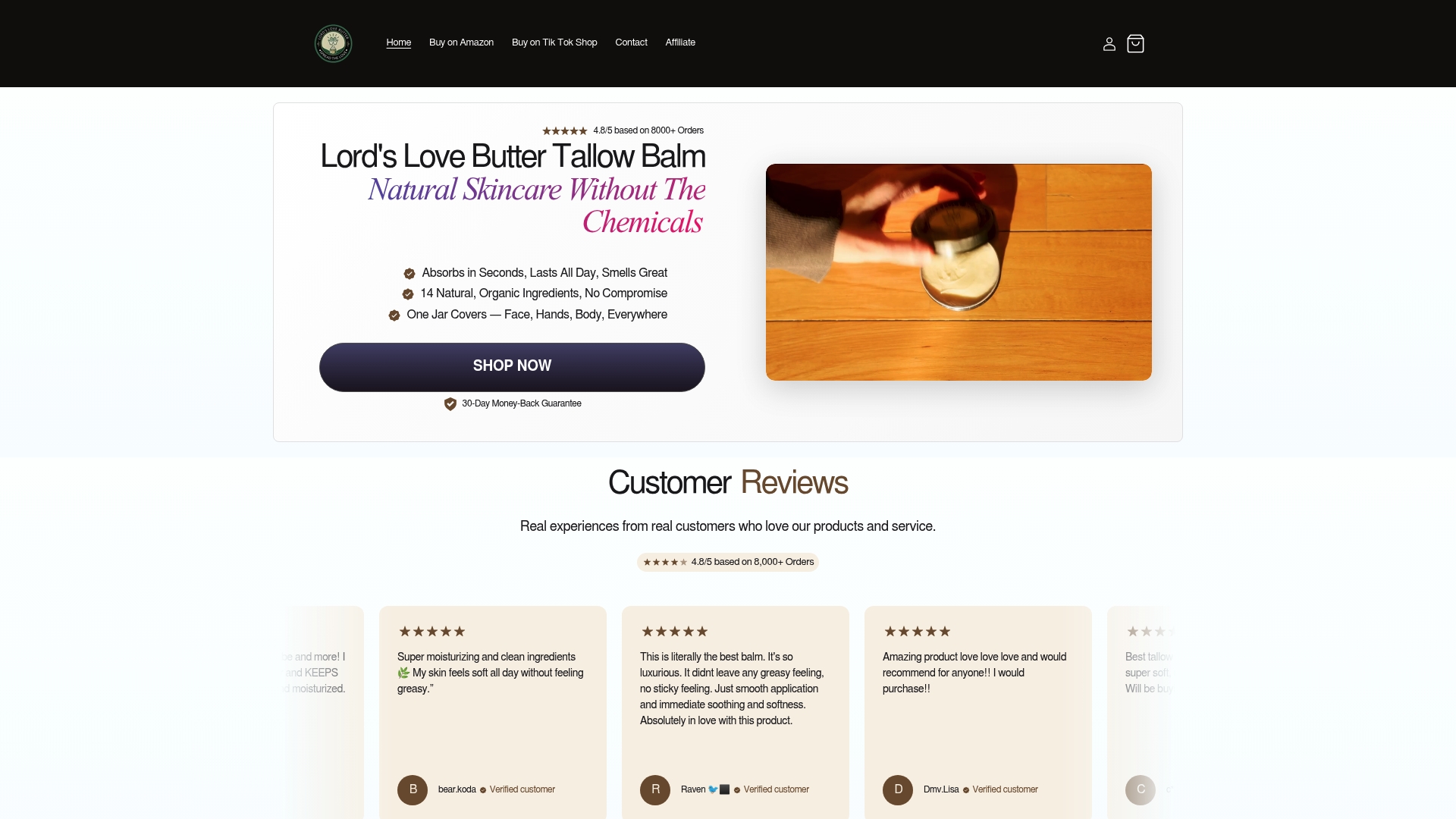
Lordslovebutter’s whipped beef tallow balm is made from grass-fed beef tallow with no synthetic additives, fragrances, or preservatives. The whipped texture makes application lighter and easier than raw tallow, reducing the greasy feel that discourages consistent use. Lordslovebutter formulates for whole-body application, which means the balm works on your face, hands, elbows, and any area where dryness or barrier damage shows up. The veteran-owned brand keeps the ingredient list short and the sourcing transparent. For people with dry, sensitive, or eczema-prone skin who want a moisturizer that works with their skin’s natural chemistry rather than against it, this is a product worth trying.
FAQ
What makes tallow similar to human sebum?
Tallow contains oleic, palmitic, and stearic acids in proportions that closely match the free fatty acids in human sebum. This similarity allows skin enzymes to recognize and integrate tallow’s lipids into the skin barrier directly.
Is tallow good for oily or acne-prone skin?
Tallow carries a comedogenic rating of 2, meaning it poses a moderate pore-clogging risk. Dermatologists advise people with oily or acne-prone skin to avoid it or use it only on dry patches.
Does grass-fed tallow have more vitamins than conventional tallow?
Grass-fed tallow contains higher levels of fat-soluble vitamins A, D, E, and K than conventionally raised cattle tallow. These levels are still low compared to pharmaceutical skincare ingredients, but they are present in a bioavailable form.
How often should you apply tallow to skin?
Start with one application per week and monitor your skin’s response before increasing frequency. Mixing tallow with a lighter oil like jojoba helps balance texture for daily use.
Does tallow replace sebum when skin is dry?
Tallow does not replace sebum production, but its compatible fatty acids replenish the lipid matrix in the stratum corneum. This reduces transepidermal water loss and restores barrier function in dry or compromised skin.

