

How Natural Balms Reduce Inflammation: A Science-Backed Guide
Natural balms reduce inflammation through two distinct mechanisms working together: a counterirritant effect that overrides pain signals at the nerve level, and direct biochemical inhibition of inflammatory compounds like TNF-α and COX-2 enzymes. Applied to the skin, plant-based actives penetrate the outer layers and interrupt the molecular cascade that drives redness, swelling, and stiffness. The result is localized relief without the systemic exposure that comes with oral medications.
Key active ingredients and how they work:
- Menthol (Mentha piperita): stimulates cold receptors, creating a cooling sensation that distracts the brain from deeper pain signals
- Camphor (Cinnamomum camphora): produces warmth and increases local blood flow, reducing stiffness
- Turmeric (curcumin): blocks COX-2 and suppresses TNF-α, two central drivers of chronic inflammation
- Ginger (gingerols and shogaols): inhibits COX and LOX enzymes and reduces NF-κB activation
- Arnica (Arnica montana): improves circulation and reduces bruising and swelling at the application site
- Clove oil (eugenol): delivers analgesic and antiseptic action alongside anti-inflammatory effects
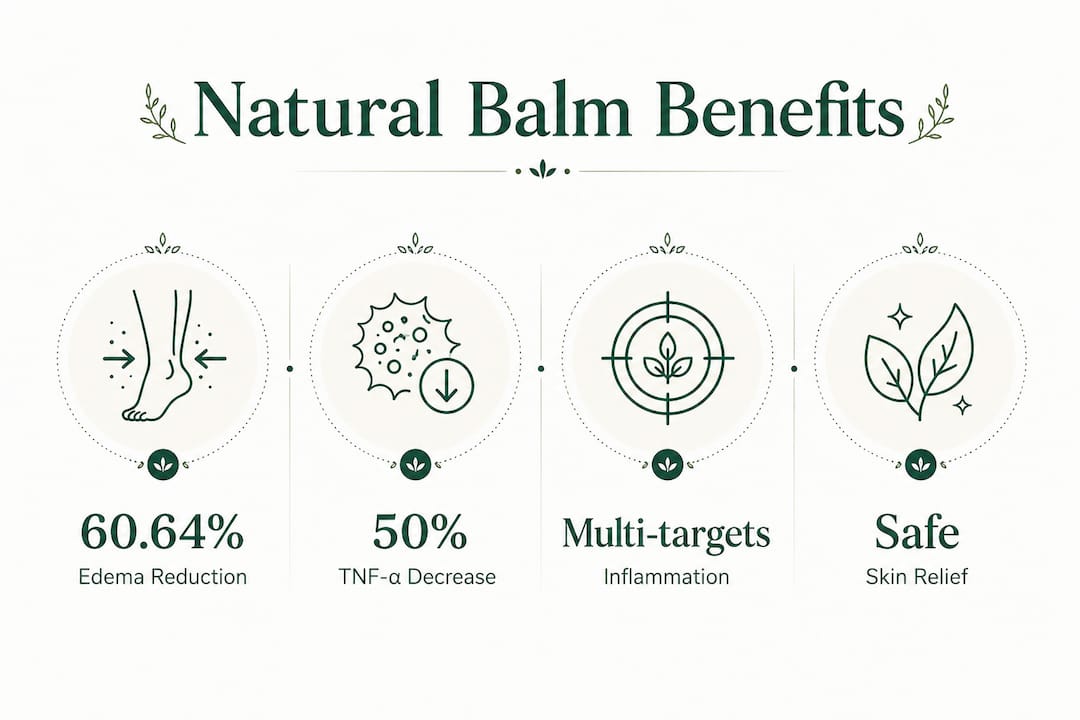
Research on a topical Nigella sativa balm at 10% concentration found 60.64% oedema reduction and a 50% decrease in TNF-α compared to control groups, with significant effects measured 150 minutes after application, highlighting the benefits of using Nigella Sativa Oil (Black Seed Oil) | PALINOVA in inflammation management. That kind of data puts natural balms well past the “folk remedy” category.
What inflammation actually is, and why managing it matters
Inflammation is the body’s first-line defense. When tissue is damaged or a pathogen enters, the immune system floods the area with white blood cells and signaling proteins called cytokines, producing the familiar signs: redness, heat, swelling, and pain. For acute injuries, that process is useful. It clears debris and starts repair.
Chronic inflammation is a different problem. When the immune response stays switched on without a clear threat, it damages healthy tissue over time. Skin conditions like eczema and psoriasis involve this kind of persistent, low-grade immune activation, producing cycles of flares, barrier breakdown, and discomfort. Joints, muscles, and connective tissue suffer similarly under prolonged inflammatory stress.

Controlling excessive inflammation, especially at the skin surface, protects both comfort and long-term tissue integrity. Topical approaches target the affected area directly, which is exactly why natural balms have attracted serious scientific attention beyond traditional use.
Which herbal and essential oil ingredients drive the anti-inflammatory effect?
The active compounds in natural balms work through overlapping but distinct pathways, and that overlap is part of what makes them effective.
Turmeric (curcumin) is one of the most studied plant-based anti-inflammatories. Curcumin inhibits COX-2 enzyme activity and suppresses TNF-α signaling, two of the primary molecular switches that sustain inflammation. Multiple RCTs and meta-analyses show curcumin reduces osteoarthritis pain and improves function, with effects approaching NSAIDs in some trials when bioavailability is optimized.
Ginger contributes gingerols and shogaols, which block both COX and LOX inflammatory enzymes and reduce NF-κB activation. NF-κB is a transcription factor that controls the expression of dozens of pro-inflammatory genes, so suppressing it has broad downstream effects. Clinical evidence supports modest but consistent reductions in osteoarthritis pain and CRP levels.
Arnica montana contains sesquiterpene lactones, particularly helenalin, that inhibit NF-κB and reduce cytokine production. Applied topically, arnica also improves microcirculation, which helps clear inflammatory byproducts from the tissue. This is why it appears in balms for bruising, sprains, and post-exercise soreness.
Menthol and camphor operate primarily through the counterirritant pathway. Menthol at concentrations around 10–11% activates TRPM8 cold receptors, creating a cooling sensation that competes with pain signals traveling to the brain. Camphor at similar concentrations stimulates TRPV1 and TRPA1 receptors, generating warmth and increasing blood flow to the area. Together, they provide fast sensory relief while the botanical actives work at the biochemical level.
Clove oil contains eugenol, a phenolic compound with documented analgesic and antiseptic properties. Eugenol inhibits prostaglandin synthesis and reduces neurogenic inflammation, making it particularly useful in balms targeting joint and muscle pain.
Methyl salicylate, found in several herbal balm formulas, acts as a topical counterirritant that induces mild surface irritation to relieve deeper pain sensations. It also has mild COX-inhibiting activity at the tissue level.
Key ingredients and their primary mechanisms:
- Curcumin: COX-2 inhibition, TNF-α suppression
- Gingerols/shogaols: COX, LOX, and NF-κB inhibition
- Helenalin (arnica): NF-κB inhibition, improved microcirculation
- Menthol: TRPM8 activation, cooling counterirritant
- Camphor: TRPV1/TRPA1 activation, warming counterirritant
- Eugenol (clove): prostaglandin inhibition, analgesic
- Methyl salicylate: counterirritant, mild COX inhibition
Combining these ingredients in a single balm creates a multi-targeted approach that addresses both the immediate sensory experience of pain and the underlying cytokine activity driving it.
Why the balm base does more than hold ingredients together
The base of a natural balm is not a passive vehicle. It actively shapes how well the active compounds reach inflamed tissue, and it contributes its own therapeutic effects.
Natural fat-based carriers like grass-fed beef tallow, shea butter, and beeswax form an occlusive film over the skin surface. That film reduces transepidermal water loss, keeping the stratum corneum hydrated and flexible. Hydrated skin is more permeable, which means lipophilic phytochemicals like curcumin and eugenol penetrate more effectively than they would on dry, barrier-compromised skin.
Beef tallow in particular shares a fatty acid profile close to human sebum, which helps it integrate with the skin’s natural lipid layer rather than sitting on top of it. Shea butter contributes triterpene alcohols with their own mild anti-inflammatory activity. Beeswax adds structure while allowing the formula to breathe. These are not inert ingredients filling space around the actives. They support skin barrier repair and moisture retention that are critical to recovery from inflamed tissue.
Pro Tip: Apply your balm to slightly damp skin, not wet. A thin layer of moisture on the surface helps the occlusive base lock in hydration without diluting the active compounds. Avoid applying warming balms immediately after a hot shower; wait at least one hour to prevent irritation from heightened skin sensitivity.
For people with eczema or psoriasis, where the skin barrier is already compromised, the base itself can be as therapeutically meaningful as the herbal actives. Lordslovebutter’s whipped beef tallow balm is built around this principle, using grass-fed tallow as the foundation for both barrier support and active delivery. You can read more about how tallow restores skin texture and why the base choice matters for inflamed skin.
How natural balms compare to synthetic anti-inflammatory options on safety
Oral NSAIDs like ibuprofen and naproxen are effective, but long-term use carries real risks: gastrointestinal bleeding, cardiovascular events, and kidney stress. Synthetic topical steroids reduce inflammation but can thin the skin, disrupt the barrier, and cause rebound flares with extended use. These are not edge cases; they are documented, dose-dependent consequences of systemic or potent pharmacological intervention.
Natural topical balms sidestep most of that risk profile. Because the active compounds stay largely at the application site, systemic exposure is minimal compared to oral medications. There is no GI lining to irritate, no cardiovascular load, and no HPA axis suppression from plant-based topicals at standard concentrations.
Safety advantages of natural balms at a glance:
- No gastrointestinal or cardiovascular risks associated with oral NSAIDs
- Minimal systemic absorption keeps toxicity risk low
- Natural bases are generally well tolerated on sensitive and chronically inflamed skin
- No risk of skin thinning or rebound inflammation from steroid-free formulas
- Better patient compliance due to pleasant texture and sensory effects
For people managing chronic skin inflammation, the comparison between natural balms and steroid creams is worth understanding in detail, particularly for conditions like eczema where long-term topical treatment is often necessary.
That said, natural does not mean risk-free. Clove oil and cinnamon oil can irritate sensitive skin at high concentrations. Arnica should not be applied to broken skin. Anyone with known plant allergies should patch-test before full application. These are manageable precautions, not reasons to avoid natural balms, but they deserve honest acknowledgment.
Lordslovebutter’s whipped beef tallow balm with Manuka honey is formulated without synthetic chemicals, making it a practical option for people who want effective inflammation support without the side effect profile of conventional topicals.
Key Takeaways
Natural balms reduce inflammation by combining direct biochemical inhibition of cytokines like TNF-α and COX-2 with counterirritant sensory effects, while the balm base enhances penetration and supports skin barrier repair.
| Point | Details |
|---|---|
| Dual mechanism action | Balms work through both counterirritant nerve pathways and biochemical cytokine inhibition simultaneously. |
| Oedema reduction evidence | A 10% Nigella sativa balm achieved 60.64% oedema reduction and 50% TNF-α decrease versus control groups. |
| Base is therapeutic | Natural carriers like beef tallow and shea butter reduce transepidermal water loss and improve active compound penetration. |
| Safety advantage | Topical natural balms avoid the GI, cardiovascular, and skin-thinning risks linked to oral NSAIDs and synthetic steroids. |
| Application timing matters | Wait at least one hour after a hot shower before applying warming balms to avoid irritation from increased skin sensitivity. |

