

Natural Balm vs Steroid Cream Explained for Eczema
A natural balm is defined as an anhydrous topical preparation made from plant oils, butters, waxes, and active botanicals that repairs the skin barrier without synthetic chemicals or corticosteroids. Steroid creams, by contrast, are topical corticosteroids that suppress skin inflammation through immunosuppressive action. The natural balm vs steroid cream explained debate matters most to parents managing eczema in children and adults seeking long-term skin health without dependency risks. Both options treat inflammatory skin conditions, but they differ fundamentally in how they work, how fast they act, and how safe they are for ongoing use.
What are natural balms and how do they work on skin conditions like eczema?
Natural balms repair the skin barrier by replenishing ceramides, essential fatty acids, and antioxidants that compromised skin lacks. This is the core mechanism that separates them from steroid creams, which suppress inflammation but do not rebuild the barrier itself. Well-formulated barrier balms reduce transepidermal water loss by 42% and improve eczema severity by up to 79% when used consistently. That level of improvement rivals mild prescription options without the side effect profile.
The composition of a quality natural balm typically includes:
- Plant oils such as jojoba, rosehip, or sunflower, which mimic the skin’s natural lipid structure
- Butters like shea or cocoa butter, which provide occlusive protection and slow water evaporation
- Waxes such as beeswax, which seal the barrier without clogging pores
- Active botanicals including colloidal oatmeal and calendula, which reduce inflammation and itch
- Anhydrous base, meaning no water content, which eliminates the need for preservatives that often irritate sensitive skin
Balms increase epidermal ceramide levels by 34% and reduce itching by 29%. Higher ceramide levels directly strengthen the skin barrier, which is the root deficiency in eczema-prone skin. Botanical ingredients provide multi-faceted skin support beyond simple occlusion, addressing inflammation, oxidative stress, and moisture retention simultaneously.
Certification matters when choosing a natural balm. Look for products that are free from parabens, synthetic fragrances, and alcohol, since these ingredients undermine the barrier repair you are trying to achieve. Truly anhydrous formulas also avoid the emulsifiers that water-based creams require, many of which are known irritants for sensitive skin.
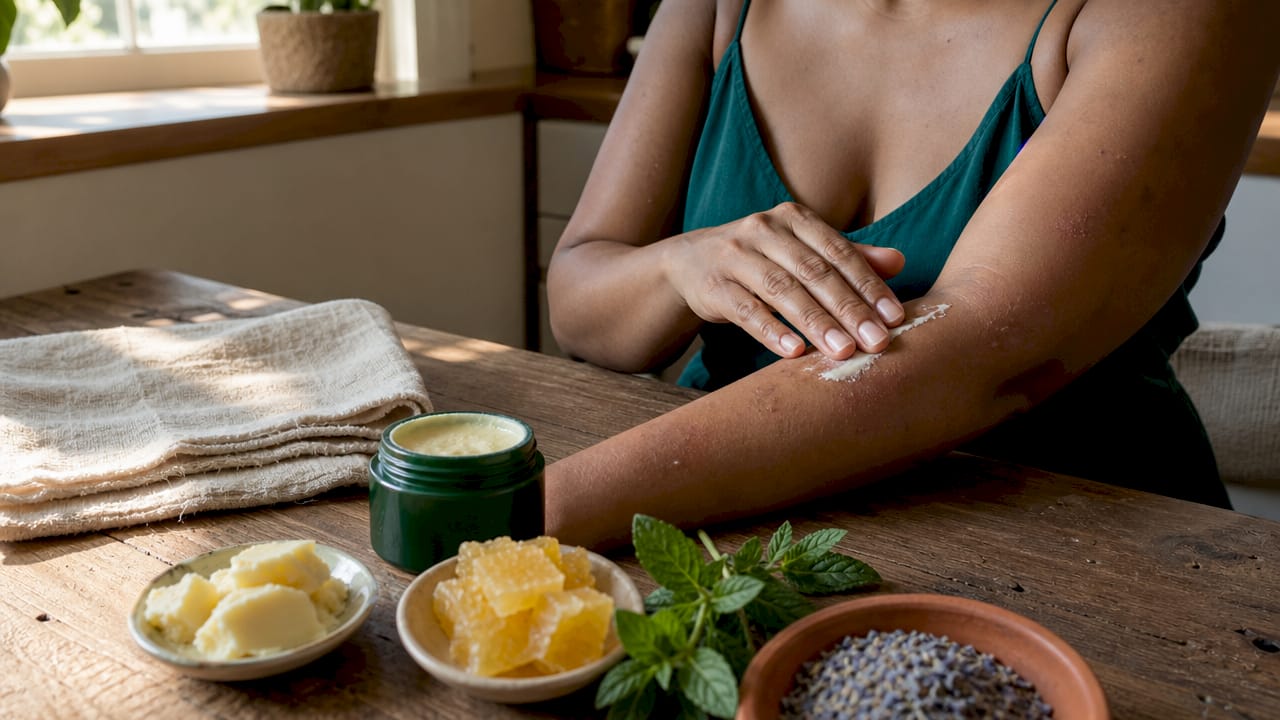
Pro Tip: Apply your natural balm to damp skin within 3 minutes of cleansing. Applying to damp skin dramatically improves hydration locking and barrier repair compared to applying on dry, inflamed skin.
How do steroid creams function, and what are their benefits and risks?
Steroid creams reduce skin inflammation by suppressing the immune response in the affected area. They block the production of inflammatory cytokines, which are the chemical signals that cause redness, swelling, and itch during an eczema flare. This mechanism produces fast, visible relief, which is why dermatologists prescribe them for acute flares.
Topical steroids come in different potencies and forms. Creams suit moist or weeping skin, ointments work better for dry, thickened patches, and lotions cover large or hairy areas. The FDA and Mayo Clinic both recommend using steroids at the lowest effective potency for the shortest possible duration. That guideline exists because the risks accumulate with prolonged use.
The most common steroid cream side effects include:
- Skin thinning (atrophy), which becomes permanent with long-term use on delicate areas
- Stretch marks that appear when collagen production is suppressed
- Spider veins caused by weakened blood vessel walls near the skin surface
- Rebound flares, where eczema returns more severely after stopping steroid use
- Systemic absorption, which increases when steroids are applied to broken or infected skin
Medical guidelines warn against using topical steroids on broken or infected skin due to increased systemic absorption. This warning is especially relevant for children, whose skin absorbs topical medications at a higher rate than adult skin. Chronic use of potent topical steroids risks skin thinning and rebound flares, particularly in thin-skin areas like the face, neck, and groin.
Age restrictions also apply. Many high-potency formulations are not approved for children under two years old, and even moderate-potency options require careful dosing in pediatric use.
Pro Tip: Always use steroid creams under medical supervision. The shortest effective duration at the lowest effective potency is the only safe approach for ongoing skin conditions.
What are the main differences between natural balms and steroid creams?
The clearest way to understand the comparison of balms and creams is to look at what each one actually does to the skin. Steroid creams suppress the inflammatory response. Natural balms rebuild the barrier that allows inflammation to occur in the first place. These are fundamentally different strategies, not interchangeable ones.
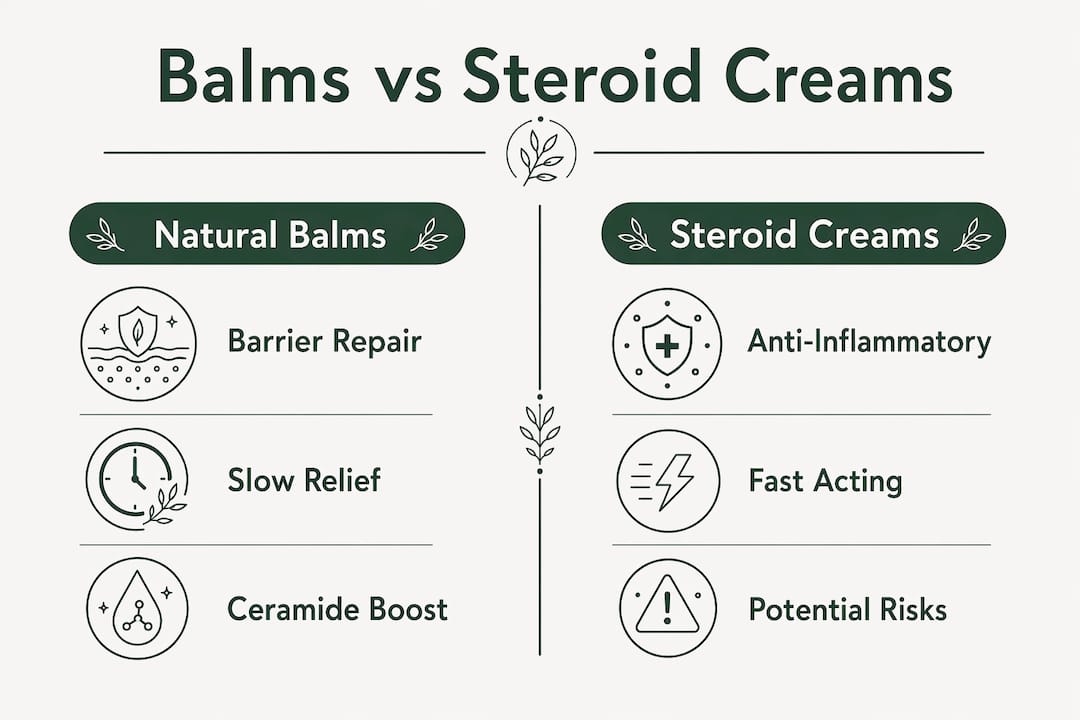
Steroid creams generally act within 24–48 hours, while natural balms may require 3–10 days to show noticeable improvement. Steroids relieve symptoms faster, but that speed comes with greater risk of side effects. Natural balms work more slowly but provide longer-lasting relief without dependency risks.
| Attribute | Natural balm | Steroid cream |
|---|---|---|
| Mechanism | Barrier repair, ceramide replenishment | Immune suppression, anti-inflammatory |
| Onset time | 3–10 days | 24–48 hours |
| Safety profile | Low risk, suitable for long-term use | Risk increases with potency and duration |
| Dependency risk | None | Rebound flares possible on discontinuation |
| Best use case | Maintenance, mild to moderate eczema | Acute flares, severe inflammation |
| Application | Damp skin after cleansing | Thin layer on affected area only |
Natural alternatives to steroid creams act more slowly but offer gentler, sustained relief without dependency risks. Colloidal oatmeal and virgin coconut oil, two common balm ingredients, show comparable effectiveness to mild steroids in some clinical studies. That finding reframes the choice: for mild to moderate eczema, a well-formulated natural balm is not a compromise. It is a clinically supported option.
The safety profile difference is most significant for children and people with sensitive skin. Natural vs synthetic creams is not just a philosophical debate. It has real consequences for skin health over months and years of use.
When should you consider using natural balms versus steroid creams?
Choosing between a soothing balm and a steroid cream depends on the severity of the flare, the age of the person being treated, and the treatment goal. The right choice is not always one or the other. Many dermatologists now recommend a hybrid approach.
- Use a natural balm for daily maintenance. Apply it morning and night to keep the skin barrier strong and reduce the frequency of flares. Consistent barrier repair is the most effective long-term strategy for eczema management.
- Reserve steroid creams for acute flares. When eczema becomes severely inflamed, weeping, or unbearably itchy, a short course of steroid cream under medical supervision provides fast relief. Use it for the shortest duration possible, then return to your natural balm routine.
- Combine both for better outcomes. Apply the steroid cream to the active flare area, then apply the natural balm over a wider area to protect surrounding skin. This limits steroid exposure while maintaining barrier function.
- Prioritize natural balms for children and sensitive skin. For babies and toddlers, grass-fed tallow baby balm and other natural options are the safer first choice. Steroid use in children requires pediatric guidance and careful monitoring.
- Never use steroid creams on broken or infected skin. Systemic absorption increases sharply on damaged skin, raising the risk of side effects beyond the skin itself. A natural balm with antimicrobial botanicals is the safer choice in those situations.
A chemical-free moisturizing routine built around a quality natural balm reduces the total number of flares over time. Fewer flares mean less need for steroid intervention. That cycle is the goal.
Key Takeaways
Natural balms repair the skin barrier through ceramide replenishment and barrier restoration, while steroid creams suppress inflammation quickly but carry cumulative risks that make them unsuitable for long-term or unsupervised use.
| Point | Details |
|---|---|
| Natural balms rebuild the barrier | They increase ceramide levels and reduce water loss, addressing the root cause of eczema. |
| Steroid creams act faster but carry risks | Relief comes in 24–48 hours, but chronic use causes skin thinning, rebound flares, and systemic absorption. |
| Application technique matters | Apply natural balms to damp skin within 3 minutes of cleansing for maximum barrier repair. |
| Hybrid approaches work best | Use natural balms daily for maintenance and reserve steroid creams for acute flares under medical guidance. |
| Children need extra caution | Natural balms are the safer first-line option for babies and toddlers; steroid use requires pediatric supervision. |
What I’ve learned from watching people choose between balms and steroids
Most people reach for a steroid cream because it works fast and the relief is undeniable. I understand that. When your child is scratching at 2 AM, you want something that stops the itch now. Steroid creams do that. But the pattern I see most often is this: the cream works, the flare clears, and then the routine goes back to nothing. No barrier maintenance, no daily balm, no prevention. Three weeks later, the flare is back, often worse than before.
The rebound effect is real, and it is not talked about enough. Skin that has been on steroids repeatedly becomes thinner and more reactive over time. The same potency stops working. People escalate to stronger formulations. That cycle is avoidable, but only if you treat the steroid as a short-term rescue tool and the natural balm as the actual treatment plan.
What I have found works is treating the natural balm as the foundation and the steroid as the emergency option. Consistent daily application of a quality anhydrous balm, especially one built on ingredients like grass-fed tallow that closely match the skin’s own lipid profile, changes the baseline. Flares become less frequent. When they do happen, they respond faster to lower-potency steroids. The skin is simply in better shape to begin with.
The parents who see the best results are the ones who commit to the balm routine even when the skin looks fine. Barrier repair is not something you do during a flare. It is something you do every day to prevent the next one.
— Michael
Lordslovebutter: a natural balm built for sensitive and eczema-prone skin
Lordslovebutter makes its balm from grass-fed beef tallow, an ingredient that mirrors the skin’s natural fatty acid profile more closely than most plant-based alternatives. The formula is completely free from synthetic chemicals, preservatives, and fragrances, making it one of the cleaner options available for people managing eczema or psoriasis.
The whipped beef tallow balm with Manuka honey is designed for whole-body application and absorbs without a greasy residue. Customers report improved skin texture within days of consistent use. For those managing eczema in children, the tallow balm for eczema guide on the Lordslovebutter site shows real-world results. Lordslovebutter is a veteran-owned business, and every product reflects that commitment to quality and simplicity.
FAQ
What is a natural balm used for on the skin?
A natural balm is a topical preparation that repairs the skin barrier by replenishing ceramides, essential fatty acids, and antioxidants. It is used for daily moisture maintenance, eczema management, and protecting sensitive or inflamed skin without synthetic chemicals.
How long does a natural balm take to work on eczema?
Natural balms typically require 3–10 days of consistent use before noticeable improvement appears. They work more slowly than steroid creams but provide longer-lasting relief without dependency or rebound flares.
What are the main steroid cream side effects to watch for?
Chronic steroid cream use causes skin thinning, stretch marks, spider veins, and rebound flares, particularly in thin-skin areas. The Mayo Clinic advises using the lowest effective potency for the shortest possible duration to minimize these risks.
Can you use a natural balm and a steroid cream at the same time?
Yes. Many dermatologists recommend applying a steroid cream to the active flare area and a natural balm to surrounding skin. This limits steroid exposure while maintaining barrier function across a wider area.
Are natural balms safe for babies and young children?
Natural balms made from anhydrous, chemical-free ingredients are generally safe for babies and young children. High-potency steroid creams are not approved for children under two years old, making a quality natural balm the safer first-line option for pediatric eczema.

