

How Tallow Protects from Wind: Natural Skin Shield
Tallow protects skin from wind by forming a breathable, bio-compatible occlusive barrier that locks in moisture and shields against environmental stressors. This barrier works because tallow’s fatty acid profile closely mirrors human skin lipids, allowing it to integrate with your skin’s natural structure rather than just sitting on top of it. The result is a significant reduction in transepidermal water loss (TEWL), which is the main way wind strips moisture from exposed skin. For people with sensitive skin, this compatibility matters more than any single ingredient claim. Lordslovebutter’s whipped beef tallow balm is built on exactly this principle.
How tallow protects from wind at the molecular level
Tallow’s wind protection comes down to one key fact: its lipid composition is nearly identical to the oils your skin produces naturally. Oleic acid, palmitic acid, and stearic acid are the three dominant fatty acids in tallow. These same fatty acids make up the bulk of your skin’s sebum, the natural oil that keeps your barrier intact.
When wind hits exposed skin, it accelerates moisture evaporation from the outermost skin layer. This process, known as transepidermal water loss, is the primary mechanism behind wind-chapped lips, raw cheeks, and cracked hands. Cold, windy conditions accelerate TEWL dramatically, and tallow creates a protective layer that slows this loss by reinforcing the skin’s own barrier structure.

The reason tallow works where many other products fall short is biocompatibility. Your skin recognizes tallow’s lipids and accepts them into the barrier structure. This means tallow does not just coat the surface. It reinforces barrier integrity from within, making the skin more resilient to repeated wind exposure over time.
What components of tallow make it effective for wind protection?
Tallow’s protective power comes from two categories of ingredients: fatty acids and fat-soluble vitamins. Both work together to create a barrier that is nourishing, not just physical.
The core fatty acids in tallow include:
- Oleic acid: A monounsaturated fat that softens and conditions the skin while supporting barrier permeability. It helps tallow absorb without sitting heavily on the surface.
- Palmitic acid: A saturated fat that forms the structural backbone of the skin barrier. It adds firmness and helps seal gaps in the outer skin layer.
- Stearic acid: Another saturated fat that contributes to barrier repair and helps skin recover from environmental damage like wind exposure.
These three fatty acids match natural skin oils closely enough that the skin barrier accepts them without triggering inflammation or rejection responses. That compatibility is what makes tallow particularly useful for sensitive skin.
Beyond fatty acids, tallow carries fat-soluble vitamins A, D, E, and K. Vitamin A supports skin cell turnover and helps repair wind-damaged tissue. Vitamin E acts as an antioxidant, neutralizing free radicals generated by environmental exposure. Vitamins D and K support skin resilience and reduce redness. These nutrients go beyond simple occlusion. They actively nourish the skin while the barrier does its protective work.
Pro Tip: Look for tallow sourced from grass-fed cattle. Grass-fed tallow carries a higher concentration of fat-soluble vitamins compared to grain-fed sources, giving you more nutritional benefit per application.
How does tallow’s barrier differ from synthetic alternatives?
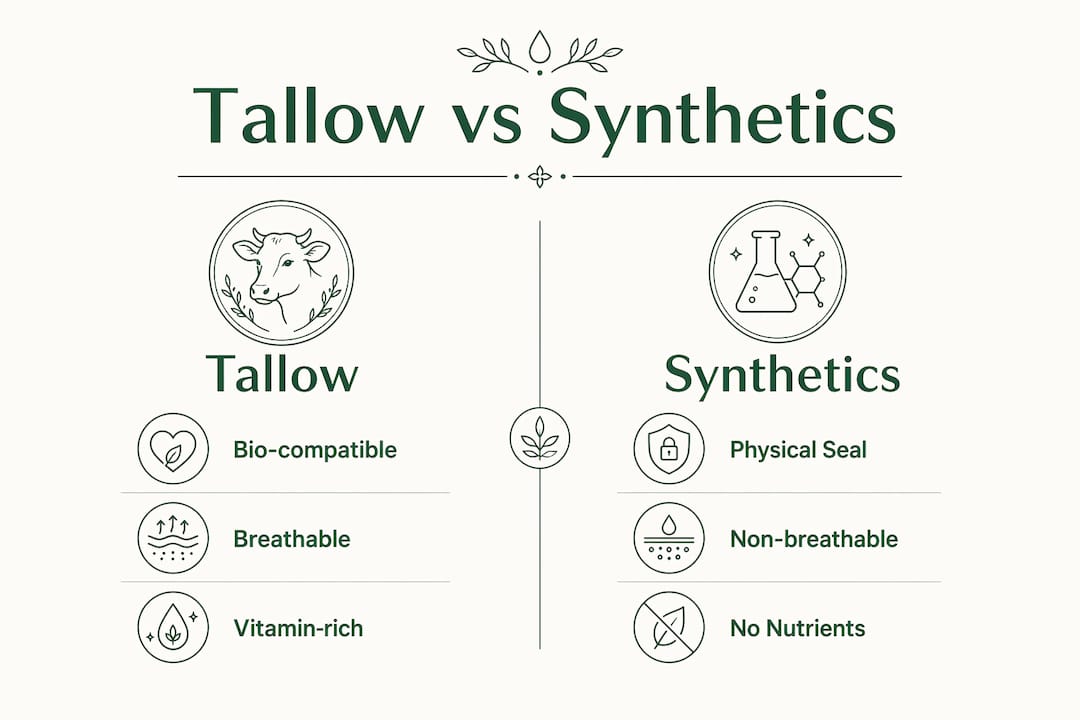
The standard comparison in skincare is tallow versus petroleum-based occlusives like petrolatum, or silicone-based products. Both categories create a barrier, but they work very differently.
| Feature | Tallow | Synthetic occlusives |
|---|---|---|
| Skin compatibility | Bio-compatible, mirrors skin lipids | Inert, sits on skin surface only |
| Breathability | Breathable, allows normal skin function | Can trap heat and moisture unevenly |
| Nutritional value | Vitamins A, D, E, K present | None |
| Pore behavior | Generally non-clogging for most skin types | Petrolatum can trap debris; silicone varies |
| Stability in wind | Does not evaporate; no emulsifiers needed | Water-based versions evaporate quickly |
Petroleum-based occlusives work by creating a physical seal over the skin. They are effective at reducing TEWL, but they do not integrate with the skin barrier. They sit on top of it. This means they can trap sweat, debris, and bacteria if applied too heavily, which is a real concern for people with acne-prone or reactive skin.
Unlike synthetic occlusives, tallow provides a breathable, skin-compatible barrier that nourishes with fat-soluble vitamins while still reducing moisture loss. The skin can still function normally underneath it. Gas exchange, temperature regulation, and natural oil production continue without interruption.
Tallow also has a stability advantage in harsh weather. Water-based moisturizers evaporate and require emulsifiers to stay stable. Tallow contains no water and no emulsifiers, so it stays on the skin longer in dry, windy conditions without breaking down.
Pro Tip: If you have oily or acne-prone skin, apply tallow only to the areas most exposed to wind, such as cheeks, lips, and the backs of hands. Avoid applying it over active breakouts.
What does the research say about tallow and wind-damaged skin?
Dermatologists acknowledge tallow’s effectiveness for moisturizing, and the scientific rationale is grounded in its lipid similarity to human skin. The key mechanism is TEWL reduction. When the skin barrier is compromised by wind, moisture escapes faster than the body can replace it. Tallow slows this process by reinforcing the barrier with compatible lipids.
“Tallow’s fatty acid ratio supports skin barrier integrity by reinforcing structure and maintaining resilience, making it particularly effective for managing compromised or wind-exposed skin.” — dermatological research on tallow’s skin-friendly fatty acids
Expert dermatologists acknowledge tallow’s efficacy in moisturizing due to its similarity with skin oils, but they caution that it is not a cure-all and should not replace clinical care for diagnosed skin conditions. This is an important distinction. Tallow supports moisture retention and barrier function. It does not treat eczema, psoriasis, or rosacea as a medical therapy.
For people with sensitive skin, the absence of synthetic fragrances, emulsifiers, and preservatives in pure tallow is a meaningful benefit. Many wind protection products contain alcohol or fragrance compounds that further dry and irritate already-stressed skin. Tallow carries none of these additives in its pure form.
The tallow for eczema-prone skin research from 2026 reinforces that grass-fed tallow supports barrier repair in compromised skin, particularly in cold and windy climates where the barrier is under constant stress.
How to apply tallow for maximum wind protection
Application technique matters as much as the product itself. Tallow applied incorrectly leaves a greasy film and reduces how long it stays effective.
- Cleanse and slightly dampen your skin. Apply tallow while your skin is still slightly damp from washing or misting. Damp skin absorbs the lipids more effectively, and the tallow helps seal that surface moisture in place.
- Use a pea-sized amount for the face. A small, pea-sized amount is sufficient for full facial coverage. More than that increases the chance of a heavy, uncomfortable feel without adding protection.
- Warm it between your fingers first. Tallow is semi-solid at room temperature. Rubbing a small amount between your fingertips for 5–10 seconds melts it slightly, making it easier to spread evenly.
- Focus on high-exposure areas. Cheeks, lips, the bridge of the nose, and the backs of hands take the most wind damage. Apply tallow to these areas as the last step in your skincare routine, after any serums or lighter moisturizers.
- Patch test before full use. If you have reactive or sensitive skin, apply a small amount to your inner wrist and wait 24 hours before using it on your face. Tallow is well-tolerated by most skin types, but individual sensitivity varies.
For applying whipped tallow without greasiness, the key is using less than you think you need and warming it properly before application. Whipped formulas like Lordslovebutter’s balm are easier to spread and absorb faster than raw rendered tallow.
Key takeaways
Tallow protects skin from wind by forming a breathable, bio-compatible occlusive barrier that reduces TEWL, nourishes with fat-soluble vitamins, and integrates with the skin’s natural lipid structure.
| Point | Details |
|---|---|
| TEWL reduction | Tallow slows moisture loss from wind exposure by reinforcing the skin’s outer barrier layer. |
| Lipid compatibility | Oleic, palmitic, and stearic acids in tallow mirror human skin oils, allowing barrier integration. |
| Vitamin nourishment | Fat-soluble vitamins A, D, E, and K in tallow actively repair and protect wind-damaged skin. |
| Breathable protection | Tallow allows normal skin function, unlike petroleum occlusives that sit inertly on the surface. |
| Application method | A pea-sized amount on slightly damp skin delivers full protection without greasiness. |
What I’ve learned from watching tallow work on wind-exposed skin
I’ve spent years paying attention to what actually holds up when skin is under real environmental stress. Cold wind is one of the most underestimated skin stressors. People reach for thick creams and heavy lotions, apply too much, and then wonder why their skin still feels raw by midday.
The most common mistake I see is over-application. More tallow does not mean more protection. A thin, even layer that absorbs into the skin works far better than a thick coat that sits on the surface and rubs off on scarves and collars. The breathability of tallow is its biggest advantage, and you lose that advantage the moment you apply too much.
What I find genuinely interesting about tallow is that it is not a new idea dressed up in modern packaging. Humans used animal fats for skin protection in cold climates long before the skincare industry existed. The science now explains why it worked. The lipid match between tallow and human skin is not a coincidence. It is the result of millions of years of biological alignment.
My honest advice: treat tallow as the final step in your wind-weather routine, not a replacement for everything else. Use a gentle cleanser, apply any targeted treatments first, then seal everything with a thin layer of tallow before going outside. That layering approach gives you the best of both worlds: active ingredients doing their work underneath, and tallow holding the barrier together on top.
— Michael
Lordslovebutter’s whipped tallow balm for wind-exposed skin
Lordslovebutter crafts its whipped beef tallow balm from grass-fed cattle, free from synthetic chemicals, emulsifiers, and fragrances. The formulation is designed specifically for people with sensitive skin who need real protection from harsh weather without the irritation that comes with conventional products.
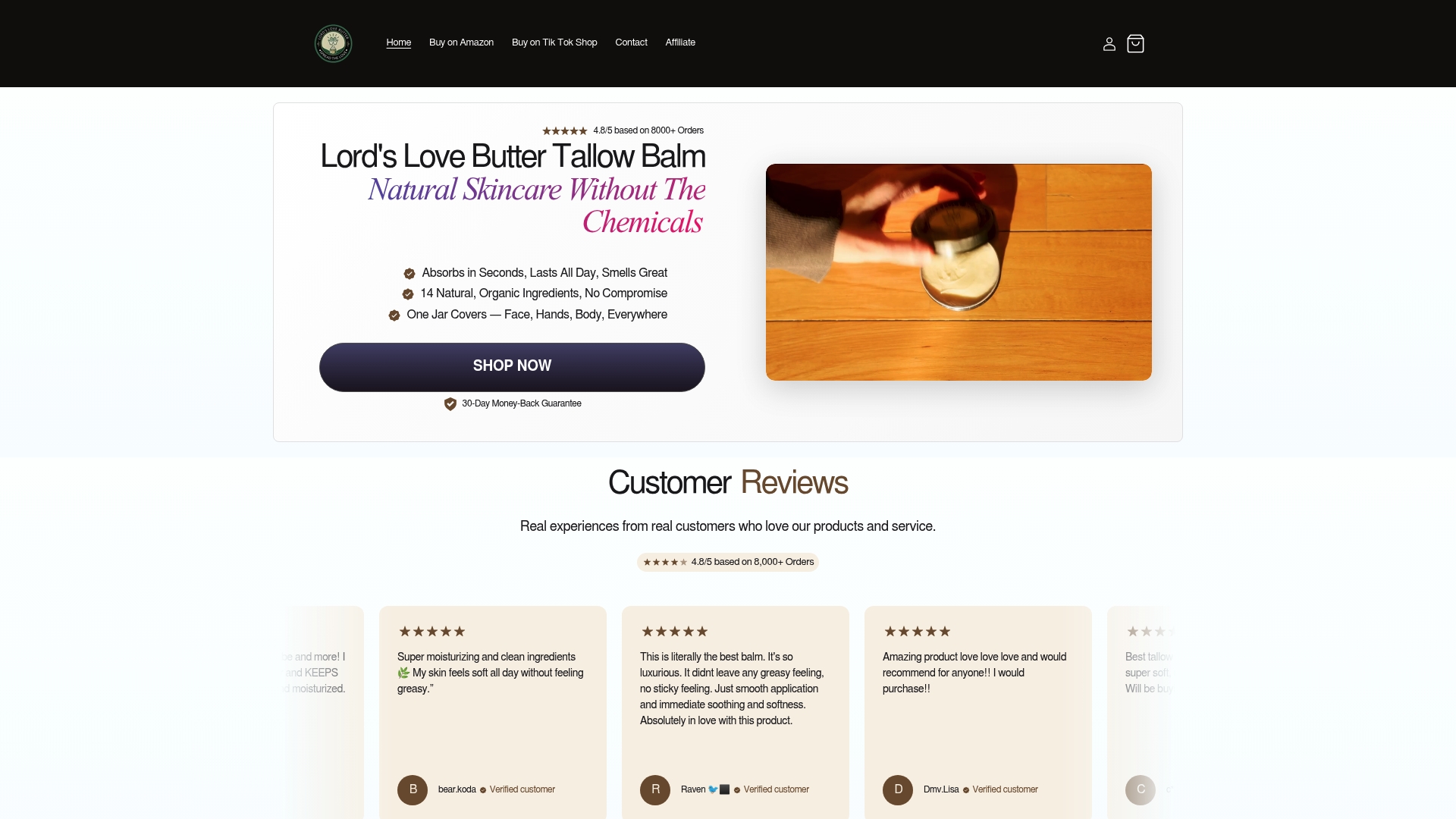
The balm delivers the same occlusive, breathable barrier described throughout this article, with the added benefit of Manuka honey for extra soothing and antimicrobial support. Customers with eczema and psoriasis report improved skin texture within days of consistent use. The whipped tallow balm is available in a 2.4 oz tin, sized for daily use and easy to carry for on-the-go wind protection. Lordslovebutter is a veteran-owned business, and every batch reflects that commitment to quality and simplicity.
FAQ
How does tallow protect skin from wind?
Tallow forms a breathable occlusive barrier on the skin’s surface that slows transepidermal water loss caused by wind exposure. Its fatty acids mirror human skin lipids, allowing it to reinforce the skin barrier rather than just coat it.
Is tallow better than petroleum jelly for wind protection?
Tallow provides a bio-compatible, breathable barrier with added vitamins A, D, E, and K, while petroleum jelly is an inert occlusive with no nutritional benefit. For sensitive skin in windy conditions, tallow’s compatibility with skin lipids makes it a more nourishing option.
How often should I apply tallow in windy weather?
Apply tallow once in the morning as the last step in your skincare routine before going outside. Reapply to lips and hands as needed throughout the day, especially after washing.
Can tallow clog pores?
Pure tallow is generally non-comedogenic for most skin types due to its compatibility with skin’s natural oils. People with very oily or acne-prone skin should apply it only to wind-exposed areas and avoid active breakouts.
Does grass-fed tallow work better than conventional tallow for skin?
Grass-fed tallow carries a higher concentration of fat-soluble vitamins compared to grain-fed sources. This makes it more nourishing for wind-damaged skin, which is why Lordslovebutter sources exclusively from grass-fed cattle.

