

Lip Licking Dermatitis: Why It Happens and How to Heal It
Lip licking dermatitis is irritant contact cheilitis caused by repeated saliva exposure, treatment begins as soon as you notice the urge. Stop licking, and coat your lips with a bland occlusive right away.
That single habit change does most of the work. But you need a plan for the moments when willpower fails.
- Stop the cycle: every time you feel the urge to lick, reach for a plain, fragrance-free balm instead.
- Seal the barrier: apply an occlusive like petrolatum, ceramides, or a natural fat such as tallow several times a day, not just once.
- Give it time: most people see real improvement in 2 to 3 weeks of consistent care, not overnight.
Key Takeaways
Lip licking dermatitis heals when saliva contact stops and a bland occlusive replaces the habit consistently for two to three weeks.
| Point | Details |
|---|---|
| It’s a saliva-driven barrier injury | Digestive enzymes and the wet-dry cycle break down lip skin with every lick. |
| Appearance is distinctive | A sharp ring of redness and scale that follows tongue reach, unlike perioral dermatitis or allergic cheilitis. |
| Recovery has a real timeline | Expect visible improvement in 2 to 3 weeks of consistent bland-occlusive use, not days. |
| Habit replacement beats willpower | Applying balm at the moment of urge works better than trying to simply stop licking. |
| Choose ingredients carefully | Lordslovebutter’s fragrance-free tallow balms, including the Mint Lip Balm Stick and Manuka Honey balms, avoid the menthol and additive irritants that slow healing. |
This article is general information, not a substitute for advice from a qualified doctor. Consult a qualified healthcare professional about your own circumstances before acting on anything here.
Table of Contents
- What Lip Licking Dermatitis Looks Like and Who Gets It
- Why Saliva and Habit Wreck the Lip Barrier
- Symptoms and How to Tell It Apart From Look-Alikes
- When to See a Dermatologist and What They’ll Check
- The Treatment and Prevention Plan That Actually Works
- What Happens If Simple Treatment Doesn’t Work
- Why Bland Occlusives Work and Where Tallow Balms Fit
- Why the Standard Advice on This Condition Falls Short
- Get Your Lips Out of the Wet-Dry Cycle for Good
- Sources
What Lip Licking Dermatitis Looks Like and Who Gets It
The rash has a signature look: a well-defined ring of redness and flaking that traces exactly as far as the tongue can reach, stopping in a sharp line rather than fading gradually. Dermatologists sometimes describe it as looking almost drawn on, because the border matches tongue reach so precisely. That’s the tell that separates it from ordinary dry lips, which tend to flake more diffusely and don’t stop at a clean edge.
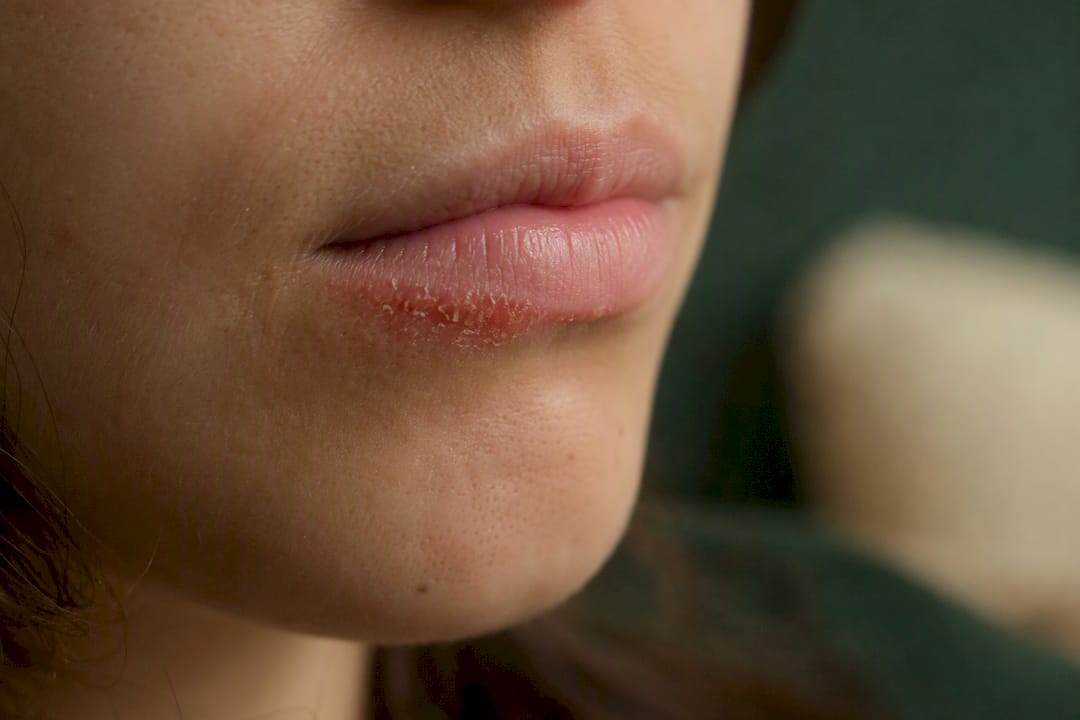
Children are common patients, partly because the habit starts young and partly because kids rarely stop licking just because it stings. Adults get it too, especially anyone with atopic dermatitis, which leaves skin more reactive to begin with.
A few conditions tend to set it off or make it worse:
- Cold, dry winter air that already strips moisture from lips.
- Chronic mouth breathing, which dries the lip surface even without licking.
- Sun exposure without any lip protection.
- Underlying eczema, which lowers the skin’s tolerance for irritation.
Why Saliva and Habit Wreck the Lip Barrier
Saliva isn’t neutral. It carries digestive enzymes meant to break down food, and those same enzymes go to work on the thin skin of your lips every time you lick them. That’s the core mechanism behind lip licker’s dermatitis: repeated chemical irritation from something your mouth produces on purpose, dozens of times a day, without you noticing.
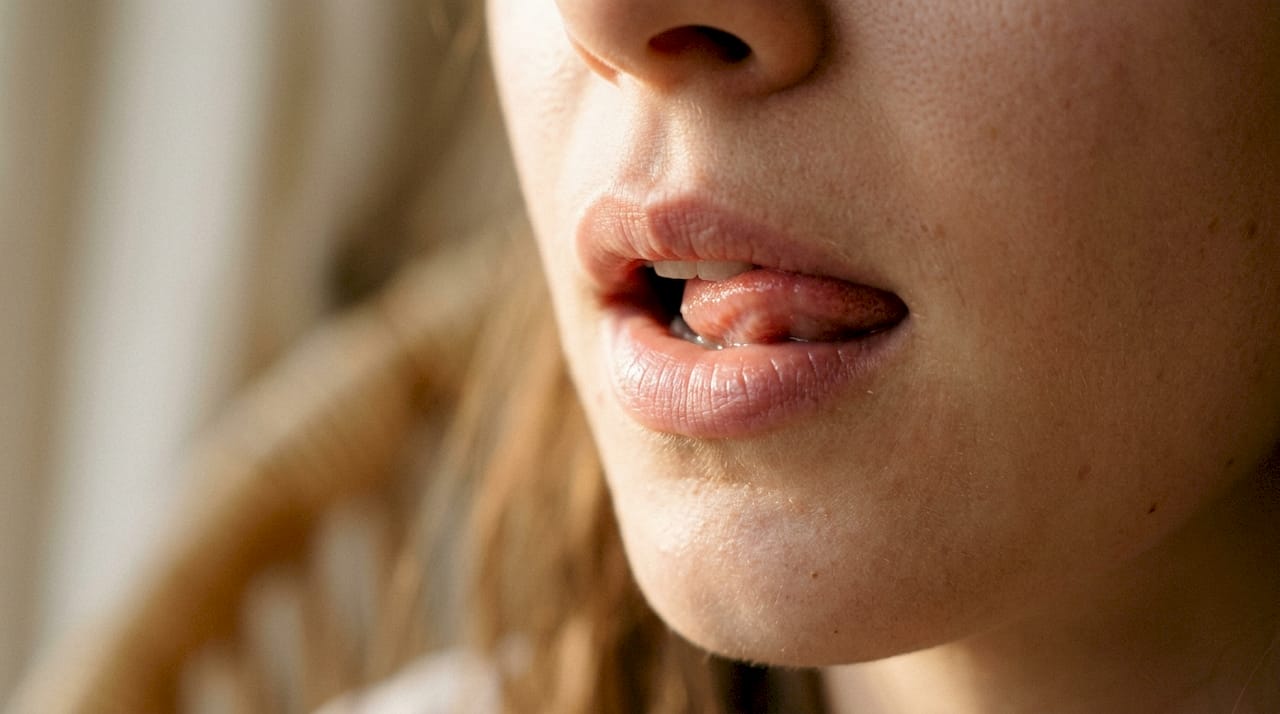
The damage compounds through what clinicians call a wet-dry cycle. Saliva evaporates faster than it hydrates, so each lick leaves lips drier than before, which triggers another lick, which strips a little more of the barrier. Within days, that loop turns mildly chapped lips into a persistent, scaling rash.
External factors accelerate the spiral:
- Weather. Cold, low-humidity air pulls moisture from lips faster than a hydrated barrier can replace it.
- Mouth breathing. Whether from allergies or habit, it dries the lip surface around the clock.
- Certain medications. Some acne treatments and antihistamines reduce natural lip moisture as a side effect.
- Stress and boredom. Lip licking often becomes an unconscious response, similar to nail biting.
Pro Tip: Keep a balm in every bag, coat pocket, and desk drawer you use. Reducing the delay between “urge” and “balm” is often what breaks the cycle faster than willpower alone.
Symptoms and How to Tell It Apart From Look-Alikes
Lip licking dermatitis shows up as chapping, fine scaling, and sometimes painful fissures at the corners or center of the lips, confined tightly to the area the tongue can reach. The vermilion border, that clean line separating lip color from surrounding skin, is directly involved and often the most irritated part.
Two other conditions get confused with it constantly, and the distinctions matter for treatment:
| Feature | Lip licking dermatitis | Perioral dermatitis | Allergic contact cheilitis |
|---|---|---|---|
| Appearance | Ring of redness and scale, sharp border | Small red bumps (papules) | Redness, swelling, sometimes blistering |
| Vermilion border | Directly involved | Usually spared | Directly involved |
| Typical cause | Saliva, habit | Steroid overuse, hormonal factors | Allergen in a lip product or food |
| Pattern | Follows tongue reach exactly | Clusters around mouth, not on lip itself | Matches contact area of the allergen |
The comparison between lip licking dermatitis and perioral dermatitis comes down to that vermilion border. Perioral dermatitis spares it and looks bumpy; lip licking dermatitis lives right on it and looks scaly.
Watch for signs of secondary infection, which changes the treatment approach entirely:
- Yellow crusting or pus, which suggests a bacterial infection.
- White patches inside the mouth or at the corners, which can signal a fungal component.
- Pain that worsens instead of improving after a week of barrier care.
When to See a Dermatologist and What They’ll Check
Most cases don’t need a clinic visit. A dermatologist can usually diagnose lip licking dermatitis just by looking at the pattern and asking about the habit, no biopsy or lab work required.
- Start with two to three weeks of consistent barrier care. This is the standard window clinicians use before calling a treatment a failure, based on American Academy of Dermatology guidance.
- If nothing improves, expect patch testing. This checks whether a lip product or food ingredient is driving allergic contact cheilitis instead.
- Persistent or unusual cases may prompt cultures. Your clinician checks for bacterial or fungal overgrowth if the rash looks infected or won’t budge.
- Referral to dermatology happens for anything atypical, recurrent, or resistant to standard care.
Get evaluated sooner if you notice a rash that’s spreading beyond the lips, visible pus, bleeding that doesn’t stop, or any fever or swelling that suggests a systemic reaction. Those signs don’t fit the standard picture and deserve a professional look.
The Treatment and Prevention Plan That Actually Works
Healing lip licking dermatitis means doing two things at once: repairing the barrier and breaking the habit that keeps damaging it. Neither alone works as well as both together, according to Verywell Health’s coverage of the condition.
Barrier repair comes first. Apply a bland occlusive several times a day, not just when your lips feel dry, such as a moisturising hand sanitiser formulation designed for hydration and barrier support. Petrolatum, ceramides, dimethicone, and inert natural fats like tallow all work by sitting on the skin’s surface and physically blocking moisture loss, which gives the damaged barrier room to rebuild underneath. Ointment textures tend to outperform waxy stick balms for serious fissuring because they stay put longer and rarely carry flavor additives.
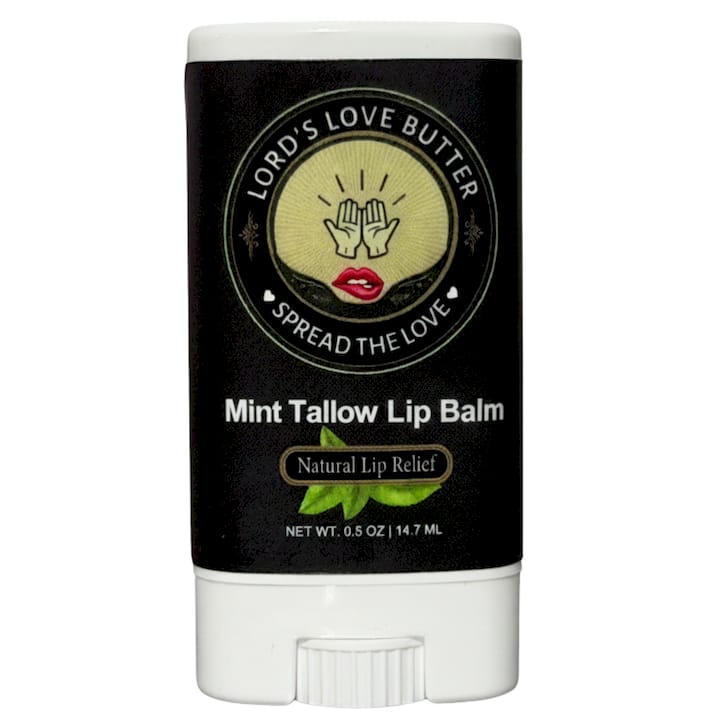
What to avoid matters just as much as what to use. Skip anything containing menthol, camphor, cinnamon, peppermint, or added fragrance while you’re healing. That cooling tingle from a menthol balm feels like it’s doing something, but it’s irritation, not treatment, and it can slow recovery.
Breaking the habit is where most people fall short. A few approaches clinicians recommend:
- Apply balm the instant you feel the urge to lick, using the balm itself as the competing response.
- Chew sugar-free gum to occupy the mouth during boredom-driven licking.
- Consider cognitive behavioral therapy for habits that feel truly involuntary or compulsive.
- Run a humidifier at home and stay hydrated, since dry indoor air and dehydration both feed the cycle.
- Use a lip product with SPF during the day to prevent sun-related irritation from compounding the problem.
For inflammation that won’t quiet down with barrier care alone, a clinician may prescribe a short course of a low-potency topical steroid, or a topical calcineurin inhibitor for chronic cases that need a steroid-free option. Both require supervision and aren’t meant for long-term daily use.
Pro Tip: Apply your occlusive right after meals and right before bed. Those are the two times saliva contact is highest, and they’re also the easiest times to build into a routine you’ll actually stick to.
What Happens If Simple Treatment Doesn’t Work
A rash that resists two to three weeks of consistent barrier care and habit changes isn’t necessarily lip licking dermatitis anymore. It might be something else, or it might have picked up a complication along the way.
- Secondary infection with Staph bacteria or Candida yeast can take hold in cracked, compromised skin and needs targeted treatment beyond moisturizer.
- Exfoliative cheilitis, a separate condition marked by continuous peeling, sometimes gets mistaken for a stubborn version of licker’s dermatitis.
- Actinic cheilitis, tied to cumulative sun damage, is rare but worth ruling out in older adults with chronic lip changes.
- Persistent cases warrant patch testing for allergic triggers or, when the habit seems compulsive rather than casual, a conversation about behavioral health support.
Why Bland Occlusives Work and Where Tallow Balms Fit
Petrolatum, ceramides, dimethicone, and rendered fats like tallow all share one job: they sit on the skin and slow water loss while the barrier underneath repairs itself. None of them contain the enzymes, fragrances, or actives that can reignite irritation on already-damaged lips. That’s the entire clinical case for “bland” treatment. Boring ingredients heal faster than exciting ones.
Fragranced or menthol-laced balms feel soothing for a few seconds and then work against you, which is exactly why avoiding irritant ingredients is a repeated point in dermatology guidance on this condition.
Lordslovebutter’s Mint Beef Tallow Lip Balm Stick works well as the daytime, urge-replacement balm you keep in a pocket. The richer Whipped Beef Tallow Balm with Manuka Honey suits nighttime intensive repair, when lips get the longest uninterrupted stretch to heal. For daytime sun exposure, the Beef Tallow Sun Balm Stick with Zinc Oxide adds mineral protection without the fragrance load that irritates healing skin.
| Point | Details |
|---|---|
| Occlusives seal, they don’t heal directly | They block water loss so your own skin can repair underneath, applied several times daily. |
| Avoid flavorants during recovery | Menthol, camphor, cinnamon, and fragrance all irritate healing lip skin. |
| Match balm to time of day | Lighter sticks work for daytime urge replacement; richer balms suit overnight repair. |
Why the Standard Advice on This Condition Falls Short
Most guidance on lip licking dermatitis leads with “just stop licking,” as though awareness alone solves a habit that often runs unconscious. That advice ignores the actual mechanism. Saliva enzymes have already started degrading the barrier before anyone notices a rash, and telling someone to stop a behavior they don’t realize they’re doing rarely works on its own.
The research that holds up combines two things, not one: aggressive, frequent barrier repair alongside a physical habit-replacement tool, something to reach for in the exact moment the urge hits. That’s a behavioral intervention disguised as a skincare step, and it’s more useful than either willpower or moisturizer alone.
What’s underrated is ingredient selection during healing. People grab whatever lip product is nearby, often something menthol-based that feels therapeutic and is quietly working against recovery. Prioritize a genuinely bland, occlusive formula over anything marketed as medicated or tingly. Then treat the balm itself as your habit-replacement tool, not an afterthought you remember once your lips already hurt.
— Michael
Get Your Lips Out of the Wet-Dry Cycle for Good
Breaking lip licking dermatitis takes an occlusive you’ll actually reach for every time the urge hits, and that’s precisely what Lordslovebutter’s tallow balms are built for. Unlike medicated sticks loaded with menthol or synthetic wax, these balms use grass-fed tallow and Manuka honey, ingredients your damaged lip barrier can tolerate while it heals instead of fighting against.
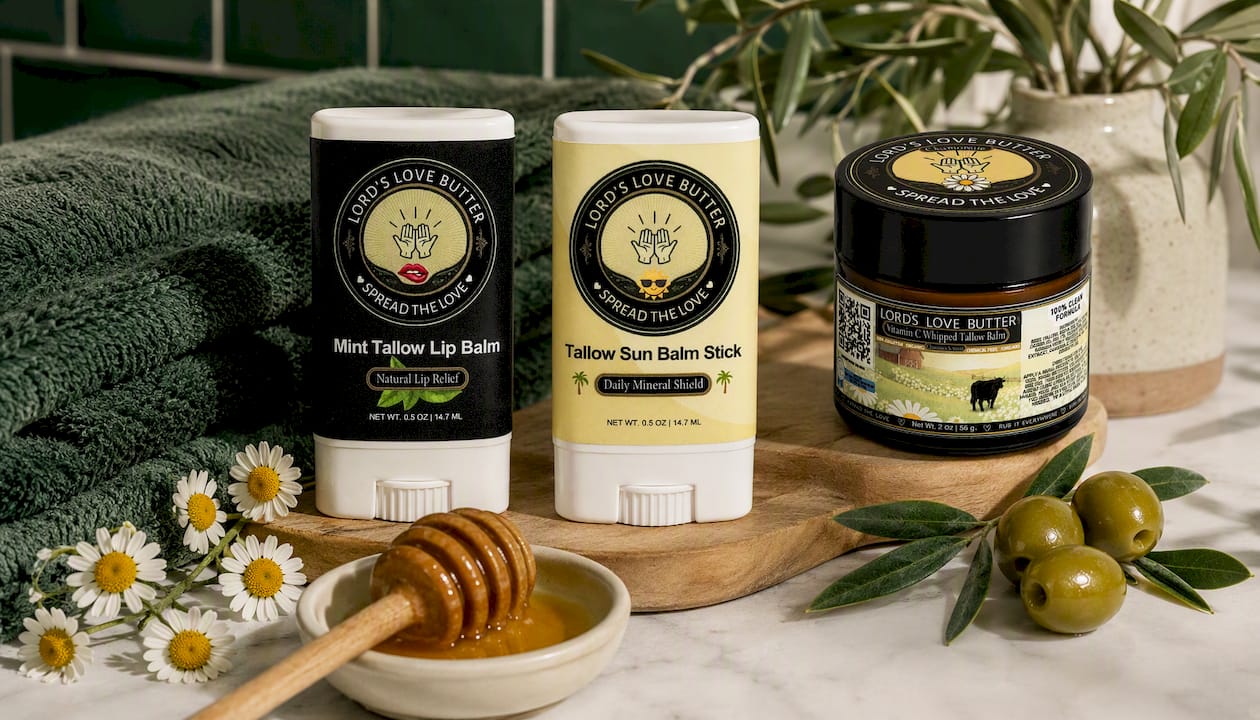
Keep the Mint Beef Tallow Lip Balm Stick wherever you spend your day for urge-replacement moments, and switch to the Original Beef Tallow Balm Lite with Manuka Honey for a gentler nighttime option if fissures are severe. Both are free of fragrance and flavorants, which matters more than most balm shopping habits account for. Order either one today and start applying it the next time you catch yourself licking, not after the rash sets in.
Sources
- Lip licker’s dermatitis — DermNet NZ
- Art of prevention: Practical interventions in lip‑licking dermatitis — PMC
- American Academy of Dermatology: heal dry chapped lips
Recommended
- How Omega Fatty Acids in Skin Repair Dry, Eczema-Prone Skin – Lord’s Love Butter
- How Beef Tallow Reduces Itching: What You Need to Know – Lord’s Love Butter
- Why Eczema Skin Loses Moisture: Causes and Solutions – Lord’s Love Butter
- How Animal Fats Nourish Dry Skin: A Science-First Guide – Lord’s Love Butter

