

How Animal Fats Nourish Dry Skin: A Science-First Guide
Unsaponified animal fats, particularly beef tallow and chicken fat, can genuinely nourish very dry skin. They work by replenishing surface lipids, reducing transepidermal water loss (TEWL), and temporarily improving skin softness. The mechanism is real, the historical use is long, and the modern clinical evidence is promising but limited. Start with a pea-sized amount on a dry body area, patch test for 24 hours, and reserve facial use for non-acne-prone skin.
- Animal fats act as emollients (softening) and light occlusives (sealing moisture in)
- Their fatty-acid profile closely overlaps with human sebum, which is why they absorb well
- Dermatologists at Scripps Health recommend small amounts and caution against use on acne-prone, rosacea-prone, or seborrheic dermatitis skin
- Fat-soluble vitamins A, D, E, and K are present but at trace levels, not therapeutic doses
- Many small-batch tallow products lack formal safety testing; sourcing and rendering quality matter
Key claim: Tallow’s biocompatibility with sebum makes it a mechanistically sound option for lipid replenishment on very dry skin, but it is not a substitute for dermatologist-managed care for chronic inflammatory conditions.
Table of Contents
- What does the research actually say about animal fats on skin?
- How do animal fats actually reduce dryness at the skin level?
- What vitamins does tallow actually deliver to your skin?
- Who benefits from topical animal fats, and who should avoid them?
- Safety, comedogenicity, and what the FDA says about tallow products
- What Lordslovebutter’s experience with tallow products shows
- How to use animal-fat topicals safely and effectively
- Key Takeaways
- The case for honest expectations with tallow skincare
- Lordslovebutter’s whipped tallow balms for very dry skin
- Useful sources for further reading
What does the research actually say about animal fats on skin?
The science behind tallow in skincare sits at an interesting intersection: strong mechanistic plausibility, a long history of topical use, and a still-thin body of modern randomized controlled trials. A recent scoping review published in PMC describes tallow as biocompatible with skin, pointing to its lipid composition as the primary reason. That is not the same as a large-scale efficacy trial, and it is worth being clear about the difference.
Dr. E. Victor Ross, a dermatologist cited by Scripps Health, notes that tallow may feel soothing for short-term dryness relief but should not replace dermatologist-managed treatment for chronic inflammatory conditions like eczema or psoriasis. That framing is useful: tallow is a reasonable adjunct for lipid replenishment, not a proven therapy for inflammatory skin disease.
The tallow trend is driven more by wellness and social-media interest than by strong, large-scale clinical evidence. Individual reports of short-term softness are common, but they are not the same as controlled trial data.
Strengths of the existing evidence:
- Mechanistic overlap with sebum is well-documented
- Long history of topical use across many cultures
- Scoping review supports biocompatibility framing
Limits to keep in mind:
- Few modern randomized controlled trials specifically on topical tallow
- Small sample sizes in most observational reports
- Variable formulations make cross-study comparison difficult
- Many artisan products lack published safety testing
Pro Tip: When you see a wellness brand cite “biocompatibility” as proof of efficacy, check whether the source is a mechanistic review or a clinical trial. Mechanistic plausibility means the chemistry makes sense, not that the product has been tested in a controlled setting.
How do animal fats actually reduce dryness at the skin level?
The answer starts with fatty acids. Tallow’s composition, roughly 40–50% oleic acid alongside significant fractions of palmitic and stearic acids, mirrors the lipid profile of human sebum more closely than most plant oils do. That overlap is what gives tallow its sebum-mimetic behavior.
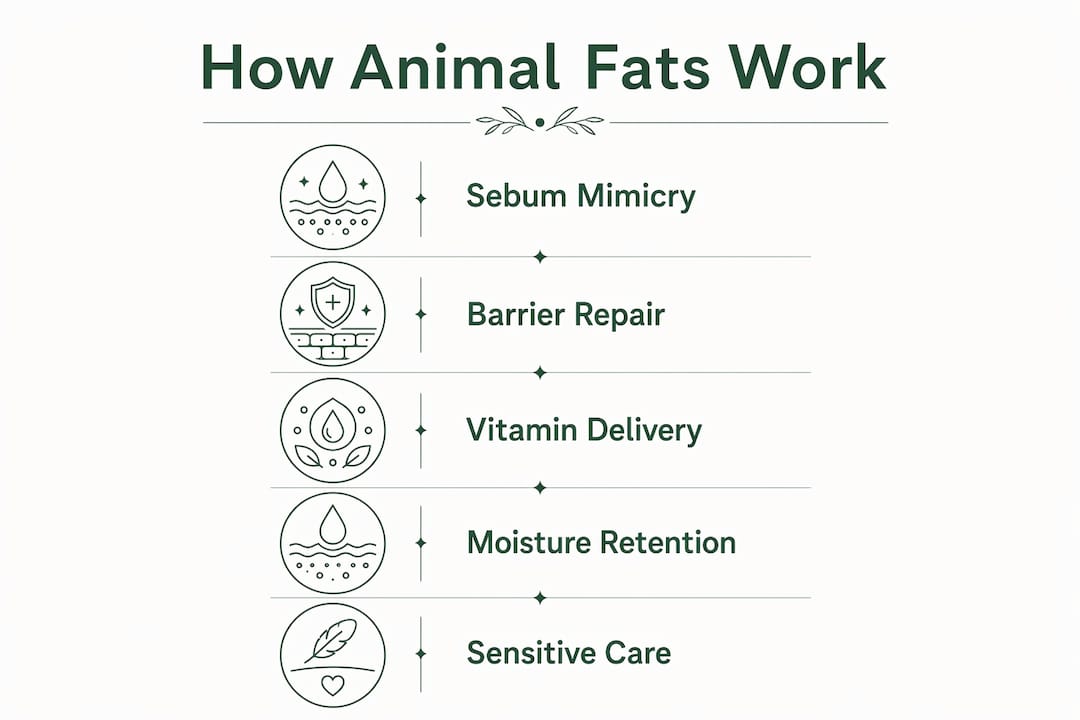
Here is how the chain of events works on dry skin:
| Step | What happens | Why it matters |
|---|---|---|
| Sebum mimicry | Tallow’s fatty acids match surface skin lipids | Skin “recognizes” the lipid profile; less barrier disruption |
| Surface lipid replenishment | Oleic, palmitic, and stearic acids fill gaps in the lipid layer | Restores the skin’s natural protective film |
| Light occlusion | Semi-solid texture forms a breathable barrier at body temperature | Slows water evaporation from the skin surface |
| TEWL reduction | Less transepidermal water loss | Skin stays hydrated longer between applications |
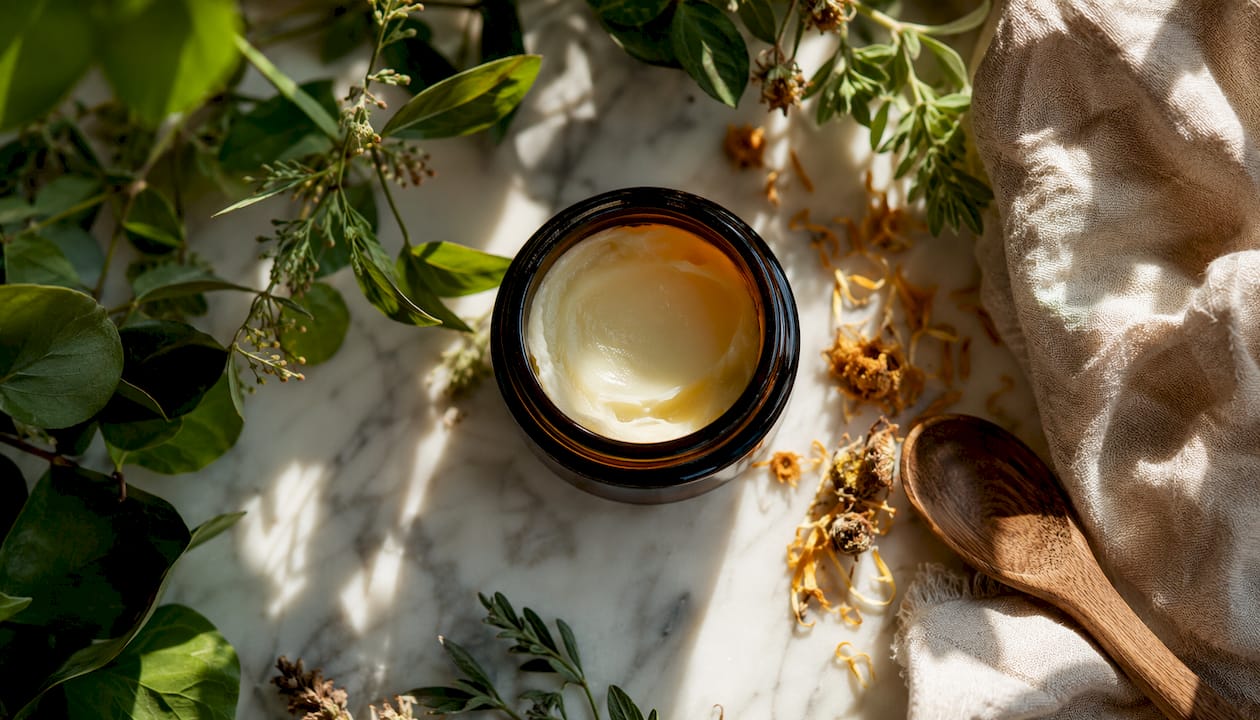
The physical behavior of tallow is part of what makes it work. It is semi-solid at room temperature but melts close to body temperature, which means it spreads easily on contact with skin and absorbs faster than many heavier plant oils. That melt-point match also leaves a light occlusive residue rather than a thick, greasy film. You can read more about why tallow absorbs faster than most oils in Lordslovebutter’s breakdown of the mechanism.
The three key fatty acids and their roles:
- Oleic acid (MUFA): Penetrates the lipid bilayer, softens skin, supports emollient action
- Palmitic acid (SFA): Structural component of the skin barrier; helps restore surface film integrity
- Stearic acid (SFA): Contributes to the semi-solid texture; supports occlusive behavior
One important distinction: unsaponified tallow (used in balms) preserves the triglyceride structure intact, which is what delivers the emollient and occlusive effects. Saponified tallow, used in traditional soaps, breaks those triglycerides into sodium fatty acid salts and glycerin. The glycerin is a useful humectant, but the emollient mechanism is different. For dry skin hydration, you want the unsaponified form.
The animal’s diet also affects the lipid profile. Grass-fed animals tend to show a more favorable omega-3 to omega-6 ratio compared with grain-fed animals, which is why sourcing matters for both composition and product claims.
What vitamins does tallow actually deliver to your skin?
Tallow contains fat-soluble vitamins A, D, E, and K. That sounds impressive until you compare concentrations. In a typical tallow balm, these vitamins are present at trace levels, well below what you would get from a dedicated topical vitamin serum. They contribute, but modestly.
| Source | Vitamins present | Concentration level | Best use case |
|---|---|---|---|
| Tallow balm | A, D, E, K (trace) | Low | Lipid support, barrier repair, general dryness |
| Dedicated vitamin serum | A (retinol), C, E, B3 | High (active dose) | Targeted treatment: aging, hyperpigmentation, acne |
| Combination formulation | Tallow + active vitamin | Variable | Broader support with lipid delivery vehicle |
The practical takeaway: tallow’s vitamin content is a supporting benefit, not a primary therapeutic dose. If you need clinical-grade retinol for fine lines or a high-potency vitamin C for pigmentation, a targeted serum is the right tool. Tallow’s real value is as a lipid delivery vehicle that also happens to carry those trace vitamins along for the ride.
Where tallow does have an edge is in its role as a natural moisturizer for sensitive skin: the lipid matrix itself supports barrier function in a way that a water-based vitamin serum alone cannot replicate.
Pro Tip: Use tallow for lipid support and barrier repair as your base layer. If you need active vitamin treatment, apply a targeted serum first and let it absorb, then seal with a thin layer of tallow balm. The fat matrix can actually help lock in the serum’s active ingredients.
Who benefits from topical animal fats, and who should avoid them?
Not every skin type responds the same way. Tallow is genuinely useful for some people and genuinely problematic for others. The distinction usually comes down to whether your skin is lipid-deficient or lipid-excess.
Good candidates for topical animal fats:
- Very dry skin (xerosis), especially on body areas like heels, elbows, and hands
- Thickened or flaky patches that need barrier repair
- People with eczema or psoriasis who want a lipid adjunct alongside their prescribed treatment
- Children with dry, sensitive skin (see note on patch testing below)
- Adults who react to synthetic fragrance or preservative-heavy conventional moisturizers
Who should avoid or proceed with caution:
- Acne-prone skin: tallow can be comedogenic and may worsen breakouts
- Oily or combination skin, particularly on the face
- Rosacea: the occlusive weight may aggravate flushing or sensitivity
- Seborrheic dermatitis: heavy lipids can feed the yeast-like organisms associated with this condition
- Anyone with a known beef or lanolin allergy
Quick self-check before you try it:
- Have you had breakouts from heavy creams or oils in the past?
- Do you have an oily T-zone or active acne?
- Has a dermatologist diagnosed rosacea or seborrheic dermatitis?
- Do you have a known sensitivity to beef-derived products?
If you answered yes to any of those, consult a dermatologist before applying tallow, especially to your face. For body use on very dry areas, the risk profile is lower, but a patch test is still the right first step.
For children, grass-fed tallow formulations designed for sensitive skin are a reasonable option, but parents should patch test on a small area first and avoid applying near the eyes or mouth. Pregnant people should consult their OB or midwife before introducing any new topical product, particularly those with added essential oils.
For clinical-grade outcomes on inflamed eczema, lipid replenishment should be one part of a broader regimen that may include ceramide-rich moisturizers and prescription treatments as advised by a dermatologist. Tallow alone is not a substitute for that level of care.
Safety, comedogenicity, and what the FDA says about tallow products
Tallow balms sold in the United States are regulated as cosmetics under the FDA’s authority. That means manufacturers are responsible for ensuring their products are safe before going to market, but the FDA does not pre-approve cosmetic formulations. For small-batch or artisan tallow products, that regulatory gap is real: many lack formal, published safety testing, which puts the burden on sourcing quality, rendering practices, and labeling transparency.
Step-by-step patch test method:
- Apply a pea-sized amount to the inside of your forearm or behind your ear
- Leave it on for 24 hours without washing the area
- Check for redness, itching, swelling, or breakouts
- If no reaction occurs, try a small area of the intended application site for another 24 hours
- Only proceed to broader use after both tests are clear
Key safety considerations:
- Avoid applying to broken, infected, or actively inflamed skin
- Do not use on open wounds or areas with active eczema flares without dermatologist guidance
- Check the ingredient list for added fragrances or essential oils, which are common sensitizers
- Confirm the source: grass-fed, properly rendered tallow has a cleaner lipid profile than grain-fed alternatives
- Topical use is categorically different from dietary intake; Harvard Health’s review of dietary saturated fats does not apply to topical cosmetic use
Storage matters more than most people realize. Tallow is an animal fat, which means it can go rancid if stored improperly. Keep it in a cool, dark place in an airtight container. Refrigeration extends shelf life significantly. A rancid product will smell off and can cause skin irritation; if it smells wrong, discard it.
Note: This article is general information, not medical advice. For chronic skin conditions, confirm the current treatment approach with a board-certified dermatologist.
What Lordslovebutter’s experience with tallow products shows
Lordslovebutter is a veteran-owned brand that formulates and sells whipped beef tallow balms made from grass-fed tallow. That commercial context matters and should be stated plainly: the brand has a direct interest in tallow skincare, and the observations below come from that perspective.
What those reports do and do not tell you:
- What they show: Tallow balm can produce noticeable softness and hydration improvements for people with very dry skin in a short timeframe
- What they do not show: Clinical efficacy for inflammatory skin disease, superiority over other moisturizers in a controlled setting, or suitability for all skin types
- The honest limit: Customer experience and small-scale product reports do not replace dermatologist-managed care for chronic inflammatory conditions
The brand’s formulation approach, combining grass-fed tallow with Manuka honey and, in one variant, squalane and vitamin C, reflects an effort to layer complementary ingredients rather than rely on tallow alone. Manuka honey adds humectant and antimicrobial properties; squalane contributes additional emollient action without comedogenic risk. For a deeper look at how animal-based skincare works at the ingredient level, Lordslovebutter’s blog covers the principles in detail.
How to use animal-fat topicals safely and effectively
Getting the application right makes a real difference in both results and safety. Here is a practical, step-by-step approach.
Application steps:
- Prep your skin. Apply immediately after a shower or bath while skin is still slightly damp. The moisture on the surface gives the tallow something to seal in.
- Use a pea-sized amount. A little goes a long way. Warm it between your fingertips first; it will melt quickly at body temperature.
- Apply to target areas. Heels, elbows, hands, shins, and other very dry body areas respond well. For facial use, apply only to dry patches and only if you have confirmed non-acne-prone skin.
- Avoid mucous membranes. Keep away from eyes, nostrils, and mouth.
- Frequency. Once or twice daily is typical for very dry skin. Reduce frequency once the skin barrier improves.
Formulation considerations:
- Pure unsaponified tallow: Maximum occlusive effect; best for severely dry, thickened skin; heavier feel
- Whipped tallow balm with Manuka honey: Lighter texture, added humectant action from honey, easier to spread; good all-around choice for dry to very dry skin
- Tallow + squalane + vitamin C: Adds antioxidant support and additional emollient action; useful for dry skin with early signs of aging or uneven tone
- DIY rendered tallow: Higher contamination risk if not rendered correctly; requires clean sourcing, proper temperature control, and airtight storage. A vetted commercial product removes that variable.
Dos and don’ts:
- Do patch test before full application
- Do store in a cool, dark, airtight container
- Do check the ingredient list for added fragrances or essential oils
- Don’t apply to actively broken or infected skin
- Don’t use as a replacement for prescribed treatments on inflammatory skin conditions
- Don’t assume grass-fed labeling alone guarantees rendering quality; look for transparent sourcing information
For a direct comparison of how tallow performs against a popular plant-oil alternative, Lordslovebutter’s piece on tallow vs. argan oil covers the occlusive and hydration differences in practical terms.
Key Takeaways
Animal fats nourish dry skin primarily through sebum-mimetic fatty acids that replenish surface lipids and reduce transepidermal water loss, making them a mechanistically sound but evidence-limited option for very dry, non-acne-prone skin.
| Point | Details |
|---|---|
| Sebum mimicry drives the mechanism | Tallow’s oleic, palmitic, and stearic acids closely match human sebum, supporting barrier repair without stripping. |
| Best for body use on very dry skin | Heels, elbows, and hands benefit most; avoid routine heavy facial use on acne-prone or oily skin. |
| Vitamins are trace, not therapeutic | Fat-soluble vitamins A, D, E, K are present but at low concentrations; use a dedicated serum for active vitamin treatment. |
| Patch test is non-negotiable | Apply a pea-sized amount to your forearm for 24 hours before broader use, regardless of skin type. |
| Lordslovebutter’s vetted formulations | Lordslovebutter’s whipped grass-fed tallow balms with Manuka honey offer a tested, chemical-free starting point for very dry or sensitive skin. |
The case for honest expectations with tallow skincare
The most common mistake people make with tallow is treating it as either a miracle cure or a dangerous fad. Neither framing is accurate, and both miss the point.
Tallow works because its chemistry is genuinely compatible with human skin. That is not marketing language; it is a straightforward observation about fatty-acid profiles. The problem is that “compatible chemistry” gets amplified into “heals eczema” or “reverses aging” on social media, and that is where the evidence stops supporting the claim.
What tallow does well, it does reliably: it softens very dry skin, reduces tightness, and helps the barrier hold onto moisture. Those are real outcomes for a real subset of people. What it does not do is replace a ceramide-based prescription moisturizer for active eczema, or outperform a clinical retinoid for aging skin. Knowing which category your skin falls into is the whole game.
The brands worth trusting in this space are the ones that say exactly that, rather than promising clinical outcomes from a cosmetic product.
Lordslovebutter’s whipped tallow balms for very dry skin
If you have read this far and want to try a vetted commercial option rather than navigating the DIY rendering process, Lordslovebutter offers exactly that. The balms are made from grass-fed beef tallow, free of synthetic chemicals, and formulated for whole-body use on dry and sensitive skin, including eczema and psoriasis-prone areas.
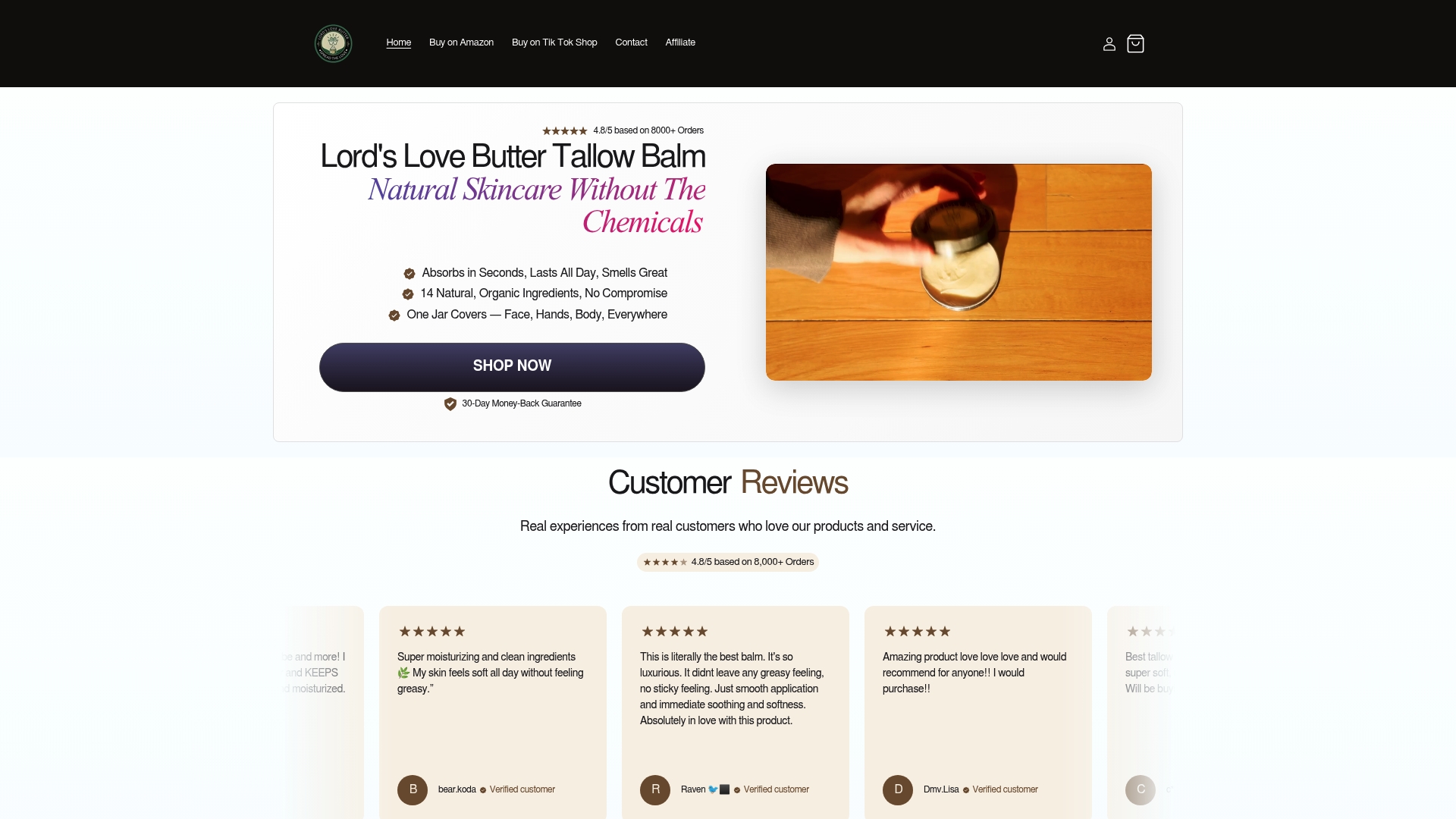
Three options are available depending on what your skin needs:
- Whipped Beef Tallow Balm with Manuka Honey, 2.4 oz Tin: The core formula. Grass-fed tallow plus Manuka honey for combined occlusive and humectant action. The tin format is compact and travel-friendly.
- Whipped Beef Tallow Balm with Manuka Honey, 2.4 oz Jar: Same formula in a jar format, easier to scoop for larger body areas.
- Vitamin C Whipped Beef Tallow Balm with Manuka Honey & Squalane: Adds squalane and vitamin C for antioxidant support alongside the lipid base. A good choice if your dry skin also shows early signs of uneven tone or aging.
Lordslovebutter is a veteran-owned business. Patch test before full application, and if you are managing a chronic skin condition, use these balms as an adjunct to, not a replacement for, your dermatologist’s recommended treatment plan. Browse the full line at lordslovebutter.com.
Useful sources for further reading
Peer-reviewed clinical evidence specifically testing topical tallow remains limited. For medical skin conditions, consult a board-certified dermatologist rather than relying on any single source, including this article.
- Scripps Health: Beef Tallow in Skin Care — Dermatologist commentary on safety, comedogenicity, and clinical cautions; the most directly applicable clinical guidance for consumers.
- PMC Scoping Review on Tallow Biocompatibility — Peer-reviewed review describing tallow as biocompatible with skin; covers mechanistic evidence and notes the need for more controlled trials.
- WhollyKaw: Tallow in Skincare — Detailed breakdown of tallow’s fatty-acid profile, sebum mimicry, and saponified vs. unsaponified behavior; useful for understanding the mechanism.
- MDPI Nutrients: The Role of Meat Lipids in Nutrition and Health — Covers how diet (grass-fed vs. grain-fed) affects animal lipid composition; relevant for understanding sourcing claims.
- Harvard Health: Beef Tallow, Seed Oils, and Full-Fat Dairy — Useful for distinguishing dietary saturated fat research from topical cosmetic use; prevents conflation of two very different risk profiles.
- PubMed: The Role of Meat Fat in the Human Diet — Overview of fatty-acid composition in meat and meat products; background context for understanding animal lipid profiles.
- JACC: Saturated Fats and Health — State-of-the-art review on saturated fatty acids; useful for understanding the chemistry of palmitic, stearic, and oleic acids referenced in the mechanism section.

