

Anti-Aging Natural Moisturizer Types for Sensitive Skin
The three main anti-aging natural moisturizer types made from animal fats are grass-fed beef tallow, lard, and lanolin. For sensitive, whole-body hydration, grass-fed beef tallow is generally the strongest choice: its fatty-acid profile closely mirrors human sebum, which means it absorbs well, rarely feels greasy, and tends to cause fewer reactions on reactive skin than most synthetic alternatives. Lordslovebutter’s whipped beef tallow, available as the Tin & Jar Bundle, is a grass-fed, chemical-free option built around exactly this principle.
Table of Contents
- What are the main animal-fat moisturizer types?
- How do animal fats actually hydrate and support anti-aging?
- Who benefits most, and who should be careful?
- How do you choose a safe, quality animal-fat moisturizer?
- How to apply animal-fat moisturizers for whole-body hydration
- What do U.S. regulations and label claims actually mean?
- Key Takeaways
- Why animal-fat moisturizers deserve a second look
- Lordslovebutter’s whipped tallow is worth trying
- Useful sources
What are the main animal-fat moisturizer types?
Each of the three major animal-fat moisturizers has a distinct texture, scent, and skin-compatibility profile. Here is what you are actually getting with each one.
- Grass-fed beef tallow is rendered from the fat surrounding cattle kidneys. Whipped versions have a creamy, butter-like texture that spreads easily and absorbs faster than you might expect. The scent is mild and slightly meaty when unscented, though most formulations are nearly odorless after rendering. Tallow is rich in vitamins A, D, E, and K plus fatty acids that parallel the skin’s own lipid structure. Comedogenic risk is low to moderate — most sensitive-skin users tolerate it well, but very acne-prone skin may need a patch test first.
- Lard (rendered pork fat) has a softer, silkier texture than tallow and a slightly higher oleic acid content. It absorbs quickly and was the dominant skin moisturizer in the U.S. before petroleum-based products took over in the 20th century. Scent is neutral when properly rendered. Comedogenic tendency is similar to tallow, and it carries a comparable vitamin profile, though typically lower in vitamin K.
- Lanolin is extracted from sheep wool grease, not rendered from tissue fat. It is one of the most effective occlusives available — thick, waxy, and long-lasting. Lanolin is a staple in nipple creams and intensive hand treatments for good reason. The downside: a meaningful subset of people carry a lanolin allergy, and its heavy texture can feel occlusive to the point of suffocation on oily or combination skin.
| Type | Texture | Absorption | Scent | Sensitive-skin fit |
|---|---|---|---|---|
| Grass-fed beef tallow | Creamy/whipped | Moderate-fast | Mild/neutral | High |
| Lard | Silky/soft | Fast | Neutral | High |
| Lanolin | Thick/waxy | Slow | Slightly animal | Moderate (allergy risk) |
How do animal fats actually hydrate and support anti-aging?
Three mechanisms drive moisturizer performance, and animal fats hit two of them well.

Occlusives form a physical barrier on the skin’s surface that slows water evaporation. Lanolin is a strong occlusive; tallow and lard are moderate ones. Emollients fill the microscopic gaps between skin cells, smoothing texture and making skin feel soft. Animal fats excel here because their fatty-acid chains slot into the skin’s lipid matrix. Humectants draw water from the environment or deeper skin layers into the outer layer. Animal fats are not humectants on their own, which is why pairing them with glycerin or urea adds real value. Glycerin and urea are among the most effective humectants for temporarily plumping skin and softening fine lines.
The term “biomimetic” gets used a lot in anti-aging skincare. It simply means a formula that mimics the skin’s own lipid composition: ceramides, fatty acids, and cholesterol-like compounds in roughly the ratios the skin barrier uses naturally. Animal fats, particularly grass-fed tallow, come closer to that ratio than most plant oils.
Dermatologist Dr. Levin recommends that after about age 45, people prioritize biomimetic moisturizers that blend ceramides, fatty acids, and cholesterol-like lipids to mirror the skin barrier’s natural structure — because standard moisturizers increasingly fall short as barrier function declines with age.
One honest caveat: moisturizers temporarily plump fine lines by hydrating the outer skin layer, but they do not reverse deep wrinkles. For meaningful long-term anti-aging, you need actives like retinoids or vitamin C alongside daily SPF. Animal-fat moisturizers support the barrier and improve hydration; they are not a substitute for sunscreen or a clinical treatment. For more on how natural balms seal moisture, the mechanism is worth understanding before you buy.
When layering with actives, apply vitamin C serum first on clean skin, let it absorb, then apply your tallow or lard moisturizer on top. With retinoids, apply the retinoid after moisturizer (the “sandwich” method) to reduce irritation, or apply moisturizer over retinoid once it has dried. Tallow and lard are generally compatible with both, but start slowly if your skin is new to either active.
Who benefits most, and who should be careful?
Grass-fed tallow and lard suit very dry, sensitive, eczema-prone, and psoriasis-affected skin best. The sebum-similar fatty-acid profile means the skin recognizes and accepts these fats readily, which is why users with reactive skin often report less irritation than with synthetic creams.
Who should be cautious:
- People with a confirmed lanolin allergy should avoid lanolin entirely and patch-test tallow and lard separately.
- Very acne-prone skin may react to any occlusive fat, including tallow. Start with a small area.
- Anyone with a soy or pork allergy should confirm lard sourcing before use.
Patch test steps:
- Apply a pea-sized amount to the inside of your wrist or behind your ear.
- Leave it on for 24 hours without washing.
- Check for redness, itching, swelling, or breakouts.
- If no reaction appears after 48 hours, proceed to a small area of your face or body.
- Stop use immediately if you develop hives, significant redness, or any swelling.
Consult a dermatologist before using any new moisturizer if you have active eczema flares, open psoriasis plaques, or a history of contact dermatitis. For sensitive-skin moisturizer guidance, minimal ingredient lists reduce the chance of a reaction significantly.
How do you choose a safe, quality animal-fat moisturizer?
The single most important purchase criterion is sourcing transparency. A product that cannot tell you where its fat comes from is a product worth skipping.
Top buying criteria:
- Grass-fed or pasture-raised sourcing, stated explicitly on the label
- Short ingredient list with no undisclosed preservatives or synthetic fragrance
- Clear allergen statements (especially for lanolin products)
- Packaging that limits contamination (pump or spatula-friendly jar)
- No vague “natural” claims without specifics
The American Academy of Dermatology notes that “clinically proven” on a label does not mean FDA clinical trial approval. It often reflects consumer testing or small internal studies. Read the actual ingredient list rather than the front-panel claim.
Red flags to walk away from: unknown fat origin, heavy synthetic fragrance, undisclosed preservatives, and any product that refuses to share a full ingredient list. For animal-based skincare, third-party certifications and transparent sourcing pages are the clearest signals of a trustworthy brand.
How to apply animal-fat moisturizers for whole-body hydration
Apply to damp skin immediately after a shower or bath. That thin layer of water on your skin gives the fat something to seal in.
- Pat skin until slightly damp, not dripping.
- Scoop a small amount (roughly a pea-sized portion for the face; a quarter-sized amount for large body areas).
- Warm the product between your palms for 5–10 seconds until it softens.
- Press into skin first, then smooth outward with light strokes.
- Allow 2–3 minutes before dressing to avoid transfer.
For the face, use less product than you think you need. A thin, even layer is enough. On the body, focus on high-dryness areas first: shins, elbows, hands, and heels.
Pro Tip: If you have eczema or psoriasis, apply your medicated treatment first, wait for it to absorb, then layer the tallow or lard moisturizer on top as a sealant. This locks in the active ingredient and reduces transepidermal water loss simultaneously.
On hygiene: jars invite contamination through repeated finger-dipping. Use a clean spatula every time, or choose a pump format when available. This matters more for whole-body daily use than for occasional spot treatment.
What do U.S. regulations and label claims actually mean?
The FDA regulates cosmetics differently from drugs. A moisturizer cannot legally claim to change the skin’s structure or function without crossing into drug territory, which requires clinical trials and FDA approval. Most anti-aging moisturizers, including animal-fat ones, are cosmetics.
The AAD is direct on this point: “clinically proven” on packaging does not equal FDA clinical trial approval. It typically reflects the manufacturer’s own consumer study.
“Natural,” “grass-fed,” and “chemical-free” are unregulated terms in U.S. cosmetics. They signal intent, not a legal standard. Ask the brand directly: Where is the fat sourced? How is it rendered? Is it tested for heavy metals or contaminants? A brand that answers those questions clearly is worth trusting. One that deflects is not.
Rancidity is a real concern with animal fats. Properly rendered and stored tallow has a reasonable shelf life, but heat and light degrade it. Buy from brands that use opaque, airtight packaging and state a batch date or expiration.
Key Takeaways
Animal-fat moisturizers work best when sourced transparently, applied to damp skin, and paired with daily SPF and actives for genuine long-term anti-aging results.
| Point | Details |
|---|---|
| Tallow leads for sensitive skin | Grass-fed beef tallow’s sebum-similar fatty acids absorb well and rarely irritate reactive or eczema-prone skin. |
| Moisturizers plump temporarily | Humectants like glycerin and urea help, but fine-line reduction is short-term without retinoids and daily sunscreen. |
| Lanolin allergy is real | Always patch-test lanolin separately; a confirmed allergy rules it out entirely regardless of formulation. |
| Sourcing transparency matters | Grass-fed, clearly labeled, minimal-additive products reduce contamination and irritation risk significantly. |
| Lordslovebutter fits this need | The grass-fed, chemical-free whipped tallow in the Tin & Jar Bundle is designed for sensitive, whole-body daily use. |
Why animal-fat moisturizers deserve a second look
The conventional skincare industry spent decades steering consumers toward petroleum derivatives and synthetic emollients, often without strong evidence that those alternatives outperformed what humans used for centuries. Tallow and lard fell out of fashion for cultural reasons, not scientific ones.
What the evidence actually shows is that biomimetic fats, those whose lipid profiles resemble the skin’s own, tend to support barrier repair more effectively than fats with very different fatty-acid compositions. Grass-fed beef tallow fits that description. Lordslovebutter is a veteran-owned brand that built its product line around this principle: grass-fed sourcing, no synthetic additives, whipped for easier application. Customers report improved skin texture within days, which aligns with what you would expect from a well-formulated occlusive emollient on dry or compromised skin.
What tallow cannot do is reverse deep wrinkles or replace sunscreen. No moisturizer can. The honest case for animal-fat options is barrier support, lasting hydration, and low irritation risk, and on those measures, the evidence is genuinely solid.
Lordslovebutter’s whipped tallow is worth trying
Grass-fed beef tallow that actually absorbs without leaving a film is harder to find than it should be. Lordslovebutter’s Tin & Jar Bundle is a chemical-free, whipped tallow formulation made for daily whole-body use, including sensitive, eczema-prone, and psoriasis-affected skin. It is veteran-owned, sourced from grass-fed cattle, and free from synthetic fragrances and preservatives.
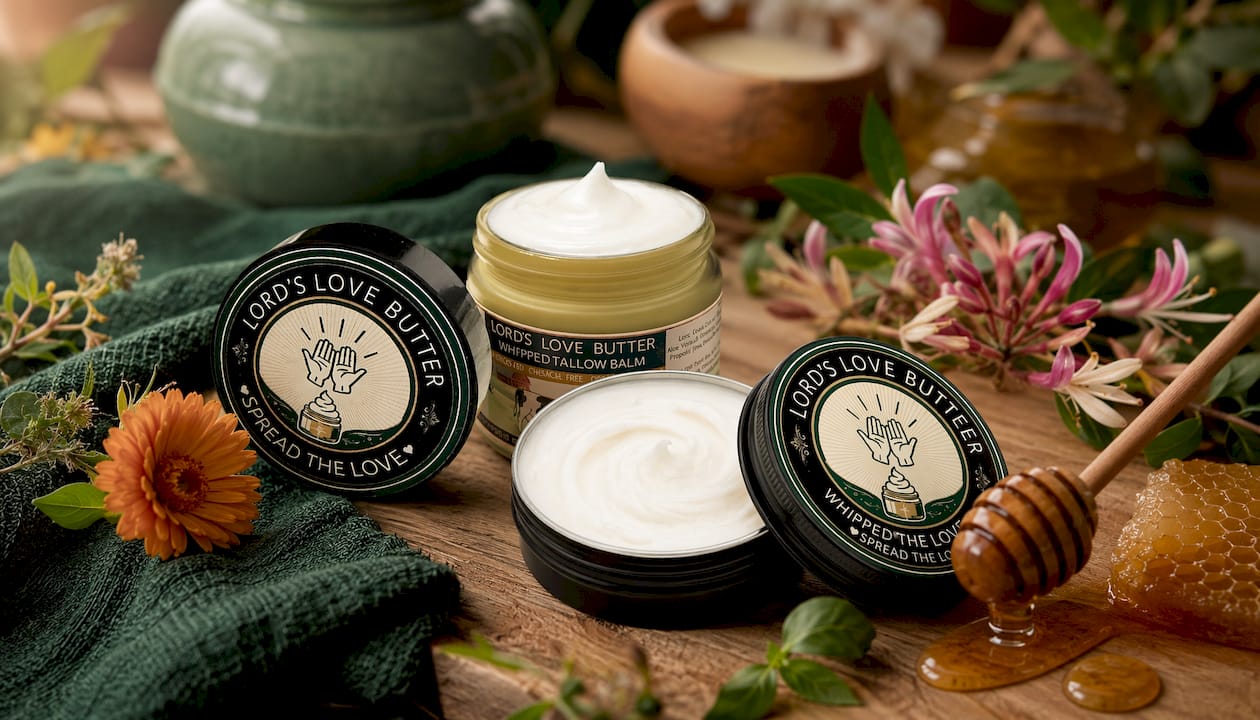
The bundle gives you both a tin and a jar format, so you can keep one in the bathroom and one at a bedside or travel bag. Apply a small amount to damp skin after your shower, warm it between your palms, and press it in. For the face, a pea-sized amount is enough. For the body, work from the driest areas outward. For more on whole-body moisturizing benefits, the brand’s blog covers the single-product approach in detail. Visit the product page to check current pack formats and place an order.
Useful sources
For anyone who wants to verify the claims in this article or read primary guidance, these U.S. sources are the most authoritative starting points.
- Mayo Clinic: Wrinkle Creams Guide — Covers how moisturizers work, which humectants are effective (glycerin, urea), and realistic expectations for wrinkle reduction.
- American Academy of Dermatology: Selecting Anti-Aging Products — Explains what label claims like “clinically proven” actually mean and how to evaluate anti-aging skincare products.
- Wirecutter / NYTimes: Best Skin-Care Products for Aging Skin — Includes dermatologist guidance (Dr. Levin) on biomimetic moisturizers for skin over 45 and packaging hygiene notes.
- CNN Underscored: Best Anti-Aging Products — Dermatologist perspectives on sunscreen as the primary anti-aging defense and the role of moisturizers in a complete routine.
- Lordslovebutter: Best Aging Skin Texture Improvement Ingredients — The brand’s own ingredient and testimonial evidence for grass-fed tallow’s effect on skin texture.
Recommended
- Natural Baby Skin Moisturizers Types: A Parent’s Guide – Lord’s Love Butter
- Best Aging Skin Texture Improvement Ingredients in 2026 – Lord’s Love Butter
- Minimal Ingredient Moisturizer Advantages for Sensitive Skin – Lord’s Love Butter
- Whole Body Chemical-Free Moisturizing Routine Guide – Lord’s Love Butter

