

Natural Baby Skin Moisturizers Types: A Parent's Guide
Natural baby skin moisturizers are formulated with gentle, plant-derived or animal-derived ingredients like squalane, shea butter, and Manuka honey to hydrate and protect infant skin without synthetic additives. Baby skin is thinner and less capable of regulating moisture than adult skin, making ingredient choice critical. The right natural baby skin moisturizers types do more than soften skin. They support the skin barrier, reduce irritation risk, and work with your baby’s developing biology rather than against it. This guide breaks down the three core types, compares them side by side, and tells you exactly how to choose and use them safely.
1. What are the main natural baby skin moisturizers types?
The three primary natural baby skin moisturizers types are squalane-based, shea butter-based, and Manuka honey-based formulas. Each targets a different skin condition and hydration need. Matching the moisturizer type to your baby’s skin condition is the single most effective way to get results.
A tiered selection approach works best: squalane for normal skin, shea butter for dry or seasonal skin, and Manuka honey for irritated or rash-prone skin. That framework gives you a clear starting point instead of guessing at the drugstore shelf.

2. Squalane-based moisturizer for everyday baby skin hydration
Squalane is the stabilized form of squalene, a lipid your skin already produces naturally. Because it mirrors the skin’s own oils, it absorbs quickly and leaves no greasy residue. That makes it the go-to choice for daily hydration on normal baby skin.
Squalane-based baby lotions are lightweight, non-greasy, and breathable. They are often blended with jojoba or sunflower oil to boost moisture delivery without clogging pores. The result is soft, comfortable skin that does not feel coated or heavy.
When to choose squalane:
- Daily full-body moisturizing after bath time
- Warm weather months when heavier creams feel uncomfortable
- Babies with normal skin who need consistent hydration without buildup
- Parents who want a fast-absorbing formula for wiggly infants
Pro Tip: Look for formulas that list squalane as a top-three ingredient and are labeled non-comedogenic. A short ingredient list with no added fragrance is a strong signal of purity.
3. Shea butter-based moisturizers for dry or seasonal baby skin
Shea butter delivers deep, nutrient-rich hydration that lighter oils cannot match. It contains vitamins A and E, which support skin cell repair and protect against moisture loss. For babies with dry, rough, or chapped patches, shea butter is the most effective natural option.
Shea butter formulas offer cushiony, lasting moisture that works especially well in nighttime routines. Applied after a warm bath when pores are open, shea butter locks in hydration through the night. Parents in cold or dry climates often find shea-based products make the biggest visible difference in winter months.
Best uses for shea butter moisturizers:
- Post-bath nighttime moisture locking
- Dry elbows, knees, and cheeks in winter
- Babies with naturally dry or rough skin texture
- Areas prone to chapping from wind or cold air
Pro Tip: Avoid shea butter products with added fragrance or essential oils. Rich formulas are more likely to mask irritating additives, and fragrance is one of the top triggers for infant skin reactions.
Shea butter also pairs well with natural balms that seal moisture for an extra layer of protection on particularly dry patches.
4. Manuka honey-based moisturizers for irritated or rash-prone baby skin
Manuka honey is a natural humectant, meaning it draws moisture from the air into the skin. High-grade New Zealand Manuka honey also supports the skin’s microbiome, which plays a direct role in calming inflammation and aiding natural repair. For babies with eczema-prone or rash-prone skin, this makes Manuka honey a standout ingredient.
Manuka honey aids skin balance and is commonly used on dry patches or post-eczema care. It works differently from shea butter or squalane because it actively supports the skin’s own healing process rather than just coating the surface. That distinction matters for babies with recurring irritation.
“Manuka honey draws in moisture while supporting the skin’s natural microbiome, making it one of the most targeted natural ingredients for soothing irritated or rash-prone infant skin.”
When Manuka honey moisturizers make sense:
- Eczema-prone or reactive skin patches
- Post-rash recovery and skin calming
- Dry areas that do not respond to standard lotions
- Layering over a lighter squalane base for added soothing effect
One safety note: Manuka honey is applied topically, not ingested, so it is safe for infant skin. However, if your baby has a known bee product allergy, consult your pediatrician before use.
5. Comparing natural moisturizer types: texture, hydration, and skin fit
Choosing between squalane, shea butter, and Manuka honey comes down to three factors: texture, hydration strength, and your baby’s skin condition. The table below summarizes the key differences.
| Type | Texture | Hydration level | Best skin condition | Key ingredients to watch |
|---|---|---|---|---|
| Squalane | Lightweight, fast-absorbing | Moderate | Normal, everyday use | Jojoba, sunflower oil |
| Shea butter | Rich, cushiony | Deep | Dry, chapped, seasonal | Vitamins A and E |
| Manuka honey | Gel-like, slightly tacky | Targeted, humectant | Irritated, rash-prone, eczema | Honey grade, bee derivatives |
Squalane absorbs in seconds and suits morning routines. Shea butter takes longer to absorb and works best overnight. Manuka honey sits between the two in texture but delivers the most targeted soothing action.
You can also layer types for customized care. A squalane base applied first, followed by a Manuka honey balm on irritated spots, gives you broad hydration plus targeted relief. For very dry skin in winter, a shea butter layer on top of squalane at bedtime covers both daily and deep hydration needs.
Organic skincare ingredients like these work best when matched to the skin’s current condition rather than used interchangeably. Rotating without purpose often delivers inconsistent results.
6. How to choose and use natural baby moisturizers safely
Reading the ingredient list is the most important skill you can develop as a parent buying baby skincare. Consumer safety advocates recommend prioritizing ingredient transparency and reputable certifications over marketing claims. A label that says “natural” means nothing without a full, readable ingredient list.
Ingredients to avoid in baby moisturizers:
- Mineral oil, petrolatum, and paraffin (occlusive synthetics that can trap irritants)
- Fragrance or parfum (can mask undisclosed additives and trigger reactions)
- Ethoxylated ingredients (often contaminated with trace chemicals)
- Artificial dyes and colorants
- Allergenic naturals like milk proteins, nut oils, and coconut derivatives
Fragrance-free formulations reduce irritation risk significantly, especially for sensitive baby skin. Scent is the most common hidden source of chemical additives in baby products.
Safe application practices:
- Patch test new products on a small area of skin and wait 24 hours before full application
- Introduce one new product at a time so you can identify any reaction
- Apply moisturizer within three minutes of bath time to lock in moisture
- Use gentle, circular motions rather than rubbing to avoid friction on delicate skin
Pro Tip: Pair your natural moisturizer with a fragrance-free, sulfate-free baby wash. Harsh cleansers strip the skin barrier before the moisturizer even gets a chance to work.
Understanding why chemical-free skincare matters for your baby goes beyond avoiding one or two bad ingredients. It means building a routine where every product earns its place.
Key takeaways
The most effective approach to natural baby moisturizers is matching the formula type to your baby’s specific skin condition, using squalane for daily hydration, shea butter for dryness, and Manuka honey for irritation.
| Point | Details |
|---|---|
| Match type to skin condition | Use squalane for normal skin, shea butter for dry skin, and Manuka honey for irritated or rash-prone areas. |
| Read every ingredient list | Avoid mineral oil, fragrance, dyes, and ethoxylated ingredients regardless of “natural” marketing claims. |
| Patch test before full use | Apply to a small skin area and wait 24 hours to confirm compatibility before full-body use. |
| Layer types for complex needs | Combine squalane as a base with Manuka honey on problem spots for targeted, full-coverage hydration. |
| Certifications beat marketing | Look for transparent ingredient disclosure and reputable certifications rather than vague “natural” labels. |
What I’ve learned from watching parents navigate baby skincare
Most parents I talk to start with the wrong question. They ask, “Which product is best?” when the real question is, “What does my baby’s skin actually need right now?” Those are very different starting points, and the second one leads to much better outcomes.
I’ve seen parents spend months cycling through products because they picked based on packaging or price rather than skin condition. A baby with eczema-prone skin does not need a daily squalane lotion. That baby needs a Manuka honey formula on the reactive patches and a shea butter base at night. The tiered approach is not complicated. It just requires a moment of honest observation before you buy.
Ingredient transparency is the other thing I feel strongly about. The word “natural” on a label is a marketing decision, not a safety guarantee. I always tell parents to flip the bottle and read the last five ingredients first. That is where the fillers, preservatives, and fragrance compounds hide. A short, readable ingredient list is almost always a better sign than a long list of botanical-sounding names.
The simplest routines tend to work best. One gentle cleanser, one daily moisturizer matched to skin type, and a targeted balm for problem areas. You do not need ten products. You need the right three.
— Michael
Lordslovebutter’s natural balm for sensitive baby skin
Parents who want a formula that skips synthetic ingredients entirely have a clear option in Lordslovebutter’s whipped beef tallow balm.
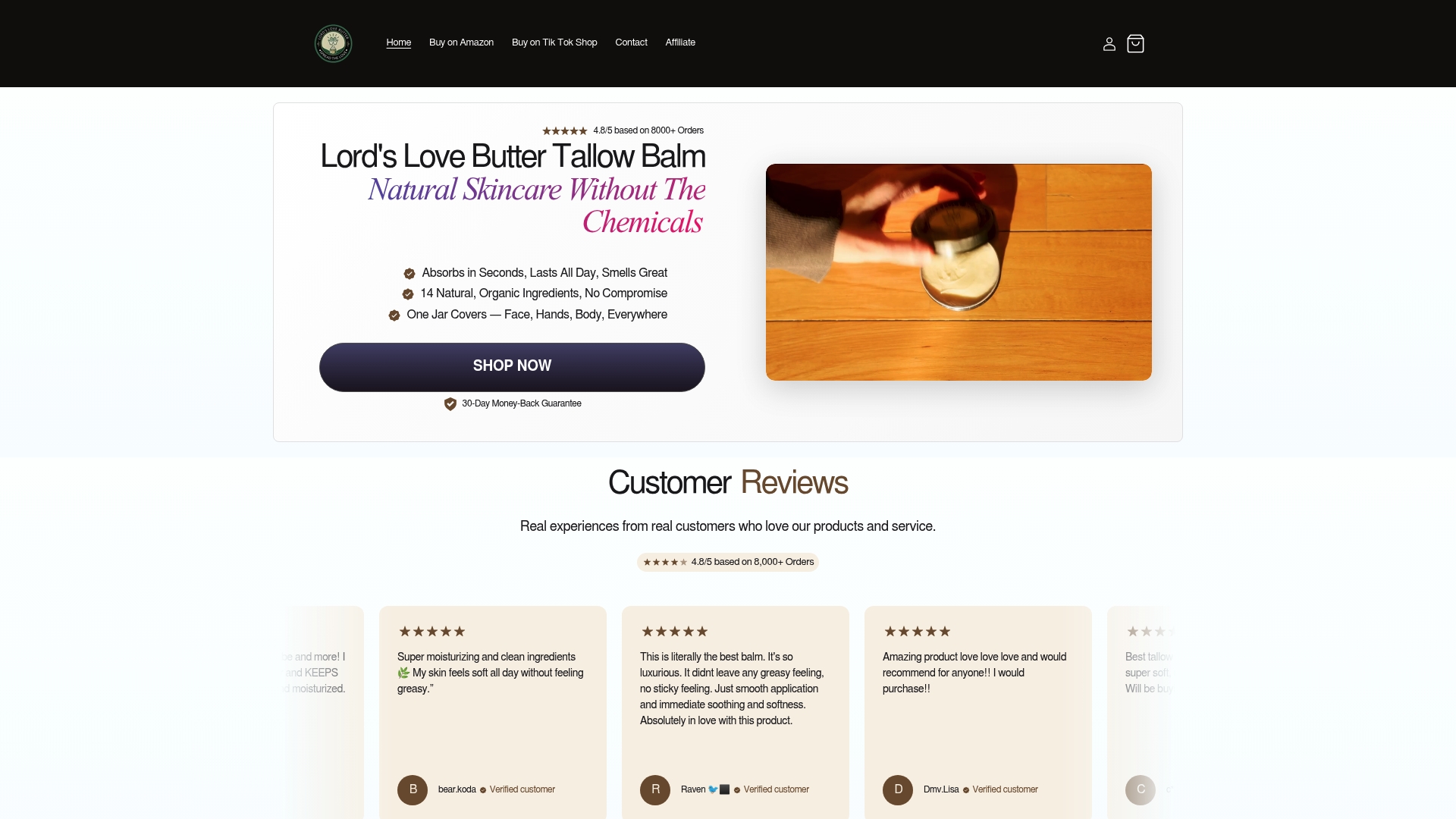
Lordslovebutter uses grass-fed beef tallow as its base, a fat that closely mirrors the fatty acid profile of human skin. The formula includes high-grade Manuka honey for its soothing, microbiome-supporting properties, making it well suited for dry, sensitive, or eczema-prone baby skin. There are no synthetic chemicals, dyes, or added fragrance. The whipped tallow balm absorbs without a greasy feel and works for whole-body application. Lordslovebutter is a veteran-owned business with a commitment to ingredient purity that shows up in every tin.
FAQ
What are the safest natural moisturizer types for newborns?
Squalane-based formulas are the safest starting point for newborns because they are lightweight, non-irritating, and closely mimic the skin’s natural lipids. Always choose fragrance-free products with short, readable ingredient lists.
How do I know if a baby moisturizer is truly natural?
Look for full ingredient disclosure and reputable certifications rather than relying on “natural” marketing claims. Consumer safety advocates confirm that transparent labeling is a more reliable safety indicator than front-of-label wording.
Can I use Manuka honey moisturizer on a baby with eczema?
Yes. Manuka honey is a natural humectant that supports the skin’s microbiome and aids repair, making it one of the most targeted options for eczema-prone or rash-prone baby skin. Confirm there is no bee product allergy before use.
What baby moisturizer ingredients should I avoid?
Avoid mineral oil, petrolatum, paraffin, fragrance, artificial dyes, ethoxylated ingredients, and allergenic naturals like nut oils or milk proteins. These can irritate baby skin or mask harmful chemical additives.
How often should I moisturize my baby’s skin?
Apply moisturizer once or twice daily, ideally within three minutes of bath time when the skin is still slightly damp. Babies with dry or eczema-prone skin may benefit from a second application before bedtime using a richer shea butter or tallow-based formula.

