

Why Eczema Skin Loses Moisture: Causes and Solutions
Eczema skin loses moisture because the skin barrier is structurally broken. A shortage of filaggrin protein, depleted ceramides, and immune signaling from IL-4 and IL-13 cytokines all work together to raise transepidermal water loss (TEWL), letting water escape far faster than healthy skin allows. The single most useful thing you can do right now: apply a physiological lipid-based emollient within three minutes of stepping out of the shower, while skin is still slightly damp.
- Filaggrin (FLG) deficiency reduces Natural Moisturizing Factors (NMFs), the compounds that hold water inside skin cells.
- Ceramide depletion breaks down the lipid “mortar” between cells, making the barrier permeable.
- IL-4/IL-13 inflammation suppresses barrier proteins and lipid enzymes, compounding the damage.
- TEWL is the clinical measure of how much water evaporates through skin; in eczema, it is measurably higher even in areas that look unaffected.
The National Eczema Association frames this clearly: barrier care, not just itch relief, is the foundation of eczema management.
Key Takeaways
Eczema skin loses moisture because filaggrin deficiency, ceramide depletion, and IL-4/IL-13 inflammation collectively destroy the stratum corneum’s ability to hold water, raising TEWL to measurably higher levels than healthy skin.
| Point | Details |
|---|---|
| Barrier failure drives moisture loss | FLG mutations, ceramide depletion, and Th2 inflammation raise TEWL; this is structural, not just dryness. |
| Apply emollient within 3 minutes | The soak-and-smear method traps water in the stratum corneum before it evaporates. |
| Layer humectant then occlusive | Humectants draw water in; an occlusive balm seals it. Use both, in that order. |
| Control your environment | Keep indoor humidity at 45%–55%; avoid hot showers, fragranced soaps, and hard water. |
| Lordslovebutter as occlusive layer | The Whipped Beef Tallow Balm with Manuka Honey works as the final occlusive step in a barrier-repair routine; patch-test before wide use. |
Table of Contents
- How does healthy skin actually hold water?
- Why does eczema skin specifically lose moisture?
- How is moisture loss measured, and what does it feel like?
- What environmental triggers accelerate moisture loss?
- What actually helps restore and retain moisture?
- A daily routine to reduce moisture loss
- Are natural balms like whipped beef tallow worth considering?
- When should you see a dermatologist?
- An editorial note on this topic
- A natural occlusive option worth trying
- Sources
How does healthy skin actually hold water?
Normal skin holds water through a “brick-and-mortar” system in the outermost layer, the stratum corneum. Corneocytes (dead, protein-filled cells) are the bricks; a lipid matrix of ceramides, cholesterol, and free fatty acids is the mortar sealing the gaps between them.
Filaggrin sits at the center of this system. The protein pro-filaggrin breaks down into filaggrin, which then degrades further into NMFs, including amino acids, urocanic acid, and pyrrolidone carboxylic acid. NMFs are hygroscopic, meaning they pull water into the corneocyte and hold it there. They also keep skin pH mildly acidic, which supports the enzymes that maintain the barrier. Filaggrin loss-of-function mutations disrupt this entire chain.
The three lipids in the intercellular matrix each play a specific role:
- Ceramides (roughly 50% of the lipid matrix) form lamellar bilayers that physically block water evaporation.
- Cholesterol keeps those bilayers fluid and organized.
- Free fatty acids maintain the acidic pH that keeps barrier enzymes active.
When all three are present in the right ratio, water stays in. When any one is depleted, the bilayers become disorganized and permeable.
Why does eczema skin specifically lose moisture?
Eczema is not simply dry skin. It is a structural barrier failure where genetics, lipid chemistry, and immune activity all converge to make the skin leaky.
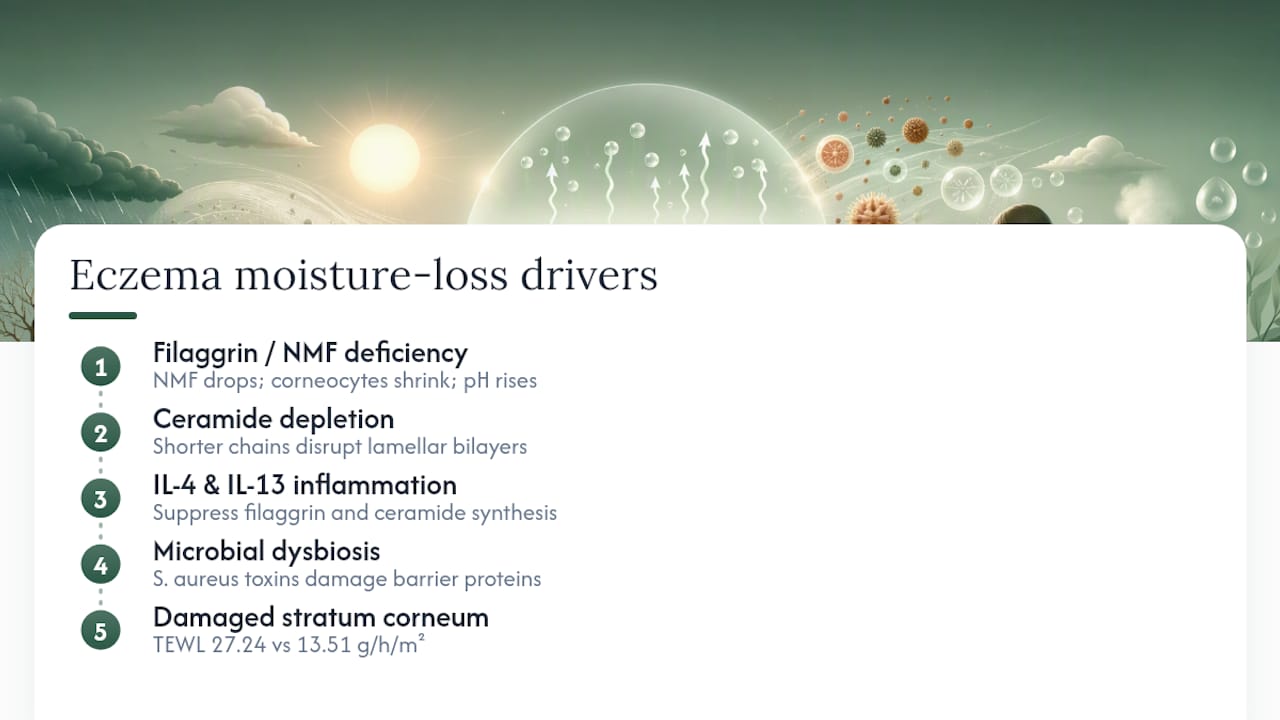
Filaggrin and NMF deficiency. Loss-of-function mutations in the FLG gene are among the strongest known genetic risk factors for eczema. Without adequate filaggrin, NMF levels drop, corneocytes shrink and lose structural integrity, and skin pH rises. Higher pH activates serine proteases that degrade the remaining barrier proteins, accelerating the breakdown.
Ceramide depletion and lipid disorganization. Eczema skin shows altered epidermal lipids with reduced total ceramide content and shorter ceramide chain lengths. Shorter chains cannot form the tight lamellar bilayers that block evaporation, so TEWL rises and stratum corneum hydration (SCH) falls. Critically, these lipid changes can appear in skin that looks clinically normal, meaning the barrier is already compromised before a visible flare.
IL-4 and IL-13 amplify the damage. Type 2 cytokines suppress filaggrin expression directly and inhibit the enzymes that synthesize long-chain ceramides. The result: inflammation makes the barrier leakier, which lets more allergens and microbes penetrate, which drives more inflammation. This is the vicious cycle that keeps eczema self-reinforcing.
Microbial dysbiosis. Staphylococcus aureus colonizes eczema skin at high rates. It produces toxins that damage barrier proteins and suppresses antimicrobial peptides, adding another layer of inflammation and permeability.
TEWL in lesional eczema skin averaged 27.24 g/h/m² versus 13.51 g/h/m² in healthy skin in one cross-sectional study — more than double the evaporation rate.
NIAMS confirms that genetic changes, immune dysfunction, and environmental exposures all converge to alter the barrier and drive moisture loss.
How is moisture loss measured, and what does it feel like?
Clinicians use two main measurements:
- TEWL (transepidermal water loss): measured in g/h/m², it quantifies how fast water evaporates through skin. Higher = leakier barrier.
- Stratum corneum hydration (SCH): measured in arbitrary units (AU) by a corneometer; lower = drier skin.
In the same cross-sectional study, SCH in flexural eczematous lesions averaged 20.3 AU compared to 31.88 AU in healthy skin. AU in healthy skin. You do not need a lab to notice the difference. Clinically, elevated TEWL shows up as:
- Persistent dryness and scaliness that returns quickly after moisturizing
- Decreased skin elasticity and visible fine creases in affected areas
- Tightness, roughness, and a dull, ashy appearance
- Itch that worsens in dry or heated indoor air
What environmental triggers accelerate moisture loss?
Several daily habits and conditions strip the barrier faster than it can recover.
- Low indoor humidity and cold air accelerate evaporation and, according to DermNet NZ, break down barrier proteins like filaggrin directly.
- Hot, long showers raise skin pH and activate serine proteases that degrade barrier lipids and proteins.
- Hard water contains calcium and magnesium ions that interact with soap to form irritating residues.
- Soaps, detergents, and fragranced products strip ceramides and free fatty acids from the stratum corneum.
- Chlorine and frequent handwashing without immediate emollient follow-up leave skin unprotected.
- Stress and sweat can exacerbate barrier dysfunction through neuroimmune pathways and direct pH disruption.
Pro Tip: Keeping indoor relative humidity between 45% and 55% may help maintain skin barrier function.% using a humidifier. Below 40%, barrier protein degradation accelerates noticeably, especially in winter.
What actually helps restore and retain moisture?
The evidence here is clearer than many people expect. Systematic reviews and randomized trials consistently show that regular moisturizer use improves clinical scores, reduces flare frequency, and cuts topical steroid use compared with no moisturizer.
Ceramide-containing emollients are particularly well-supported. A meta-analysis found ceramide-containing moisturizers produced statistically significant SCORAD improvements versus comparators, though TEWL results varied across studies. The mechanism is direct: replenishing ceramides restores lamellar bilayer structure and reduces permeability.
Humectants (urea, glycerin) draw water into the stratum corneum but cannot seal it there. In low-humidity environments, pair them with an occlusive to prevent net water loss from deeper layers.
Occlusives (petrolatum, thick balms, animal-fat-based products) form a physical film over the skin surface that slows evaporation. They are most useful at night or immediately after bathing. Lipid-replacement emollients used consistently have been shown to restore intercellular lipid bilayers over time.
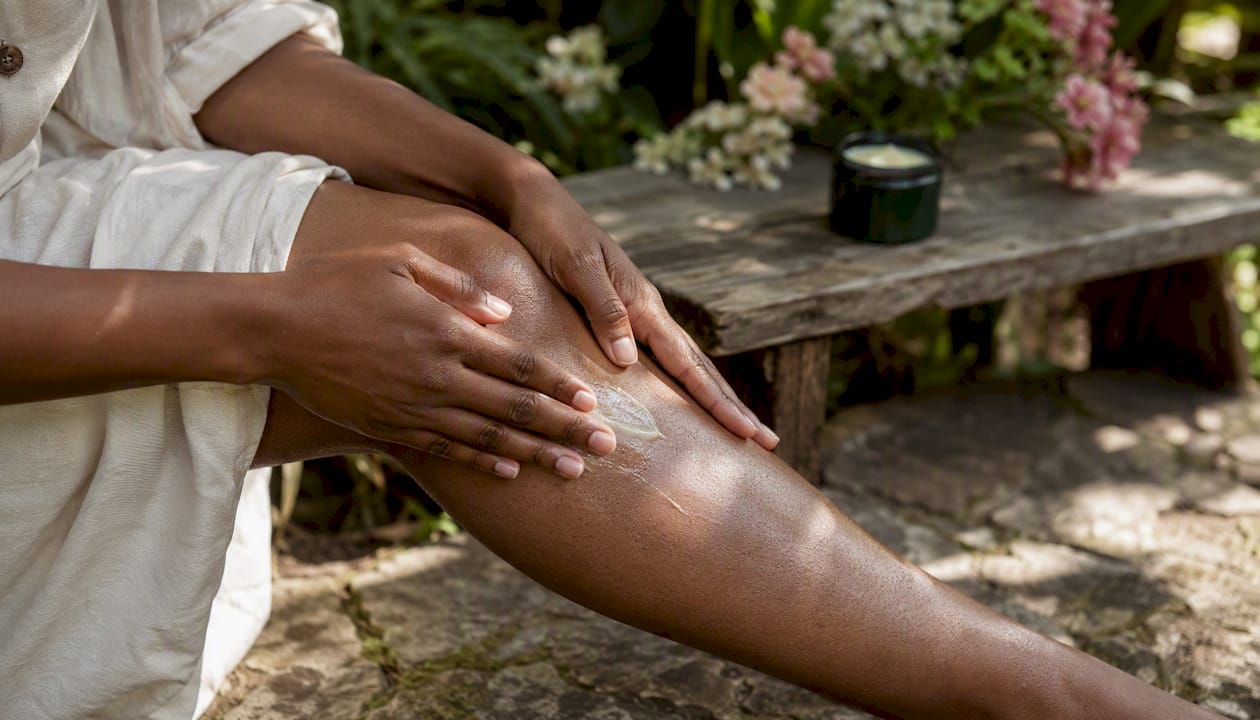
Wet-wraps involve applying a damp layer of bandage or clothing over a freshly applied emollient or topical medication. They are typically reserved for moderate-to-severe flares and should be used under clinician guidance.
A daily routine to reduce moisture loss
- Shower in lukewarm water for 10 minutes or less. Hot water raises pH and strips lipids. Use a gentle, fragrance-free, low-pH cleanser only where needed.
- Pat skin gently with a soft towel — leave it slightly damp. Do not rub.
- Apply emollient within 3 minutes (“soak-and-smear”). This traps residual water in the stratum corneum. Start with a humectant-containing lotion on larger areas, then seal with an occlusive balm on the driest patches.
- Daytime: use a lighter emollient that sits comfortably under clothing. If going outdoors, add a mineral SPF over the emollient.
- Night routine: apply a heavier occlusive balm liberally. If a topical anti-inflammatory is prescribed, apply it first to clean skin, then apply the emollient over it as directed by your clinician.
- Wet-wraps (if needed): apply damp cotton bandages or a damp pajama layer over the emollient on severely affected areas. Leave on for 30–60 minutes or overnight. Discuss with your dermatologist before starting.
Pro Tip: “Liberal” means more than you think. For an adult’s full arm, roughly one teaspoon of balm is the minimum. Most people under-apply by 50% or more, which is why results disappoint.
For more detail on post-shower timing, the moisturizing guide on the Lordslovebutter blog walks through the soak-and-smear method step by step.
Are natural balms like whipped beef tallow worth considering?
Whipped beef tallow balms are occlusive, lipid-rich products. Tallow’s fatty acid profile, heavy in oleic, palmitic, and stearic acids, resembles the lipids naturally found in human skin, which is why it can support the barrier without the long ingredient lists that raise allergen risk for sensitive skin.
Pros:
- Strong occlusive effect that slows TEWL
- Minimal ingredients reduce fragrance and preservative exposure (see hypoallergenic skincare guidance for what to look for)
- Manuka honey adds antimicrobial properties relevant to S. aureus colonization
Cons:
- Heavy occlusives can trap irritants if applied over an active skin infection; always patch-test first
- Not a substitute for prescribed topical anti-inflammatories during active flares
Lordslovebutter products and how they fit a routine:
- Whipped Beef Tallow Balm with Manuka Honey (2.4 oz Tin and 2.4 oz Jar): the core occlusive layer, best applied as the final step after a humectant, especially at night.
- Vitamin C Whipped Beef Tallow Balm with Manuka Honey & Squalane: adds antioxidant support and squalane (a skin-identical lipid) for daytime use when you want occlusion with a lighter feel.
- Original Beef Tallow Balm Lite with Manuka Honey: the lighter formulation for daytime or for people who find the full balm too heavy under clothing.
Pro Tip: It is recommended to patch-test any new balm on a small area of inner arm for 48 hours before wider use. hours before applying widely. If redness, stinging, or increased itch develops, stop use and consult a clinician before trying again.
When should you see a dermatologist?
Self-care covers a lot of ground, but some signs mean you need a clinician, not just more moisturizer.
Seek care urgently if you notice:
- Spreading redness with fever or chills (possible skin infection)
- Pus, crusting with yellow discharge, or rapidly worsening pain
- Blistering or skin that looks raw and weeping across a large area
See a dermatologist when:
- Flares keep returning despite twice-daily emollient use
- Eczema covers a significant portion of your body surface
- Itch is disrupting sleep regularly
- You need to use topical steroids more than twice a week to stay comfortable
Dermatologists can measure Dermatologists can measure TEWL and SCORAD objectively, run patch testing to identify contact allergens, and prescribe topical calcineurin inhibitors or PDE4 inhibitors when appropriate. inhibitors, or systemic therapies when topical emollients alone are not enough.
An editorial note on this topic
Writing about eczema and moisture loss means sitting with a lot of conflicting information, some of it oversimplified, some of it genuinely nuanced. What strikes me most is how often people treat eczema as a moisturizer problem when it is really a barrier architecture problem. The moisturizer is not the fix; it is the scaffold while the barrier tries to rebuild. That distinction changes how you choose products, how often you apply them, and how patient you need to be. Patch-test anything new, follow your clinician’s guidance on prescription therapy, and do not expect a single product to do everything. The biology is layered, and so is the care.
A natural occlusive option worth trying
If you are looking for a clean, minimal-ingredient occlusive to use as the final layer in the routine described above, Lordslovebutter’s whipped beef tallow balms are formulated specifically for sensitive and eczema-prone skin. Grass-fed tallow, Manuka honey, and no synthetic additives mean a short ingredient list and a lower allergen load than most conventional moisturizers.
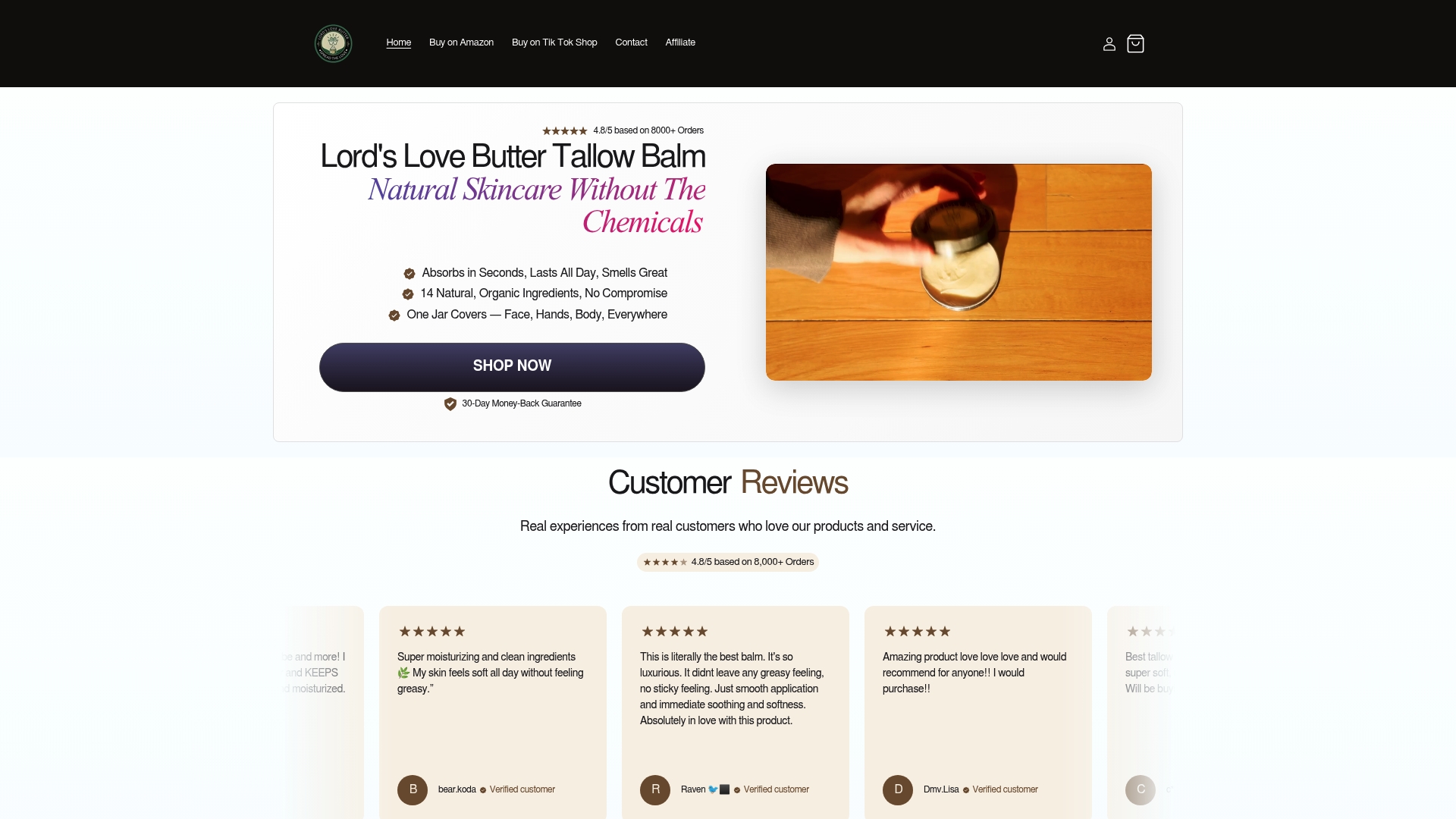
The Whipped Beef Tallow Balm with Manuka Honey (available in a 2.4 oz Tin or 2.4 oz Jar) is the go-to for nighttime occlusion. The Vitamin C Whipped Beef Tallow Balm with Manuka Honey & Squalane suits daytime use. For a lighter texture, the Original Beef Tallow Balm Lite with Manuka Honey works well under clothing. Patch-test on your inner arm for 48 hours before applying to affected skin. These products are not a replacement for prescribed therapy; if your eczema is worsening or shows signs of infection, see a clinician first. Browse the full range at Lordslovebutter and choose the formulation that fits where you are in your routine.
This article is for general informational purposes only and is not a substitute for professional medical advice. Confirm current treatment recommendations with a qualified dermatologist or healthcare provider.
Sources
- Chapter: Filaggrin and skin barrier — NCBI Bookshelf
- Barrier function in atopic dermatitis — DermNet NZ
- Significance of Skin Barrier Dysfunction in Atopic Dermatitis — PMC
- Cochrane-style systematic review on emollients and eczema (PubMed ID 28432721)
- Meta-analysis: ceramide-containing moisturizers and atopic dermatitis (PubMed ID 37151263)
- Atopic dermatitis — NIAMS (National Institute of Arthritis and Musculoskeletal and Skin Diseases)
- Study: skin barrier dysfunction and structural changes in patients with AD (PubMed ID 39407921)
- Skin barrier basics for people with eczema — National Eczema Association

