

Why Urban Skin Needs Extra Moisture: A City Guide
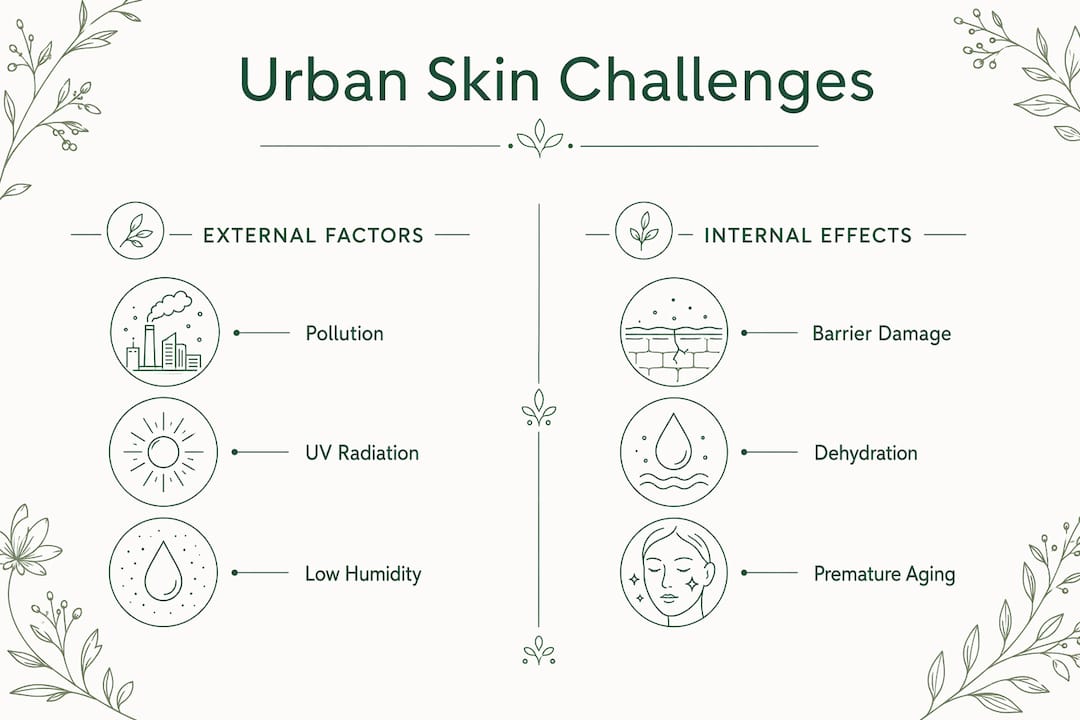
City air is doing real damage to your skin barrier every single day. Urban living increases transepidermal water loss (TEWL), the rate at which water evaporates through your skin, by exposing it to pollution particles, elevated UV radiation, low indoor humidity from HVAC systems, and hard tap water minerals. The result: a thinned, stressed stratum corneum that can’t hold onto moisture the way it should. The fix isn’t just drinking more water. It’s a layered approach: humectants to pull water in, ceramides and fatty acids to rebuild the barrier, and an occlusive like an overnight beef tallow balm to seal everything in place.
Key urban skin stressors at a glance:
- Outdoor air pollution: particulate matter and traffic fumes trigger chronic, low-grade skin inflammation that weakens the barrier over time
- UV exposure: in major urban hubs, UV index levels can reach 11 or above, the highest WHO category, accelerating photoaging
- Indoor HVAC: air conditioning and heating strip moisture from the air, raising TEWL
- Hard water: mineral deposits from city tap water disrupt lipid barrier function
- Urban stress: psychological pressure elevates cortisol, which degrades the barrier from within
Table of Contents
- Why does city life accelerate moisture loss?
- What are the signs your skin needs more moisture?
- Hydration vs. moisturizing: what’s the actual difference?
- What does a city-proof AM and PM routine look like?
- Which ingredients should you look for, and which should you avoid?
- Why natural occlusives work, and what Lordslovebutter offers
- How long does it take to see real improvement?
- Daily habits that protect your skin without buying anything new
- How does urban stress affect your skin barrier?
- Key Takeaways
- The routine change that actually moved the needle
- Lordslovebutter makes overnight barrier repair straightforward
Why does city life accelerate moisture loss?
The mechanisms behind urban skin dryness are more specific than most people realize. Outdoor air pollution, particularly fine particulate matter (PM2.5) from traffic and industrial sources, penetrates the outer skin layers and generates free radicals. Those free radicals oxidize the lipids that hold your stratum corneum together, thinning the barrier and accelerating TEWL. Air pollution and commuting contribute to chronic inflammation that compounds this damage day after day.
UV radiation adds another layer of stress. In some major cities, the UV index reaches 11 or higher, the extreme category on the WHO scale, which drives both photoaging and pigment changes. Heat-island effects in dense urban areas push ambient temperatures higher than surrounding suburbs, increasing sweat loss and surface dehydration.

Indoors, the situation doesn’t improve much. Air conditioning and heating lower indoor humidity, pulling moisture from the skin’s surface and disrupting the natural moisture barrier. Then there’s the water itself: hard water mineral deposits common in U.S. city water systems interfere with lipid barrier function and leave skin feeling tighter and more reactive after every wash. The WHO reports that many cities fail air-quality standards, and consumer research consistently identifies urban dry skin as a top skincare concern.

What are the signs your skin needs more moisture?
Skin rarely announces a moisture deficit loudly. More often, it sends quiet signals that are easy to dismiss as normal.
- Tightness after cleansing: if your face feels pulled or uncomfortable within minutes of washing, your barrier isn’t retaining water
- Flaky patches: visible flaking, especially around the nose, brows, or cheeks, signals surface lipid depletion
- Dehydration lines: fine, crinkly lines that appear when you smile or squint but aren’t deep wrinkles yet
- Dull, rough texture: well-hydrated skin reflects light; dehydrated skin scatters it
- Redness and sensitivity: a compromised barrier lets irritants in, triggering reactive episodes
- Increased fine lines: accelerated wrinkling in younger skin is often a hydration problem, not just an aging one
There’s an important distinction between dry skin (a skin type with fewer oil glands) and dehydrated skin (a condition where any skin type lacks water). Dehydrated skin can be oily on the surface and still be water-deficient underneath. That’s why even people with oily city skin often need hydrating serums.
Pro Tip: Press gently on your cheek and release. If the skin takes a moment to spring back or looks slightly creased, dehydration is likely. Combine that with checking for dry mouth or dark urine, both signs of systemic underhydration. If redness, swelling, or severe sensitivity appear suddenly, see a dermatologist rather than adjusting your routine alone.
Hydration vs. moisturizing: what’s the actual difference?
These two words get used interchangeably, but they describe completely different actions, and you need both.
Hydration means adding water to the skin. Humectants are the ingredients that do this: they attract water molecules from the environment and from deeper skin layers and hold them in the stratum corneum. Hyaluronic acid, glycerin, and urea are the most studied examples.
Moisturizing means repairing and sealing the lipid barrier so that water doesn’t escape. This splits into two sub-roles: emollients (ceramides, fatty acids, cholesterol) that fill the gaps between skin cells and restore barrier structure, and occlusives (beef tallow, petrolatum, dimethicone) that form a physical seal on the surface to prevent TEWL.
The layering logic follows that sequence: apply your humectant first to load water into the skin, then layer barrier-supporting lipids over it, then finish with an occlusive to lock everything in. Skipping the occlusive step, especially overnight in a dry apartment, means the humectant pulls water in and then loses it to the air.
| Ingredient Role | Examples | What It Does |
|---|---|---|
| Humectant | Hyaluronic acid, glycerin, urea | Attracts and binds water in the skin |
| Emollient | Ceramides, fatty acids, cholesterol | Fills lipid gaps, restores barrier structure |
| Occlusive | Beef tallow, petrolatum, dimethicone | Seals the surface, reduces TEWL |
| Antioxidant | Vitamin C, niacinamide, green tea | Neutralizes pollution and UV free radicals |
| SPF | Mineral or chemical filters | Blocks UV-driven barrier degradation |
Antioxidants and SPF aren’t moisturizing agents, but they are non-negotiable in urban routines. Vitamin C and niacinamide neutralize the free radicals that pollution and UV generate, slowing the oxidative breakdown of your barrier lipids. SPF prevents the UV-driven collagen and lipid damage that makes moisture loss worse over time.
What does a city-proof AM and PM routine look like?
The goal isn’t a 12-step routine. It’s the right steps in the right order, adapted to what your city is actually doing to your skin.
Morning routine:
- Gentle cleanse or water rinse (skip surfactants if your skin isn’t oily overnight)
- Antioxidant serum: vitamin C or niacinamide to neutralize morning pollution exposure
- Hydrating serum: hyaluronic acid applied to damp skin for maximum uptake
- Ceramide-containing moisturizer: a dime-sized amount, pressed in rather than rubbed
- Broad-spectrum SPF 30 or higher: reapply every two hours when outdoors
Evening routine:
- Double cleanse on heavy-pollution or makeup days: an oil cleanser first, then a gentle foam or gel
- Targeted treatment if used (retinoid or AHA), applied to dry skin
- Hydrating serum again
- Heavier barrier balm or occlusive: a small amount of whipped beef tallow balm on dry patches, cheeks, and lips works well here
- Avoid over-exfoliation: limit acid exfoliation to 1–2 times per week on stressed urban skin
Climate matters for texture choices. High-humidity cities like Miami or Houston call for lighter gel moisturizers and minimal occlusives. Low-humidity cities like Denver or Phoenix, and any city in winter, need richer emollients and a proper occlusive layer. City-by-city differences in humidity, pollution, and heat require adjusting texture and layering accordingly.
Pro Tip: Keep a travel-size facial mist and a lip balm stick in your bag for commutes. A mid-day SPF powder or stick takes 30 seconds and meaningfully extends your morning protection. On high-pollution days, a light scarf over the lower face reduces direct particulate contact during outdoor commutes.
Which ingredients should you look for, and which should you avoid?
Look for:
- Hyaluronic acid and glycerin for surface hydration
- Ceramides (especially ceramide NP, AP, and EOP) to rebuild barrier structure
- Fatty acids and cholesterol to complete the lipid matrix
- Beef tallow or petrolatum as occlusives for overnight sealing
- Niacinamide and vitamin C for antioxidant and barrier-supporting benefits
- Saccharide isomerate, an ingredient shown in industry studies to bind to the skin surface and maintain hydration through repeated water exposure, useful for frequent hand-washers and commuters
Use cautiously or avoid:
- High concentrations of denatured alcohol (listed as “alcohol denat.”): drying and barrier-disrupting
- Heavy fragrance: a common sensitizer in already-reactive urban skin
- Aggressive physical scrubs: microbeads or coarse particles remove the lipid layer along with dead cells
- Overuse of drying acne actives (benzoyl peroxide, high-percentage salicylic acid): effective for breakouts but counterproductive when the barrier is already compromised
For sensitive urban skin, minimal-ingredient formulas reduce the risk of stacking irritants. Patch-test any new product on the inner forearm for 48 hours before applying to the face. The fewer the ingredients, the easier it is to identify what’s causing a reaction.
Why natural occlusives work, and what Lordslovebutter offers
Beef tallow’s effectiveness as an occlusive isn’t a trend claim. Its composition, rich in saturated triglycerides and free fatty acids, closely mirrors the lipid profile of human sebum and the stratum corneum. That biochemical similarity means it integrates well with the skin’s existing barrier structure rather than sitting on top of it as a foreign layer. For dry, eczema-prone, or city-stressed skin, that compatibility matters.
Lordslovebutter, a veteran-owned brand using grass-fed beef tallow free from synthetic additives, offers three products worth knowing:
- Mint Beef Tallow Lip Balm Stick: targeted lip hydration and spot use on dry patches. The stick format makes it easy to carry and apply without touching the product directly. Use it on lips throughout the day and on any tight, flaky spots before bed.
- Whipped Beef Tallow Balm with Manuka Honey, 2.4 oz Tin: the overnight workhorse. A pea-sized amount on cheeks, nose, and any dry patches after your PM serum creates an occlusive seal that holds moisture in through the night. Manuka honey adds humectant properties alongside the tallow’s barrier-sealing effect.
- Original Beef Tallow Balm Lite with Manuka Honey: a lighter texture suited to daytime use on dry patches or as a finishing layer over a ceramide moisturizer when you don’t need the full occlusive weight of the tin.
Customers report reduced tightness and noticeable texture improvement within days of consistent use, consistent with what clinical and industry reports show about occlusives providing measurable hydration benefits within hours and structural barrier improvements over weeks.
Patch-test any new occlusive on the inner forearm for 48 hours before applying to the face. Avoid the eye area. Those with acne-prone skin should start with a small amount on non-breakout zones to assess comedogenicity.
Pro Tip: Apply the whipped tallow balm to slightly damp skin after your PM serum. The occlusive layer traps the moisture already on the surface, amplifying the overnight effect without needing a thicker application.
How long does it take to see real improvement?
Realistic timelines keep people from quitting too early, which is the most common reason urban skincare routines fail.
- Within hours: occlusives reduce TEWL and provide immediate softening and relief from tightness
- 1–2 weeks: visible texture improvements, reduced flaking, and a more even surface tone
- 3–4 weeks: measurable barrier strengthening and sustained hydration between applications
- 2–3 months: long-term resilience, reduced sensitivity to pollution and temperature changes, and slower visible aging progression
Internal hydration supports every stage of that timeline. Harvard T.H. Chan School of Public Health recommends roughly 11 cups of fluids daily for women and 16 cups for men, including fluids from food and beverages. The NIH notes that dehydration produces dry mouth, dry skin, and impaired body function, and that drinking fluids relieves mild dehydration. Topical barrier repair and internal hydration work together; neither alone is sufficient for city-stressed skin.
If symptoms worsen after two weeks of consistent care, or if you develop sudden severe sensitivity, persistent redness, or new breakouts, consult a dermatologist. Some urban skin reactions indicate contact dermatitis or rosacea, not simple dehydration.
Daily habits that protect your skin without buying anything new
Products matter, but the habits around them often matter more.
- Use a humidifier at home: target 40–60% relative humidity, especially in winter when heating systems drop indoor air to 20–30%
- Shorten hot showers: hot water strips surface lipids faster than warm water; keep showers under 10 minutes and use lukewarm temperatures
- Rinse your face after commuting: a gentle water rinse or micellar wipe removes surface pollutants before they sit on the barrier overnight
- Limit harsh surfactants: SLS-heavy cleansers strip the lipid layer; look for gentle, low-pH cleansers for daily use
- Eat hydrating foods: fruits and vegetables with high water content, cucumbers, watermelon, oranges, contribute meaningfully to daily fluid intake alongside beverages
- Wear protective clothing: hats and UV-protective fabrics reduce direct UV exposure on high-index days
- Address your water quality: if you live in a hard-water city, a shower filter or a thorough post-wash rinse with filtered water can reduce mineral deposit buildup on the skin
Hard water is an underappreciated driver of urban skin dryness. The mineral deposits it leaves behind interfere with lipid barrier function, and no amount of moisturizer fully compensates if you’re washing with heavily mineralized water twice a day. Addressing the water itself, or the post-wash routine, can be as impactful as switching products.
How does urban stress affect your skin barrier?
Psychological stress is a real physiological driver of skin barrier breakdown, not just a vague wellness concern. When cortisol levels rise, as they do chronically in high-pressure urban environments, the skin produces less of the lipids that form the stratum corneum. The result is a measurably thinner, more permeable barrier that loses water faster and reacts more intensely to the same pollution and UV exposure that a lower-stress person’s skin handles better.
Cortisol also suppresses the skin’s immune response, making it slower to repair after barrier damage from pollution, hard water, or over-cleansing. City residents dealing with long commutes, noise pollution, and work pressure are running a chronic cortisol load that compounds every environmental stressor already discussed. The practical implication: stress management isn’t separate from skincare. Sleep, which is when the skin does most of its barrier repair, is the single highest-leverage non-product intervention for urban skin. Consistent sleep of 7–9 hours per night supports the overnight barrier recovery that your PM routine is designed to assist.
Key Takeaways
Urban skin loses moisture faster than rural skin because of pollution, UV, low indoor humidity, hard water, and chronic stress, and the fix requires both topical barrier repair and internal hydration.
| Point | Details |
|---|---|
| Layer your routine correctly | Apply humectant first, then ceramide emollient, then an occlusive to seal and prevent TEWL. |
| Urban stressors compound daily | Pollution, UV, HVAC air, hard water, and cortisol each damage the barrier; address all of them, not just one. |
| Internal hydration matters | Harvard and NIH guidance recommends roughly 11 cups of fluids daily for women and 16 cups for men, including fluids from food and beverages; topical care alone can’t compensate for systemic dehydration. |
| Expect realistic timelines | Occlusives relieve tightness within hours; visible texture improvement takes 1–2 weeks; barrier strengthening takes 3–4 weeks. |
| Lordslovebutter for overnight repair | The Whipped Beef Tallow Balm Tin and Balm Lite offer natural occlusive sealing suited to dry, city-stressed skin. |
The routine change that actually moved the needle
The conventional skincare advice for city dwellers tends to focus on adding more products: a pollution-shield serum here, a probiotic mist there. What actually makes the biggest difference, based on the evidence in this article, is simpler and less expensive. Switching to an overnight occlusive and wearing SPF every single day, not just beach days, addresses the two biggest drivers of urban moisture loss simultaneously. Everything else is refinement.
The overnight occlusive step is the one most people skip because it feels heavy or greasy. A small amount of a well-formulated tallow balm, applied after a hydrating serum, doesn’t feel that way in practice. It absorbs enough to be comfortable and works while you sleep, when the skin’s repair processes are most active. That combination, nightly occlusion plus daily SPF, is where the measurable results come from. The rest of the routine supports it.
Lordslovebutter makes overnight barrier repair straightforward
If you’ve been layering products without seeing results, the missing piece is usually the occlusive seal. Lordslovebutter’s whipped beef tallow balms are formulated specifically for that role: grass-fed tallow, no synthetic additives, and a texture that works as a true overnight barrier without the petroleum-jelly feel.
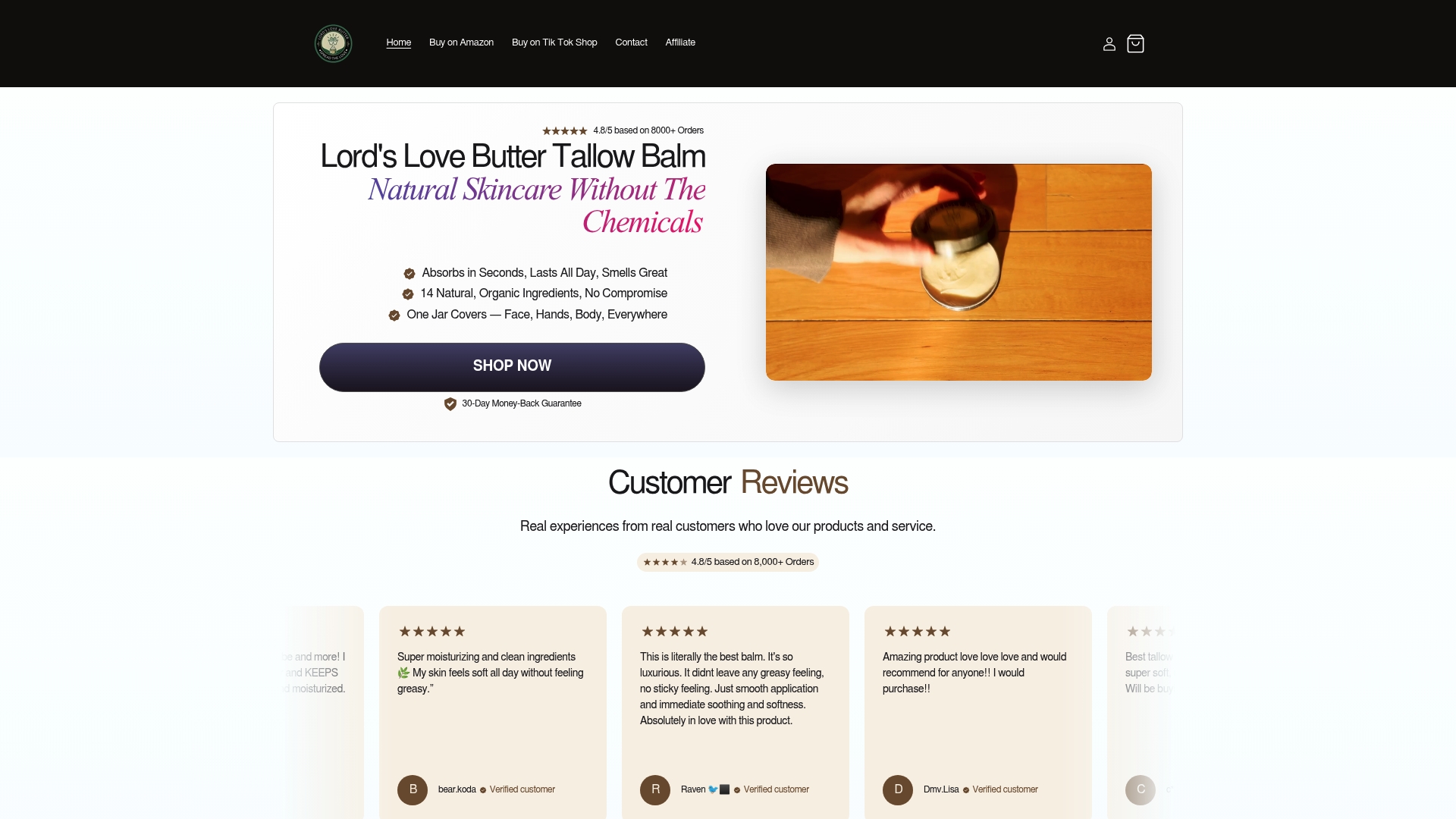
The Whipped Beef Tallow Balm Tin is the overnight anchor: a pea-sized amount on dry patches, cheeks, and lips after your PM serum. The Original Beef Tallow Balm Lite works for daytime use when you want lighter coverage. And the Mint Lip Balm Stick handles lips and spot use throughout the day. All three are patch-test friendly and suited to sensitive skin. Lordslovebutter is veteran-owned, ships across the United States, and keeps the ingredient list short by design. Visit the product pages to find the right format for your routine and skin type.
Sources and further reading
- The importance of hydration | Harvard T.H. Chan School of Public Health
- Hydrating for Health | NIH News in Health
- About Water and Healthier Drinks | CDC
- Urban Skin Hydration Is a Global Challenge | Happi
- From Dubai to London, what the city you live in says about your skin | Condé Nast Traveller Middle East
- How City Living Affects Your Skin | Smytten
- For persistent redness, severe sensitivity, or worsening symptoms, consult a board-certified dermatologist. This article is general information, not medical advice.

