

How Omega Fatty Acids in Skin Repair Dry, Eczema-Prone Skin
Topical fatty acids in beef tallow balms can genuinely help hydrate and support barrier repair, especially for dry, eczema-prone, or psoriasis-prone skin. The science behind this is specific: the stratum corneum (your skin’s outermost protective layer) is built largely from lipids, and replenishing those lipids topically is a defensible, evidence-backed approach. If you have chronically dry or reactive skin and you’re considering a whipped beef tallow balm like those from Lordslovebutter, the short answer is: yes, it’s worth trying, with a patch test first.
- Who it’s for: Dry, very dry, eczema-prone, or psoriasis-prone skin with a compromised lipid barrier.
- Core mechanism: Tallow’s free fatty acids (FFAs) replenish intercellular lipids, reduce transepidermal water loss (TEWL), and form an occlusive film that supports overnight barrier recovery.
- Evidence base: An ex vivo tape-stripped skin study showed FFA formulations increased repaired stratum corneum layers and improved lamellar structures. A clinical emollient trial in 58 eczema-prone adults found physiologic lipid plus glycerin formulations reduced TEWL after tape stripping, while glycerin-only emulsions did not.
- Caution: Oily or acne-prone skin types should approach with care. Patch test for 48–72 hours before full application.
Key Takeaways
Topical fatty acids in grass-fed beef tallow balms support skin barrier repair by replenishing the stratum corneum’s lipid matrix and reducing transepidermal water loss, with the strongest benefit for dry and eczema-prone skin.
| Point | Details |
|---|---|
| Lipid replenishment is the mechanism | Tallow’s FFAs integrate into the SC lipid matrix, supporting lamellar repair and reducing TEWL. |
| Clinical evidence supports physiologic lipids | A 58-person trial showed TEWL dropped from 38.02 to 29.79 g·m⁻²·h⁻¹ with a lipid plus glycerin formula; glycerin alone had no effect. |
| Patch test before full use | Apply to the inner forearm and wait 48–72 hours; stop if redness, itching, or bumps appear. |
| Oily and acne-prone skin should be cautious | Tallow’s occlusive texture can worsen congestion in sebum-rich skin types. |
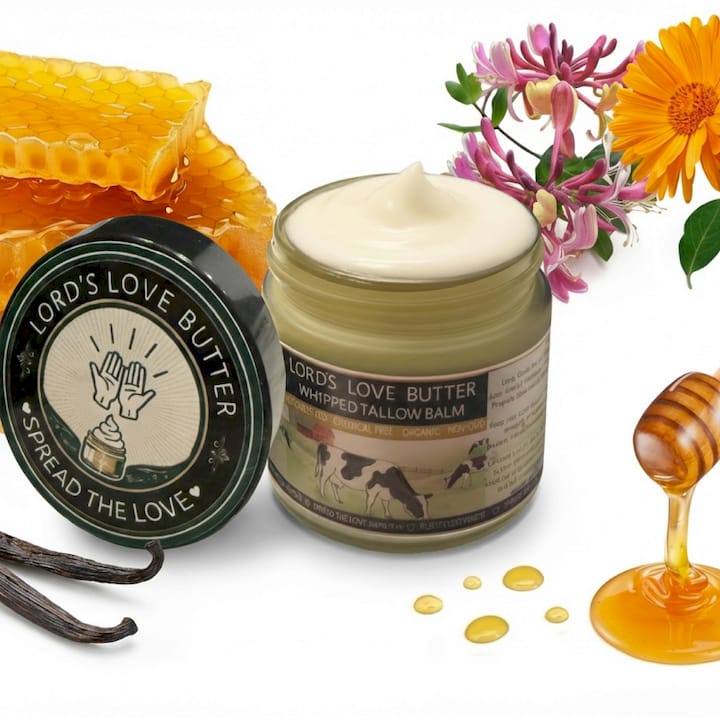
| Lordslovebutter for barrier support | The Whipped Beef Tallow Balm Tin and Balm Lite offer grass-fed, chemical-free lipid support for dry and eczema-prone skin. |
Table of Contents
- How do omega fatty acids in beef tallow actually repair your skin barrier?
- What does the research actually show — and where are the gaps?
- Who benefits from a tallow balm — and who should be careful?
- How to use a whipped beef tallow balm safely and effectively
- What to look for on the label before you buy
- When should you stop using a tallow balm and see a doctor?
- Why the formulation philosophy behind Lordslovebutter makes sense
- Lordslovebutter whipped tallow balms: which one fits your skin
- Sources
How do omega fatty acids in beef tallow actually repair your skin barrier?
The role of omega fatty acids in skin health starts at the structural level. Your stratum corneum isn’t just dead cells stacked up — it’s a precisely organized lipid matrix. Research confirms this matrix is primarily ceramides, cholesterol, and free fatty acids, arranged in lamellar sheets that control how much water escapes and how much irritant gets in. When that matrix is depleted — by harsh cleansers, cold weather, or inflammatory conditions like eczema — TEWL rises and the skin becomes reactive.
Beef tallow supplies FFAs that can slot into that matrix and support its repair. The mechanism works on two levels:
- Lipid replenishment: Tallow’s FFAs integrate into the intercellular lipid layers, supporting lamellar rebuilding and reducing permeability. The ex vivo tape-stripped study showed FFA-containing formulations produced more repaired SC layers and longer intercellular lamellae than ceramide-only formulations.
- Occlusive/emollient film: The triglyceride fraction forms a physical film on the skin surface, slowing water loss while the lipid repair happens underneath.
The four main fatty acids in tallow each play a different role:
| Fatty Acid | Type | Primary Skin Action |
|---|---|---|
| Palmitic acid | Saturated | Structural support; reinforces lamellar organization |
| Stearic acid | Saturated | Barrier integrity; softening without excess permeability |
| Oleic acid | Monounsaturated | Penetration enhancer; aids delivery but may increase permeability in compromised skin |
| Linoleic acid | Polyunsaturated | Anti-inflammatory; supports ceramide synthesis pathways |
Leave-on application matters here. Rinse-off products don’t give FFAs enough contact time to integrate into the SC. A whipped balm worn overnight or under clothing provides the sustained occlusion that makes barrier recovery measurable.
Key figure: In the clinical emollient trial, TEWL after 20 tape strips fell from 38.02 to 29.79 g·m⁻²·h⁻¹ with a physiologic lipid plus glycerin formulation (P < 0.001). The glycerin-only emulsion showed no significant change.
What does the research actually show — and where are the gaps?
The strongest evidence comes from two directions. The ex vivo tape-stripped model demonstrates that topical FFA formulations outperform ceramide-only formulations on ultrastructural repair markers. The clinical emollient trial in 58 eczema-prone adults shows that physiologic lipid supplementation reduces TEWL and irritant sensitivity in a way that humectant-only formulas don’t replicate.
A 2024 scoping review of tallow in skincare adds useful texture: tallow is rich in oleic, palmitic, and stearic acids, and multiple studies report moisturizing effects. But the review also flags inconsistent findings on irritation, limited randomized trial data, and some environmental concerns.
On the humectant side, in vitro lipid film research shows glycerol increases lipid cohesion and stability without raising permeability — which is why glycerin as a co-ingredient in a tallow balm is a sensible formulation choice, not just a filler.
Honest limitations:
- Ex vivo models don’t perfectly predict in vivo outcomes on living skin.
- Most positive tallow studies are small or short-duration.
- Oleic acid’s penetration-enhancing activity can be a double edge: helpful for delivery in intact skin, potentially irritating in severely compromised barriers.
- Product quality varies widely. Rancid or poorly rendered tallow can introduce irritants rather than repair them.
Social interest in tallow skincare is high, but the clinical trial base is still catching up. The evidence supports cautious optimism, not certainty.
Who benefits from a tallow balm — and who should be careful?
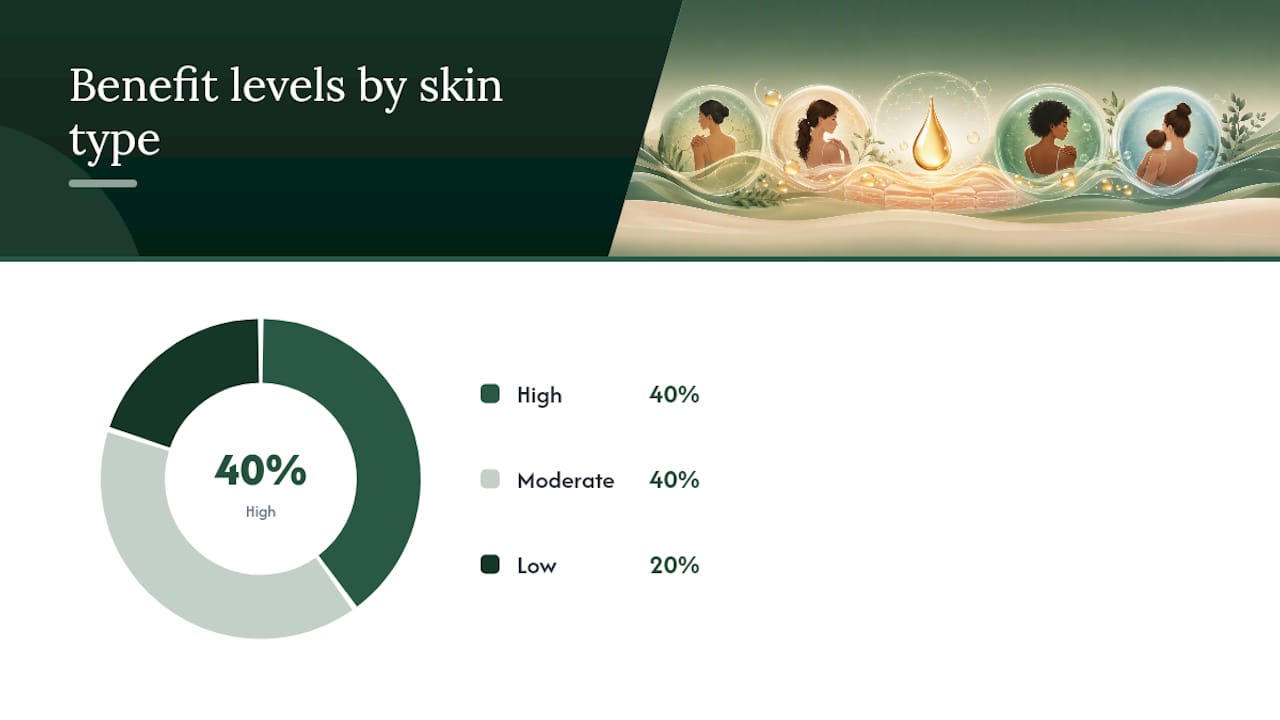
| Skin Type | Likely Benefit | Caution Level |
|---|---|---|
| Dry/very dry | High — lipid replenishment directly addresses the deficit | Low — patch test standard |
| Eczema-prone | High — barrier lipid support aligns with the condition’s core deficit | Moderate — patch test; avoid during open flares |
| Psoriasis-prone | Moderate — emollient effect may reduce scaling and discomfort | Moderate — consult a dermatologist for active plaques |
| Sensitive/reactive | Moderate — depends on individual tolerance to oleic-rich formulas | Moderate — 72-hour patch test recommended |
| Oily/acne-prone | Low — occlusive texture may worsen congestion | High — avoid or use very sparingly on affected areas |
People with a known allergy to animal products or lanolin should skip tallow-based products entirely. If you’ve reacted to oleic-rich oils (olive oil, avocado oil) in the past, that’s a signal to patch test carefully — tallow’s oleic content runs roughly similar.
For eczema-prone skin specifically, whipped tallow compares favorably to coconut oil because its fatty acid profile more closely mirrors human sebum, reducing the risk of disrupting the existing lipid balance.
Pro Tip: Patch test on the inner forearm, not the face. Apply a small amount, cover loosely, and check at 24 and 72 hours. Redness, itching, or small bumps are a stop signal.
How to use a whipped beef tallow balm safely and effectively
Apply to clean, slightly damp skin immediately after washing — that’s when the barrier is most receptive and the occlusive layer locks in residual moisture most effectively.
- Cleanse gently. Use a fragrance-free, low-pH cleanser. Harsh surfactants strip the lipids you’re trying to replenish.
- Pat dry, don’t rub. Leave skin slightly damp before applying.
- Patch test first. New users: apply a pea-sized amount to the inner forearm and wait 48–72 hours before full use.
- Warm between fingers. Scoop a small amount and press between your fingertips for 10–15 seconds. The balm softens and spreads more evenly, with less drag on sensitive skin.
- Apply thin layers. More isn’t better. A thin, even coat is enough for the occlusive effect without the greasy residue.
- Use leave-on, especially at night. Overnight application gives the fatty acids maximum contact time with the SC. For daytime use on the face, a lighter application works well under makeup or sunscreen.
For maintenance on dry skin, once or twice daily is typical. During a flare, you can apply more frequently to affected areas, but if symptoms worsen rather than improve within 3–5 days, stop and consult a dermatologist.
Tallow balm fits best as the last step in a routine, after any water-based serums or treatments. It seals everything in. Avoid layering directly over retinoids or strong exfoliating acids without a buffer layer, as the occlusion can intensify their effects. For a full guide on layering natural skincare products correctly, Lordslovebutter’s blog covers the sequencing in detail.
What to look for on the label before you buy
Not all tallow balms are equal. Formulation and sourcing choices directly affect whether you get barrier support or a jar of rancid fat.
Green flags:
- Grass-fed sourcing stated explicitly. Grass-fed tallow tends to have a more favorable fatty acid profile and lower risk of residual hormones or antibiotics.
- Low-temperature rendering. High heat degrades unsaturated fatty acids and antioxidants. Formulation research confirms low-temperature rendering preserves more of the beneficial unsaturated fraction and produces a more stable, cosmetically acceptable product.
- Manuka honey as a complementary active. Pilot trials show honey in dermatology is feasible and well-tolerated, though the evidence positions it as complementary rather than the primary driver of barrier repair. The lipid fraction does the structural work.
- Minimal, clean ingredient list. Glycerin as a co-humectant is a well-supported addition. Avoid formulas with unlisted preservatives or synthetic fragrance.
Red flags:
- A rancid or “off” smell (oxidized fat smells sharp or crayon-like). Rancidity introduces free radicals that can irritate rather than repair.
- “Animal fat” listed without species or sourcing specifics.
- No storage guidance. Tallow balms should be stored cool and away from direct sunlight.
- Reef-safety or SPF claims without supporting data.
For more on reading ingredient labels, Lordslovebutter’s guide on skincare ingredient labels walks through what each listing actually means.
When should you stop using a tallow balm and see a doctor?
Most people tolerate tallow balms well. But a few situations call for stopping immediately and getting clinical input.
- Stop and seek care if: you develop spreading redness, swelling, weeping, or crusting — these can signal contact dermatitis or secondary infection, not just sensitivity.
- Rancidity check: before each use, smell the product. Any sharp, paint-like, or “off” odor means the fat has oxidized. Discard it.
- Storage: keep the balm in a cool, dry place away from sunlight. Heat and light accelerate oxidation. Refrigeration extends shelf life if you’re in a warm climate.
- Pediatric use: tallow balms are generally gentle, but for infants or young children with eczema, consult a pediatric dermatologist before introducing any new topical product.
- No improvement after 2–3 weeks of consistent use on a chronic dry skin condition warrants a dermatologist visit. A tallow balm is a supportive emollient, not a treatment for moderate-to-severe eczema or psoriasis.
Why the formulation philosophy behind Lordslovebutter makes sense
The science of barrier repair points clearly toward one thing: the skin needs lipids, not just water. Humectants pull moisture in, but without a lipid layer to hold it, that moisture evaporates. That’s the gap a well-formulated tallow balm fills.
When Lordslovebutter was developed, the formulation decision to combine whipped grass-fed beef tallow with Manuka honey wasn’t arbitrary. Tallow’s fatty acid profile — palmitic, stearic, oleic, linoleic — maps closely to the lipids the stratum corneum actually uses. The whipped texture reduces the greasiness that makes heavier balms impractical for daily use. And Manuka honey contributes complementary soothing properties without overstating its role. The lipids do the structural work; the honey supports the experience.
Customers with dry and eczema-prone skin consistently report improved texture and reduced tightness within the first week of use. That tracks with what the barrier science predicts: when you replenish the lipid deficit, the skin stops losing water as fast, and the cycle of dryness and irritation slows.
Lordslovebutter whipped tallow balms: which one fits your skin
Lordslovebutter makes three products worth knowing about if you’re ready to try a tallow-based barrier balm:
- Whipped Beef Tallow Balm with Manuka Honey, 2.4 oz Tin: The flagship. Best for dry-to-very-dry body and face skin that needs consistent lipid support. Rich enough for overnight barrier repair, light enough for daily use.
- Original Beef Tallow Balm Lite with Manuka Honey: A lighter texture for sensitive facial skin or anyone who found heavier balms too occlusive. Same grass-fed tallow base, less residue.
- Mint Beef Tallow Lip Balm Stick: Convenient stick format for lips and small dry patches. The mint keeps it fresh; the tallow does the barrier work.
All three are grass-fed, chemical-free, and formulated for whole-body use. If you’re new to tallow skincare, the Lite version is a lower-commitment starting point. For chronic dry or eczema-prone skin, the full-strength tin is where the barrier science is most directly applicable.
Sources
- Topically applied, fatty acid-containing formulations provide superior barrier benefits in an ex vivo tape-stripped skin model
- Tallow, Rendered Animal Fat, and Its Biocompatibility With Skin: A Scoping Review - PMC
- The skin barrier: An extraordinary interface with an exceptional lipid organization
- Topical supplementation with physiological lipids rebalances the stratum corneum ceramide profile and strengthens skin barrier function in adults predisposed to atopic dermatitis
This article is general information, not a substitute for advice from a qualified doctor. Consult a qualified healthcare professional about your own circumstances before acting on anything here.

