

How to Read Skincare Ingredient Labels Effectively
The single most useful thing you can do before buying a skincare product is flip it over and read the ingredient list. Ingredients are listed in descending order by concentration down to the 1% threshold, so the first five ingredients alone often tell you what a product actually is versus what the front label claims. Below that 1% line, brands can list ingredients in any order they choose, which is where most of the marketing sleight of hand happens.
Here is what to keep in mind from the start:
- Descending order rule: Ingredients above 1% appear from highest to lowest concentration; below 1%, the order is legally flexible.
- The 1% marker trick: Preservatives like phenoxyethanol, used at 0.5–1%, typically signal where the sub-1% zone begins.
- Active ingredients need position: For most actives, being above the 1% line matters for efficacy. A few exceptions exist, covered below.
- Front packaging lies: Claims like “hypoallergenic” or “dermatologist recommended” carry no standardized legal definition. The ingredient list is the only objective source.
- Fragrance is a red flag: Listed as “fragrance” or “parfum,” it is the number one cosmetic allergen and hides dozens of undisclosed chemicals.
- Short lists are often better: Fewer ingredients generally means less exposure to potential irritants, especially for sensitive skin.
- INCI names are universal: Every ingredient uses the International Nomenclature of Cosmetic Ingredients (INCI) system, a global standard that lets you decode labels across any brand or country.
Table of Contents
- How ingredient label order actually tells you what’s in your product
- Deciphering ingredient names and what they actually do
- What to look for in skincare labels for safety and efficacy
- Ingredients and practices to avoid on skincare labels
- Factors that should shape which skincare ingredients you choose
- Red flags and common labeling tricks to watch out for
- How formulation factors beyond the label affect what you actually get
- Key Takeaways
- Lordslovebutter puts these principles into practice
How ingredient label order actually tells you what’s in your product
INCI nomenclature is the global standard for naming cosmetic ingredients, and every U.S. product sold under FDA regulations must follow it. That standardization is genuinely useful: once you learn that “Butyrospermum Parkii Butter” is shea butter and “Tocopheryl Acetate” is Vitamin E, you can decode any label regardless of brand.
The first five ingredients in any formula typically define its character. A moisturizer that opens with water, glycerin, and a fatty acid is a hydration-focused product. One that opens with a silicone like dimethicone is built for texture and slip. The presence of water near the top also means the formula needs a preservative system, which is why you will almost always find something like phenoxyethanol, sodium benzoate, or ethylhexylglycerin somewhere in the middle or lower third.
The 1% line is the most important invisible boundary on any skincare label. Above it, ingredient order is legally mandated and concentration-driven. Below it, brands have full freedom to rearrange, which means a “hero” ingredient listed just above the preservative might be present at a fraction of a percent.
A few common ingredients and their roles worth knowing:
- Water (Aqua): The base of most water-based formulas; its position at the top simply means it is the largest component by weight.
- Glycerin: A humectant that draws moisture into skin; effective even at relatively low concentrations.
- Phenoxyethanol: A preservative used at 0.5–1%; its position marks the approximate start of the sub-1% zone.
- Carbomer / Xanthan Gum: Thickeners and stabilizers; functional additives with no direct skin benefit.
- Dimethicone: A silicone that creates a smooth skin feel; it is the second most common ingredient in moisturizers, per Cleveland Clinic dermatologist Wilma Bergfeld, MD.
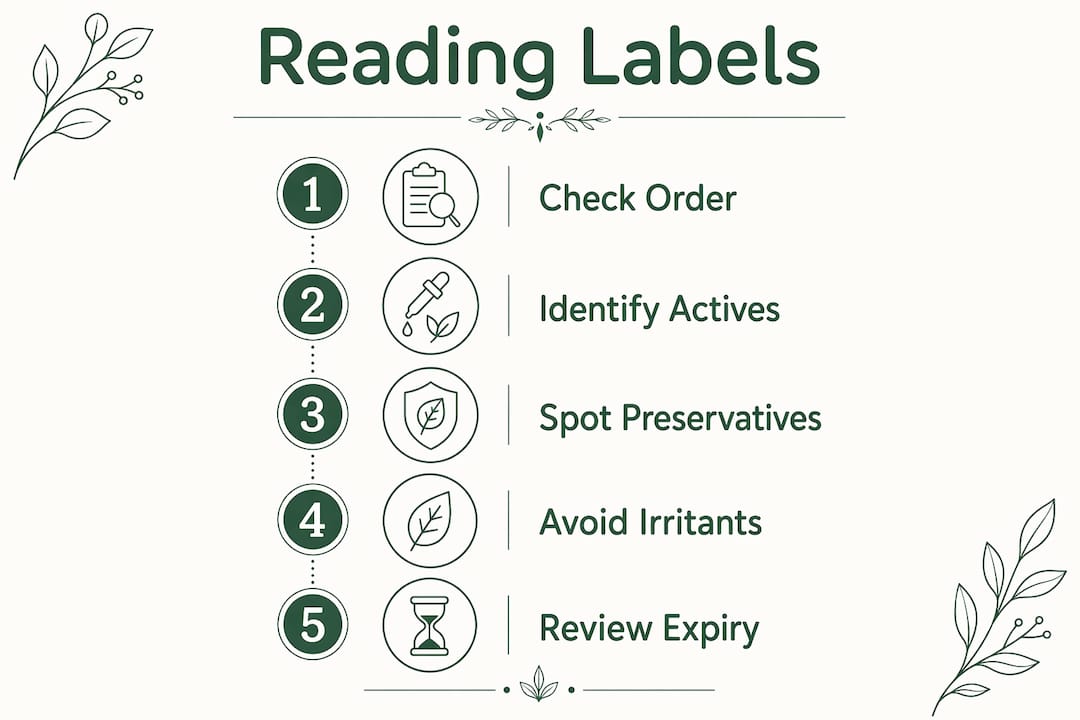
Pro Tip: When you want to quickly assess a product, find the preservative on the list. Everything above it is likely present at 1% or more. Everything below it is probably a trace amount, regardless of how prominently it is marketed.

Deciphering ingredient names and what they actually do
INCI names follow Latin or modified scientific naming conventions, which makes them look intimidating but are actually consistent once you know the patterns. “Acid” in a name usually signals an exfoliant or pH adjuster. “Butyl,” “propyl,” or “methyl” prefixes often indicate preservatives. Names ending in “-cone” or “-siloxane” are silicones.
Recognizing active ingredients by name is the core skill for reading labels well. Here are the key ones and their effective concentration thresholds:
| Active Ingredient | INCI Name | Effective Concentration |
|---|---|---|
| Niacinamide (Vitamin B3) | Niacinamide | 2% and above |
| Glycolic Acid | Glycolic Acid | 2% and above |
| Vitamin C (active form) | Ascorbic Acid (L-ascorbic acid) | 10–20% typical |
| Retinol | Retinol | — |
| Hyaluronic Acid | Sodium Hyaluronate | Effective at low % |
| Zinc Oxide (mineral SPF) | Zinc Oxide | — |
A few actives break the “top of list” rule. Peptides and advanced retinoids like Hydroxypinacolone Retinoate (HPR) work effectively at sub-1% levels, so their position near the bottom does not mean they are ineffective. This is one of the more nuanced points in skincare label reading and one that most guides skip entirely.
Functional additives are a separate category from actives:
- Emulsifiers (e.g., Cetearyl Alcohol, Polysorbate 20): Hold oil and water together; no direct skin benefit.
- Thickeners (e.g., Carbomer, Xanthan Gum): Adjust texture; purely functional.
- Preservatives (e.g., Phenoxyethanol, Sodium Benzoate): Prevent microbial growth; necessary for safety.
- Chelating agents (e.g., Disodium EDTA): Stabilize formulas; no skin benefit.
Knowing the difference between an active and a functional additive stops you from being impressed by a long ingredient list that is mostly texture agents and water.
What to look for in skincare labels for safety and efficacy
Safety and efficacy on a label come down to two questions: what is present, and where does it appear? An active ingredient buried below the preservative is almost certainly a marketing ingredient rather than a functional one.
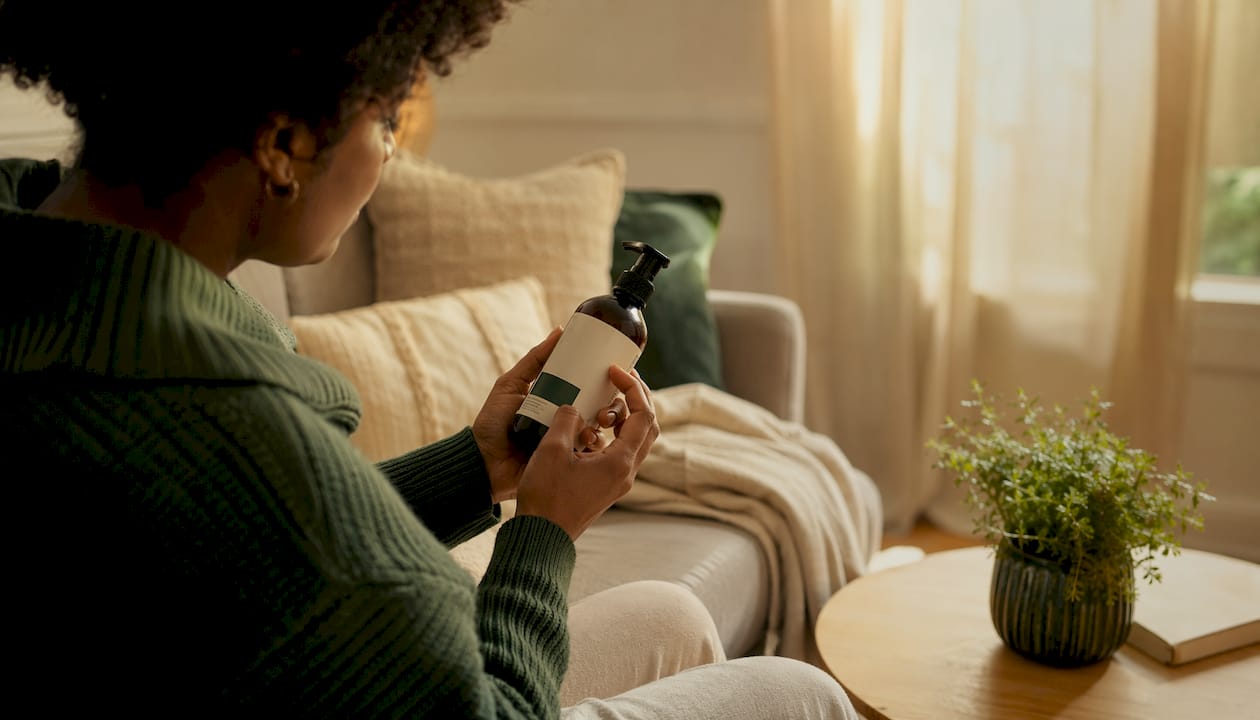
For efficacy, check that your target actives appear above the 1% line. If you are buying a niacinamide serum for pore size and the niacinamide appears after phenoxyethanol, the product likely contains less than 1% of it, well below the 2% threshold where research shows a benefit. The same logic applies to glycolic acid, vitamin C, and retinol.
For safety, watch for these specific signals:
- Fragrance / Parfum: The top cosmetic allergen, capable of triggering contact dermatitis even in people who have never reacted before. Avoid it if you have sensitive or reactive skin.
- Drying alcohols (Alcohol Denat., SD Alcohol, Isopropyl Alcohol): Disrupt the skin barrier with repeated use; different from fatty alcohols like Cetearyl Alcohol, which are fine.
- Methylisothiazolinone (MI) and Methylchloroisothiazolinone (MCI): Preservatives linked to contact allergy; the EU has restricted their use in leave-on products.
- Formaldehyde-releasing preservatives (DMDM Hydantoin, Imidazolidinyl Urea): Slowly release formaldehyde as a byproduct; a concern for sensitive skin.
Expiration dates and batch codes belong in any safety conversation. The FDA requires cosmetics to be safe at the time of use, and most products carry a Period After Opening (PAO) symbol, a small jar icon with a number like “12M” meaning 12 months after opening. Expired products can harbor bacteria or have degraded actives. Batch codes, usually a short alphanumeric string on the bottom or back, let you verify manufacture date through tools like CheckFresh or CheckCosmetic if the expiration is not printed directly.
Pro Tip: If a product contains vitamin C (L-ascorbic acid) and has turned orange or brown, the vitamin C has oxidized and is no longer effective. The color change is a visible signal that the active has degraded, regardless of what the expiration date says.
Ingredients and practices to avoid on skincare labels
Not every ingredient on a label is there to help your skin. Some are there to extend shelf life, improve texture, or make the formula smell appealing, and a few carry real risks for certain skin types.
Common ingredients worth avoiding or approaching with caution:
- Parabens (Methylparaben, Propylparaben, Butylparaben): Widely used preservatives with ongoing debate about hormonal disruption; many brands have moved away from them voluntarily.
- Methylisothiazolinone (MI): A potent sensitizer; even at low concentrations it has caused widespread contact allergy reactions.
- Heavy synthetic fragrance: Not just “fragrance” as a single entry, but also long lists of individual fragrance chemicals like Linalool, Limonene, or Citronellol, which are common sensitizers.
- Drying alcohols: As noted, Alcohol Denat. and SD Alcohol strip the skin barrier over time.
- PEG compounds (Polyethylene Glycol derivatives): Can enhance penetration of other ingredients, including potentially harmful ones; a concern for compromised skin barriers.
A longer ingredient list is not automatically better. Each additional ingredient is another potential irritant, allergen, or interaction risk. For people with eczema, psoriasis, or reactive skin, a minimal ingredient formula often performs better precisely because there is less to react to.
Marketing language on the front of a package is not regulated the way drug claims are. “Natural,” “clean,” “non-toxic,” and “hypoallergenic” have no standardized legal definitions under FDA cosmetics regulations. A product labeled “natural” can still contain synthetic preservatives, fragrance, and dyes. The ingredient list is the only place where you get objective information.
Factors that should shape which skincare ingredients you choose
There is no single best ingredient for everyone. Effectiveness depends entirely on your skin type, your specific concerns, and how your skin responds to particular actives. A retinol serum that transforms one person’s skin can cause weeks of irritation for another.
Skin type is the starting point. Oily, acne-prone skin generally benefits from salicylic acid (a beta hydroxy acid that penetrates oil-laden pores), niacinamide, and lightweight humectants. Dry or mature skin responds better to ceramides, fatty acids, and hyaluronic acid. Sensitive skin needs the shortest possible ingredient lists with no fragrance, no drying alcohols, and barrier-supporting ingredients like grass-fed tallow or shea butter.
Concentration and compatibility both matter:
- Vitamin C and niacinamide: Once thought to be incompatible, current research suggests they work fine together in most formulas.
- Retinol and AHAs/BHAs: Using both in the same routine can cause over-exfoliation and irritation; alternating nights is a common approach.
- Layering order: Water-based serums go before oil-based ones; actives go before occlusives. Getting the layering sequence right affects how well each ingredient actually absorbs.
The myth that more ingredients equals a better product is worth addressing directly. A formula with 40 ingredients is not more effective than one with 10. It is more complex, which means more potential interactions, more sensitization risk, and often more filler ingredients padding out the list. Brands that minimize their ingredient lists are often making a deliberate formulation choice, not cutting corners.
Red flags and common labeling tricks to watch out for
The most common labeling trick in skincare is placing a hero ingredient just above the preservative. Because brands can reorder ingredients below 1% freely, a product can legally list its star ingredient before phenoxyethanol even if both are present at trace amounts. The ingredient appears prominent on the list, but it is functionally irrelevant at that concentration.
Watch for these specific red flags:
- Hero ingredient after the preservative: If niacinamide, retinol, or any marketed active appears after phenoxyethanol, it is almost certainly below 1% and likely below its effective threshold.
- Sub-1% reordering: Brands legally move ingredients below 1% to appear earlier in the list for marketing purposes. This is not fraud, but it is misleading.
- Trade names instead of INCI names: An ingredient listed as “Matrixyl” instead of “Palmitoyl Pentapeptide-4” obscures what you are actually getting. Legitimate labels use INCI names; trade names are a marketing layer.
- Duplicated ingredients under different names: The same ingredient listed twice under slightly different names inflates the apparent ingredient count.
- Buzzword claims with no label backing: “Peptide-rich,” “vitamin-infused,” or “antioxidant-packed” on the front means nothing if those ingredients appear at the very bottom of the list.
- “Fragrance-free” versus “unscented”: Fragrance-free means no fragrance compounds were added. Unscented often means fragrance was added to mask the smell of other ingredients.
The front of a package is advertising. The ingredient list is a legal document. Treat them accordingly.
How formulation factors beyond the label affect what you actually get
Reading an ingredient list tells you what is in a product, but not always how well it works. Formulation factors like pH, stability, and delivery systems are invisible on labels and can determine whether an active ingredient actually reaches your skin in a functional form.
Vitamin C is the clearest example. L-ascorbic acid is the only form of vitamin C with strong evidence for collagen stimulation, per Cleveland Clinic dermatologist Wilma Bergfeld, MD. But it is also notoriously unstable and requires a low pH (around 3.5) to remain effective. A product can list L-ascorbic acid at a high concentration and still deliver poor results if the pH is wrong or the packaging exposes it to air and light. Derivatives like magnesium ascorbyl phosphate or ascorbyl palmitate are more stable but less proven.
This is where Lordslovebutter’s approach stands apart. The brand’s whipped beef tallow balms are built around a short list of barrier-first ingredients: grass-fed tallow, Manuka honey, and targeted additions like zinc oxide or vitamin C, each present at functional levels. There is no filler, no fragrance, and no ingredient added purely for label appeal.
A few principles for evaluating formulation quality beyond the list:
- Packaging matters: Vitamin C and retinol degrade in clear bottles exposed to light. Opaque or airless packaging signals the brand is protecting unstable actives.
- pH affects actives: AHAs need a pH below 4 to exfoliate effectively. Vitamin C needs a pH below 3.5. A product with these actives in a neutral-pH base is not delivering them properly.
- Delivery systems: Encapsulated retinol releases more slowly and with less irritation than free retinol. Liposomal vitamin C penetrates more effectively. These details rarely appear on labels but matter for results.
- Transparency signals trust: Brands that disclose exact percentages or provide detailed formulation notes are showing confidence in what they made.
Pro Tip: Use a free tool like INCIDecoder to paste in any ingredient list and get plain-language explanations of each ingredient’s function, safety rating, and typical concentration range. It takes about two minutes and removes most of the guesswork.
Key Takeaways
Reading skincare ingredient labels effectively means understanding that ingredient order above 1% is concentration-driven, actives must appear above the 1% line to be functional, and front-label claims require no regulatory backing.
| Point | Details |
|---|---|
| Ingredient order above 1% | Ingredients are listed highest to lowest concentration down to 1%; below that, order is freely chosen by the brand. |
| The 1% threshold marker | Phenoxyethanol, used at 0.5–1%, typically marks where the sub-1% zone begins on any label. |
| Active ingredient thresholds | Niacinamide works at 2% and above; glycolic acid at 2% and above; position on the list reveals whether these levels are likely met. |
| Avoid fragrance and drying alcohols | Fragrance (parfum) is the top cosmetic allergen; drying alcohols like Alcohol Denat. disrupt the skin barrier over time. |
| Lordslovebutter’s formulation approach | Lordslovebutter uses short, barrier-first ingredient lists with grass-fed tallow, Manuka honey, and functional actives at effective levels, with no fragrance or filler. |
Lordslovebutter puts these principles into practice
Once you know how to read a skincare label, you start to notice how many products fail their own ingredient lists. Actives buried below the preservative. Fragrance listed third. Fifteen texture agents before a single functional ingredient. That knowledge changes what you reach for.
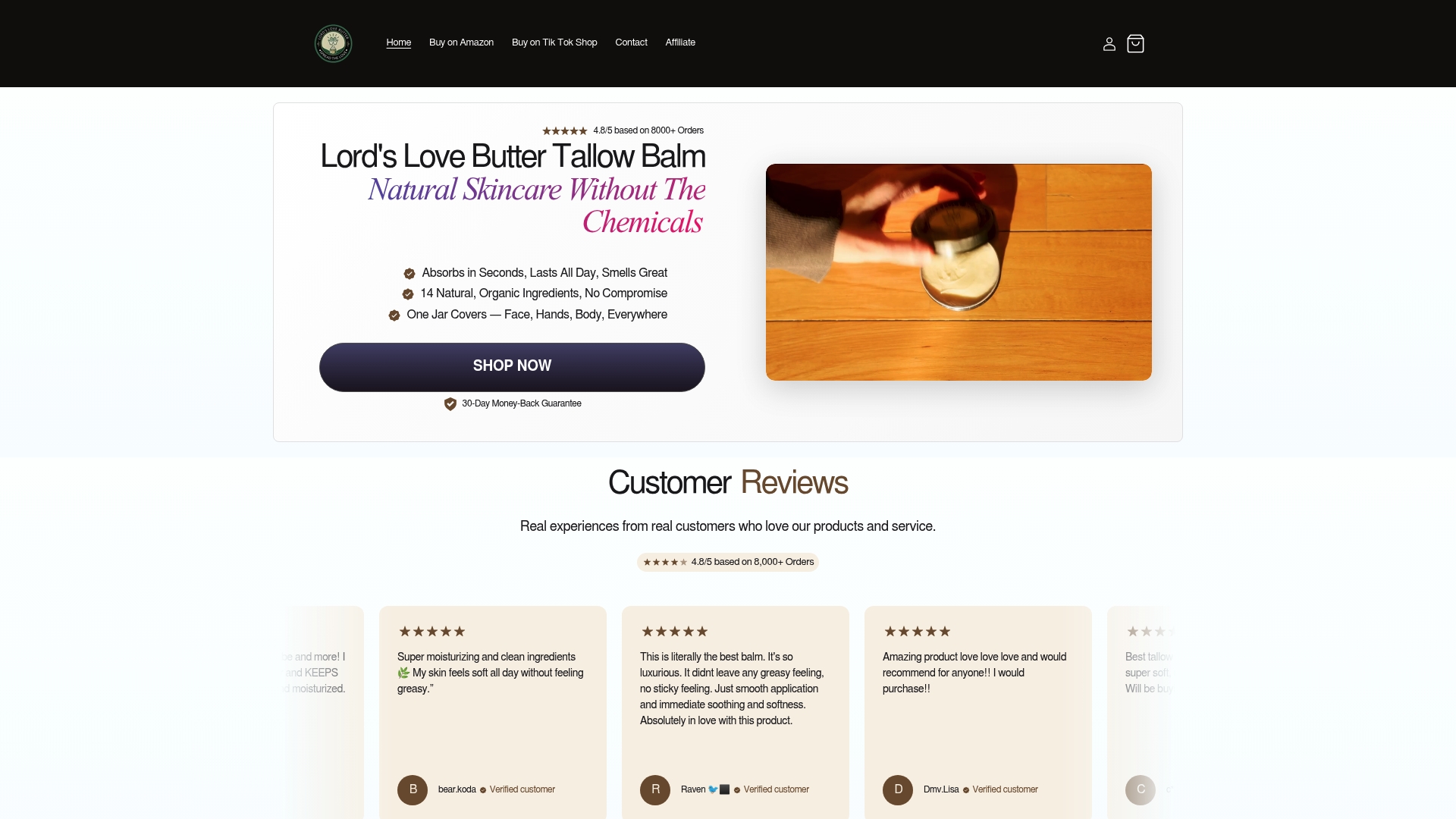
Lordslovebutter was built around the opposite approach. Every product in the line starts with grass-fed beef tallow, a lipid profile that closely mirrors the skin’s own fatty acids, paired with Manuka honey for its antimicrobial and humectant properties. The ingredient lists are short by design, because the brand’s position is that fewer, better ingredients outperform long lists of fillers. The Original Beef Tallow Balm Lite is formulated specifically for sensitive skin, including eczema and psoriasis, with nothing added that could trigger a reaction. The Vitamin C Whipped Beef Tallow Balm pairs L-ascorbic acid with squalane and tallow for a formula where the vitamin C is actually present at a functional level, not a trace amount added for label appeal. For daily mineral sun protection, the Beef Tallow Sun Balm Stick with Zinc Oxide uses zinc oxide as its active, with tallow and Manuka honey as the base. The Mint Beef Tallow Lip Balm Stick, the Whipped Beef Tallow Balm in a 2.4 oz Jar, and the Whipped Beef Tallow Balm in a 2.4 oz Tin follow the same principle: real ingredients, honest labels, no marketing padding. Browse the full line at lordslovebutter.com and read every ingredient list yourself. That is exactly the kind of scrutiny the brand was built to welcome.

