

Why Grass-Fed Matters for Skincare Ingredients
Grass-fed skincare ingredients are defined by their superior fatty acid profile, fat-soluble vitamin content, and biochemical compatibility with human skin. Understanding why grass-fed matters for skincare ingredients starts with one fact: the feed an animal eats directly changes the nutrient composition of its fat. Grass-fed tallow contains elevated levels of conjugated linoleic acid (CLA) and omega-3 fatty acids, both of which reduce inflammation and support the skin barrier. Lordslovebutter builds its entire product line on this principle, using 100% grass-fed and grass-finished beef tallow with no synthetic additives.
Why grass-fed skincare ingredients are nutritionally superior
The fatty acid profile of grass-fed tallow closely resembles human sebum, the natural oil your skin produces. That similarity is the reason grass-fed tallow absorbs quickly and does not sit on top of the skin the way many plant-based or synthetic moisturizers do. Your skin recognizes the molecular structure and draws it in efficiently.
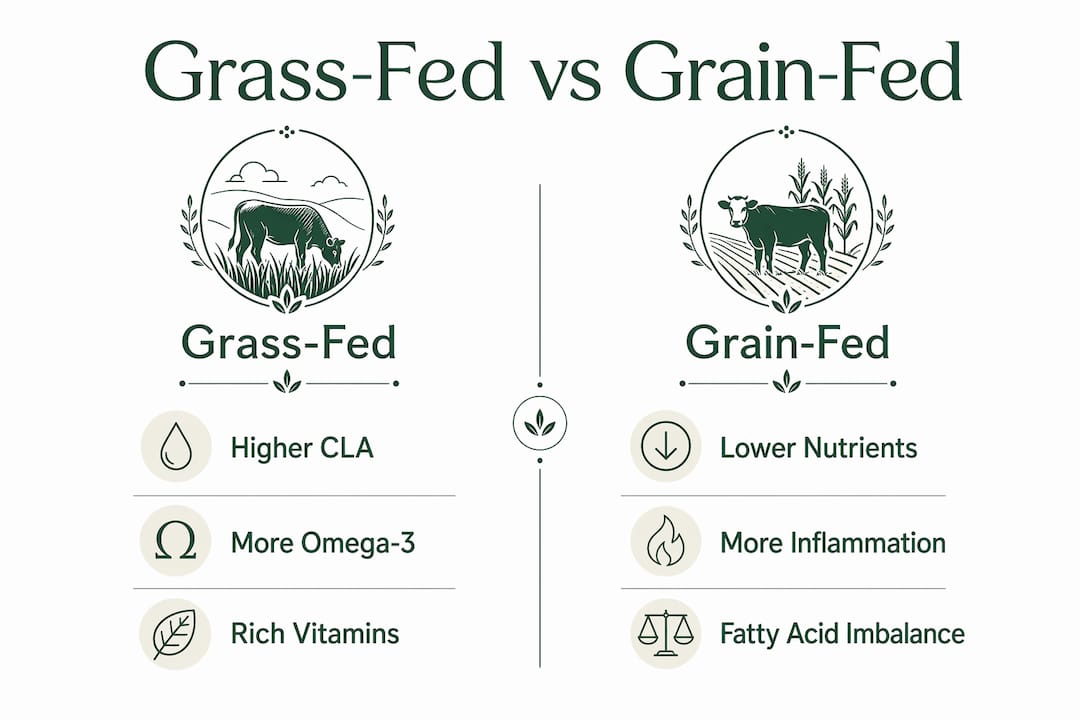
Grass-fed tallow contains higher CLA and omega-3 fatty acids compared to grain-fed sources. Higher CLA levels translate directly to better anti-inflammatory activity at the skin surface. For people managing redness, dryness, or chronic irritation, that difference is not trivial.
The vitamin profile adds another layer of benefit. Grass-fed tallow naturally contains fat-soluble vitamins A, D, E, and K. Vitamin A supports cell turnover and repair. Vitamin D regulates immune response in the skin. Vitamin E acts as an antioxidant, protecting against oxidative damage. Vitamin K supports elasticity and reduces the appearance of dark spots. These four vitamins work together in a way that isolated synthetic versions rarely replicate.
Grain-fed finishing strips much of this nutrient density. When cattle spend their final months in feedlots eating corn and soy, the omega-3 to omega-6 ratio shifts dramatically toward omega-6. High omega-6 content promotes inflammation rather than calming it. That shift shows up in the ingredient you apply to your skin.
Pro Tip: When reading a product label, look for “grass-finished” alongside “grass-fed.” Grass-fed alone only guarantees the animal ate grass at some point. Grass-finished means it ate grass its entire life, preserving the full nutrient profile.
How does sourcing affect ingredient purity and safety?
Sourcing transparency is the single biggest gap between grass-fed beauty products and conventional skincare. The label “grass-fed” is not federally regulated with the same rigor as organic certification, which creates room for misleading claims. Knowing what to look for protects you from paying a premium for an ingredient that delivers conventional results.
The key distinctions to understand:
- Grass-fed vs. grass-finished. Grass-fed means the animal ate grass at some stage. Grass-finished means grass was the exclusive diet from birth to harvest. Only grass-finished tallow retains the elevated CLA and omega-3 levels that make it worth using.
- Feedlot finishing risks. Grain-finished cattle often receive antibiotics and growth hormones. These compounds can concentrate in fat tissue and carry through to the rendered tallow.
- Pesticide exposure. Conventionally farmed cattle graze on fields treated with herbicides. Residues accumulate in fat, the same fat used in skincare products.
- Fragrance masking. Many commercial tallow products add fragrances to mask the natural scent of tallow. Those added fragrances are a leading cause of contact dermatitis in people with sensitive skin.
Expert dermatologists recommend sourcing products labeled “100% grass-fed and grass-finished” to avoid inflammatory feed additives and maximize nutrient retention. That recommendation exists because the sourcing directly determines what ends up on your skin.
For a broader look at how sourcing practices affect ingredient quality across the industry, the ethically sourced skincare guide from M3 Shop covers dermatologist and beauty industry perspectives worth reading.
Pro Tip: A short ingredient list is a trust signal. If a grass-fed tallow product lists more than five ingredients, read each one carefully. Fragrance, essential oils, and preservatives are the most common irritant additions.
What are the benefits and limitations for sensitive skin?
Grass-fed tallow delivers real, measurable benefits for specific skin types. It also carries real limitations. Knowing both helps you make a decision grounded in your actual skin, not social media enthusiasm.
Who benefits most
- Dry and mature skin. Grass-fed tallow is occlusive, meaning it forms a physical barrier that locks moisture into the skin. People with chronically dry or aging skin see the most consistent results because occlusion prevents transepidermal water loss.
- Eczema-prone skin. The simplicity of a pure, fragrance-free grass-finished tallow product reduces the number of potential irritants to near zero. For eczema, fewer ingredients means fewer triggers. The eczema skin guide from Lordslovebutter documents real-world examples of how this plays out.
- Sensitive and reactive skin. The sebum-mimicking fatty acid structure reduces the likelihood of irritation compared to synthetic emollients. Skin that reacts to most products often tolerates pure tallow well.
- Infants and young children. The same purity and compatibility that benefits sensitive adult skin applies to delicate baby skin. The grass-fed tallow baby balm research covers this application in detail.
Where caution applies
Tallow may be comedogenic and is generally not recommended for oily or acne-prone skin. Its thick, occlusive nature can clog pores and worsen breakouts in people who already produce excess sebum. If your skin leans oily, test any tallow product on a small patch of skin for at least two weeks before applying it to your face.
Dermatologists also caution that clinical evidence for tallow’s superiority over standard moisturizers remains limited. Traditional use is well-documented, but large-scale clinical trials are not. Social media claims about tallow curing acne or rosacea outpace the current evidence. A balanced approach treats tallow as a strong moisturizer with a favorable ingredient profile, not a medical treatment.
For sensitive skin compatibility, the purity of grass-finished tallow without added essential oils or fragrances is the critical factor. The tallow itself is rarely the problem. The additives are.
How to use grass-fed skincare ingredients effectively
Getting results from grass-fed beauty products depends as much on application method as ingredient quality. A few practical habits make a significant difference.
- Apply to slightly damp skin. Tallow is occlusive, not humectant. It seals in moisture but does not draw water from the air. Applying it right after a shower or after misting your face traps existing moisture under the barrier it creates.
- Start with a small amount. Tallow is dense. A pea-sized amount covers more surface area than you expect. Starting small prevents the heavy, greasy feeling that puts people off on their first try.
- Test on a small area first. Apply to the inside of your wrist or behind your ear for one week before using it on your face. This is especially important for people with a history of contact reactions.
- Check the full ingredient list. Look for products where the first ingredient is grass-finished tallow and the remaining ingredients are minimal and recognizable. Avoid anything listing “fragrance,” “parfum,” or unnamed “essential oil blend.”
- Use consistently. Occlusive moisturizers show their best results with daily use. Skin barrier repair takes time, typically several weeks of consistent application before the full effect is visible.
The animal-based skincare overview from Lordslovebutter covers how these ingredients work at a deeper level for people who want the full picture before committing to a routine change.
Key Takeaways
Grass-fed skincare ingredients outperform conventional alternatives because their fatty acid and vitamin profiles directly support the skin barrier, reduce inflammation, and improve moisture retention.
| Point | Details |
|---|---|
| Grass-finished matters more than grass-fed | Only grass-finished tallow retains the full CLA and omega-3 profile that benefits skin. |
| Fatty acid similarity drives absorption | Tallow’s sebum-like structure allows it to absorb efficiently and support the skin barrier. |
| Vitamins A, D, E, and K work together | These fat-soluble vitamins support repair, antioxidant defense, and elasticity simultaneously. |
| Fragrance-free formulas reduce risk | Added fragrances are the most common irritant in tallow products for sensitive skin. |
| Not suitable for all skin types | Oily and acne-prone skin may experience clogged pores with occlusive tallow products. |
What I’ve learned about grass-fed ingredients after years of watching the market
The grass-fed skincare conversation has gotten louder, and not all of it is honest. I’ve watched brands slap “grass-fed” on labels while finishing their cattle on grain for the final 90 days. That practice is legal. It is also misleading. The nutrient profile you are paying for degrades significantly in those final months.
What I find genuinely compelling about grass-fed tallow is not the social media narrative. It is the biochemistry. The sebum-mimicking fatty acid structure is real and measurable. The fat-soluble vitamin content is real. The anti-inflammatory advantage of elevated CLA over grain-fed sources is real. These are not marketing claims. They are documented differences in composition.
Where I apply skepticism is to the cure-all framing. Tallow is a strong moisturizer with a favorable ingredient profile. It is not a dermatological treatment. People with eczema who see improvement are likely benefiting from the barrier support and the absence of irritants, not from some unique healing property. That distinction matters because it helps you set realistic expectations.
My honest recommendation is simple. If you have dry, sensitive, or reactive skin and you have cycled through synthetic moisturizers without lasting results, a pure grass-finished tallow product with no added fragrances is worth trying. If your skin is oily or acne-prone, skip it. The sourcing label matters. The ingredient list length matters. Everything else is noise.
— Michael
Lordslovebutter’s grass-fed tallow balm for dry and sensitive skin
Lordslovebutter makes a whipped beef tallow balm with Manuka honey using 100% grass-fed and grass-finished beef tallow and no synthetic additives. The formula is built for people who have struggled with conventional moisturizers and need something that actually supports the skin barrier without triggering reactions.
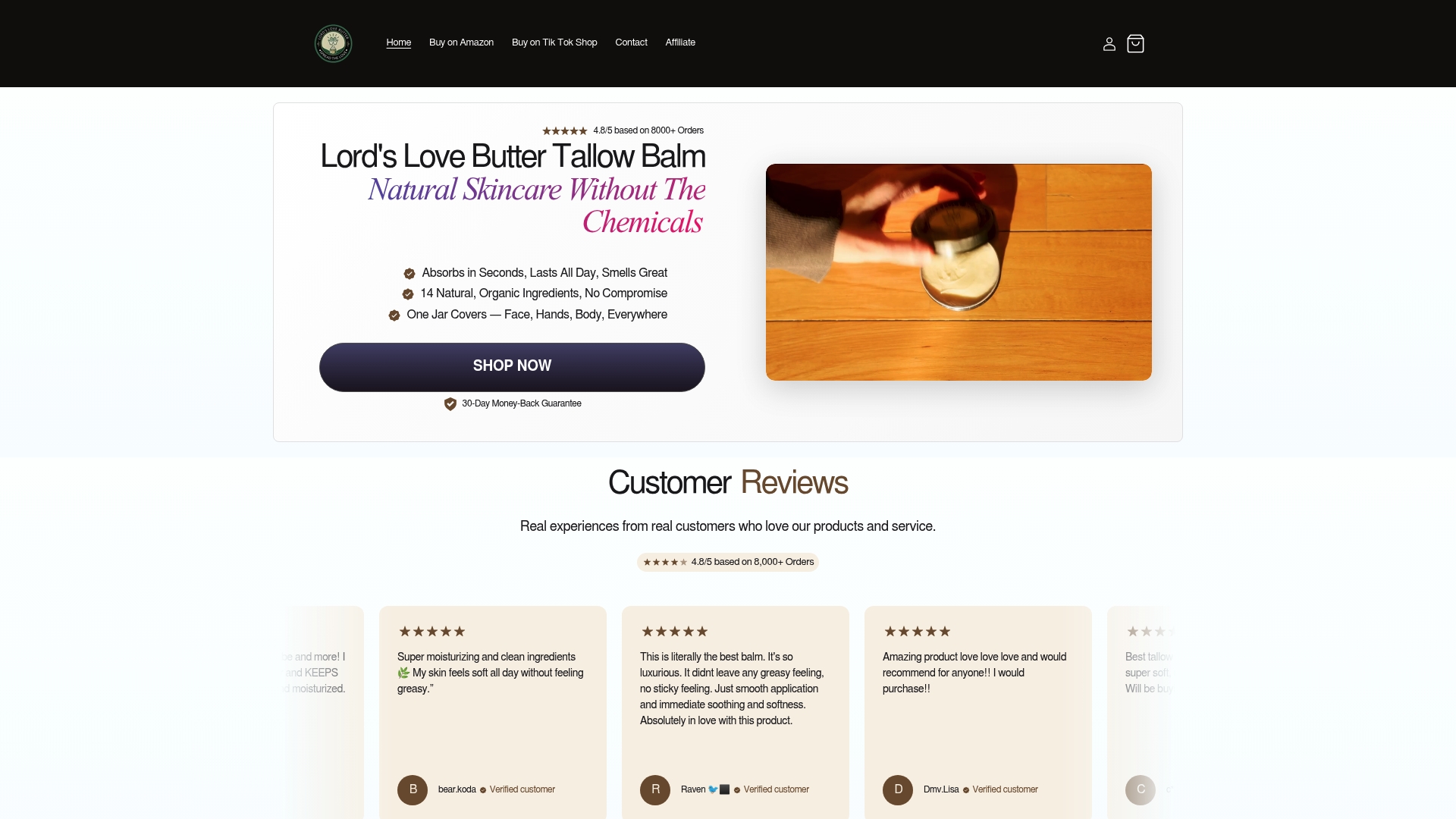
The ingredient list is short by design. Lordslovebutter is a veteran-owned business that prioritizes sourcing transparency over marketing complexity. If you want to try both the tin and jar formats, the tin and jar bundle makes it easy to find the texture that works best for your routine.
FAQ
What makes grass-fed tallow different from regular tallow?
Grass-fed and grass-finished tallow contains higher levels of CLA and omega-3 fatty acids than grain-fed tallow. These differences directly affect the ingredient’s anti-inflammatory properties and its ability to support the skin barrier.
Is grass-fed tallow safe for sensitive skin?
Pure grass-finished tallow without added fragrances or essential oils is well-tolerated by most people with sensitive skin. The fatty acid structure closely resembles human sebum, which reduces the likelihood of irritation compared to synthetic alternatives.
Can grass-fed tallow clog pores?
Tallow is occlusive and may be comedogenic for oily or acne-prone skin types. Dermatologists generally do not recommend it for people who already experience frequent breakouts or excess sebum production.
How do I know if a product is truly grass-finished?
Look for “100% grass-fed and grass-finished” on the label, not just “grass-fed.” Grass-fed alone does not guarantee the animal ate grass its entire life, which is the standard required to preserve the full nutrient profile.
Does grass-fed tallow have clinical proof of effectiveness?
Traditional use of tallow as a moisturizer is well-documented, but large-scale clinical trials comparing it to standard moisturizers are limited. Dermatologists recognize its moisturizing properties while cautioning that social media claims about treating acne or rosacea go beyond current evidence.

