

Nutrient-Dense Skincare Ingredients: Top Examples for Radiance
Nutrient-dense skincare ingredients are compounds packed with vitamins, minerals, and antioxidants that directly improve skin health and appearance. In the world of topical skincare, the industry term for these compounds is “bioactive ingredients,” meaning they produce a measurable biological effect on skin tissue. The best nutrient-dense skincare ingredients examples include retinoids, ascorbic acid, niacinamide, zinc, and fatty acid-rich oils like rosehip and sea buckthorn. Dermatologists increasingly recommend these over synthetic fillers because they address root causes of skin concerns rather than masking symptoms. Knowing which ones to use, and why, is the fastest way to build a routine that actually works.
1. What are the most effective vitamin-based nutrient-dense skincare ingredients?
Vitamins are the backbone of any nutrient-rich skincare routine. They work at the cellular level to repair damage, stimulate collagen, and protect against environmental stress.
- Vitamin A (retinoids): Vitamin A enhances cell turnover and collagen production, making it the most studied anti-aging ingredient in dermatology. Retinol, tretinoin, and retinaldehyde are all forms of Vitamin A used in topical products. Start at a low concentration (0.025–0.05%) if your skin is sensitive, then increase gradually.
- Vitamin C (ascorbic acid): Vitamin C supports collagen synthesis and acts as a powerful antioxidant that neutralizes free radicals from UV exposure. Topical Vitamin C at 10–20% concentration improves photodamage and hyperpigmentation effectively. L-ascorbic acid is the most bioavailable form, though it degrades quickly in light and air.
- Vitamin E (tocopherol): Vitamin E is the most abundant fat-soluble antioxidant in the body. It protects against UV damage and maintains the skin’s moisture barrier. Vitamin E works best when paired with Vitamin C, since the two antioxidants regenerate each other.
- Vitamin D: Vitamin D supports skin repair and barrier function. Low levels correlate with increased skin sensitivity and slower wound healing.
Pro Tip: Pair Vitamin C serum in the morning with Vitamin A at night. This avoids pH conflicts and maximizes the benefit of both.
Vitamin-based ingredients are the most researched examples of skincare nutrients available. They deliver measurable results when used at the right concentration and in stable formulations.

2. How do B vitamins enhance skin texture and barrier function?
B vitamins are among the most underrated examples of skincare nutrients, yet they carry strong clinical backing. Niacinamide (Vitamin B3) leads this group by a wide margin.
77% of dermatologists recommend niacinamide for enhancing dermal health and barrier function. That level of professional consensus is rare in skincare. Niacinamide reduces inflammation, minimizes pore appearance, and improves uneven skin tone. It also serves as a chemopreventive agent: oral nicotinamide 500 mg twice daily reduces actinic keratoses and non-melanoma skin cancer recurrence in high-risk adults. That finding extends niacinamide’s role well beyond cosmetic improvement.
“Dermatologists suggest nicotinamide (Vitamin B3) as secondary prevention for skin cancer due to its expanding evidence for skin health benefits.”
Biotin (Vitamin B7) rounds out the B vitamin group for skin. Biotin is essential for healthy hair, skin, and nails, found naturally in egg yolks, salmon, and almonds. Topical biotin supports the skin barrier, while oral supplementation addresses deficiency-related skin issues like dryness and flaking.
Other B vitamins, including panthenol (B5) and riboflavin (B2), play supportive roles. Panthenol is a widely used humectant that draws moisture into the skin and speeds up wound repair. You can find it in many moisturizers and post-procedure creams.
3. What minerals and trace elements are vital for skin health?
Minerals are often overlooked in skincare conversations dominated by vitamins. They are just as critical for skin repair, hydration, and collagen production.
- Zinc: Zinc accelerates wound healing and reduces skin inflammation. It is a first-line recommendation for acne-prone skin because it regulates sebum production and inhibits the bacteria linked to breakouts.
- Magnesium: Magnesium supports skin hydration and helps regulate cortisol, which directly affects skin sensitivity and redness. Low magnesium levels are associated with dry, reactive skin.
- Copper: Copper drives collagen and elastin synthesis. Copper peptides are a well-established topical ingredient for improving skin elasticity and reducing fine lines.
- Fulvic acid: Fulvic acid delivers over 70 trace minerals, including zinc, magnesium, and copper, in a single compound. It boosts skin regeneration and helps balance inflammation responses. This makes it one of the most mineral-dense single ingredients available in topical skincare.
Pro Tip: Look for zinc oxide in your sunscreen. It provides broad-spectrum UV protection while delivering the wound-healing and anti-inflammatory benefits of zinc at the same time.
Minerals work best when they are bioavailable, meaning the skin can actually absorb and use them. Fulvic acid improves mineral bioavailability by acting as a natural carrier molecule, which is why it appears in an increasing number of nutrient-rich formulations.
4. Which antioxidant-rich oils and plant extracts provide the most nutrient density?
Natural oils and botanical extracts are among the richest sources of fat-soluble vitamins and antioxidants in skincare. They deliver multiple nutrients in a single ingredient, which makes them efficient choices for a minimal ingredient list.
| Oil or Extract | Key Nutrients | Primary Skin Benefit |
|---|---|---|
| Rosehip oil | Vitamins A, D, E, oleic acid | Hydration and skin repair |
| Sea buckthorn oil | Vitamins C, E, carotenoids | Brightening and barrier support |
| Avocado oil | Vitamins A, D, E, fatty acids | Deep moisture and collagen support |
| Seaweed extract | Minerals, antioxidants | Barrier function and hydration |
| Rosehip oil is rich in vitamins A, D, and E plus oleic acid, supporting skin hydration and repair. |
Seaweed stands out as a mineral powerhouse. Seaweed contains more than 10 times the minerals of land-based plants. That concentration makes it a nutrient-dense botanical ingredient with strong support for skin barrier function and hydration.
Berry and tea extracts add polyphenols and flavonoids to the mix. Green tea extract (EGCG) reduces UV-induced inflammation. Resveratrol from grape seed extract neutralizes oxidative stress and supports collagen integrity. These plant compounds work synergistically with vitamins and minerals to produce results that single-ingredient products cannot replicate.
- Rosehip oil suits dry, aging, or post-acne skin.
- Sea buckthorn oil works well for dull or sun-damaged skin.
- Avocado oil is ideal for very dry or eczema-prone skin.
- Seaweed extract fits oily or combination skin due to its lightweight mineral delivery.
5. How does grass-fed beef tallow fit into nutrient-rich skincare?
Grass-fed beef tallow is one of the most nutrient-dense animal-derived skincare ingredients available. Its fatty acid profile closely mirrors human sebum, which is why it absorbs quickly without a greasy residue.
Tallow from grass-fed cattle contains fat-soluble vitamins A, D, E, and K in their natural, bioavailable forms. These are the same vitamins that appear in the most expensive botanical oils, but in a form the skin recognizes and uses efficiently. The animal-based skincare approach has gained traction among people with sensitive skin, eczema, and psoriasis precisely because tallow delivers nutrients without synthetic additives or preservatives.
Lordslovebutter uses whipped grass-fed beef tallow as its core ingredient for this reason. The formulation is chemical-free and designed for whole-body application. Customers report improved skin texture within days, which aligns with what the nutrient profile of tallow would predict: rapid barrier repair driven by fat-soluble vitamins and conjugated linoleic acid.
6. What does “nutrient density” actually mean for a skincare product?
Nutrient density in skincare means the concentration of biologically active compounds per unit of product. A product with a high nutrient density delivers more vitamins, minerals, or antioxidants per application than a diluted or filler-heavy formula.
Most mass-market moisturizers list water as the first ingredient, which dilutes every nutrient that follows. Products built around oils, butters, or concentrated botanical extracts start with the nutrients themselves. That structural difference explains why fewer ingredients often mean better skin health. A short ingredient list with high-potency actives outperforms a long list padded with emulsifiers and synthetic stabilizers.
When you evaluate a product for nutrient density, check where the active ingredients appear on the label. Ingredients listed in the first five positions make up the bulk of the formula. If vitamins or oils appear near the end, their concentration is too low to produce a meaningful effect.
7. How to choose nutrient-rich skincare for your specific skin concern
Choosing the right nutrient-rich ingredients starts with identifying your primary skin concern. The wrong actives, even at high concentrations, will not address your specific issue and may cause irritation.
- Aging and fine lines: Prioritize Vitamin A (retinoids), Vitamin C, copper peptides, and collagen-supporting oils like rosehip.
- Acne and oiliness: Focus on zinc, niacinamide, and lightweight oils like sea buckthorn. Avoid heavy occlusives if your pores clog easily.
- Dryness and eczema: Choose fat-soluble vitamins A, D, E, and K delivered in tallow or avocado oil. These rebuild the barrier rather than just sitting on top of it.
- Hyperpigmentation and dullness: Vitamin C at 10–20% concentration, niacinamide, and resveratrol are the most evidence-backed options.
- Sensitivity and redness: Magnesium, panthenol (B5), and mineral-rich seaweed extracts calm inflammation without adding chemical irritants.
Pro Tip: Start with one new active ingredient at a time. Wait two to four weeks before adding another. This tells you exactly which ingredient is working and which is causing a reaction.
Matching ingredients to concerns is the core skill in building a skincare routine that produces real results. Generic “all-in-one” products rarely deliver the concentration needed to address a specific concern.
Key Takeaways
The most effective nutrient-dense skincare ingredients are vitamins A, C, E, and B3 (niacinamide), supported by minerals like zinc and copper, and delivered through bioavailable carriers like grass-fed tallow or antioxidant-rich botanical oils.
| Point | Details |
|---|---|
| Vitamins A and C lead anti-aging | Retinoids boost cell turnover; Vitamin C at 10–20% corrects photodamage and hyperpigmentation. |
| Niacinamide has the strongest B vitamin evidence | 77% of dermatologists recommend it for barrier function, texture, and even cancer prevention. |
| Minerals are underused but critical | Zinc, magnesium, and copper support wound healing, hydration, and collagen synthesis. |
| Nutrient density depends on formula structure | Active ingredients listed in the first five positions deliver meaningful concentrations. |
| Match ingredients to your skin concern | Aging, acne, dryness, and sensitivity each require a different nutrient priority. |
Why I think most people overcomplicate their nutrient skincare routine
After years of paying close attention to what actually moves the needle in skincare, I keep coming back to the same conclusion: most people are using too many products and not enough of the right nutrients.
The skincare industry profits from complexity. New ingredient categories appear every season, and the marketing is designed to make you feel like you need all of them. The clinical evidence tells a different story. A handful of well-researched nutrients, used consistently at effective concentrations, outperform a 10-step routine built around trendy extracts.
My honest recommendation is to anchor your routine in three nutrients: a retinoid for cell turnover, niacinamide for barrier support and inflammation, and a fat-soluble vitamin-rich oil or balm for moisture and repair. Everything else is optional. If you have a specific concern like hyperpigmentation, add Vitamin C. If you have eczema, prioritize tallow or avocado oil over any synthetic moisturizer.
The other thing I have learned is that delivery matters as much as the ingredient itself. A nutrient in a poorly formulated product, or one that degrades before it reaches your skin, does nothing. Grass-fed tallow is a good example of a delivery vehicle that works because its fatty acid structure is so close to the skin’s own sebum. The nutrients in it absorb efficiently rather than sitting on the surface.
Simplicity and quality beat quantity every time. Pick fewer ingredients, check that they appear high on the label, and give them at least four weeks to work before you change anything.
— Michael
Nutrient-rich skincare from Lordslovebutter
Lordslovebutter builds its products around the same nutrient principles covered in this article: fat-soluble vitamins, clean delivery, and zero synthetic fillers.
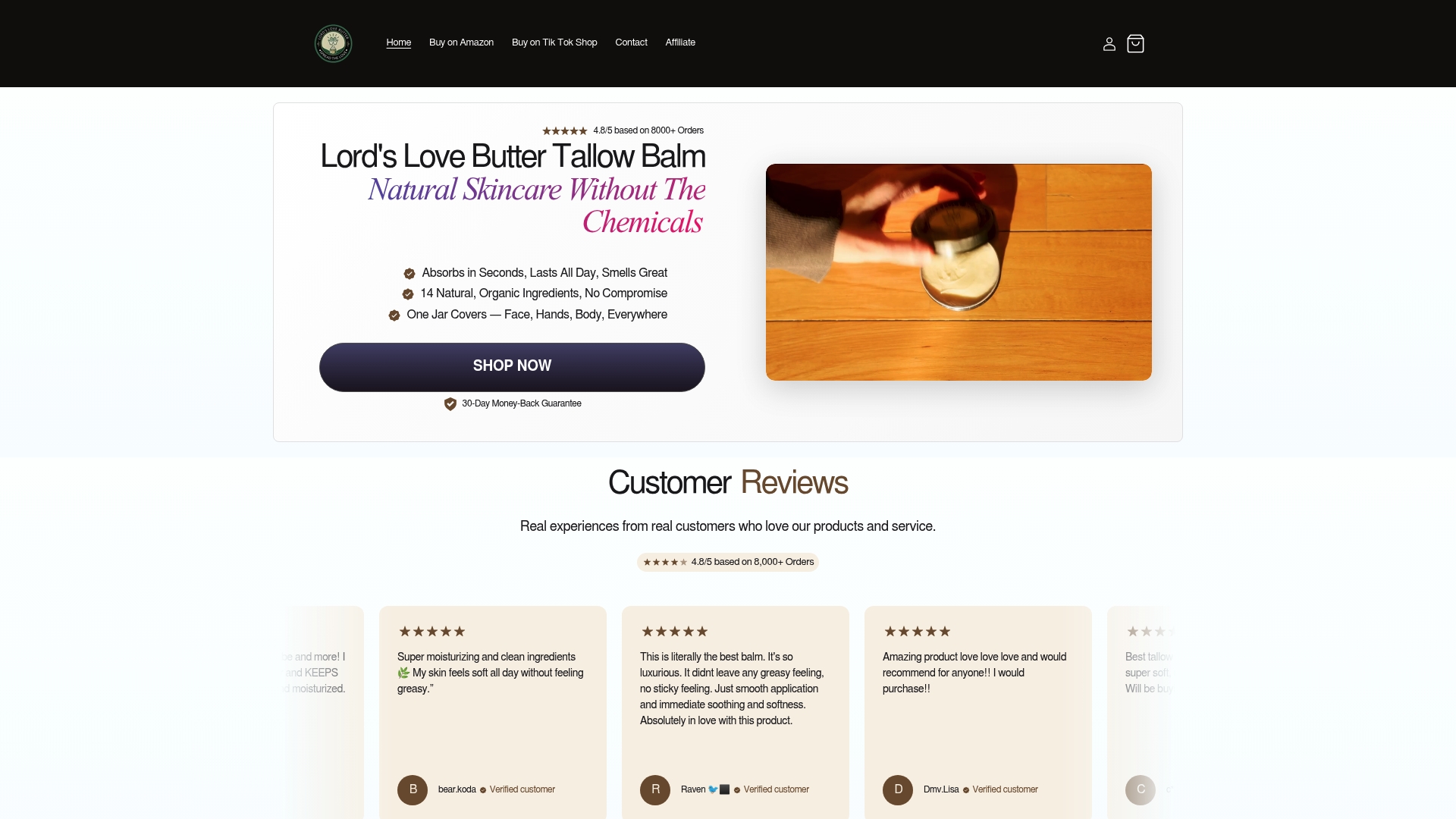
The Whipped Beef Tallow Balm with Manuka Honey combines grass-fed beef tallow with raw Manuka honey to deliver vitamins A, D, E, and K alongside natural antimicrobial support. The formula is chemical-free, absorbs without grease, and works for the whole body, including sensitive areas affected by eczema or psoriasis. Customers consistently report visible texture improvement within days. If you want nutrient-dense skincare without a complicated routine, this is a straightforward place to start.
FAQ
What are nutrient-dense skincare ingredients?
Nutrient-dense skincare ingredients are bioactive compounds, including vitamins, minerals, and antioxidants, that produce measurable improvements in skin health when applied topically. Examples include retinoids, niacinamide, zinc, and fatty acid-rich oils.
Which vitamin is most effective for anti-aging skincare?
Vitamin A (retinoids) is the most clinically supported anti-aging ingredient, as it enhances cell turnover and collagen production. Vitamin C at 10–20% concentration is the strongest option for correcting existing photodamage.
Is niacinamide safe for sensitive skin?
Niacinamide is one of the best-tolerated actives for sensitive skin. It reduces inflammation and strengthens the barrier without the irritation risk associated with retinoids or high-concentration acids.
Can grass-fed tallow replace a standard moisturizer?
Grass-fed tallow delivers vitamins A, D, E, and K in a fatty acid profile that closely matches human sebum, making it an effective moisturizer for dry, sensitive, and eczema-prone skin. It absorbs quickly and does not require synthetic emulsifiers or preservatives.
How do I know if a skincare product is truly nutrient-dense?
Check the ingredient list: active nutrients should appear in the first five ingredients by weight. If vitamins or oils appear near the bottom of a long list, their concentration is too low to produce a meaningful skin benefit.

