
Cool the skin fast with short cool compresses and a refrigerated occlusive moisturizer, then keep showers brief and with warm, not hot, water and moisturize while skin is still damp. Those steps calm itch within minutes to hours. Lasting relief still depends on treating the underlying inflammation with a dermatologist, since home care only manages symptoms in the meantime.
TL;DR:
- Cool compresses and refrigerated moisturizers provide immediate relief by calming nerves and reducing inflammation, but they do not treat the underlying psoriasis.
- Limiting hot water, using fragrance-free cleansers, and applying moisturizers within minutes after bathing help prevent flare-ups and decrease baseline itch.
- OTC creams like hydrocortisone and menthol offer temporary symptom relief, but persistent or severe itch requires dermatologist-prescribed treatments targeting inflammation.
- Sensitive areas such as scalp, face, or genitals need milder products, avoiding harsh keratolytics and over-washing to prevent irritation.
- Long-term control depends on regular skin care, avoiding irritants, and consulting a dermatologist if itch lasts more than a few weeks or worsens.
Table of Contents
- Fast Psoriasis Itch Relief You Can Try Tonight
- What Daily Skin Care Actually Prevents Itch Flare-Ups?
- Which OTC Creams and Medical Treatments Relieve Itching?
- How Do You Treat Scalp and Sensitive-Area Psoriasis Itch?
- Breaking the Itch-Scratch Cycle Without Losing Your Mind
- Using an Occlusive Balm Safely in Your Itch-Relief Routine
- Where to Verify Clinical Guidance on Psoriasis
- The Real Priority Nobody Mentions First
- Where Lordslovebutter Fits Into Your Itch-Relief Routine
- Sources
- FAQ
Fast Psoriasis Itch Relief You Can Try Tonight
Most people with psoriasis deal with itching as the single most irritating symptom of the disease, and it often flares hardest at night when there’s nothing to distract from it. The good news: a handful of low-effort tactics can take the edge off within minutes.
Cool compresses work because heat dilates blood vessels and ramps up inflammation, while cold does the opposite and calms the nerve signals that trigger scratching, according to the Cleveland Clinic. Products with menthol or camphor add a cooling, tingling sensation that distracts itch nerves from firing, per the American Academy of Dermatology. Keeping a jar of moisturizer in the refrigerator gives you both effects at once.
Here’s what to reach for during an itch flare:
- A washcloth soaked in cool water, wrapped in a thin towel, held on the itchy patch for 10 to 15 minutes
- A refrigerated occlusive moisturizer or balm, applied in a thin layer to cooled skin
- A menthol or camphor lotion for spot treatment on especially maddening patches
- Cotton gloves at bedtime to blunt scratching damage while you sleep
- A fidget object or stress ball to occupy hands during a stubborn itch spell
Never press ice directly against skin or leave a compress on for more than 15 to 20 minutes at a stretch. Direct ice contact can cause frostbite on already-compromised skin, and prolonged cold exposure can backfire by drying out the area further.
Pro Tip: Keep two moisturizer containers in rotation. One stays in the fridge for flare moments, the other stays at room temperature for regular use. Trimming and filing nails short also cuts down on the skin damage from unconscious scratching, a small habit the AAD specifically recommends.
What Daily Skin Care Actually Prevents Itch Flare-Ups?
Itch control isn’t just about the moment you’re mid-flare; adopting routine skin-health practices is crucial for long-term relief. It’s about what you do every single day, because dry, compromised skin itches more and heals slower.
The National Psoriasis Foundation recommends capping showers at around 5 minutes and baths at 10 to 15 minutes, using lukewarm rather than hot water. Hot water strips the skin’s natural oils and worsens the exact dryness that fuels itching.
A routine that actually reduces baseline itch looks like this:
- Shower or bathe with lukewarm water only, no hotter than feels mild
- Use a mild, fragrance-free cleanser or soap substitute instead of standard bar soap
- Pat skin partially dry, leaving it slightly damp rather than towel-drying completely
- Apply an occlusive balm or moisturizer within a few minutes, while skin still holds moisture
- Reapply to particularly dry patches (elbows, knees, scalp edges) a second time later in the day
Fragrance, harsh detergents, and wool fabric are common irritants worth avoiding entirely if your skin reacts to them. Loose, breathable cotton against affected areas tends to cause far less friction and heat buildup than synthetic fabrics. For very dry patches, layering a thicker occlusive balm over a lighter lotion locks in more moisture than either product alone. A step-by-step post-shower moisturizing routine can make this habit easier to stick with long term.
Which OTC Creams and Medical Treatments Relieve Itching?
Over-the-counter options handle mild to moderate itch reasonably well, but they’re managing symptoms, not the disease driving them.
Hydrocortisone cream, pramoxine, and menthol or camphor preparations are the standard OTC lineup. Hydrocortisone tones down local inflammation for mild patches; pramoxine numbs the itch signal directly; menthol and camphor rely on that cooling distraction effect covered earlier. None of them touch the deeper immune process behind psoriasis, so expect temporary relief measured in hours, not days.
- Salicylic acid softens and lifts thick scale so other treatments can actually penetrate the skin
- Urea creams work similarly, softening scale while adding hydration
- Coal tar preparations reduce scaling and itch for some people, though the smell and staining put many off daily use
- Topical corticosteroids prescribed by a dermatologist handle more stubborn or widespread patches
See a dermatologist if itching disrupts your sleep regularly, if a patch shows signs of infection (increasing redness, warmth, pus, fever), or if OTC measures stop making a dent after a couple of weeks. Treating the actual inflammation is what produces durable itch control, according to Mayo Clinic, and that’s where phototherapy or systemic biologics come in for moderate to severe cases. Both work by calming the immune activity that drives psoriasis, which in turn reduces itch as a downstream effect rather than masking it.
How Do You Treat Scalp and Sensitive-Area Psoriasis Itch?
Scalp, face, genital, and skin-fold psoriasis need gentler handling than the tougher skin on elbows or knees.
- Medicated shampoos with salicylic acid or coal tar loosen scalp scale during washing; follow with a moisturizing conditioner to offset dryness
- Never pick or scrape scalp scale dry. Loosen it with product and gentle massage instead
- Thin skin on the face, genitals, and folds calls for milder steroid formulations. Harsh keratolytics like strong salicylic acid preparations are too aggressive for mucosal or fold areas
- Genital psoriasis specifically warrants a dermatologist visit rather than self-treatment. This skin is thin and treatment errors here cause more harm than the condition itself
- Avoid over-washing folds and sensitive zones. Once daily cleansing plus consistent moisturizer beats aggressive scrubbing every time
Breaking the Itch-Scratch Cycle Without Losing Your Mind
Scratching feels like relief for about three seconds, then it makes everything worse. Every scratch damages skin, and that trauma can trigger new psoriasis patches at the injury site through a phenomenon called the Koebner response. Patting the skin firmly or pressing on a cool, moisturized patch satisfies the same nerve urge without the damage.
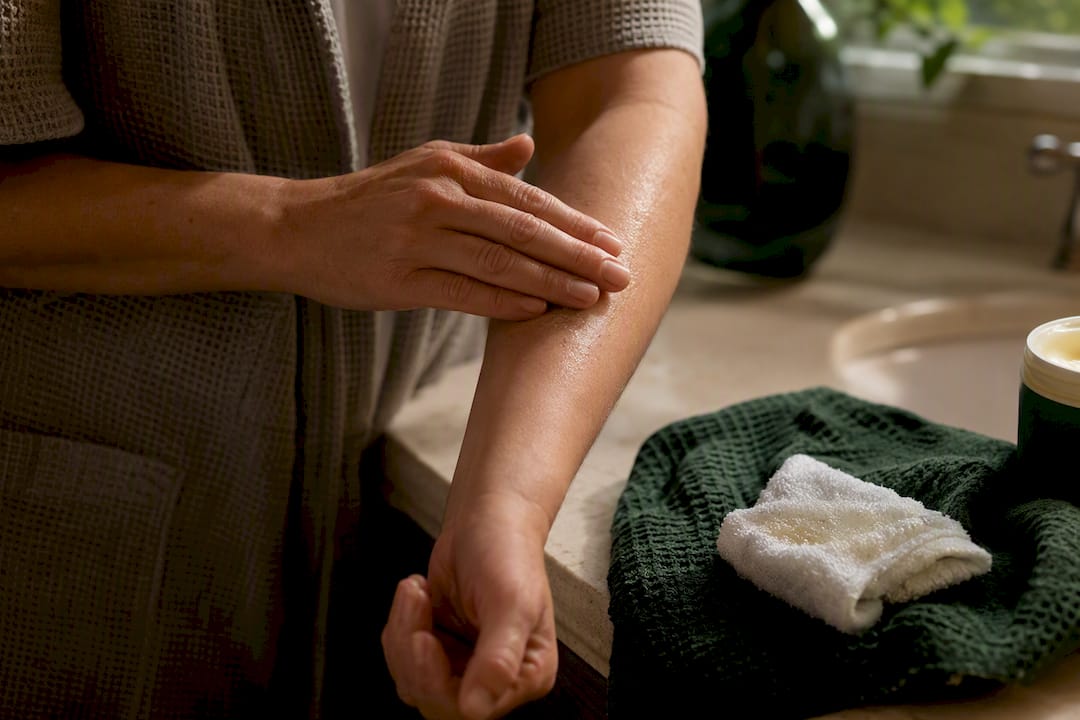
Stress is a documented psoriasis trigger, and relaxation techniques like deep breathing and meditation can reduce both flare frequency and how intensely skin itches. A brisk 10-minute walk, a few minutes of slow breathing before bed, or a consistent sleep schedule all chip away at the stress load that keeps skin reactive.
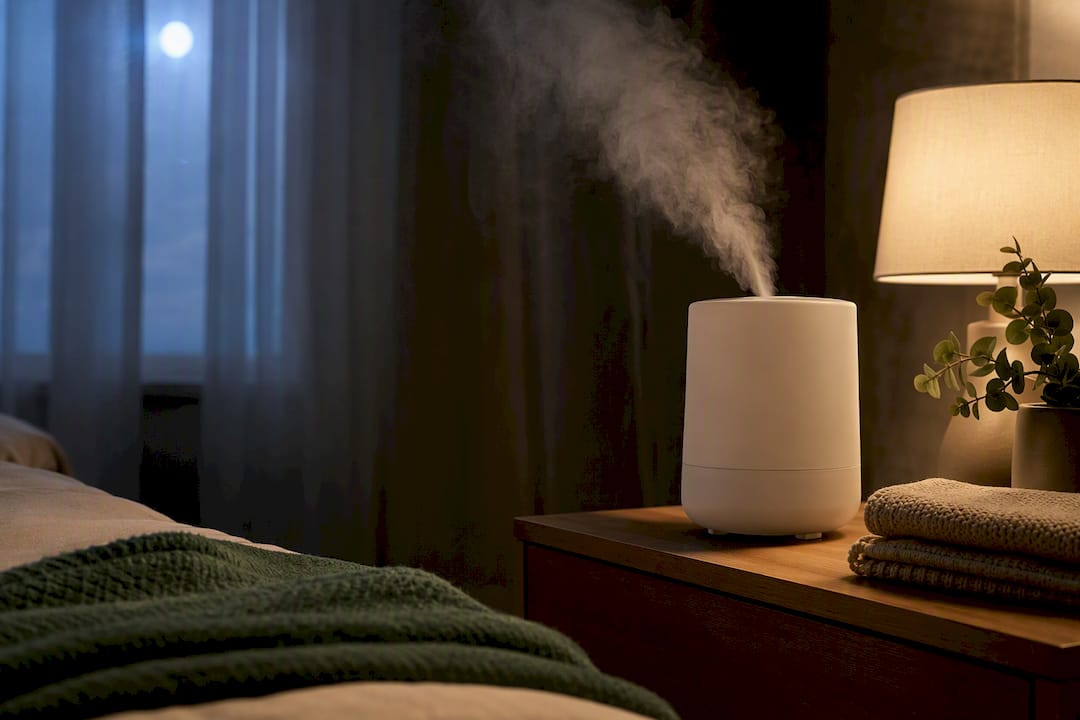
Pro Tip: Run a small humidifier in your bedroom during dry seasons. Low humidity pulls moisture straight out of already-compromised skin overnight, undoing whatever moisturizing you did before bed.
Using an Occlusive Balm Safely in Your Itch-Relief Routine
An occlusive balm works by sealing moisture into skin rather than adding water that evaporates fast. Applied to skin that’s still damp from a shower, it traps that hydration underneath a protective layer, which is exactly why timing matters more than the product itself.
A chemical-free, whipped tallow balm fits into this routine the same way any occlusive would: apply a thin layer to clean, damp skin, focusing on chronically dry or scaly patches. Before using any new product on active psoriasis, a short patch test on a small area for three to five days is worth doing, since sensitive or broken skin reacts unpredictably even to gentle ingredients.
- Apply within a few minutes of bathing, while skin is still slightly damp
- Use a thin layer rather than a heavy coat. Occlusives work through sealing, not volume
- Patch test on a small patch for several days before applying broadly
- Reapply to particularly stubborn dry areas later in the day if needed
Understanding how tallow’s fat structure interacts with skin helps explain why occlusive, chemical-free formulas tend to sit well on reactive skin.
Where to Verify Clinical Guidance on Psoriasis
For clinician-vetted detail beyond what’s covered here, the American Academy of Dermatology and National Psoriasis Foundation focus on itch-specific self-care, while Mayo Clinic and Cleveland Clinic cover treatment escalation and the biology of itch. Bring whichever source raises a question specific to your case to your next dermatology appointment.
The Real Priority Nobody Mentions First
Most itch-relief advice online buries the actual priority under a pile of home remedies. Cooling tricks and moisturizers matter, but they’re managing a symptom while the disease underneath keeps doing its thing. The advice that actually changes outcomes is the least exciting one: get inflammation under control with a dermatologist, then treat everything else as maintenance.
Where conventional advice falls short is treating home care and medical care as separate tracks. They’re not. A good moisturizing routine makes prescribed topicals absorb better and last longer between flares. Skipping the skin-care basics while waiting on a specialist referral wastes weeks you don’t need to lose.
If you’re starting today, prioritize in this order: get short, lukewarm showers and damp-skin moisturizing locked in as a daily habit, address any obvious irritant in your routine (harsh soap, wool, fragrance), and book the dermatologist visit if itch has lasted more than a few weeks. Everything else is refinement.
— Michael
Where Lordslovebutter Fits Into Your Itch-Relief Routine
Lordslovebutter offers a whipped beef tallow balm formulated to be free of chemical additives and gentle enough for sensitive, reactive skin including psoriasis and eczema. It is designed for whole-body use, suitable for application on various skin areas.
If you’ve read this far, you already know the routine that works: damp skin, occlusive product, consistent timing. The full balm collection includes the original whipped tallow balm, a lip balm, and a zinc oxide sun balm for daily coverage. Start with the 2.4 oz jar for regular use, or grab the travel tin if you want a smaller size to patch test first. The business emphasizes a straightforward, ingredient-first approach to skincare. Pick a size, run your patch test for a few days, then work it into the damp-skin routine your dermatologist already signed off on.
This article is general information, not a substitute for advice from a qualified doctor. Consult a qualified healthcare professional about your own circumstances before acting on anything here.
Sources
- 7 ways to relieve itchy psoriasis | American Academy of Dermatology
- A Few Self-Care Tips to Manage Psoriasis Itch and Scaling | National Psoriasis Foundation (Advance)
- Psoriasis — diagnosis and treatment | Mayo Clinic
FAQ
What is the best anti-itch ointment for psoriasis?
There’s no single “best” ointment since it depends on severity, but hydrocortisone and pramoxine handle mild itch well, while thicker occlusive balms lock in moisture to reduce dryness-driven itch between flares. For persistent or severe itching, a dermatologist-prescribed topical steroid or keratolytic typically outperforms anything sold over the counter.
What is the best ointment for psoriasis itching?
Menthol or camphor-based lotions offer the fastest sensory relief through a cooling, distracting sensation, according to the American Academy of Dermatology. An occlusive, fragrance-free balm applied to damp skin supports longer-lasting comfort by preventing the dryness that triggers itch in the first place.
Does Benadryl stop psoriasis itching?
Antihistamines like Benadryl target histamine-driven itch, but psoriasis itch is largely driven by inflammatory pathways rather than histamine alone, so results are inconsistent. Some people get modest relief, particularly at night when the sedating effect helps with sleep, but antihistamines aren’t a primary psoriasis itch treatment.
How do you calm a psoriasis flare-up?
Start with cool compresses and a refrigerated occlusive moisturizer, then shift to short lukewarm showers with damp-skin moisturizing as your daily baseline. If a flare persists beyond a couple of weeks or disrupts sleep, a dermatologist can escalate to prescription topicals, phototherapy, or systemic treatment aimed at the underlying inflammation.