
Tallow can improve how scars look by hydrating and softening the surrounding skin, but it is not a proven scar-removal treatment. Used on fully healed skin, it may calm redness and smooth texture over weeks, and the moisturizing effect alone can make a scar look less prominent. It won’t reliably remodel deep or raised scar tissue, and it belongs nowhere near an open wound, a fresh incision, or acne-prone facial skin without a patch test first.
TL;DR:
- Tallow provides hydration and softening benefits by forming an occlusive barrier that reduces moisture loss on fully healed skin.
- There is limited scientific evidence showing tallow can remodel or significantly improve deep or raised scars.
- The fatty acids in tallow resemble skin lipids, which may support barrier repair but do not influence collagen restructuring involved in scar healing.
- Tallow’s comedogenic potential makes it unsuitable for oily or acne-prone facial skin, especially without patch testing.
- For effective scar treatment, more proven options like silicone, retinoids, or clinical procedures should be prioritized over tallow.
Table of Contents
- Does Tallow for Scars Actually Have Research Behind It?
- How Tallow Might Affect Scars: Lipids, Occlusion, and Barrier Support
- How to Use Tallow on Scars Safely
- Who Should Avoid Tallow on Their Skin
- Tallow vs. Other Scar Treatments: When Each One Makes Sense
- Why I’m Cautiously Optimistic About Tallow, Not Sold on It
- Try the Whipped Beef Tallow Balm on Healed Scars
- Primary Sources and Further Reading
- Sources
- FAQ
Does Tallow for Scars Actually Have Research Behind It?
The honest answer is: some, but not much, and none of it settles the question. A 2024 scoping review on topical tallow found that tallow is biocompatible and genuinely hydrating, with a handful of small studies pointing to symptomatic relief in dermatitis and some wound-healing signals in limited human and animal research. That’s a real finding, but it’s a thin one. The review’s own authors flag that larger, well-controlled human trials simply don’t exist yet.
That gap matters more than it might seem, because scars are not just dry skin. A scar is reorganized collagen, and improving it in any lasting way usually means influencing how that collagen is laid down or remodeled, not just how hydrated the surface feels.
What dermatologists are actually saying
Cleveland Clinic’s dermatology team has been direct about this: there isn’t enough clinical evidence to support tallow as a proven skincare treatment, and they point to real downsides like clogged pores and irritation that can offset any benefit. National Geographic’s rundown of dermatologist opinion echoes that caution. Experts note that tallow’s fatty-acid profile overlaps with skin’s own lipids, which gives it a plausible reason to help with barrier repair, but they’re blunt that the trend’s popularity has outrun the science supporting it.
MD Anderson’s skin experts add a more specific warning: tallow is a genuinely strong moisturizer, but it’s also comedogenic enough to cause breakouts on oily or acne-prone skin, which rules it out for a lot of facial applications regardless of scarring.
Here’s what the evidence actually supports, stacked plainly:
- Tallow moisturizes and softens skin texture, backed by small studies and biocompatibility data.
- It shows anti-inflammatory and symptomatic relief signals in dermatitis, but not scar-specific trials.
- No large human study has measured whether tallow changes scar depth, pigment, or collagen structure.
- Comedogenicity and irritation risk are documented concerns, not hypothetical ones.
The gap in one sentence: every source agrees tallow can hydrate skin well; none of them can point to a study showing it remodels a scar the way silicone gel or a retinoid can.
How Tallow Might Affect Scars: Lipids, Occlusion, and Barrier Support
Tallow is mostly triglycerides, and the fatty acids inside those triglycerides, oleic, palmitic, and stearic acid, along with small amounts of fat-soluble vitamins, happen to resemble lipids your skin already produces. That overlap is the entire biological argument for using tallow on skin in the first place. It’s not a foreign substance trying to force its way into the barrier; it’s chemically closer to what’s already there.
Once applied, tallow forms an occlusive layer on the surface. That layer slows transepidermal water loss, meaning moisture already in your skin stays put longer instead of evaporating. Less water loss means less dryness, and less dryness means a scar that was looking flaky or tight starts to look smoother almost immediately. This is a texture change, not a structural one.
That distinction is worth sitting with. Occlusion can make a scar look better within days because dry, dehydrated skin catches light differently and creases more visibly than well-hydrated skin. But softening the surface is a completely different mechanism than reorganizing the collagen fibers underneath, which is what actually determines whether a scar is raised, indented, or discolored long term.
Formulation changes the outcome too. Raw rendered fat behaves differently on skin than tallow whipped into an emulsion or blended with something like Manuka honey. The scoping review’s own data found that tallow used as the oil base in an emulsion produced better symptomatic relief in dermatitis models than tallow alone, likely because emulsification improves spreadability and penetration. A few practical takeaways from that:
- Whipped or emulsified tallow tends to absorb more evenly than a hard, unrefined block.
- Additives like honey or humectants can improve moisture retention beyond what tallow provides alone.
- The base fatty-acid profile doesn’t change with formulation, but tolerability and how the skin uses it often does.
How to Use Tallow on Scars Safely
Timing matters as much as the product itself. Tallow should go nowhere near an open wound, a healing incision, or broken skin. Dermatology sources are consistent that cosmetic tallow is not a substitute for real wound care and has no proven role in treating infected or unhealed tissue. Wait until the skin has fully closed and any scabbing is gone before introducing any topical fat.
From there, a cautious, monitored routine works better than jumping in with daily heavy application. Here’s a sequence that lines up with what dermatologists quoted in outlets like National Geographic recommend for trialing new topicals:
- Patch test first. Rub a pea-sized amount on your inner forearm and leave it alone for 48 hours, watching for redness, itching, or small bumps.
- If skin stays clear, cleanse the scar area gently and pat dry.
- Apply a thin layer of tallow directly to the healed scar, using light circular massage if the texture is tolerable.
- Repeat nightly for four to eight weeks, checking every week or two for any change in color, texture, or irritation.
- Stop immediately if you notice new breakouts, itching, or worsening redness anywhere near the area.
Daytime care needs a different tool entirely. Tallow offers no UV protection, and newly formed or actively lightening scar tissue is often more sun-sensitive than the skin around it. A broad-spectrum SPF over any exposed scar during the day isn’t optional if you want to avoid pigment darkening that undoes weeks of progress.
For scars that are raised, itchy, or clearly hypertrophic or keloid, tallow alone is unlikely to be the deciding factor. Silicone sheets, dermatologist-prescribed treatments, or an in-person evaluation make more sense for those cases, and tallow can still play a supporting moisturizing role alongside them.
Pro Tip: Apply tallow at night rather than morning. It gives the occlusive layer hours to work undisturbed by clothing, sweat, or sun exposure, and you wake up to noticeably softer texture without needing SPF layered on top of it.
Who Should Avoid Tallow on Their Skin
The biggest risk with tallow isn’t some rare allergic reaction. It’s ordinary pore-clogging. Tallow is dense in saturated fat, and dermatologists at MD Anderson are specific that this makes it a poor choice for oily or acne-prone facial skin, where it can trigger new breakouts even while it’s soothing dryness elsewhere on the body. If your scar sits on a part of your face that already runs oily, weigh that tradeoff before starting a nightly routine there.
Additives are the second concern. Fragranced tallow products or ones bulked up with fillers carry a higher risk of contact dermatitis than a simple, minimal-ingredient formula. If irritation shows up, it’s often the added fragrance or preservative causing it, not the tallow itself, which is one more reason a plain, short ingredient list is worth prioritizing.
A few groups should be especially cautious:
- Anyone with active acne or consistently oily skin, particularly on the face.
- People with known lanolin, dairy, or animal-fat sensitivities, since cross-reactivity is possible.
- Anyone using tallow on a scar without daytime SPF, since sun sensitivity can worsen pigment changes.
- Anyone applying it to a wound that isn’t fully closed, regardless of how long ago the injury happened.
Cleveland Clinic’s overall read is that the limited clinical evidence doesn’t necessarily outweigh these risks for every skin type, which is a fair way to frame it. This isn’t a treatment with a strong enough track record to justify pushing through irritation. If redness spreads, new bumps appear, or anything looks like it’s getting worse instead of better, stop and see a dermatologist rather than waiting it out.
Tallow vs. Other Scar Treatments: When Each One Makes Sense
Tallow’s real strength is accessibility. It’s inexpensive, widely available, and delivers strong occlusive hydration that genuinely helps dry, sensitive, or uncomfortable skin feel and look better fast. For scars that are flat, healed, and mostly bothering you cosmetically because of dryness or dullness, that’s a legitimate use case.
For scars that are raised, thick, persistently discolored, or limiting movement, tallow isn’t in the same category as the treatments built specifically to address those problems. Silicone sheets and gels have a longer track record for softening hypertrophic scars. Topical retinoids target pigment and turnover more directly. Procedures like laser treatment, microneedling, or steroid injections work on the collagen structure itself, something no topical fat is designed to do.
A simple way to decide:
- Want softer texture and less dryness-related visibility on a flat, healed scar? Tallow is a reasonable, low-cost place to start.
- Dealing with a raised, thick, or function-limiting scar, or one that keeps darkening? Talk to a dermatologist about silicone, retinoids, or procedural options before relying on tallow alone.
Why I’m Cautiously Optimistic About Tallow, Not Sold on It
Our company is built around the belief that grass-fed whipped beef tallow, without synthetic fillers, provides effective hydration and is suitable for sensitive skin. Our formulation work is centered on whole-body use, and some customers report smoother, calmer-looking skin within days, particularly on areas that stay dry or irritated. [testimonial]
That said, I’d rather undersell this than oversell it. Nothing in our internal experience, or in the clinical literature, supports calling tallow a scar-remodeling treatment. It’s a genuinely good moisturizer with a fatty-acid profile that flatters skin. Treat it as that, and it earns its place in a routine. Treat it as a cure, and you’ll be disappointed. [internal_data]
— Michael
Try the Whipped Beef Tallow Balm on Healed Scars
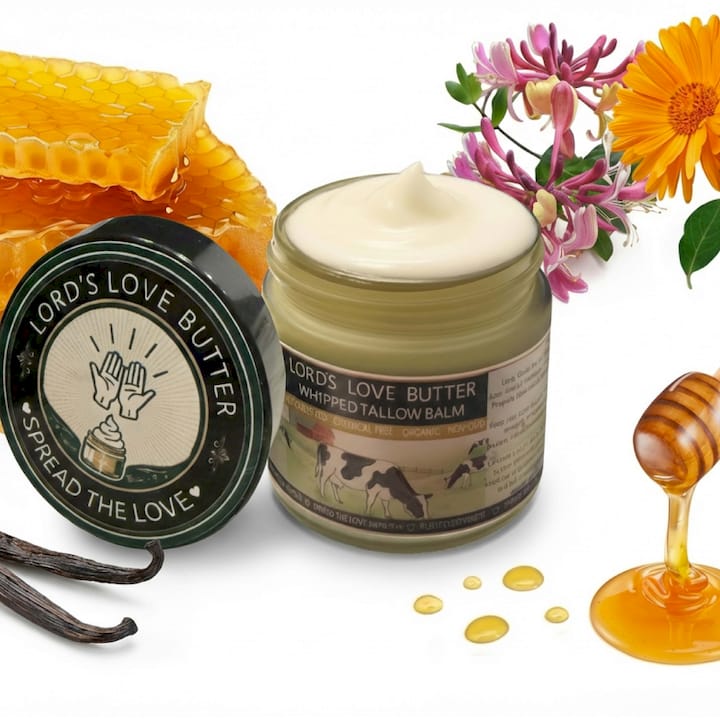
If you’re ready to see what tallow does for the dry, tight, or dull-looking skin around a healed scar, our Whipped Beef Tallow Balm with Manuka Honey is built for exactly this kind of trial run.
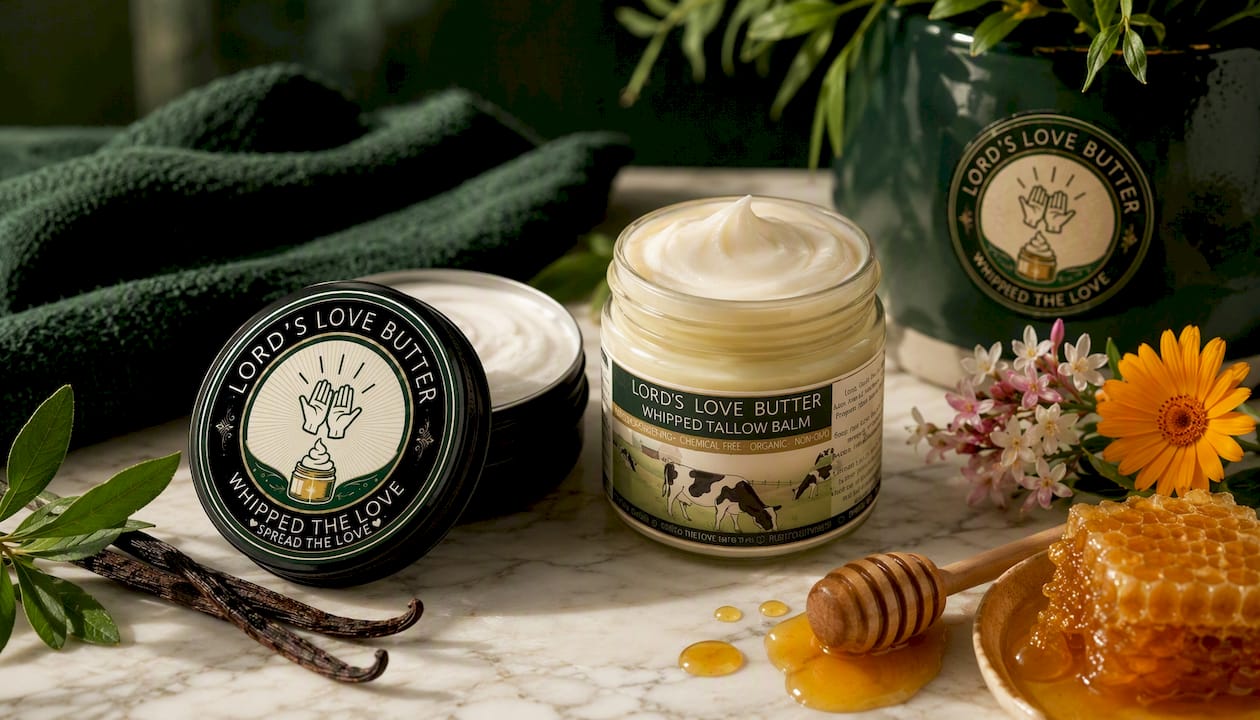
The 2.4 oz tin is the better pick if you want something portable enough for a gym bag or travel kit, while the 2.4 oz jar works better for regular nightly use at your bathroom sink. Both are the same grass-fed, minimal-ingredient formula, whipped with Manuka honey for extra soothing on sensitive or irritated skin. Start with a pea-sized amount on your forearm for 48 hours before applying anywhere near a scar, and stick to nighttime use so the occlusive layer has time to work undisturbed. We source our tallow from grass-fed cattle and skip synthetic additives entirely, keeping the ingredient list short and the irritation risk low. Pick the tin or the jar based on how you’ll actually use it, and give it a few weeks before judging results.
Primary Sources and Further Reading
- Scoping review on topical tallow (PMC): the main clinical evidence review behind this article’s claims about biocompatibility and hydration.
- Cleveland Clinic on beef tallow for skin: medical caution on limited evidence and comedogenic risk.
- National Geographic’s dermatologist roundup: expert commentary on mechanism and hype versus evidence.
- MD Anderson on tallow and acne risk: clinical guidance on who should avoid facial use.
- The Regen Store’s guide to natural scar treatment: a broader look at plant-based and natural scar-care approaches.
Sources
- Scoping review on topical tallow (PMC)
- Is Beef Tallow Good for Your Skin? | Cleveland Clinic
- Beef tallow as skin care? Experts explain what’s truth—and myth | National Geographic
- Beef tallow: dietitian and derm weigh in | MD Anderson
FAQ
Will Beef Tallow Heal Scars?
Tallow can hydrate and soften the skin around a scar, which may improve its appearance, but no clinical evidence shows it heals or remodels scar tissue itself.
Why Don’t Some Dermatologists Recommend Beef Tallow?
Many dermatologists point to a lack of large clinical trials and to real risks like clogged pores and irritation, arguing tallow’s popularity has outpaced the science supporting it.
What Is the Fastest Way to Fade a Scar?
Evidence-backed options like silicone sheets, topical retinoids, and procedures such as laser therapy or microneedling target collagen and pigment more directly than any single moisturizer, tallow included.
Which Oil or Fat Is Best for Fading Scars?
No single oil has strong proof of fading scars on its own; tallow, vitamin E, and cocoa butter mainly work by hydrating skin, which can improve appearance without changing scar depth.
Can I Use Tallow on a Fresh Wound?
No. Tallow should only go on fully healed, closed skin, never on open wounds, fresh incisions, or infected areas.