

Tallow for Keratosis Pilaris: How to Try It Safely
Tallow is worth trying for keratosis pilaris if your KP is dryness-dominant and your skin is not acne-prone — but go in with realistic expectations, because it addresses moisture, not the keratin plugs themselves.
- The mechanism is plausible. Tallow’s fatty-acid profile (oleic, palmitic, stearic) closely resembles human skin lipids, which means it can act as an occlusive barrier repair agent and soften the rough texture around follicles.
- The clinical evidence is thin. A scoping review of tallow’s biocompatibility screened 147 studies and included only 19 that met criteria — enough to support hydrating properties, not enough to call tallow a proven KP treatment.
- Real risks exist. Cleveland Clinic dermatologists warn that tallow’s thick, occlusive nature can clog pores and trigger breakouts, especially on acne-prone or inflamed skin.
Start with a 48-hour patch test on your inner arm before applying anywhere else. If your bumps are inflamed, weepy, or infected, see a dermatologist before reaching for any home remedy.
Key Takeaways
Tallow can soften KP-prone skin by repairing the moisture barrier, but it does not remove keratin plugs and requires consistent use over 6–8 weeks to show results.
| Point | Details |
|---|---|
| Tallow targets dryness, not plugs | It works as an occlusive barrier repair agent, not a keratolytic — best for dry, rough KP. |
| Clinical evidence is limited | A scoping review of 147 studies included only 19 that met criteria; more human trials are needed. |
| Patch test before full use | Apply 1 gram to inner forearm for 48–72 hours; stop immediately if redness or stinging appears. |
| Add keratolytics for texture | Urea or lactic acid addresses plug density; tallow layers on top as the moisture-sealing step. |
| Lordslovebutter for KP | The Balm Tin suits nightly body use; Balm Lite fits face and arms; Vitamin C Balm pairs with exfoliation nights. |
Table of Contents
- How does tallow for keratosis pilaris actually work?
- Who should avoid tallow, and what can go wrong?
- Step-by-step protocol for using tallow on KP
- How to pick a tallow balm that’s right for KP
- Natural and medical alternatives: when are they the better choice?
- What does the research actually say about tallow for skin?
- An honest take on tallow and KP
- Lordslovebutter tallow balms for your KP routine
- Sources
How does tallow for keratosis pilaris actually work?
Keratosis pilaris is a condition where keratin — the protein that makes up hair — builds up inside follicles and forms small, rough plugs. The skin around those plugs tends to be dry, which makes the texture feel sandpaper-rough and look red or flushed. Tallow does not dissolve keratin plugs. What it can do is address the dryness that makes them worse.
Grass-fed beef tallow is primarily composed of oleic acid, palmitic acid, and stearic acid — the same fatty acids that dominate the skin’s own sebum. That structural similarity is why tallow can mimic skin sebum for deep hydration rather than just sitting on top like a film. As an occlusive, it slows transepidermal water loss, keeping the follicle environment more pliable and less prone to the tight, rough feel that KP produces.
“Tallow contains fatty acids also found in human skin, which theoretically could reinforce the skin barrier and reduce water loss — but experts note a glaring lack of clinical evidence for many of the marketing claims made around it.” — National Geographic
A few things tallow advocates get wrong:
- Vitamin A claims are overstated. Tallow contains trace fat-soluble vitamins, but those traces are not equivalent to topical retinoids. Dermatologists at Cleveland Clinic are explicit on this point: tallow is a moisturizer, not a targeted active.
- Topical delivery of micronutrients is not guaranteed. Even if tallow carries small amounts of vitamins D and K, absorption through intact skin at those concentrations is not clinically established.
- Barrier repair is not plug removal. The skin barrier biology literature supports occlusives for hydration, but hydration alone does not clear keratin buildup.
Where tallow is most likely to help: KP that is primarily rough and dry, with minimal redness and no active breakouts. If your arms feel like fine sandpaper and the bumps are skin-colored rather than inflamed, the moisture-barrier angle is a reasonable place to start.
Who should avoid tallow, and what can go wrong?
Tallow is not a neutral product. Its occlusive density is exactly what makes it useful for dry skin — and exactly what makes it problematic for others.
Primary risks:
- Clogged pores and comedones, particularly on the face, chest, and upper back
- Acne breakouts in people with acne-prone or oily skin
- Heat trapping under the balm, which can worsen redness or irritation in warm climates
- Allergic contact dermatitis (rare, but possible with any animal-derived fat)
- Worsening of existing inflammation if applied to broken or weepy skin
Contraindications — skip tallow and consult a dermatologist first if you have:
- Active acne or a history of frequent breakouts on the area you want to treat
- Rosacea, especially during a flare
- Inflamed, weepy, or infected KP lesions
- Severe eczema currently managed with topical steroids
- Known sensitivity to beef or animal-derived products
“Beef tallow’s thick, occlusive nature may be unsuitable for all skin types and can lead to clogged pores, acne breakouts, and increased heat-related irritation in some users.” — Cleveland Clinic
If you see immediate redness, stinging, or a sudden worsening of texture within 24 hours of application, stop immediately. Wash the area gently with a mild cleanser, apply nothing occlusive, and let the skin settle for 48–72 hours before deciding whether to try again at a lower frequency or abandon the approach entirely.
Pro Tip: Run your patch test on the inner forearm, not the area you actually want to treat. Apply a pea-size amount, cover loosely with a bandage, and check at 24 and 48 hours. No reaction at 48 hours is your green light — but even then, start with every-other-night application on the target area, not daily.
Step-by-step protocol for using tallow on KP
This protocol is designed for dryness-dominant KP on arms or thighs — the most common presentation. Adjust frequency based on how your skin responds.
Step 1: Cleanse gently. Use a fragrance-free, non-stripping body wash. Hot water worsens dryness, so keep showers warm, not scalding, and limit them to 10 minutes.
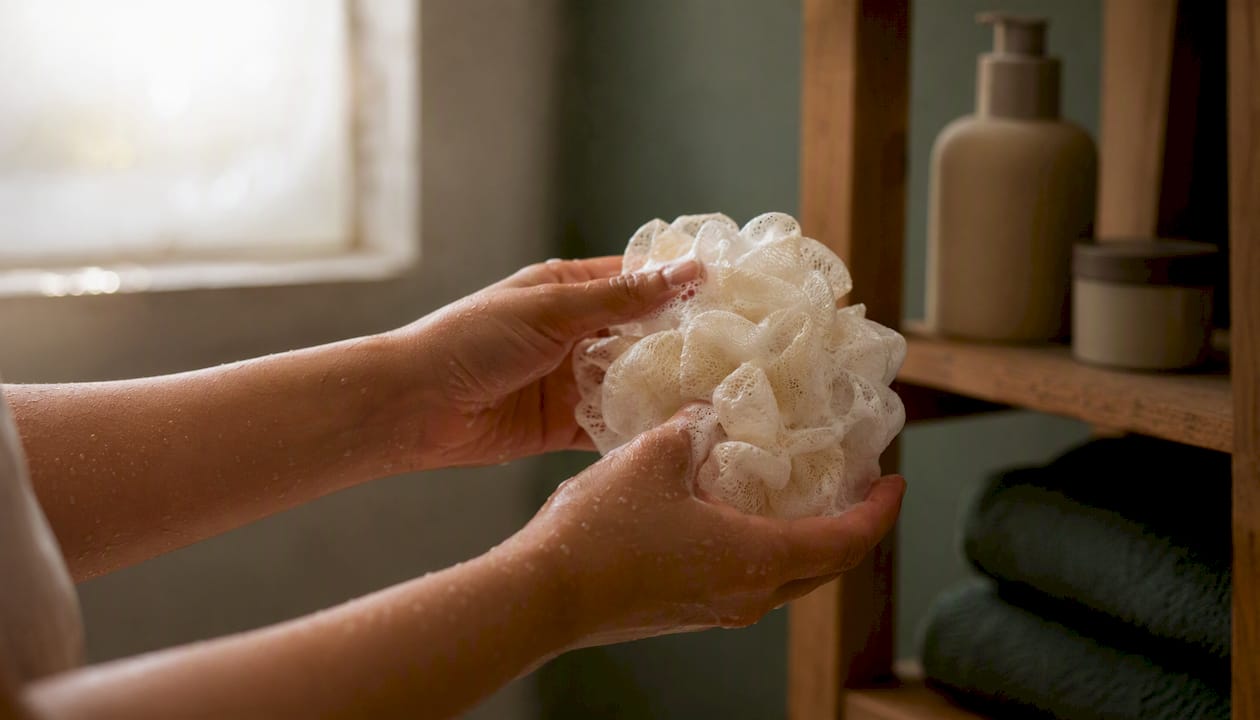
Step 2 (optional): Exfoliate. Two to three times per week, use a gentle physical exfoliant (a soft washcloth or a mild chemical exfoliant with lactic acid) on KP-prone areas. Do this before applying tallow, never at the same time. Combining a heavy occlusive with an active exfoliant in one session can cause irritation.
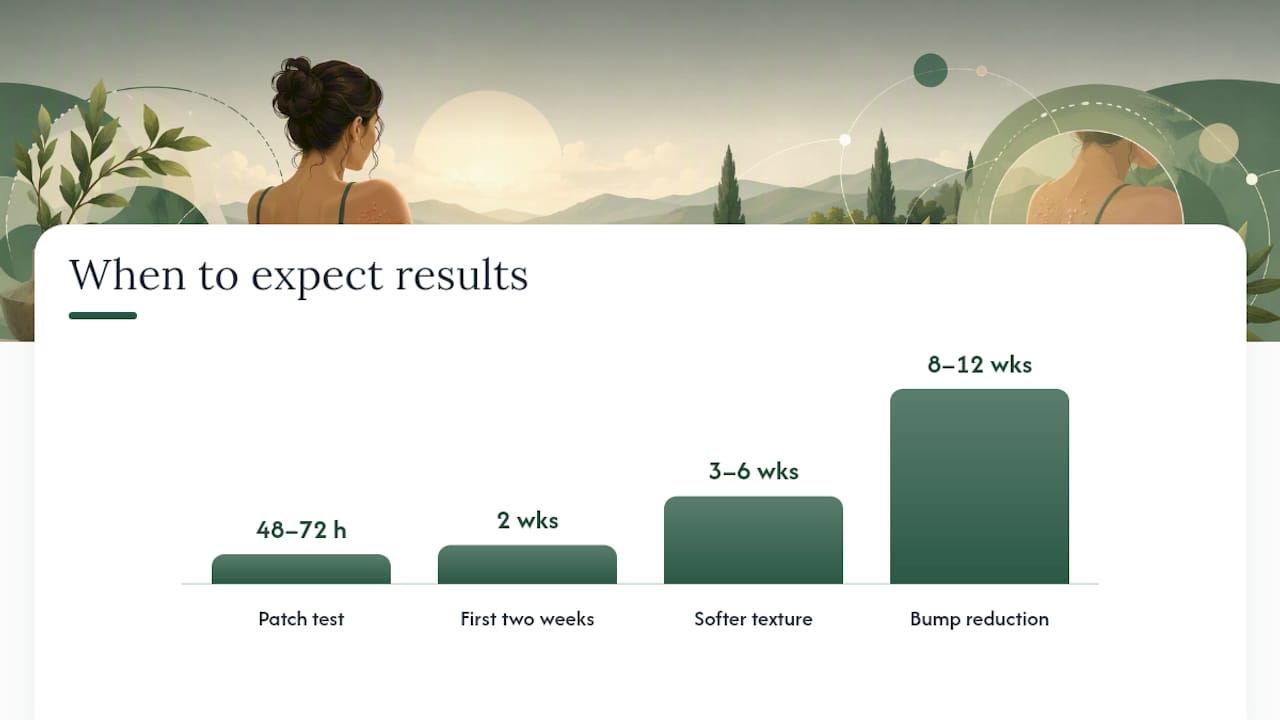
Step 3: Patch test. Before your first full application, apply roughly a pea-size amount (about 1 gram) to a 2-inch patch of inner forearm. Leave it for 48–72 hours. Check for redness, itching, or breakouts.
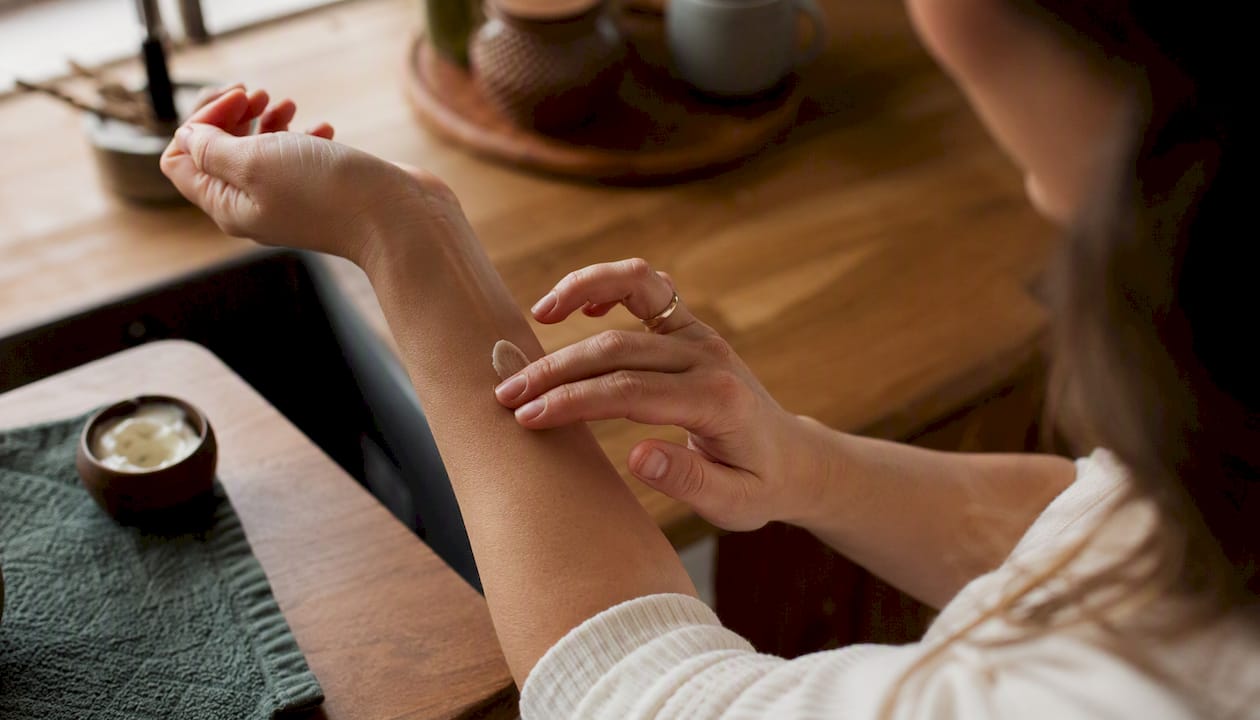
Step 4: Apply to damp skin. Pat skin dry but leave it slightly damp. Scoop a pea-size to two-pea-size amount (1–2 grams) for an area like the back of one upper arm. Warm it between your palms and press it into the skin rather than rubbing aggressively.
Step 5: Timing. Apply at night. Tallow is heavier than most daytime moisturizers, and nighttime application lets it work without the friction of clothing or sun exposure. If you want daytime use, the lighter formulation options (covered in the product section below) are a better fit.
Step 6: Frequency. Start every other night for the first two weeks. If no breakouts or clogging appear, move to nightly. If you notice milia or small whiteheads forming, scale back to two to three times per week.
Realistic timeline: Mayo Clinic notes that many KP treatments improve appearance but require ongoing maintenance — improvement is not permanent once you stop. With consistent nightly tallow application, most people notice softer texture within 3–6 weeks. Visible reduction in bump density takes longer, often 8–12 weeks, and only if the dryness was a significant driver. If you see no change after 8 weeks, tallow alone is unlikely to be sufficient.
Troubleshooting:
- Small whiteheads or milia appearing: reduce frequency to twice weekly or switch to a lighter formulation
- Skin still feels rough after 4 weeks: add a humectant step (hyaluronic acid or glycerin serum) before the tallow to draw moisture in before sealing it
- Redness or stinging after any application: stop, wash off, and reassess whether tallow is appropriate for your skin type
Pro Tip: Apply tallow immediately after a shower while skin is still slightly damp — the occlusive layer traps that surface moisture rather than just sitting on dry skin. This single timing shift makes a measurable difference in how soft the skin feels by morning.
How to pick a tallow balm that’s right for KP
Not all tallow products are equal, and the wrong formulation can introduce the exact problems you’re trying to avoid.
Look for:
- Grass-fed sourcing. Grass-fed tallow differs from conventional in fatty-acid ratios and purity; grass-fed tends to have a cleaner lipid profile and fewer processing residues.
- Minimal ingredient list. For KP, fewer additives means fewer variables if a reaction occurs.
- Fragrance-free or naturally scented only. Synthetic fragrances are a leading cause of contact dermatitis on already-sensitive skin.
- Humectant additions (optional but useful). Squalane or glycerin alongside tallow addresses both occlusion and moisture attraction — a more complete approach for dry KP.
- Water-free formulation. Pure tallow balms without water are less likely to support microbial growth and do not require synthetic preservatives.
Avoid:
- Heavy synthetic fragrances or parfum in the ingredient list
- Comedogenic additives like coconut oil or cocoa butter if you’re applying to the face or chest
- Products with unknown sourcing or no transparency about rendering process
- Water-containing tallow products without a listed preservative system
Pro Tip: Tins and jars both work, but always use a clean spatula or freshly washed fingertips to scoop product. Double-dipping with dirty hands introduces bacteria into a water-free product that has no preservative to fight them. Store away from direct sunlight and heat, which accelerates oxidation.
Lordslovebutter’s three recommended SKUs for KP:
- Whipped Beef Tallow Balm with Manuka Honey — 2.4 oz Tin: The core body balm. Best for nightly occlusive application on arms and thighs. The whipped texture spreads more easily than a dense block tallow and absorbs without a heavy residue.
- Original Beef Tallow Balm Lite with Manuka Honey: The lighter formulation. Better suited for the face, upper arms, or anyone who found the full balm too heavy. Good starting point if you’re acne-adjacent or new to tallow.
- Vitamin C Whipped Beef Tallow Balm with Manuka Honey & Squalane: Adds squalane (a humectant) and vitamin C (an antioxidant) to the base. Use this after a chemical exfoliation session when the skin barrier needs both repair and antioxidant support. The squalane component addresses the humectant gap that plain tallow leaves.
Natural and medical alternatives: when are they the better choice?
Tallow is one tool. Depending on your KP presentation, something else may work better or faster.
| Approach | Best for | Limitation vs. tallow |
|---|---|---|
| Linoleic-rich botanical oils (pumpkin seed, hemp seed) | Acne-prone skin, oily skin types | Less occlusive; may need more frequent reapplication |
| Humectant-rich moisturizers (glycerin, hyaluronic acid base) | All skin types as a first layer | Does not seal moisture without an occlusive on top |
| Urea or lactic acid creams | Keratotic, rough-textured KP; plug reduction | Can sting on sensitive or broken skin |
| Salicylic acid body wash | Mild KP with some follicular congestion | Drying with overuse; not suitable for very dry skin |
| Topical retinoids (prescription) | Persistent, treatment-resistant KP | Requires dermatologist prescription; initial irritation common |
Decision rules:
- Choose tallow if your KP is primarily dry and rough with no active breakouts, and you want a fragrance-free, chemical-free occlusive.
- Choose a linoleic-rich botanical oil if you’re acne-prone. WebMD notes that oils higher in linoleic acid can outperform animal fats for hydration in certain skin types, and linoleic acid is less comedogenic than oleic-dominant fats.
- Add a keratolytic (urea or lactic acid) if texture and plug density are your main complaint, not just dryness. Mayo Clinic’s treatment guidance positions keratolytics as standard first-line agents for KP texture. Tallow can layer on top after the keratolytic has done its work. For a deeper look at how tallow compares to prescription creams, that comparison is worth reading before you decide.
- See a dermatologist if: bumps are inflamed, painful, or spreading; you’ve tried consistent moisturization for 8–12 weeks without improvement; or you develop a widespread breakout after starting any new topical.
The Cleveland Clinic’s KP guidance recommends medical consultation when over-the-counter measures fail — tallow included in that category.
What does the research actually say about tallow for skin?
The honest answer: promising but thin. Here’s what the evidence actually supports.
What the scoping review found: The PMC scoping review screened 147 studies and included 19. It concluded tallow is biocompatible, can be moisturizing, and has a fatty-acid profile relevant to skin health. One emulsion study with 78 participants noted moisturizing benefit. Side-effect reporting across studies was inconsistent, and the authors called for more controlled human trials.
What preclinical and barrier research suggests: Skin barrier biology literature supports the use of occlusive fatty products for reducing transepidermal water loss. This is the mechanistic basis for tallow’s potential benefit — but it does not translate directly to KP plug resolution.
What dermatologists say:
- Tallow is a moisturizer, not a targeted KP therapy. The vitamin A angle is frequently overstated in marketing.
- The trend’s popularity has outpaced clinical proof, per experts quoted by National Geographic.
- WebMD’s summary acknowledges moisturizing and possible anti-inflammatory benefit in limited studies, but flags comedogenic risk and the need for more research.
“Tallow can moisturize and may help some inflammatory skin conditions in limited studies, but it can also be comedogenic and more research is needed before strong efficacy claims can be made.” — WebMD
The gap between what tallow can plausibly do (barrier repair, moisture retention) and what it is sometimes marketed to do (clear KP, deliver therapeutic vitamin A) is real and worth keeping in mind. For a broader look at how tallow restores skin texture, the mechanism article goes deeper on the biology without the hype.
An honest take on tallow and KP
The most common mistake people make with tallow and KP is expecting it to act like a keratolytic. It does not. What it does well is keep the skin around those follicular plugs soft, hydrated, and less inflamed-looking — and for dryness-dominant KP, that is genuinely useful.
Customers who report the best results tend to be consistent: nightly application for at least 6–8 weeks, combined with gentle exfoliation two to three times per week. Those who are disappointed usually applied it sporadically or expected the bumps to disappear entirely. Tallow is maintenance, not a cure.
If your KP is primarily cosmetic and dryness-driven, a grass-fed tallow balm is a reasonable, low-risk first step. If it’s inflamed, widespread, or not responding after a solid 8-week trial, that’s a dermatologist conversation — not a product-switching exercise.
Lordslovebutter tallow balms for your KP routine
Lordslovebutter makes grass-fed, whipped beef tallow balms with Manuka honey — no synthetic fragrances, no fillers, and no ingredients you can’t pronounce. For a KP routine, the three SKUs cover different needs cleanly.
The Whipped Beef Tallow Balm Tin is the nightly body workhorse: apply 1–2 grams to damp skin on arms or thighs after your shower. The Balm Lite is the right call for the face or upper arms if you’ve found heavier balms congesting. And the Vitamin C Whipped Balm with Squalane pairs well with your exfoliation nights — the squalane draws moisture in while the tallow seals it, and the vitamin C supports skin recovery after lactic acid or urea use.
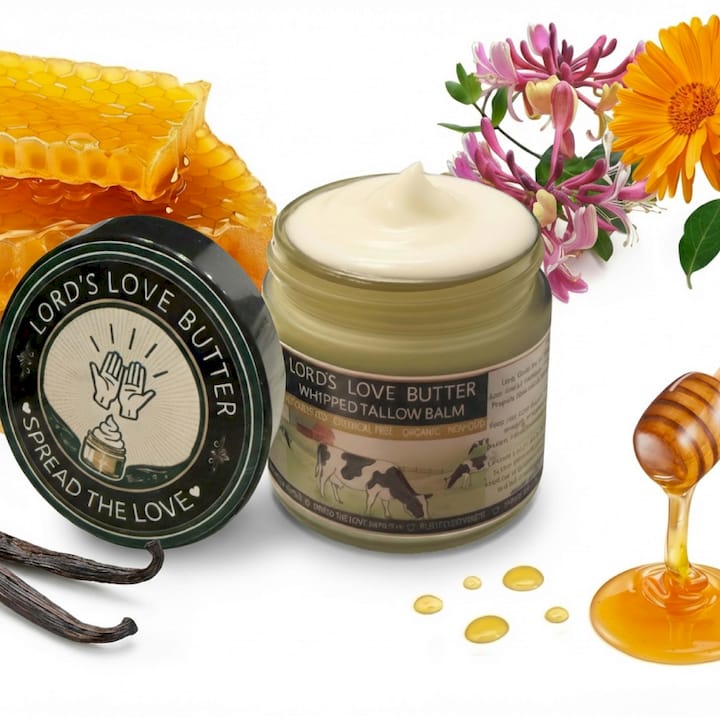
All three are veteran-made, ship across the United States, and come with no subscription required. Pick your starting point at Lordslovebutter and give the protocol a genuine 6–8 week run.
Sources
- Is Beef Tallow Good for Your Skin? | Cleveland Clinic
- Tallow, Rendered Animal Fat, and Its Biocompatibility With Skin: A Scoping Review - PMC
- Beef tallow as skin care? Experts explain what’s truth—and myth | National Geographic
- Beef tallow for skin care: Benefits, risks, and more | WebMD
- Keratosis pilaris - Symptoms and causes | Mayo Clinic
- PMC article related to skin barrier and topical therapy
Research on tallow specifically for KP remains sparse. For clinical updates, search PubMed using the terms “keratosis pilaris emollient” or “occlusive moisturizer follicular keratosis” to find the most current controlled trials.
This article is general information, not a substitute for advice from a qualified doctor. Consult a qualified healthcare professional about your own circumstances before acting on anything here.

