

Pregnancy Skin: Tallow Soothes Itch and Dryness, Not Stretch Marks
Beef tallow hydrates skin well enough to ease itching and tightness, but no clinical evidence shows it prevents or reduces stretch marks. Its main trick is occlusion, a fatty film that locks moisture into the outer skin layer, and that’s a comfort tool, not a cure. It’s especially useful during pregnancy, but skip it if you’re prone to acne or clogged pores. The sections below cover the mechanism, the safety details, and how to use it well.
TL;DR:
- Tallow forms a fatty barrier that improves skin hydration and reduces tightness and itchiness but cannot repair collagen tears causing stretch marks.
- It is effective for smoothing skin surface texture and relieving discomfort during pregnancy but offers no controlled evidence of preventing stretch marks.
- Use patch tests before application, avoid if prone to acne, and practice proper hygiene with tools to prevent contamination and spoilage.
- Choose high-quality, grass-fed tallow with minimal additives, and apply it on clean, damp skin once or twice daily for best results.
- Be realistic about its limits: it supports comfort and hydration but cannot influence deep dermal stretch marks caused by genetic and hormonal factors.
Table of Contents
- What Tallow Can Do for Skin, and Where It Falls Short
- What Do Dermatologists and Research Say About Tallow?
- Is Tallow Safe to Use During Pregnancy and Breastfeeding?
- How to Use Tallow for Stretch Marks the Right Way
- How Do You Choose a Safe, High-Quality Tallow Balm?
- Why Lord’s Love Butter Formulates Tallow the Way We Do
- The Honest Take on Tallow and Stretch Marks
- Try Lord’s Love Butter’s Whipped Tallow Balm With Manuka Honey
- Sources
What Tallow Can Do for Skin, and Where It Falls Short
Tallow works as an occlusive. It sits on top of skin and forms a physical barrier that slows transepidermal water loss, the process by which moisture escapes through the epidermis into the air. That barrier effect is why it feels so different from a watery lotion. Its fatty acid profile, mostly stearic, oleic, and palmitic acids, resembles the composition of human sebum, which is part of why it spreads and absorbs the way it does. Some trace fat-soluble vitamins may offer minor supporting benefits, though nothing dramatic.
Here’s what it genuinely helps with:
- Reduces the feeling of tightness on a stretching belly
- Calms itch associated with dry, expanding skin
- Softens rough patches and improves surface texture
Stretch marks, though, form when the dermis, the layer beneath the epidermis, tears at the collagen and elastic fibers under rapid stretching. A topical product applied to the surface cannot reach or repair that deeper structural damage. Roughly 50 to 90% of pregnant people develop stretch marks regardless of what they apply, which tells you the driver is mostly genetic and hormonal, not topical. Expect comfort and smoother texture from tallow. Don’t expect it to erase marks that have already formed or guarantee you won’t get new ones.
What Do Dermatologists and Research Say About Tallow?
Dermatologists interviewed by outlets like National Geographic are consistent on one point: the tallow trend has moved faster than the science backing it. It moisturizes, full stop, but the leap from “moisturizes well” to “prevents stretch marks” isn’t supported by controlled trials.
A few things worth knowing before you buy in:
- Cleveland Clinic notes tallow can moisturize effectively but may also clog pores and irritate reactive skin.
- MD Anderson Cancer Center echoes that caution, adding that for some skin types the risks may outweigh the benefit.
- Indexed research on topical fatty acids and skin barrier repair exists, but nothing that directly tests tallow against placebo for stretch-mark prevention.
None of that makes tallow useless. It just means the honest pitch is hydration and barrier support, not a dermal fix.
Is Tallow Safe to Use During Pregnancy and Breastfeeding?
Tallow is generally well tolerated, but pregnancy skin runs more reactive than usual, so a few precautions matter more than they normally would.
- Patch test first. Apply a small amount to your inner forearm, wait 24 hours, and check for redness, bumps, or itching before using it anywhere else.
- Watch for comedogenicity. If you already deal with acne or rosacea, a heavy occlusive like tallow can trap oil and heat against the skin and make breakouts worse.
- Keep it clean. Anhydrous balms like whipped tallow don’t contain water, so they resist bacterial growth, but introducing water via wet fingers invites contamination and spoilage. Use a clean spatula instead of dipping fingers into the jar.
- Go gentle on nipples. If you’re using it while breastfeeding, apply a thin layer after feeds and wipe away excess before the next feed. Stop and call your doctor if you notice cracking that won’t heal, discharge, or signs of infection.
Pro Tip: Keep a small dedicated spatula or spoon inside your tallow tin. It sounds fussy, but it’s the single easiest way to extend the product’s shelf life and avoid contamination.
How to Use Tallow for Stretch Marks the Right Way
Most people start applying tallow once the belly begins stretching noticeably, typically in the second trimester, though starting earlier for general hydration won’t hurt.
- Start with a patch test on your inner arm and wait a full day before using it elsewhere.
- Apply to clean, dry skin, ideally right after a shower while skin is still slightly damp, which helps trap extra moisture underneath the balm.
- Use a small amount, about a dime-sized dollop for the belly, warming it between your fingers until it melts, then massaging it in with a light rub.
- Layer for very dry or sensitive areas. If your skin feels tight and dehydrated rather than just dry, apply a lighter humectant like hyaluronic acid first, then seal it with tallow on top. Products like solid moisturizer sticks work on a similar layering principle for hands and feet.
- Repeat once or twice daily, morning and after your evening shower, and stop immediately if you notice new redness, bumps, or breakouts.
Pro Tip: If the balm feels greasy after a minute or two, you used too much. Buff the excess off with a dry cloth instead of adding more product next time.
How Do You Choose a Safe, High-Quality Tallow Balm?
Not all tallow is processed the same way, and that difference shows up on your skin fast.
- Look for grass-fed sourcing, since diet affects the fatty acid and nutrient profile of the fat.
- Check for minimal, fragrance-free ingredient lists. Fewer additives means lower odds of irritation on already-sensitive pregnancy skin.
- Understand that whipped balm and raw rendered tallow are not the same texture. Whipping aerates the fat for easier spreading, and heat during shipping can cause that airy structure to collapse without actually reducing potency, so a melted-looking tin isn’t necessarily a ruined one.
- Avoid brands with opaque sourcing or vague “natural” claims with no mention of grass-fed status, rendering method, or contamination risk, which is real given tallow skincare is largely unregulated.
Why Lord’s Love Butter Formulates Tallow the Way We Do
. We built Lord’s Love Butter around one core idea: whipped tallow should feel usable, not intimidating. That meant sourcing grass-fed tallow, keeping the ingredient list short, and adding manuka honey for its own skin-repairing reputation alongside tallow’s fatty acid profile.
. What we hear from customers most often is improved texture and less itching within days of consistent use, particularly on bellies, elbows, and other dry patches that flare during pregnancy. We designed the balm for whole-body use, including sensitive areas, because a product that only works on “safe zones” isn’t much of a solution for someone dealing with widespread dryness.

The Honest Take on Tallow and Stretch Marks
The wellness internet oversold tallow the moment it went viral, and that’s the real problem here, not the ingredient itself. Tallow is a genuinely good moisturizer with a fatty acid profile that makes sense for skin. It never had a shot at being a stretch-mark cure, because no topical does. Stretch marks form in the dermis, and nothing you rub on top changes collagen structure underneath. That’s not a tallow failure. It’s a basic limit of anything applied to the skin’s surface.
Where conventional advice falls short is treating “prevention” and “comfort” as the same goal. They’re not. If you’re chasing a guarantee against stretch marks, you’ll be disappointed by tallow, retinoids, or anything else on the shelf, because genetics and skin elasticity call most of the shots. But if your priority is calmer, softer, less itchy skin through a stretching belly and a rough postpartum recovery, tallow earns its place. Start there, and let comfort be the win you’re actually measuring.
— Michael
Try Lord’s Love Butter’s Whipped Tallow Balm With Manuka Honey
This whipped tallow balm offers a grass-fed, fragrance-free formula that meets high sourcing standards and is whipped to a suitable texture.
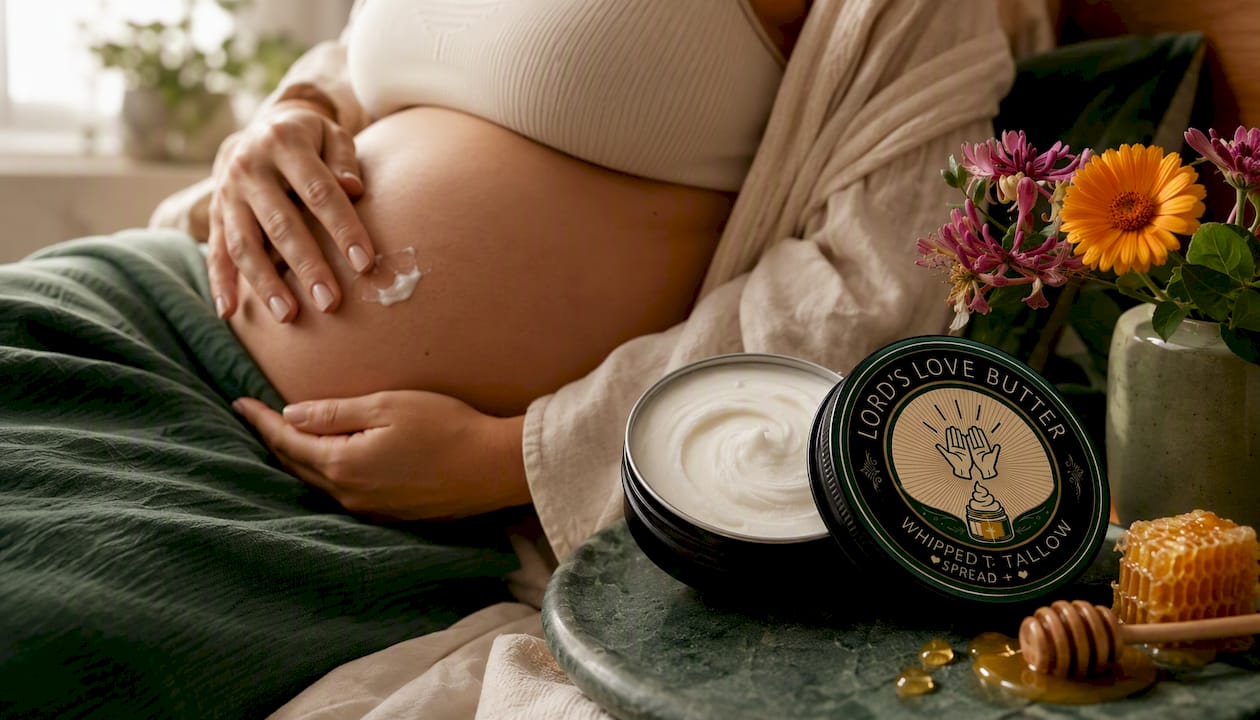
The Whipped Beef Tallow Balm with Manuka Honey comes in a 2.4 oz tin built for whole-body use, from a stretching belly to dry elbows to breastfeeding nipples that need a gentle, minimal-ingredient option. It skips synthetic fillers and fragrance, pairs manuka honey with grass-fed tallow for extra barrier support, and ships in a tin sized for daily use without waste. If you’ve read this far and want a tallow balm that’s already cleared the quality checks outlined above, order the tin and start applying it tonight.
This article is general information, not a substitute for advice from a qualified doctor. Consult a qualified healthcare professional about your own circumstances before acting on anything here.
Sources
- Beef tallow as skin care? Experts explain whats truth—and myth | National Geographic
- Why are pregnant moms smearing beef fat on their bellies? | BabyCenter
- Is Beef Tallow Good for Your Skin? | Cleveland Clinic Health Essentials
- Beef tallow: dietitian and derm weigh in | MD Anderson Cancer Center

