

Unscented Tallow Is Low Risk in Pregnancy: Patch Test First
Pure, unscented beef tallow is likely low-risk for topical use during pregnancy, and most of the concern comes from what’s mixed into it, not the fat itself. No formal clinical trials confirm it prevents stretch marks. Patch test first, watch for irritation, and check with your clinician if anything looks or feels off.
TL;DR:
- Plain beef tallow is considered low-risk for topical use during pregnancy, but formulations with fragrances or botanicals pose additional safety concerns.
- Tallow’s occlusive properties help lock in moisture and may ease skin tightness, dryness, and itching on stretched areas during pregnancy.
- Patch testing is essential before regular use, especially when ingredients like essential oils or fragrances are present or if the skin is reactive.
- There is no clinical proof that tallow prevents stretch marks, and moisturizing mainly improves comfort without affecting genetic or growth factors.
- Products with unnecessary additives increase irritation risk; simple, unscented tallow-based balms are the safest option for pregnancy skin.
Table of Contents
- Is Tallow Safe During Pregnancy? The Short Answer
- What Tallow Does For Pregnancy Skin
- Safety Considerations Before You Use Tallow While Pregnant
- How to Patch Test Tallow Safely During Pregnancy
- What the Research and Real-World Use Actually Show
- Why Simplicity Wins on Pregnant Skin
- A Simpler Option Worth Considering
- Sources
- FAQ
Is Tallow Safe During Pregnancy? The Short Answer
Tallow itself sits low on the risk scale. BabyCenter’s reporting on the trend describes rendered beef fat as likely safe for topical use in pregnancy, while noting that no formal clinical trials have tested it specifically on pregnant skin. That’s an honest gap, and it’s worth sitting with for a second: “likely safe” and “clinically proven” are two different claims, and skincare marketing tends to blur them.
The bigger safety question usually isn’t the tallow. It’s everything else in the jar. Essential oils, fragrance blends, and certain botanical extracts carry their own pregnancy-specific cautions, and a “natural” product loaded with them isn’t automatically gentler than a synthetic one. A plain, minimally processed tallow balm is a different animal from a scented version with a dozen add-ins.
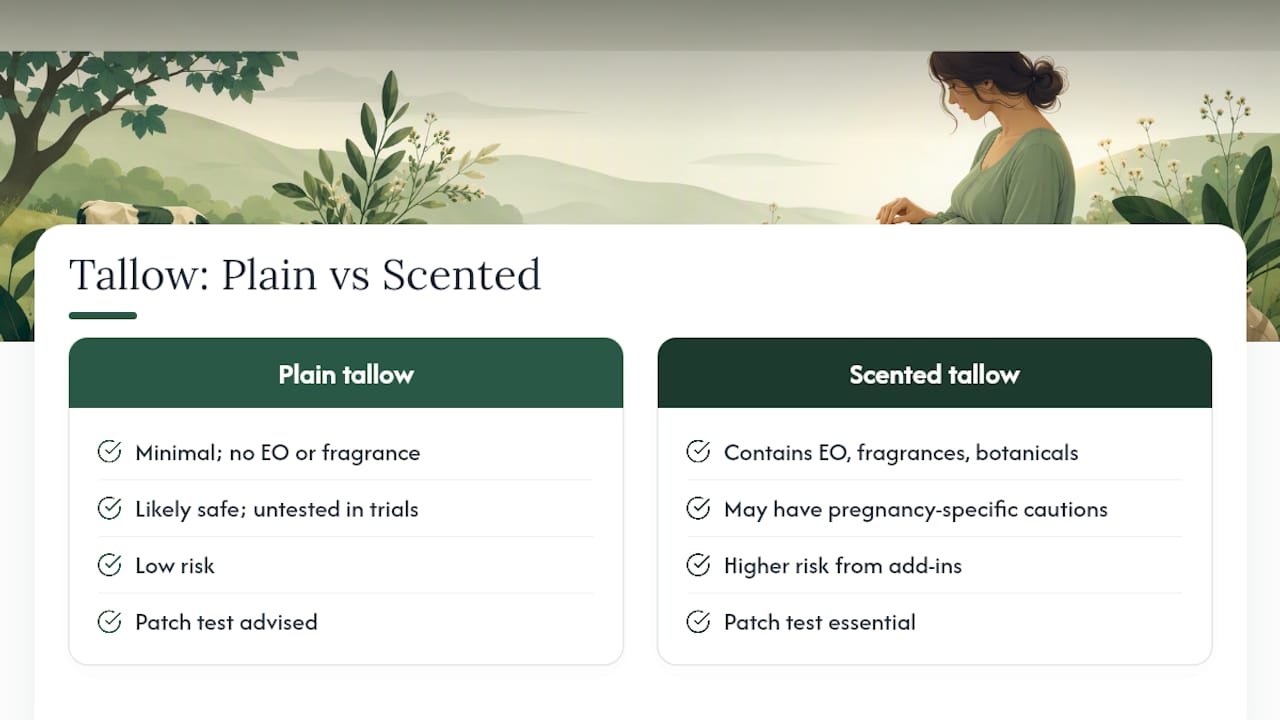
That distinction drives everything else in this guide. Formulation matters more than the base fat, patch testing matters more than good intentions, and knowing when to stop matters more than pushing through discomfort hoping it clears up.
What Tallow Does For Pregnancy Skin
Tallow works as an occlusive. It sits on top of the skin and slows water loss through the surface, which is the same mechanism dermatology literature uses to explain why occlusive moisturizers reduce dryness and support a compromised skin barrier. That’s a well-documented effect, not a marketing claim. Rendered beef fat also has a fatty-acid composition that some skincare researchers compare loosely to human sebum, though that similarity doesn’t translate into a proven clinical benefit.
For pregnant skin, that occlusive quality shows up in a few practical ways:
- Sealing in moisture on a stretching belly, which can ease the tightness and dryness that come with rapid growth
- Calming itch on dry patches, especially in the third trimester when skin feels stretched thin
- Softening skin around the nipples and areola, which some people start using before birth and continue postpartum through breastfeeding
- Providing a simple, single-ingredient option for anyone trying to avoid synthetic lotion bases altogether
Here’s the honest caveat: a systematic review of topical stretch-mark treatments found no large randomized trials proving that any topical product, tallow included, reliably prevents striae. Moisturizing helps skin feel more comfortable and less tight. It doesn’t rewrite genetics or slow down how fast a belly grows. Treat tallow as a supportive daily habit, not insurance against stretch marks.
Safety Considerations Before You Use Tallow While Pregnant
Formulation is where most of the real risk lives. Dermatology literature flags certain essential oils and fragrance additives as concerns during pregnancy, and those ingredients show up in a surprising number of “natural” balms marketed for bellies. A scent-free jar of rendered fat and a heavily perfumed version sold next to it on a shelf are not equivalent products just because both say “tallow” on the label.
Watch for these specific issues before you apply anything:
- Unlisted essential oils. Rosemary, clary sage, wintergreen, and camphor are among the botanicals commonly flagged in pregnancy guidance, so check the ingredient list rather than trusting the front label.
- Heavy fragrance. Added scent increases the odds of skin sensitivity, and pregnancy hormones can make skin more reactive than usual.
- Open wounds or fresh scars. Skip tallow on a healing C-section incision, an open cut, or any area with active infection until a clinician clears topical products for that spot.
- Spreading rash or active dermatitis. Applying any new balm over inflamed or spreading skin can make diagnosis and treatment harder later.
If you notice persistent redness, blistering, swelling, or a rash that spreads rather than fades, stop using the product and check with your OB/GYN rather than waiting it out.
Pro Tip: Read the ingredient list before you read the marketing copy. If you can’t pronounce something and it’s not tallow, water, or a known oil, look it up before it goes on your belly.
How to Patch Test Tallow Safely During Pregnancy
Hormonal shifts change how skin reacts to new products, which is exactly why patch testing is standard dermatology guidance before introducing anything new in pregnancy, tallow included.
- Apply a small amount to a discreet patch of skin, like the inner forearm.
- Leave it uncovered and avoid washing that spot for 24 to 48 hours.
- Check for redness, itching, bumps, or swelling before applying it anywhere else.
- If skin looks calm, move to a small test area on your belly before going all in.
For general use, here’s what actually works day to day:
- Warm a small amount between your palms so it melts into a thin layer instead of sitting on top of skin.
- Apply after a shower or before bed, when skin is slightly damp and more receptive to an occlusive layer.
- Use sparingly on the nipples and areola postpartum, and always check with your care team before nursing if you’re concerned about ingestion by a newborn.
- Store the balm somewhere cool and dark, since animal fats can oxidize and turn rancid past their best-by date, which increases the odds of skin irritation.
If a reaction does show up, snap a photo before it fades. A visual record makes it much easier for a clinician to assess what happened and rule out anything more serious than mild contact irritation. A step-by-step patch-testing method from skincare educators covers the same basic window with more detail if you want a second reference.
What the Research and Real-World Use Actually Show
The clearest summary comes from BabyCenter’s reporting: tallow is widely considered low-risk for topical pregnancy use, but no formal trial has tested it against a placebo for stretch-mark prevention. ACOG’s explanation of stretch-mark causes reinforces why that gap exists: genetics, how fast skin stretches, and hormonal shifts drive most stretch marks, and no moisturizer changes any of those three factors. Topical care manages comfort, not root cause.
Occlusive moisturizers have a real, measurable effect on transepidermal water loss. That’s the mechanism behind why tallow feels good on tight, dry skin, even though it isn’t a documented stretch-mark cure. The comfort is real. The prevention claim isn’t backed by trial data.
The pattern observed from customer feedback matches the literature: people report real relief from itch and tightness, almost none report irritation when the formula stays simple, and the products causing problems tend to be the heavily fragranced ones, not plain tallow itself. That’s useful, observational evidence, not a clinical trial, and it should be read that way.
Why Simplicity Wins on Pregnant Skin
I keep coming back to the same principle: the fewer ingredients in a pregnancy balm, the fewer things that can go wrong. Grass-fed tallow with nothing added is about as close to a low-risk skincare choice as this category gets, and the customer reports we hear back match what the research suggests, real comfort, minimal irritation, when the formula stays plain. That doesn’t erase the clinical gap on stretch-mark prevention, and it shouldn’t. Patch test, watch your skin for 48 hours, and trust what you see on your own arm before you trust any label.
— Michael
A Simpler Option Worth Considering
Most tallow balms on the market bury the fat under fragrance oils, preservative blends, and thickeners you can’t pronounce, which defeats the whole point of choosing a simple ingredient in the first place. Our Whipped Beef Tallow Balm with Manuka Honey keeps the label short: grass-fed tallow, Manuka honey, and nothing else fighting for space on your belly or nipples.
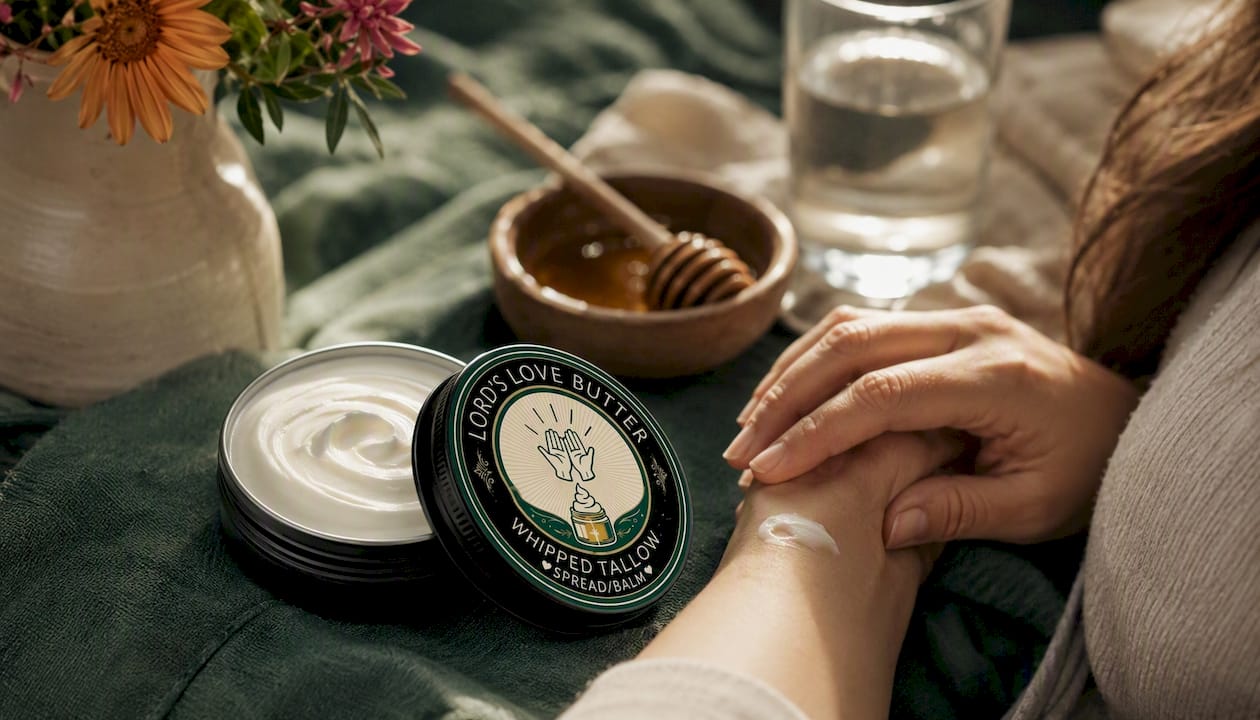
It’s whipped to a light texture so a little goes a long way, no melting it between your palms first, and it’s unscented enough that the checklist above applies cleanly. Still patch test before regular use, especially in the third trimester when skin reactivity can shift week to week. If you want more background on how the fat behaves on stretched or itchy skin before you buy, our breakdown of tallow’s itch relief walks through the mechanism in plain terms. Grab the 2.4 oz tin and try it on a small patch tonight.
Sources
- Why are pregnant moms smearing beef fat on their bellies? | BabyCenter
- PubMed indexed article on topical barrier and occlusive moisturizers
- Systematic review on topical treatments for stretch marks
- What causes stretch marks during pregnancy | ACOG
This article is general information, not a substitute for advice from a qualified doctor. Consult a qualified healthcare professional about your own circumstances before acting on anything here.
FAQ
What oils should I avoid while pregnant?
Essential oils commonly flagged in pregnancy guidance include rosemary, clary sage, wintergreen, camphor, and pennyroyal, so check any balm’s full ingredient list rather than assuming “natural” means safe.
Why do some dermatologists hesitate to recommend beef tallow?
Concern usually centers on formulation, not the fat itself. Added fragrance, botanical extracts, and inconsistent product quality across brands make some clinicians cautious even though plain tallow itself carries low reported risk.
What is the 3-month pregnancy rule people mention with skincare?
There’s no single official “3-month rule” for skincare; the phrase usually refers to extra caution during the first trimester, when organ development is most active and people tend to avoid retinoids, high-dose salicylic acid, and certain essential oils. Tallow itself isn’t part of that specific caution list.
Why does hummus come up as a pregnancy food to avoid?
Store-bought hummus itself is fine; the caution usually applies to raw tahini or unpasteurized ingredients some homemade versions use, which is a food-safety issue unrelated to topical skincare like tallow.
Can pregnant women use tallow on a C-section scar?
Wait until a fresh surgical incision has fully closed and your clinician confirms it’s healed before applying any topical product, tallow included, since open or healing wounds carry infection risk that unbroken skin doesn’t.

