

Why Deep Hydration Smooths Fine Lines, Not Just Dryness
Deep hydration reduces fine lines because water plumps the outer skin layers and supports the collagen network underneath, so tiny surface folds relax and light stops catching in the creases. That’s the whole mechanism in one sentence. When the stratum corneum holds enough water and transepidermal water loss (TEWL) stays low, skin behaves more like a taut, flexible sheet instead of a dry, crumpled one. Hyaluronic acid plays a starring role here because it binds far more water than its own weight.
What changes when hydration improves:
- Immediate plumping. Water fills the spaces between skin cells, softening the look of crepey texture within hours.
- Better elasticity. Hydrated collagen and elastin fibers flex and rebound instead of creasing permanently.
- Smoother optics. Even, hydrated skin scatters light more uniformly, which is why dehydrated skin looks dull and lined under bad lighting.
Pro Tip: Apply a hyaluronic acid serum to damp skin, then seal it immediately with an occlusive balm. Water on dry skin evaporates; water trapped under a barrier stays put.
Key Takeaways
Deep hydration reduces fine lines because water plumps the stratum corneum and keeps collagen fibers flexible, and sealing that water in with an occlusive makes the effect last.
| Point | Details |
|---|---|
| Dehydration lines are temporary | They soften within 20 to 30 minutes of moisturizer; structural wrinkles barely respond. |
| Hyaluronic acid works fast | Multi-weight formulations can soften fine lines within one to two weeks when applied to damp skin. |
| Drinking water has limits | Extra water intake mainly helps people who started under-hydrated, not a universal fix. |
| Sequence matters more than products | Apply humectants to damp skin, then seal with an occlusive to slow water loss. |
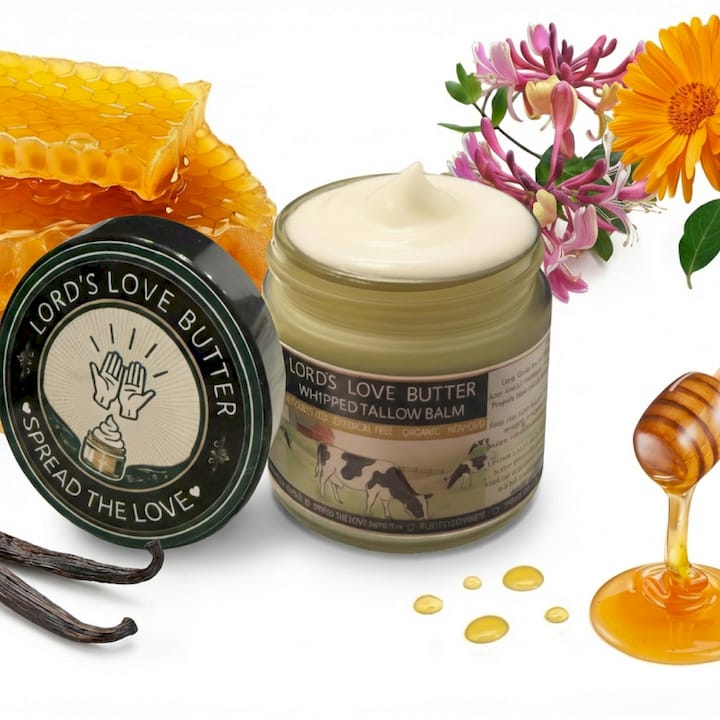
| Occlusives lock in hydration | Balms like Lord’s Love Butter’s whipped tallow tin and lip stick reduce TEWL and support the barrier overnight. |
Table of Contents
- Is It a Dehydration Line or a Permanent Wrinkle?
- What Happens Inside Skin When It Gets Properly Hydrated?
- What Does the Research Actually Say?
- How Do You Build a Hydration-First Skincare Routine?
- When Does Hydration Stop Being Enough?
- How Occlusive Balms Help Lock In Deep Hydration
- Seal In What You’ve Already Hydrated
- Sources
Is It a Dehydration Line or a Permanent Wrinkle?
A dehydration line is a temporary crease caused by low water content in the outer skin layer. A structural wrinkle is a permanent fold caused by long-term loss of collagen, elastin, and fat volume. The first responds to a good moisturizer in days; the second doesn’t move much no matter how much water you drink.
Some quick ways to tell them apart:
- Time of day: dehydration lines often look worse by evening and better right after cleansing.
- Response to moisturizer: dehydration lines soften within 20 to 30 minutes of applying a hydrating product; structural wrinkles barely change.
- Depth and location: dehydration lines are shallow and can appear anywhere, including cheeks and under eyes; structural wrinkles concentrate where muscles move repeatedly, like the forehead and nasolabial folds.
- Cause: dehydration lines track with weather, air travel, or low water intake; structural wrinkles track with age, sun exposure, and years of repeated expression.
Pro Tip: Check your skin the morning after a flight or a rough night’s sleep. If lines that weren’t there before have appeared and vanish once you rehydrate, that’s your barrier talking, not your collagen. A compromised barrier exaggerates visible lines because water escapes faster and low-grade inflammation slows repair.
What Happens Inside Skin When It Gets Properly Hydrated?
“Deep” hydration means water reaching past the surface film into the stratum corneum and, to a meaningful degree, the upper dermis, not just a fleeting glow from a spritz. The stratum corneum is the outermost layer, made of dead cells held together by lipids. Beneath it sits the epidermis, and beneath that the dermis, where collagen, elastin, and water-loving glycosaminoglycans do the structural work.
Water changes how these fibers behave mechanically. Collagen and elastin need hydration to stay pliable; dry fibers stiffen and crease more easily under normal facial movement. Glycosaminoglycans, including hyaluronic acid, act like molecular sponges that hold dermal water in place and keep fibers lubricated enough to slide and recoil instead of folding permanently.

Two systems govern how much water your skin actually holds. Natural moisturizing factor (NMF) is a mix of amino acids, urea, and salts inside skin cells that pulls in and holds water. TEWL measures how fast water escapes through the barrier into the air. When NMF is depleted or TEWL is high, the stratum corneum dries out and visibly puckers.
Hyaluronic acid binds water at a scale disproportionate to its size, and formulations that combine multiple molecular weights work on more than one level: larger molecules hydrate the surface, smaller ones penetrate slightly deeper. Clinicians report that visible softening of fine lines can occur within a relatively short period when it’s applied correctly.
Key terms, defined plainly:
- Stratum corneum: the outer, dead-cell layer that acts as skin’s first water barrier.
- NMF: the internal humectant mix that keeps skin cells hydrated from within.
- TEWL: the rate water evaporates through skin; lower is better for smoothness.
- Glycosaminoglycans (including hyaluronic acid): dermal molecules that trap water and keep fibers lubricated.
What Does the Research Actually Say?
The evidence splits cleanly into two categories: topical hydration and drinking more water. Topical hyaluronic acid has the stronger track record. Formulations with mixed molecular weights reduce dryness, roughness, and fine lines within one to two weeks when applied to damp skin and sealed with an occlusive.
Drinking water tells a more limited story. One clinical trial that added about 2 liters of water daily found significant increases in superficial and deep skin hydration, especially among participants who started out drinking less. A broader systematic review reached a similar but softer conclusion: additional fluid intake may raise stratum corneum hydration in people with low baseline intake, but the studies are small and inconsistent.
The honest takeaway:
- Topical hydration has faster, more reliable evidence for visible softening.
- Drinking water helps mainly if you’re currently under-hydrated, not as a universal wrinkle fix.
- Drinking water alone won’t erase wrinkles unless someone is clinically dehydrated to begin with.
How Do You Build a Hydration-First Skincare Routine?
Getting deep hydration to actually show up on your face comes down to sequence, not just ingredients. Water evaporates fast, so the order you apply things in matters as much as what’s in the bottle.
- Cleanse with a gentle, non-stripping cleanser so you’re not undoing the barrier before you start.
- Apply a humectant serum to damp skin. Hyaluronic acid and glycerin pull in moisture best when there’s water already on the surface to grab onto.
- Layer a lightweight emollient if your skin needs it, especially over drier patches like cheeks or around the mouth.
- Seal with an occlusive, heavier at night, lighter during the day if you’re also wearing sunscreen.
Here’s how the three ingredient roles break down:
| Role | Examples | Why it helps fine lines | Application note |
|---|---|---|---|
| Humectant | Hyaluronic acid, glycerin | Pulls water into the stratum corneum, plumping surface cells | Apply to damp skin for best absorption |
| Emollient | Squalane, fatty acids | Fills gaps between skin cells, smoothing texture | Use over dry or flaky areas before your moisturizer |
| Occlusive | Beef tallow balm, petrolatum, shea butter | Forms a physical barrier that slows TEWL and locks hydration in | Best applied last, especially overnight |
If you use retinoids or exfoliating acids, hydrate first for a few weeks before adding them. A well-hydrated barrier tolerates actives far better, so irritation drops and results show up faster. A minimalist routine built around hydration-first sequencing often outperforms a crowded shelf of half-used products.
Pro Tip: If retinol makes your skin flake or sting, don’t stop it, buffer it. Apply your humectant and occlusive first, wait 20 minutes, then apply retinol over the top on nights you use it.
When Does Hydration Stop Being Enough?
Hydration fixes surface-level lines fast, but it can’t rebuild lost collagen or restore facial volume. Watch for these signals that you’re dealing with structural aging rather than dehydration:
- Creases stay deep and visible even a week into a consistent, damp-skin-plus-occlusive routine.
- You’ve noticed a loss of cheek or jawline volume, not just surface texture changes.
- Lines don’t budge whether you’re hydrated or not, regardless of season or sleep.
If those apply, hydration is still worth keeping, but it’s a foundation, not the whole answer. Retinoids stimulate collagen turnover over months. Professional resurfacing addresses deeper texture and pigment changes. Injectables restore lost volume directly. A hydrating facial or deeper hydration treatment can bridge the gap by delivering hyaluronic acid past what home products reach. If you’re unsure which category you’re in, a dermatologist visit usually starts with a simple skin assessment and a conversation about your history before anything more invasive gets discussed.
How Occlusive Balms Help Lock In Deep Hydration
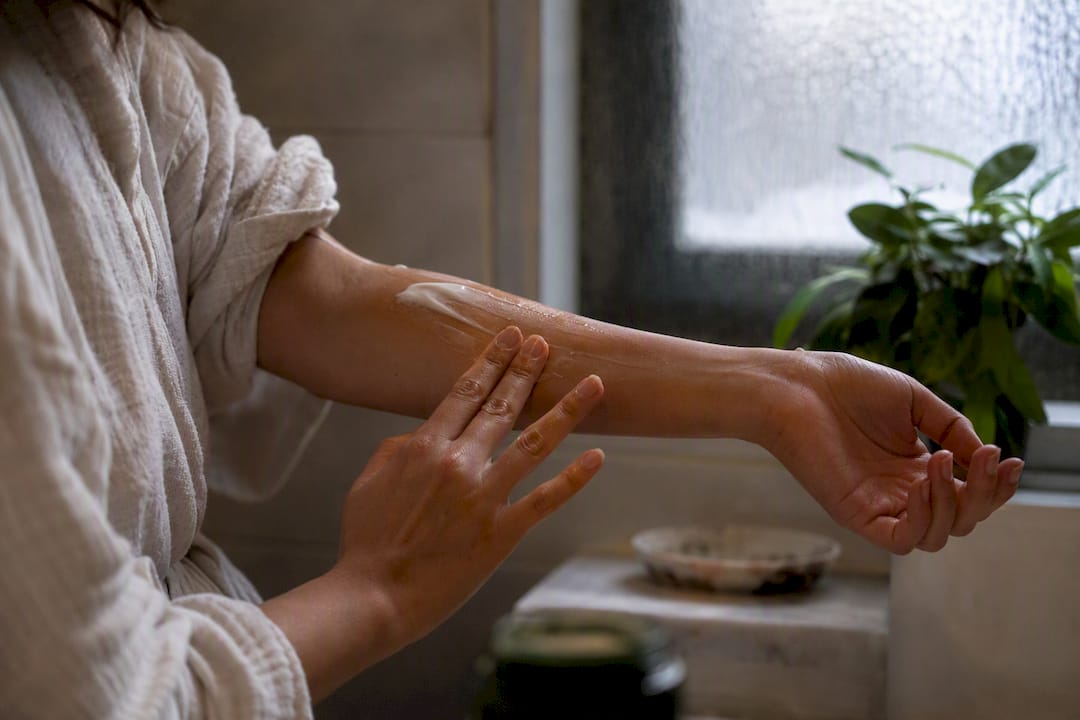
An occlusive doesn’t add water. It stops the water you already have from leaving. A physical barrier over the skin slows TEWL significantly, which gives humectants like hyaluronic acid time to do their job instead of evaporating within the hour.
Whipped beef tallow balms work this way whether applied to the whole body or targeted to the face. The best window is right after a humectant on damp skin, or overnight when TEWL naturally rises. Options worth knowing:
- Mint Beef Tallow Lip Balm Stick for lips and the fine lines that form around the mouth.
- Whipped Beef Tallow Balm with Manuka Honey (2.4 oz Tin) for whole-body barrier support and overnight sealing.
- Original Beef Tallow Balm Lite with Manuka Honey for a lighter daily option on facial skin.
Patch-test any new balm, avoid the eye area, and check with a dermatologist first if you have an active flare of eczema or psoriasis.
A hydration-first take on anti-aging
Skip the actives until hydration is solid. A well-hydrated barrier isn’t just smoother, it’s what lets retinoids and treatments actually work.
Seal In What You’ve Already Hydrated
Serums and humectants do the hard work of pulling water into skin, but that water needs somewhere to stay. That’s the gap an occlusive fills, and it’s the part most routines skip. Lord’s Love Butter makes whipped beef tallow balms specifically for that sealing step: no synthetic fillers, gentle enough for sensitive skin and eczema-prone areas, and formulated for whole-body use so you’re not buying three different products for face, hands, and body.
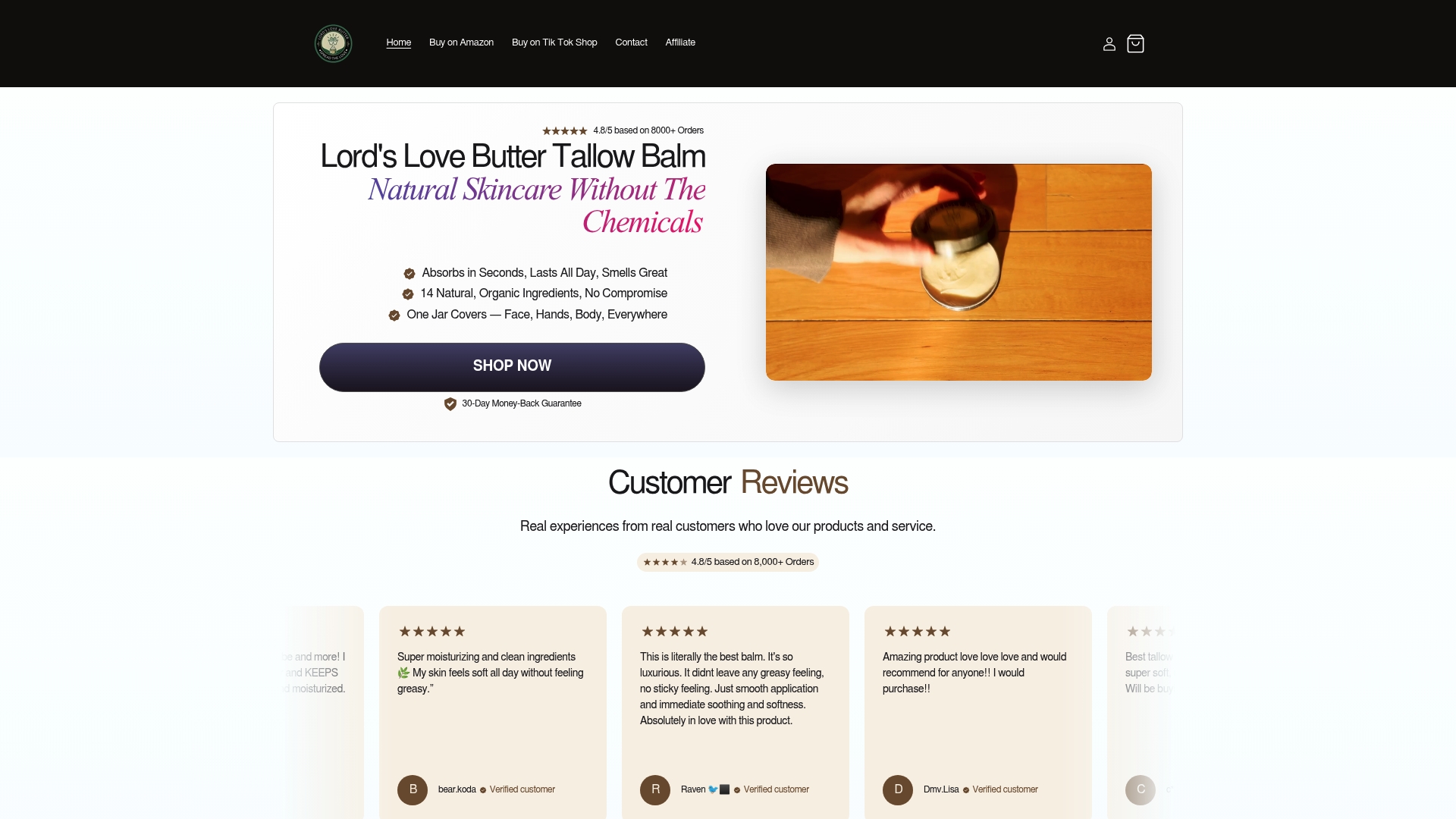
Apply a pea-sized amount to damp skin right after your humectant, or use the lip stick directly on lip lines throughout the day. If you want a lighter daily option for your face, the Original Beef Tallow Balm Lite with Manuka Honey is built for that. For overnight, whole-body barrier support, the Whipped Beef Tallow Balm with Manuka Honey is the heavier option worth adding to your nightstand. Pick one and add it to tonight’s routine.
Sources
- Hyaluronic acid for skin: benefits, how to use it, and side effects — Harvard Health
- Does dietary water intake affect skin hydration in healthy humans? (clinical water‑intake study) — PMC
- Does dietary fluid intake affect skin hydration in healthy humans? A systematic literature review — ResearchGate
- Drinking Water: Does It Help Your Skin? — WebMD

