

Beef Tallow and CLA: What Your Body Actually Gets
Beef tallow contains conjugated linoleic acid (CLA), a bioactive fatty acid produced naturally in the digestive systems of grass-fed ruminants and stored in their fat tissue. Understanding how beef tallow contains CLA explained through biology, not marketing, gives you a clearer picture of what this ancient fat actually delivers for your diet and skin. CLA is not an additive or a supplement. It forms through a process called biohydrogenation inside the rumen of cattle, sheep, and other grazing animals. The result is a fat with a genuinely different chemical profile from anything produced in a factory.
How CLA forms in beef tallow through ruminant digestion
CLA originates in the rumen, the first chamber of a cow’s stomach, where bacteria convert dietary linoleic acid from pasture grass into conjugated linoleic acid. This process is called biohydrogenation. The CLA produced then travels through the animal’s bloodstream and gets stored in fat deposits, including the tallow rendered from that animal.
Grass-fed ruminants produce significantly more CLA than grain-finished animals. Pasture grass is rich in linoleic acid, which gives rumen bacteria more raw material to work with. Grain-heavy diets reduce that substrate, so the rumen produces less CLA. The difference between grass-fed and grain-fed tallow is not trivial.
The CLA stored in beef tallow is primarily the c9, t11 isomer, also called rumenic acid. This is the form most studied for its potential health effects. It is structurally a trans fat, but its origin and behavior in the body differ completely from industrial trans fats created through partial hydrogenation of vegetable oils.
- Diet drives CLA content. Animals raised on green pasture produce the most CLA-rich fat.
- Biohydrogenation is the key mechanism. Rumen bacteria convert linoleic acid into CLA before it ever reaches the fat tissue.
- Rendering preserves CLA. The slow, low-heat rendering process used for quality tallow keeps the fatty acid profile intact.
- Grass-fed sourcing matters. Tallow from conventionally raised, grain-fed cattle contains measurably less CLA.
Pro Tip: When buying tallow for dietary or topical use, look for products that specify “100% grass-fed” on the label. That single detail is the strongest indicator of higher CLA content.
What are the nutritional and metabolic benefits of CLA?
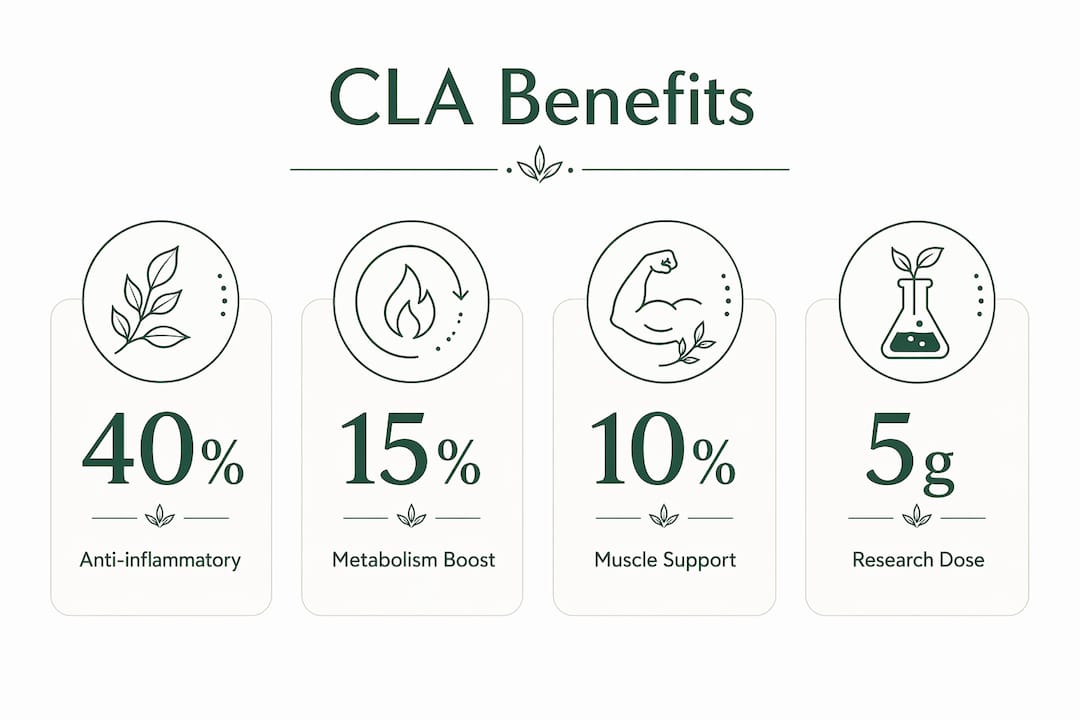
CLA is recognized for anti-inflammatory and metabolism-supportive properties, based on a growing body of research. Studies have examined CLA’s potential role in body composition, immune function, and reducing markers of systemic inflammation. The evidence is promising, though not yet conclusive for all claimed effects.

The dosage gap is the most important thing to understand here. Research studies typically use 3–6 grams of CLA daily to observe measurable effects. A realistic serving of beef tallow provides only a fraction of that amount. Reaching research-level doses through diet alone would require impractical quantities of tallow or beef.
This does not make beef tallow useless as a CLA source. It means tallow functions best as a whole food fat source that contributes CLA alongside other beneficial fatty acids, fat-soluble vitamins, and stearic acid. The cumulative effect of eating quality animal fats regularly is different from taking an isolated CLA supplement.
Here is how to think about the nutritional value of beef tallow realistically:
- CLA contribution. Each serving adds a small but real amount of naturally occurring CLA to your diet.
- Fat-soluble vitamins. Grass-fed tallow carries vitamins A, D, E, and K, which support immune function, bone health, and skin repair.
- Stearic acid. This saturated fat converts to oleic acid in the body and does not raise LDL cholesterol the way shorter-chain saturated fats do.
- Stable cooking fat. Tallow’s high smoke point makes it one of the most stable fats for high-heat cooking, reducing oxidation compared to polyunsaturated oils.
“Dietary CLA amounts from beef tallow are far lower than typical 3–6 gram supplemental doses. Tallow is a healthy fat source, not a CLA supplement.” NutriStack Research
Does beef tallow actually benefit your skin?
Beef tallow’s fatty acid profile makes it compatible with skin lipids in a way that most synthetic moisturizers are not. The skin’s natural sebum contains oleic acid, palmitic acid, and stearic acid. Grass-fed tallow contains all three, plus CLA and fat-soluble vitamins that support skin barrier repair and reduce inflammation.
Dermatological interest in tallow as a topical ingredient has grown alongside the broader shift toward simpler, natural ingredients in skincare. People with conditions like eczema, psoriasis, and chronic dryness report faster relief with tallow-based products than with many conventional creams. The fat-soluble vitamins in grass-fed tallow, particularly vitamin A, support cell turnover and skin regeneration.
CLA’s anti-inflammatory properties add another layer of benefit for topical use. Inflammation drives many chronic skin conditions, and a moisturizer that also delivers anti-inflammatory fatty acids addresses the problem at more than one level. Tallow restores skin texture by reinforcing the lipid barrier rather than just sitting on top of it.
- Oleic acid penetrates deeply and keeps the skin barrier flexible and hydrated.
- Vitamins A, D, E, and K support cell renewal, reduce oxidative damage, and calm irritated skin.
- CLA contributes anti-inflammatory effects that may reduce redness and sensitivity.
- Palmitic and stearic acids reinforce the outer skin barrier and slow moisture loss.
One important caution: tallow is comedogenic for some skin types. People with oily or acne-prone skin may find that tallow clogs pores. A patch test on the inner arm before applying it to the face is a sensible first step.
Pro Tip: If you have sensitive or dry skin, tallow works best applied to slightly damp skin right after washing. The moisture already on your skin helps the fat absorb faster and more evenly.
If you are researching how natural oils compare to animal fats in skincare, natural oils and hydration research shows that ingredient source and molecular compatibility both matter for real results.
Is CLA in beef tallow really a trans fat?
CLA is technically classified as a trans fat because of its molecular geometry. That classification causes confusion, because the word “trans fat” carries strong negative associations tied to industrial hydrogenation. The two are not the same thing.
Natural CLA is exempt from negative trans fat labeling under both US FDA regulations and Codex Alimentarius standards. Regulatory bodies made this distinction because the evidence shows natural CLA does not carry the cardiovascular risks associated with partially hydrogenated vegetable oils. The chemical structure differs, the metabolic pathway differs, and the health outcomes differ.
“Natural CLA trans fats differ chemically and do not share the cardiovascular risks of artificial trans fats. Regulatory bodies exempt them from negative labeling.” HandWiki, Conjugated Linoleic Acid
The saturated fat content in beef tallow is a separate and legitimate conversation. Harvard Health advises prioritizing plant-based unsaturated fats for cardiovascular health over animal fats. That guidance applies to overall dietary patterns, not to the CLA specifically. Tallow consumed in reasonable amounts as part of a varied diet is a different situation from making it your primary cooking fat.
The bottom line: the “trans fat” label on beef tallow does not mean the same thing it means on a bag of fast-food fries. Natural CLA is a biologically produced fatty acid with a distinct safety profile.
How to use beef tallow for CLA benefits in diet and skincare
Beef tallow works best when treated as a quality fat source within a balanced diet, not as a CLA therapy. The following guidance reflects that realistic framing.
- For cooking: Use grass-fed tallow in place of refined seed oils for high-heat cooking. A tablespoon or two per meal contributes CLA, fat-soluble vitamins, and stable saturated fats without excess.
- For dietary balance: Pair tallow with vegetables, fiber, and plant-based fats. Harvard Health’s guidance on animal fat consumption is a useful reference for keeping saturated fat intake sensible.
- For skin hydration: Apply a small amount of whipped or rendered tallow to dry, clean skin. Start with the body before moving to the face.
- For eczema or psoriasis: Tallow’s anti-inflammatory fatty acids and vitamins may reduce flare-ups. Grass-fed tallow for eczema has shown real results for many people with chronic skin conditions.
- For sourcing: Choose products labeled “100% grass-fed” and rendered without chemical solvents. That combination gives you the highest CLA content and the cleanest fat profile.
- For acne-prone skin: Skip topical tallow or use it only on the body. The comedogenic potential is real for oily skin types.
Checking a cosmetic ingredients checklist before adding any new fat-based product to your skincare routine is a practical step, especially if you use other active ingredients.
Key Takeaways
Beef tallow contains CLA because grass-fed ruminants convert dietary linoleic acid into this bioactive fatty acid through rumen biohydrogenation, storing it in fat tissue that becomes tallow.
| Point | Details |
|---|---|
| CLA forms through biohydrogenation | Rumen bacteria in grass-fed cattle convert linoleic acid into CLA stored in tallow. |
| Grass-fed sourcing determines CLA levels | Grain-fed tallow contains less CLA; always choose 100% grass-fed products. |
| Dietary CLA is below supplement doses | Tallow contributes real CLA but far less than the 3–6 grams used in research studies. |
| Natural CLA is not an industrial trans fat | Regulatory bodies exempt natural CLA from negative trans fat labeling due to its distinct safety profile. |
| Topical tallow suits dry and sensitive skin | Oleic acid, CLA, and fat-soluble vitamins support skin barrier repair, but tallow may clog pores for oily skin types. |
Why I think the CLA conversation around tallow is both right and overstated
The enthusiasm around CLA in beef tallow is grounded in real science. Biohydrogenation is a well-documented process. The fatty acid profile of grass-fed tallow is genuinely different from grain-fed tallow. And the distinction between natural CLA and industrial trans fats is not a marketing spin. It is a regulatory and biochemical fact.
Where I think the conversation goes sideways is when people treat tallow as a CLA supplement. The math does not support that. You would need to eat impractical amounts of tallow daily to approach the doses used in clinical research. That does not make tallow a bad choice. It makes it a good whole food fat with a meaningful but modest CLA contribution.
For skin, the case is stronger. Tallow’s compatibility with skin lipids is hard to argue with. The fat-soluble vitamins, the oleic acid, and the anti-inflammatory fatty acids all work together in a way that isolated synthetic ingredients rarely replicate. I have seen people with chronic eczema and psoriasis get real relief from quality tallow-based products after years of frustration with conventional creams.
The key word is quality. Grass-fed, solvent-free, and properly rendered. That is where the CLA and the skin benefits actually live.
— Michael
Lordslovebutter’s whipped tallow balm for real skin results
Lordslovebutter makes its whipped beef tallow balm from 100% grass-fed beef tallow, which means the CLA, oleic acid, and fat-soluble vitamins discussed throughout this article are actually in the product. No synthetic fillers, no chemical solvents, and no ingredient lists that require a chemistry degree to read.
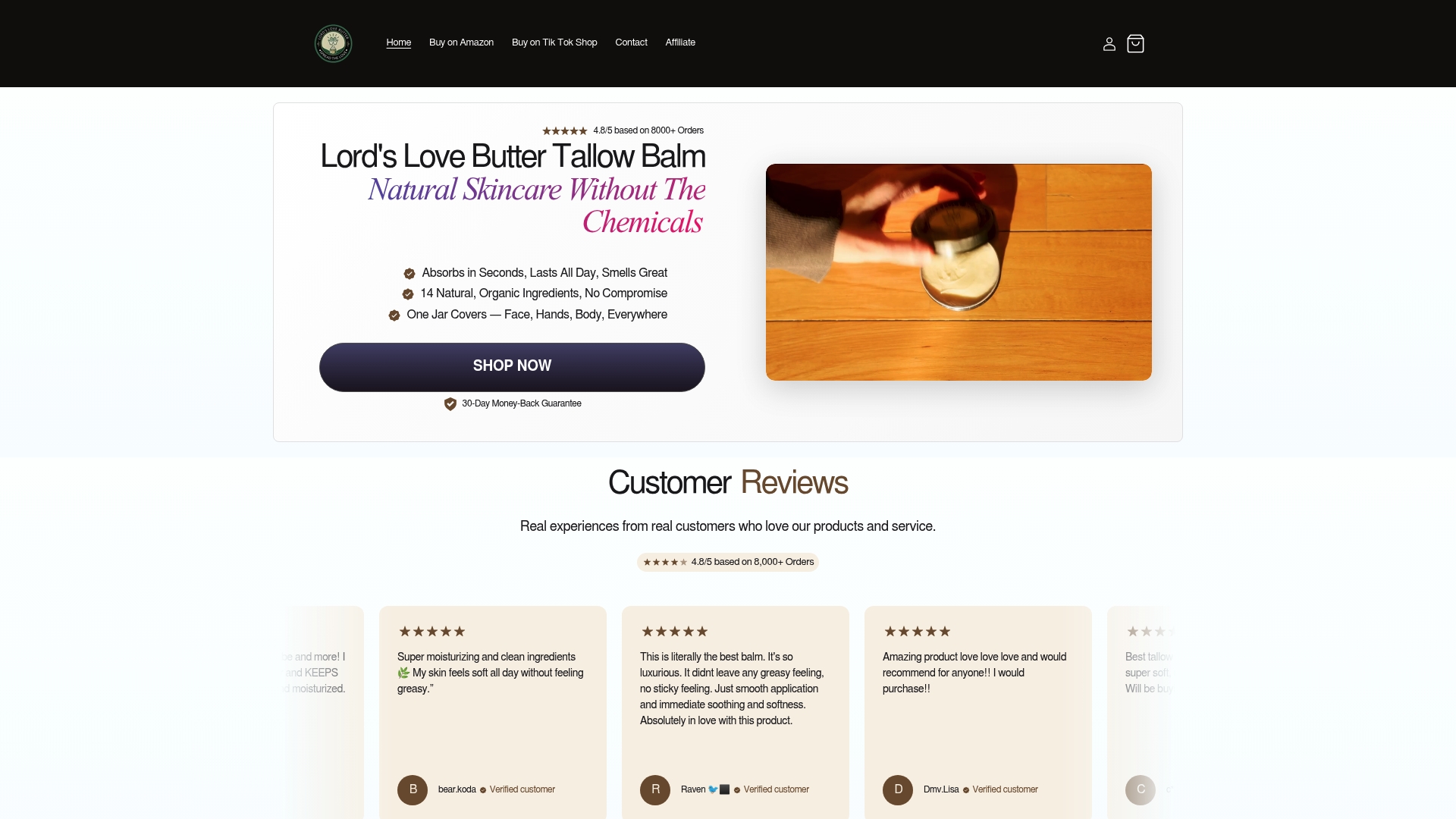
The formula also includes Manuka honey, which adds antimicrobial and wound-healing properties that work alongside tallow’s skin barrier support. This veteran-owned brand built the product specifically for people with sensitive skin, eczema, and psoriasis who need moisture that lasts without irritation. Customers report visible improvement in skin texture within days. If you want a tallow product where sourcing and purity are not guesswork, Lordslovebutter is worth a close look.
FAQ
What is CLA in beef tallow?
CLA, or conjugated linoleic acid, is a naturally occurring fatty acid produced in the rumen of grass-fed cattle and stored in their fat tissue, including tallow. It is not added during processing.
Does grass-fed tallow have more CLA than grain-fed?
Yes. Pasture-raised cattle produce significantly more CLA because their diet provides more linoleic acid for rumen bacteria to convert. Grain-fed tallow contains measurably less.
Can you get enough CLA from beef tallow alone?
No. Research doses of CLA run 3–6 grams daily, and typical tallow servings deliver only a fraction of that. Tallow is a healthy fat source, not a CLA supplement.
Is the trans fat in beef tallow harmful?
Natural CLA is classified as a trans fat by structure, but it is exempt from negative labeling under FDA and Codex Alimentarius standards. It does not carry the cardiovascular risks of industrial hydrogenated trans fats.
Is beef tallow safe to put on your face?
Tallow suits dry and sensitive skin well, but it may clog pores for oily or acne-prone skin types. A patch test before facial use is the safest approach.

