

The Right Way to Moisturize Your Whole Body, Head to Toe
The best head to toe moisturizer is a gentle, barrier-supporting balm applied to damp skin right after bathing, not a light lotion rubbed in once skin has already dried out. This approach traps in existing moisture instead of chasing lost hydration, and it works best with occlusive, minimal-ingredient formulas like whipped beef tallow balm that coat sensitive and dry areas without synthetic fillers. The payoff is longer-lasting hydration in places lotions tend to fail: elbows, heels, and eczema-prone patches.
TL;DR:
- Applying a barrier balm to damp skin immediately after bathing maximizes hydration and reduces the need for frequent reapplication.
- A moisturizer should contain humectants, ceramides, and occlusives, with balms and sticks ideal for dry or cracked skin, especially in winter.
- Fragrance-free formulas with at least one lipid-replenishing ingredient work best for sensitive or reactive skin types.
- Consistent use of a minimal-ingredient whipped beef tallow balm yields visible improvements within days, especially on high-moisture-loss areas like elbows and heels.
- For best results, prioritize application timing and product format based on climate and skin condition, rather than relying solely on product preferences.
Table of Contents
- What to Look for in a Head to Toe Moisturizer
- How Do You Apply a Whole-Body Moisturizer Correctly?
- Balm vs. Lotion vs. Oil: Which Format Actually Fits You?
- Why a Whipped Beef Tallow Balm Works for Whole-Body Care
- What Do Customers Actually Experience, and How Fast?
- Where to Buy a Head to Toe Moisturizer and What to Expect
- What the Research Actually Says About Whole-Body Skincare
- Finding Your Starting Point in the Lord’s Love Butter Lineup
- Further Reading and Brand Resources
What to Look for in a Head to Toe Moisturizer
Not every jar labeled “for the whole body” actually holds up on the whole body. The formula needs three things working together: something to pull water into the skin, something to rebuild the barrier, and something to seal it all in.
Humectants like hyaluronic acid and glycerin draw moisture from the air and deeper skin layers to the surface. Barrier lipids, mainly ceramides, patch the gaps between skin cells that let water escape in the first place. CeraVe’s Intensive Moisturizing Lotion leans on exactly this combination, ceramides plus hyaluronic acid, to target very dry skin. Occlusives, the butters, oils, and animal-derived fats like tallow, form a physical seal on top so all that humectant work doesn’t evaporate by lunchtime.
Texture matters as much as ingredients. Balms and sticks sit heavier and last longer, which makes them the better call for genuinely dry or cracked skin. Lotions and creams spread thinner and absorb faster, which suits daily use in warmer climates or on less problem-prone skin. Oils sit somewhere in between, good for adding shine or spot-treating a rough patch, but they rarely hold up as a standalone whole-body solution.
If you have eczema, rosacea, or reactive skin, fragrance is usually the first thing to cut. Essential oils, dyes, and alcohol-based “quick-dry” additives are common irritant culprits, even in products marketed as gentle. Vanicream’s Enhanced Moisturizer built its entire reputation on stripping that stuff out for sensitive skin.
A quick checklist before you buy:
- Fragrance-free or naturally scented only (no added “parfum”)
- At least one ceramide or lipid-replenishing ingredient
- A texture you’ll actually use daily, not just admire in the jar
- Clear labeling on what’s face-safe versus body-only
Pro Tip: If you’re deciding between a face product and a body product for mixed use, check the ingredient list for occlusion strength first. A balm gentle enough for your face will almost always work fine on your body, but the reverse isn’t always true.
How Do You Apply a Whole-Body Moisturizer Correctly?
Timing beats almost everything else. Applying moisturizer to damp, freshly washed skin is one of the most effective ways to lock in hydration, because you’re sealing water that’s already there instead of trying to pull moisture back into skin that’s already dried out and tightened up.
Here’s a routine that works for most skin types:
- Pat skin dry with a towel, don’t rub. Leave it slightly damp.
- Apply a nickel-sized amount to your face, then work larger amounts across your torso, arms, and legs.
- Spot-treat rough patches, elbows, knees, heels, with a slightly heavier layer.
- Let it absorb for a minute before dressing, especially on feet.
Layering order matters if you use serums or sunscreen. Apply any treatment serums first, moisturizer second, sunscreen last if you’re heading outdoors. If you’re using Embryolisse’s Lait-Crème Fluid+ as a primer under makeup, that’s the exception; multiuse face-and-body formulas are often designed to sit under other products rather than seal them out.
For eczema patches or chafed areas, a thicker, fragrance-free balm applied twice daily tends to outperform lighter lotions. Lord’s Love Butter’s guide on moisturizing eczema-prone skin walks through exactly how much product to use and where irritation tends to flare first.
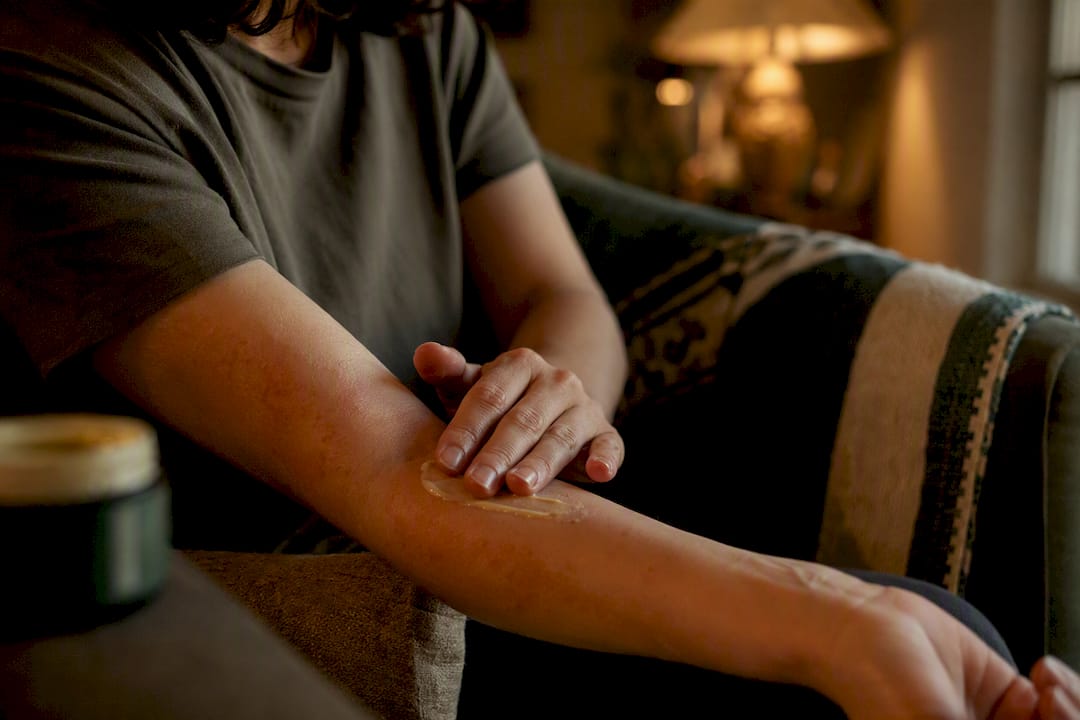
Pro Tip: Keep a travel-size balm in your bag for cracked heels or knuckles. Thirty seconds of reapplication midday beats waiting until the skin splits.
Balm vs. Lotion vs. Oil: Which Format Actually Fits You?
Format is not a personal preference question so much as a skin-and-climate question. Balms win for genuinely dry skin, winter months, and long-term barrier repair, because their higher fat and lower water content means they sit on skin longer and don’t need reapplying every few hours. Lotions win for daily use in humid or hot climates, where a heavier balm can feel like too much.
Ingredient concentration tracks with format. A balm typically carries a higher percentage of occlusive fats relative to water, which is why it feels heavier and absorbs slower, while a lotion’s higher water content makes it disappear into skin faster but also means it evaporates and needs reapplication sooner.
A rough matchup by skin profile:
- Very dry or eczema-prone skin: balm, applied to damp skin, morning and night
- Oily or acne-prone skin: lightweight lotion or gel, used sparingly on the body
- Aging or crepey skin: balm or rich cream, focused on elbows, knees, and neck
- On-the-go lifestyle: a stick or tin balm that survives a gym bag without leaking, like Rosemira’s All Over Aloe for lighter coverage or a heavier tallow balm for real dry-skin days
Why a Whipped Beef Tallow Balm Works for Whole-Body Care
Lord’s Love Butter was built by Michael, a veteran-owned brand founder who sources grass-fed tallow specifically because its lipid profile mirrors the fat structure already in human skin more closely than most plant oils or synthetic occlusives. That similarity is why tallow tends to absorb without leaving the greasy film you’d expect from something this rich.
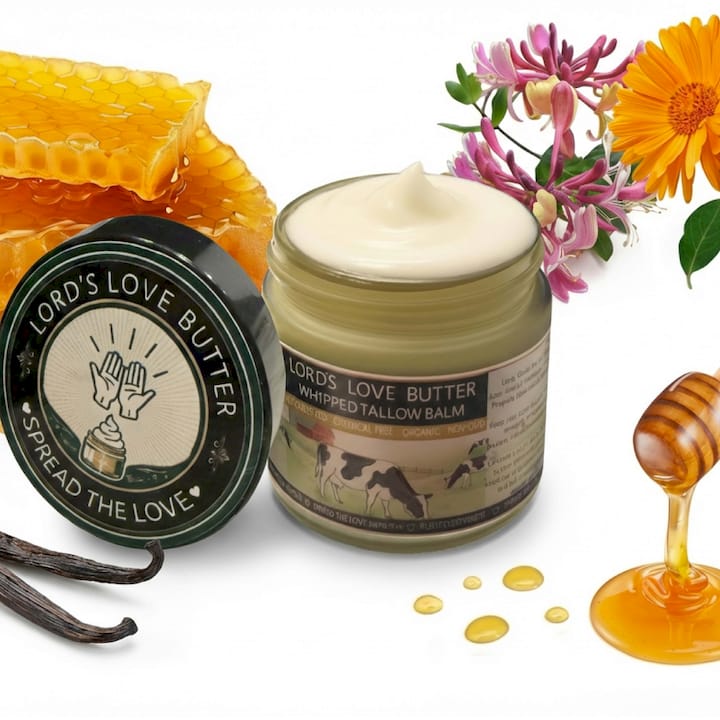
The formula stays intentionally minimal: tallow, Manuka honey, and little else. That transparency matters to shoppers with reactive skin, since minimal-ingredient formulations give fewer places for a hidden irritant to hide. Customers dealing with eczema, psoriasis, or chronically rough elbows and knees report visibly smoother texture within days of consistent use, not weeks.
The Whipped Beef Tallow Balm in the 2.4 oz tin remains the brand’s flagship whole-body format, built around the same whole-body moisturizing philosophy that favors fewer, better ingredients over long synthetic lists. Independent clinical trial data on tallow-based balms specifically is still limited, so the strongest evidence right now comes from ingredient science and consistent customer reporting rather than peer-reviewed dermatology studies.
What Do Customers Actually Experience, and How Fast?
Most reports of improvement land in the first week. Customers dealing with dry patches on elbows, knees, or heels commonly describe visibly smoother skin within three to five days of twice-daily use, with more dramatic changes in eczema-prone areas showing up over two to three weeks of consistent application.
The pattern that shows up again and again in feedback isn’t overnight transformation, it’s cumulative improvement. Skin that’s been chronically dry for months doesn’t rebuild its barrier in a single application, but a balm applied to damp skin morning and night gives the barrier a real chance to recover rather than just masking dryness temporarily.
What tends to separate satisfied long-term users from one-time buyers is texture tolerance. A whipped tallow balm feels notably richer than a standard lotion straight out of the jar, and people expecting a thin, fast-absorbing cream sometimes need a few uses to adjust their application amount downward. Once they do, most describe the payoff as fewer touch-ups during the day and less midday tightness, especially on hands and shins.
Chafed or cracked areas, inner thighs, underarms, between toes, tend to respond fastest, since these spots lose moisture quickly and benefit most from an occlusive seal. Facial use skews slower to show results simply because facial skin turns over and reacts to product changes on a different timeline than body skin.
Where to Buy a Head to Toe Moisturizer and What to Expect
Lord’s Love Butter sells directly through its own site, which keeps pricing straightforward and avoids the markup and inconsistent stock you sometimes hit with third-party resellers. The core lineup runs from a 2.4 oz tin or jar of the Whipped Beef Tallow Balm up through bundled sets for anyone who wants variety without ordering three separate times.
Expect a thick, whipped texture that’s solid at room temperature and softens on contact with skin, not a pourable lotion. First-time buyers sometimes assume a small tin won’t stretch far, but a little goes further than expected once you’re using it correctly, since a dime-sized amount covers a forearm without needing a second scoop.
Bundles make sense if you’re trying more than one use case at once, say, a body balm plus a lip balm plus a face-focused Vitamin C version, since buying them together typically costs less than three separate one-off orders. Single tins or jars work fine if you already know your routine and just need a reliable refill.
Standard e-commerce return and satisfaction policies apply, and orders ship directly from the brand rather than through a marketplace, so tracking and support stay in one place instead of routed through a third-party platform.
What the Research Actually Says About Whole-Body Skincare
The conventional advice on moisturizing gets one thing badly wrong: it treats “moisturize daily” as the whole strategy, when timing and format matter just as much as frequency. A rich balm applied to bone-dry skin ten hours after your shower does less work than the same balm applied to damp skin sixty seconds after you towel off. That single detail, timing, gets buried under generic advice more than anything else in this category.
The second miss is treating all occlusives as interchangeable. Petroleum-based products seal skin effectively, but they don’t feed the barrier anything useful. A lipid-rich option like tallow does double duty: it seals moisture in while also supplying fats that resemble what your skin already produces. That’s a meaningful distinction for anyone managing eczema or chronic dryness, not just a marketing angle.
If you take one thing from this guide, prioritize consistency and application timing over chasing a “miracle” ingredient. The most effective whole-body routine is boring: same product, damp skin, twice a day, for a few weeks straight.
— Michael
Finding Your Starting Point in the Lord’s Love Butter Lineup
Most people overthink which product to start with, when the real decision is simpler than it looks.
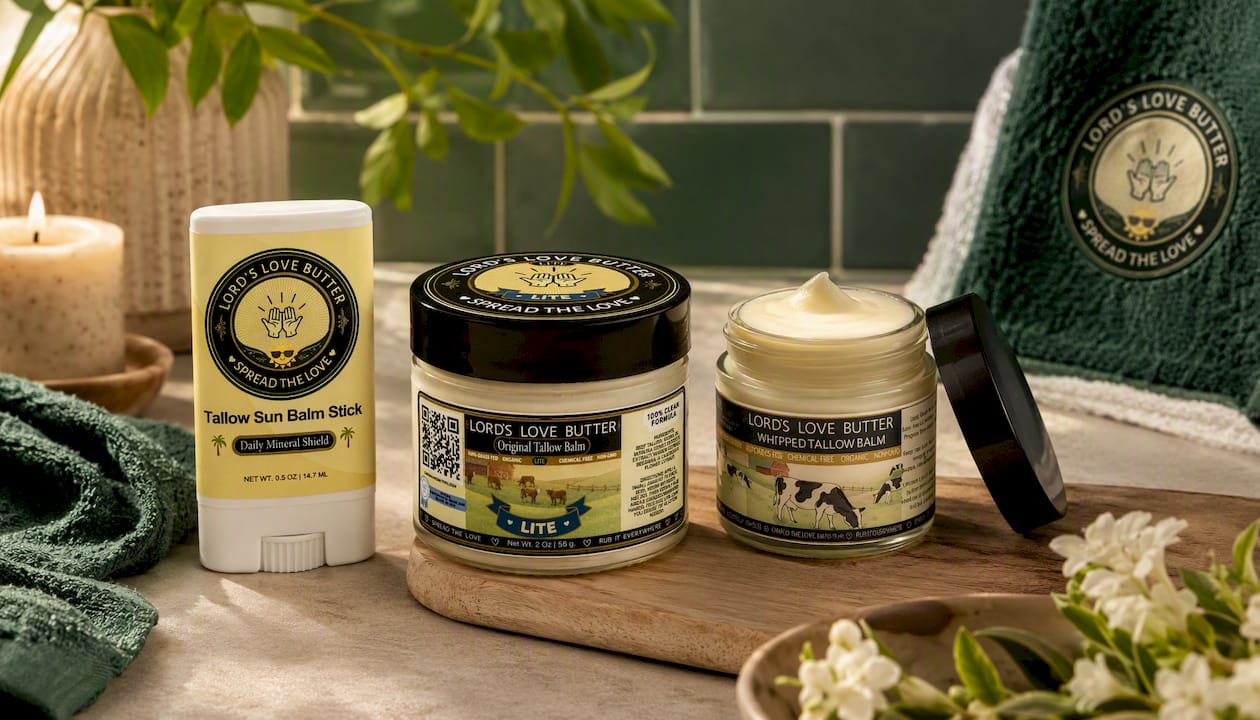 If you’re new to whole-body balms, the Whipped Beef Tallow Balm in the 2.4 oz tin is the easiest starting point. It’s travel-friendly, works from face to feet, and gives you a real sense of how tallow performs before you commit to a bigger jar or a bundle.
If you spend time outdoors, the Beef Tallow Sun Balm Stick with zinc oxide fits in a bag or glove compartment for quick reapplication on your face, lips, and shoulders without switching products mid-day. For daytime facial care specifically, the Vitamin C Whipped Beef Tallow Balm with Manuka Honey & Squalane adds antioxidant support without the heaviness of the original formula.
Buying a bundle, like the Tin & Jar Bundle, typically works out cheaper per ounce than ordering pieces separately, and it means you’re never caught without your morning tin because the backup jar ran out first. Every order ships direct, with standard tracking, and support if the texture or scent isn’t quite what you expected. Pick your starter SKU on the Lord’s Love Butter site and place your first order today.
Further Reading and Brand Resources
For deeper routine guidance, see Lord’s Love Butter’s whole-body moisturizer breakdown and its chemical-free routine guide. Readers combining professional treatments with daily moisturizing may also find this aftercare timing guide useful for the first week post-treatment.

