

How Dehydration Shows on Your Skin: Signs and Fixes
Dehydration makes skin look dull, feel tight, and pushes fine lines into sharper relief — especially the thin skin under your eyes. The fastest way to check: pinch the skin on the back of your hand, hold for two seconds, then release. If it snaps back immediately, your skin turgor is normal. If it returns slowly or holds a “tent” shape, that’s a signal worth taking seriously, and MedlinePlus describes this turgor test as a reliable clinical screen for fluid loss.
A few key signs to look for right now:
- Skin that looks flat or grayish rather than luminous
- Fine lines that seem more pronounced than usual, especially around the eyes
- A tight or papery feeling after washing your face
- Products that sit on top of your skin instead of absorbing
- Sunken or shadowed under-eyes even after a full night of sleep
The good news: dehydration is temporary. Unlike a chronic dry skin type, it responds quickly to the right combination of internal rehydration and a smart topical routine.
Key Takeaways
Dehydrated skin is a temporary, correctable condition that shows as dullness, tightness, accentuated fine lines, and slow turgor return — and it responds quickly to internal rehydration paired with a humectant-to-occlusive topical routine.
| Point | Details |
|---|---|
| Pinch test first | Slow skin return after pinching the back of your hand signals reduced turgor and likely dehydration. |
| Dehydration vs. dry skin | Dehydrated skin lacks water and appears rapidly; dry skin lacks oil and is a chronic skin type. |
| Layer products correctly | Apply humectant to damp skin, then emollient if needed, then occlusive last to seal moisture in. |
| Red flags need medical care | Skin that tents, faintness, very dark urine, or inability to keep fluids down require urgent attention. |
| Lordslovebutter balms | The tallow balm range serves as a chemical-free occlusive final step to lock hydration after humectant application. |
Table of Contents
- How does dehydration show on skin? Visible signs and what causes them
- Is it dehydrated skin or dry skin? How to tell them apart
- How to check for skin dehydration at home
- What causes skin to become dehydrated?
- How to treat dehydrated skin right now
- Dermatologist-backed tips and mistakes to avoid
- When does dehydrated skin become a medical emergency?
- Daily routines and seasonal adjustments to prevent skin dehydration
- Why the “just drink more water” advice misses the point
- Lordslovebutter balms that support barrier repair
- Sources
How does dehydration show on skin? Visible signs and what causes them
The outer layer of your skin, the stratum corneum, needs water to stay plump, flexible, and smooth. When that water content drops, the layer thins and loses its ability to reflect light evenly. The result is a flat, almost grayish tone rather than the natural glow of well-hydrated skin.
Dermatologists cited by Teen Vogue describe a consistent cluster of signs: tightness after cleansing, increased visibility of fine lines, flaky patches, and heightened sensitivity or redness when the barrier is compromised. WebMD notes that very fine lines are frequently exacerbated by dehydration and can visibly fade once moisture is restored — which tells you something useful about how reversible this is.
One sign that trips people up: oily-looking skin. Dehydrated skin can paradoxically produce excess sebum as a compensatory response to low water content. So if your skin feels greasy on the surface but still looks dull, shows fine lines, or feels tight after washing, water deficit is likely the driver, not excess oil.
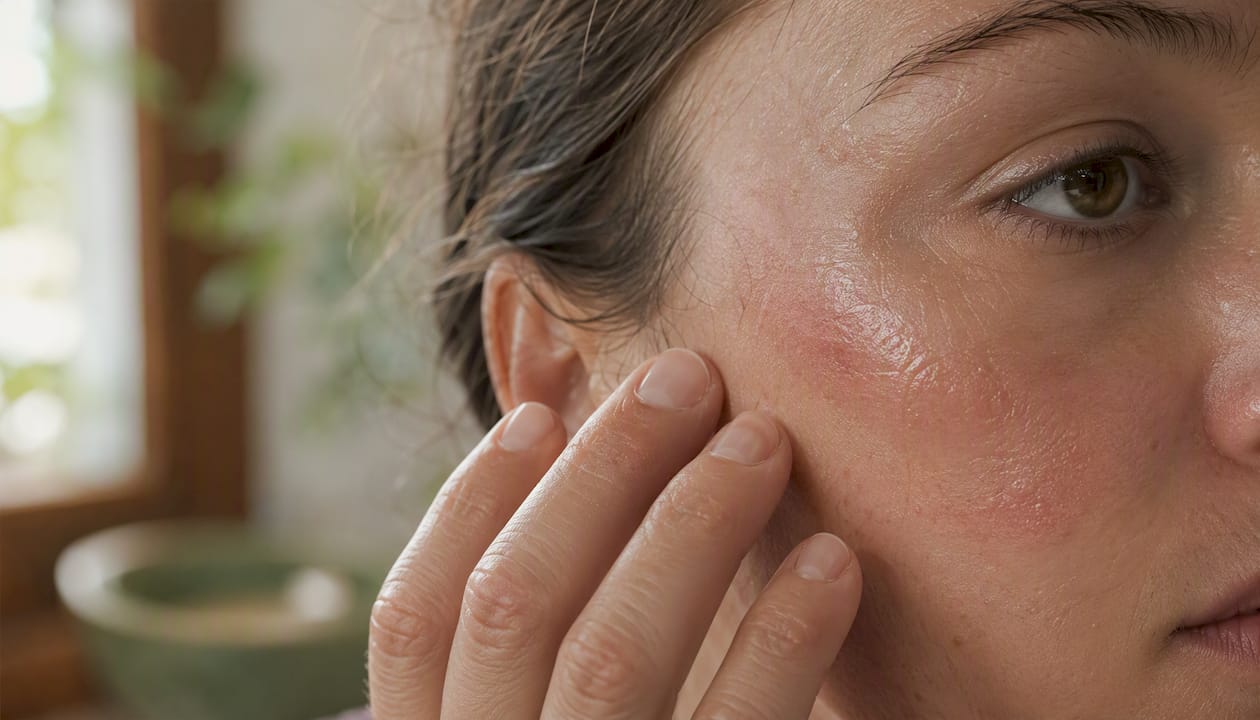
Here’s a quick reference for the clinical thresholds tied to skin turgor, based on MedlinePlus guidance:
| Dehydration level | Fluid loss level | Turgor sign |
|---|---|---|
| Mild | Low fluid loss | Slight delay in skin return |
| Moderate | Moderate fluid loss | Noticeable slow return, skin tents briefly |
| Severe | High fluid loss | Skin tents and stays; systemic symptoms present |
Stat to know: Skin turgor is one of the first physical signs clinicians check when assessing fluid loss. A slow return after the pinch test correlates with moderate to severe dehydration, not just surface dryness.
Is it dehydrated skin or dry skin? How to tell them apart
The confusion between these two is real, and it leads people to grab the wrong product. The Well by Northwell puts it plainly: “Dry skin is about oil. Dehydrated skin is about water.” That single distinction changes everything about how you treat it.
Dry skin is a skin type. It’s chronic, usually genetic, and present regardless of season or routine. Dehydrated skin is a temporary condition that can affect any skin type, including oily skin. It shows up fast after a long flight, a week of aggressive exfoliation, or a sudden drop in humidity.
| Feature | Dehydrated skin | Dry skin |
|---|---|---|
| Core deficit | Water (hydration) | Oil (lipids) |
| Onset | Rapid, often after a trigger | Chronic, longstanding |
| Texture | Tight, papery, fine lines worsen | Persistent flaking, rough patches |
| Skin type affected | Any, including oily | Typically a fixed skin type |
| Best immediate fix | Humectants + occlusive | Emollient-rich creams, oils |
If your skin changed noticeably after a flight, a new cleanser, or a week of cold dry weather, that’s dehydration. If your skin has been rough and flaky your entire adult life regardless of season, that points to a dry skin type. The distinction matters because loading up on heavy oils when you’re dehydrated won’t restore water content — it just seals in the deficit.
How to check for skin dehydration at home
The pinch test is the most practical home screen available. Medical News Today confirms it as a valid first-pass check, and notes that clinics use a device called a corneometer for objective hydration scores — but you don’t need one to get a useful read.
Pinch/turgor test, step by step:
- Choose a test site: the back of your hand, your cheek, or your abdomen.
- Pinch a small fold of skin between your thumb and forefinger.
- Hold for two seconds, then release.
- Watch how quickly the skin returns to flat.
- Normal: snaps back within one to two seconds. Delayed or tented: suggests reduced turgor and possible dehydration.
- Repeat on a second site if the result is unclear.
Other quick checks to run alongside:
- Mouth feel: Dry or sticky mouth often accompanies skin dehydration.
- Urine color: Pale yellow is well-hydrated; dark amber or brown signals significant fluid deficit.
- Post-cleanse feel: Skin that feels tight, papery, or uncomfortable within minutes of washing is a strong indicator.
- Product absorption: If your serum or moisturizer sits on the surface instead of sinking in, the barrier is compromised.
Pro Tip: Run the pinch test in the morning before applying any products. Results are more reliable on bare skin, and morning is when overnight fluid loss is most apparent.
If the turgor test shows a slow return AND you have systemic symptoms — faintness, very dark urine, inability to keep fluids down — that combination points to systemic dehydration, not just surface dryness. Seek medical care promptly in that case.
What causes skin to become dehydrated?
Dehydration rarely has a single cause. It’s usually a combination of internal and external factors stacking up at the same time.
Internal causes:
- Low daily fluid intake, especially in hot weather or during exercise
- Fever, vomiting, or diarrhea (rapid fluid loss)
- Excess caffeine or alcohol, both of which increase urine output
- Diuretic medications
- Heavy sweating without adequate replacement
Environmental and routine triggers:
- Low indoor humidity, especially in winter with central heating
- Air travel (cabin humidity typically runs very low)
- Long, hot showers that strip the skin’s natural lipid layer
- Over-cleansing with harsh surfactants
- Aggressive or frequent exfoliation that damages the barrier
- Topical products with high alcohol content or strong acids used too often
A practical example: you take a six-hour flight, skip water, and use a foaming cleanser that evening. By morning, your skin looks flat, fine lines are sharper, and your moisturizer isn’t absorbing. That’s not a new skin type — it’s a predictable cascade of triggers. The Well by Northwell specifically flags low humidity and travel as common rapid-onset dehydration triggers, which is why the fix is usually faster than people expect.
Urban environments add another layer. Pollution, heating systems, and seasonal humidity swings all accelerate transepidermal water loss. If you live in a city, your skin is fighting harder to hold onto moisture than it would in a temperate, low-pollution environment. For a closer look at how city conditions affect skin, this guide on urban skin and moisture breaks it down practically.
How to treat dehydrated skin right now
Start from the inside. If your dehydration has a systemic cause — fever, vomiting, diarrhea — topical products will not fix it. Drink water, and if fluid loss has been significant, an oral rehydration solution with electrolytes (sodium, potassium) restores balance faster than plain water alone. When you can’t keep fluids down, that’s a medical situation, not a skincare one.
Once internal hydration is addressed, a three-step topical routine makes a real difference. The sequence matters.
Topical layering routine:
- Humectant first, on damp skin. Apply a water-based product containing glycerin or hyaluronic acid while your skin is still slightly damp from washing. Humectants draw water into the outer layer. Applying them to damp skin gives them something to work with.
- Emollient next, if needed. A light cream or lotion smooths the surface and fills gaps in the skin barrier. This step is optional if your skin isn’t also dry.
- Occlusive last. A balm or heavier product seals the moisture in place. This is the step most people skip, and it’s the one that makes the biggest difference in how long hydration lasts.
Ingredients that work:
- Humectants: glycerin, hyaluronic acid, aloe vera
- Emollients: ceramides, squalane, shea butter
- Occlusives: beef tallow, beeswax, petrolatum, lanolin
Avoid while skin is dehydrated:
- Alcohol-heavy toners (they evaporate moisture)
- Strong chemical exfoliants used daily (AHAs, BHAs)
- Abrasive physical scrubs
Pro Tip: Apply your humectant serum or toner within 60 seconds of stepping out of the shower. That brief window of damp skin dramatically improves how much moisture the humectant can pull in before the surface dries.
For a deeper look at natural ways to plump dehydrated skin, including ingredient-level guidance, that resource covers the practical side in detail.
Dermatologist-backed tips and mistakes to avoid
The most common mistake is treating dehydration like a chronic dry skin condition. People reach for thick, oil-heavy creams without first restoring water content. The occlusive layer then seals in a deficit rather than locking in hydration. The skin still looks dull and flat, just greasier.
Dermatologists consistently emphasize that dehydration is a temporary, correctable state. The priority is barrier repair and water restoration — not loading the skin with oil. Abrasive treatments during a dehydration episode actively worsen the condition by stripping the lipids that hold water in place.
The second most common error: confusing oily skin for hydrated skin. As Teen Vogue’s dermatologist sources note, sebum overproduction is a compensatory response to water deficit. Skin can feel greasy and still be dehydrated — the fine lines, dullness, and post-cleanse tightness are the reliable signals, not surface texture.
A few dermatologist-aligned principles worth keeping:
- Pause exfoliation entirely during a dehydration episode. Resume gently after the barrier has recovered.
- Don’t layer multiple active ingredients (retinol, vitamin C, acids) when skin is compromised. Simplify until it recovers.
- Barrier repair products with ceramides or fatty acids help rebuild the lipid matrix that holds water in the stratum corneum.
Pro Tip: If your skin feels tight and looks dull but your usual moisturizer isn’t helping, try applying it to slightly damp skin instead of dry. The difference in absorption is often immediate and noticeable.
When does dehydrated skin become a medical emergency?
Surface dehydration and systemic dehydration exist on a spectrum. Most of what this article covers is cosmetic dehydration — the kind that responds to water, a humectant, and a good night’s sleep. But some signs indicate the body’s fluid deficit has crossed into territory that needs medical attention.
When skin turgor is severely reduced — the skin “tents” and stays elevated after pinching — and systemic symptoms are present, MedlinePlus classifies this as moderate to severe fluid loss. At that level, topical products are irrelevant. The body needs fluids, and in some cases, IV hydration.
Red flags that warrant urgent care:
- Skin that tents and stays up after the pinch test
- Faintness, lightheadedness, or confusion
- Very dark urine (brown or amber) or no urine output
- Inability to keep fluids down (vomiting, severe diarrhea)
- High fever with no improvement after fluids
- Rapid unexplained weight loss over a short period
What to do before you reach a clinician:
- Sip an oral rehydration solution (not plain water alone if vomiting has been significant)
- Lie down and elevate your legs if you feel faint
- Tell the clinician when symptoms started, how much fluid you’ve lost, and what you’ve tried
Infants and older adults are at higher risk for rapid progression to severe dehydration. The turgor test is less reliable in older adults because skin naturally loses elasticity with age — a slow return may reflect age rather than fluid status. In those cases, urine color and systemic symptoms are more reliable indicators.
Daily routines and seasonal adjustments to prevent skin dehydration
Prevention is mostly about consistency. The skin’s water content fluctuates with your environment, your habits, and the season — so the routine needs to flex with those changes.
Daily checklist:
- Drink water steadily through the day rather than in large amounts at once
- After showering, apply a humectant to damp skin within 60 seconds
- Seal with an emollient or occlusive when conditions are dry or cold
- Apply a mineral SPF daily — UV exposure accelerates transepidermal water loss
Seasonal and environmental adjustments:
- Winter: Run a humidifier in your bedroom. Indoor heating drops humidity sharply, and overnight is when skin loses the most water.
- Summer: Lighter products work fine in humid weather, but increase frequency after sweating heavily or swimming in chlorinated water.
- After travel: Rehydrate internally first, then apply your humectant-to-occlusive routine before sleeping.
- After exercise: Replenish fluids with electrolytes if the session was long or intense; follow with your usual topical routine.
Internal habits that protect skin hydration:
- Limit caffeine to moderate amounts and balance with extra water
- Alcohol dehydrates systemically — match each drink with a glass of water
- Watch for medications (antihistamines, diuretics, some blood pressure drugs) that increase fluid loss and adjust your intake accordingly
- Eat water-rich foods: cucumbers, watermelon, leafy greens, and citrus all contribute to total daily fluid intake
A minimalist skincare routine built around these principles — humectant, emollient, occlusive, SPF — covers most people’s needs without overcomplicating things.
Why the “just drink more water” advice misses the point
Most articles on dehydrated skin end with “drink more water and use a good moisturizer.” That’s not wrong, but it skips the part that actually determines whether the advice works: the barrier.
Water you drink reaches the skin last. The body prioritizes organs first. And even when systemic hydration is adequate, skin that has a damaged barrier loses water faster than it can retain it — a condition called increased transepidermal water loss. You can drink two liters a day and still have dehydrated skin if the barrier is compromised from over-exfoliation, harsh cleansers, or the wrong topical products.
The practical implication: barrier repair is not optional. It’s the foundation. Humectants draw water in; occlusives keep it there. Without the occlusive step, the water you just pulled into the stratum corneum evaporates within hours, especially in low-humidity environments. That’s why the layering sequence in the treatment section isn’t just a preference — it’s the mechanism.
What I find most useful about the pinch test is that it cuts through the noise. You don’t need a dermatologist visit or a corneometer to get a directional answer. Two seconds and the back of your hand tell you more than any quiz or skin-type label. Start there, then build the routine around what you find.
Lordslovebutter balms that support barrier repair
When you’ve addressed internal hydration and applied your humectant, the occlusive step is where Lordslovebutter fits naturally. The brand’s whipped beef tallow balms are formulated without synthetic chemicals and work as a final seal over damp, humectant-treated skin.

Three options worth knowing:
The Vitamin C Whipped Beef Tallow Balm with Manuka Honey & Squalane adds antioxidant support alongside the occlusive function, which is useful when environmental exposure (UV, pollution) is a factor in your dehydration. The Original Beef Tallow Balm Lite with Manuka Honey is the lighter daily option — enough occlusion for most skin types without feeling heavy. For areas that need more intensive repair, the Whipped Beef Tallow Balm with Manuka Honey in the 2.4 oz Tin is the richer choice, particularly useful in winter or after travel.
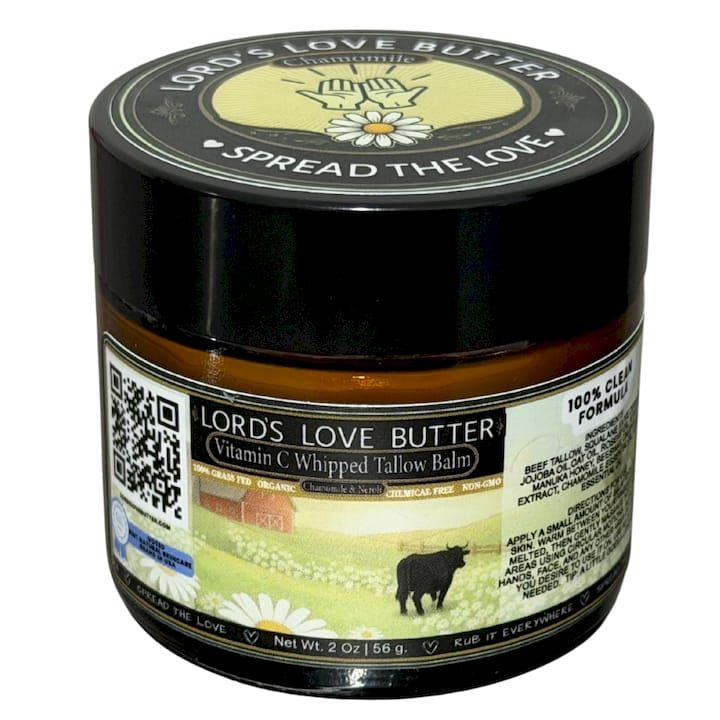
One honest note: if you’re acne-prone, start with the Lite version and patch-test first. Heavy occlusives applied without the humectant step underneath won’t restore water content — they’ll just seal in whatever’s already there. Apply to damp skin, after your humectant, and let the balm do what it’s designed to do.
Sources
- Skin turgor: MedlinePlus Medical Encyclopedia
- Dry Skin vs. Dehydrated Skin: How To Tell The Difference | The Well by Northwell
- Signs of Dehydrated Skin (and How to Fix It), According to Dermatologists | Teen Vogue
- Signs of poor skin hydration (WebMD slideshow)
- Dehydrated vs. dry skin: Differences and more | Medical News Today
This article is general information, not a substitute for advice from a qualified doctor. Consult a qualified healthcare professional about your own circumstances before acting on anything here.

