

How Skin Tolerates New Products: A 2026 Guide
Skin tolerance to new products is defined as the biological adaptation process by which your skin barrier, microbiome, and immune system adjust to unfamiliar ingredients over time. This process is not instant. Most people experience mild irritation, dryness, or flaking in the first few weeks, which is a normal part of adjustment, not a sign of failure. Understanding how skin tolerates new products helps you make better choices, avoid unnecessary product switching, and build a routine that actually works. The key variables are barrier health, skin pH, and the pace at which you introduce new actives.
How skin tolerates new products: the biology behind it
Your skin’s ability to accept new products depends on three core systems working together: the stratum corneum, the skin microbiome, and the immune response.
The stratum corneum is the outermost layer of skin. It is made up of dead skin cells held together by a lipid matrix, which acts as a physical barrier against irritants, allergens, and moisture loss. When a new product disrupts this lipid structure, the barrier becomes temporarily permeable. That permeability is what causes the stinging, redness, or tightness you feel in the first days of using a new active.
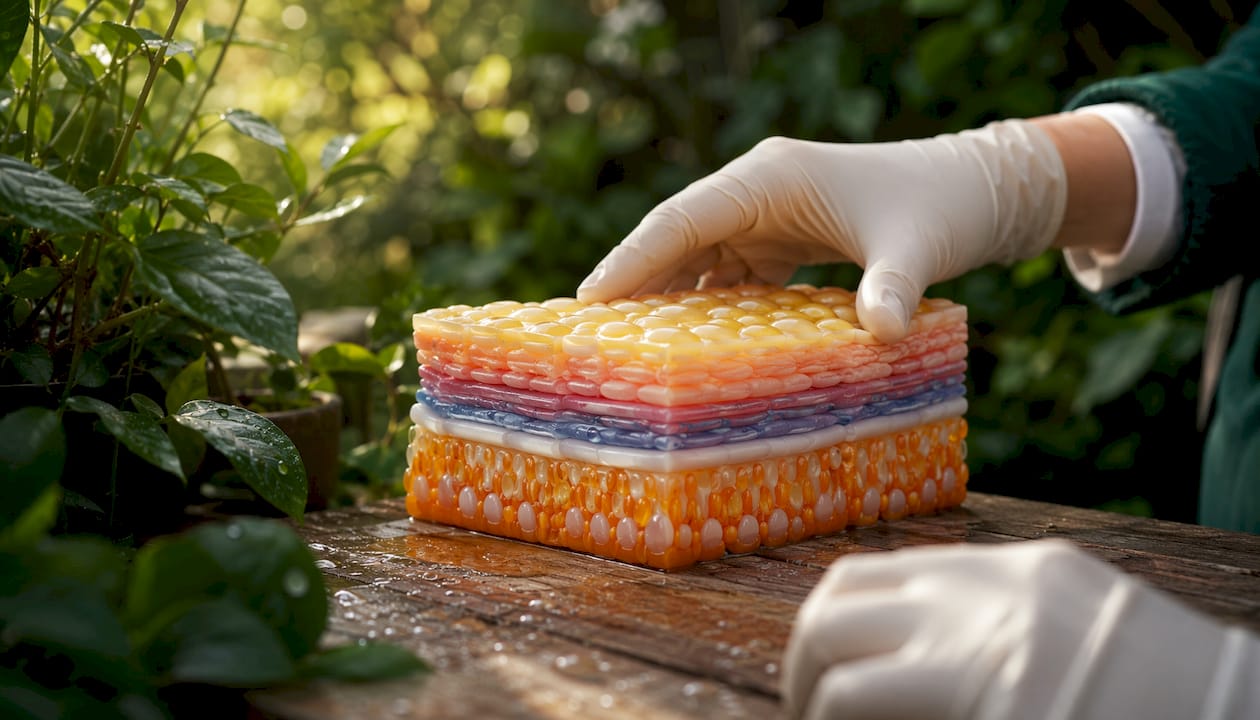
Skin pH plays an equally critical role. Healthy skin maintains a pH between 4.5 and 5.5, a slightly acidic range that supports both the barrier and the microbial community living on your skin. That community, called the microbiome, includes bacteria and fungi that protect against pathogens and regulate inflammation. When you introduce a new cleanser or exfoliant that shifts your pH outside that range, the microbiome loses balance. The result is increased sensitivity and a skin reaction to new products that feels disproportionate to the product itself.
The immune system adds another layer of complexity. Skin reactions fall into two categories: irritant contact dermatitis and allergic contact dermatitis. Irritant reactions are more common and happen when a product physically damages the barrier. Allergic reactions involve the immune system identifying an ingredient as a threat and mounting a response. Knowing which type you are experiencing changes what you should do next.
Pro Tip: If redness appears only at the application site and fades within 24 hours, it is likely irritant contact dermatitis. If it spreads beyond the application area or worsens over days, consult a dermatologist to rule out an allergic response.
Key factors that affect skin product compatibility:
- Barrier integrity: Compromised skin from over-exfoliation or harsh cleansers reacts more strongly to new products.
- Microbiome balance: Frequent product switching disrupts microbiome stability, creating cumulative irritation.
- Skin pH: Products with extreme pH values shift your skin’s acid mantle and increase sensitivity.
- Immune sensitivity: Pre-existing conditions like eczema or psoriasis lower the threshold for immune-triggered reactions.
How long does skin take to adapt to new active ingredients?
The adjustment timeline for new actives is longer than most people expect. Full tolerance to ingredients like retinoids or AHAs typically builds over 8–12 weeks, starting with once-weekly application and gradually increasing frequency. That timeline is not a flaw in the product or your skin. It is the biology of adaptation.
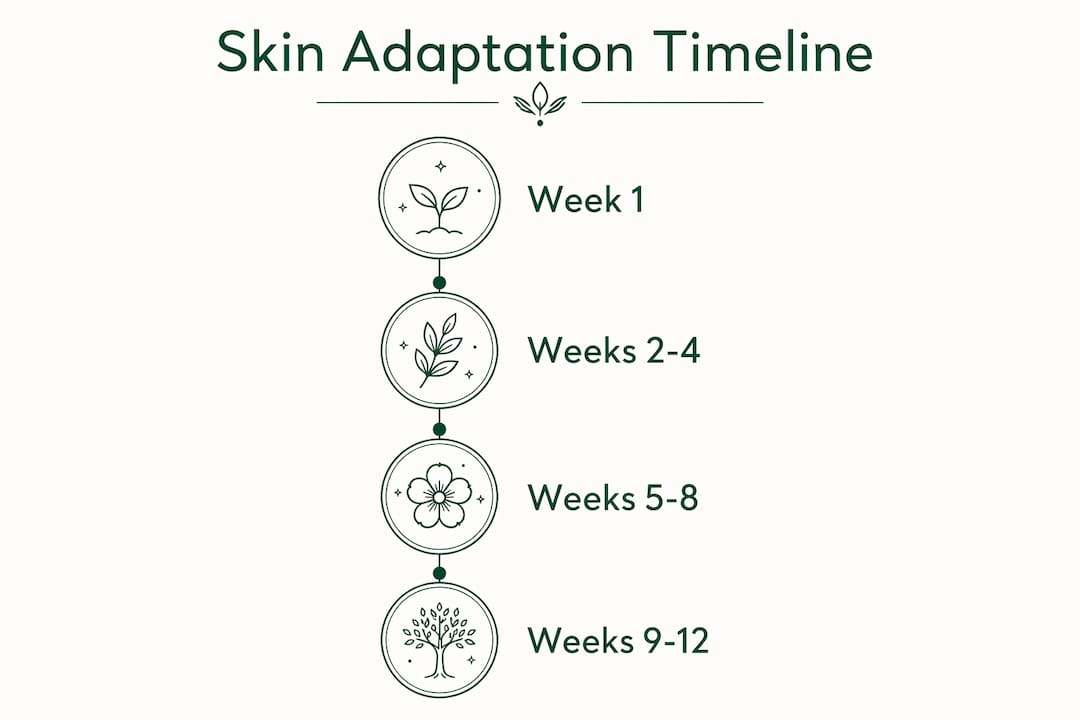
Weeks 2–4 are the most challenging. During this window, mild dryness, peeling, and tingling are normal. These symptoms reflect the skin barrier recalibrating to the new ingredient load. The mistake most people make is stopping the product at this point, assuming it is not working or causing harm.
The buffer method
The buffer method is the most practical tool for managing early irritation with actives. You apply a thin layer of moisturizer before your active, which dilutes the concentration reaching the skin and slows absorption. This does not reduce the product’s long-term effectiveness. It reduces the intensity of the initial reaction while your skin builds tolerance. Over weeks, you reduce the buffer layer until you apply the active directly.
Purging vs. irritation vs. allergy
These three responses look similar but require different actions.
| Response | What it looks like | What to do |
|---|---|---|
| Purging | Breakouts in usual acne zones, resolves in 4–6 weeks | Continue product, reduce frequency |
| Irritant reaction | Redness, stinging, dryness at application site | Reduce frequency, add buffer moisturizer |
| Allergic reaction | Spreading rash, hives, worsening over days | Stop product immediately, see a dermatologist |
Purging is limited to breakout-prone areas and resolves within 4–6 weeks. If breakouts appear in new locations or persist beyond six weeks, the product is causing irritation, not purging.
Pro Tip: Start retinoids on a Monday-Wednesday-Friday schedule for the first month. This gives your skin two days of recovery between applications and dramatically reduces early peeling.
One more thing worth clarifying: your skin does not become immune to a product over time. Tolerance means the initial irritation diminishes, not that the product stops working. Efficacy remains constant. The adaptation is in your skin’s response, not in the ingredient’s activity.
What is the best way to introduce new skincare products safely?
The safest method for testing new products is variable isolation. This means introducing one product at a time and observing your skin for 2–4 weeks before adding anything else. When people introduce multiple products simultaneously, identifying the trigger becomes nearly impossible. Variable isolation removes that confusion entirely.
Here is a practical protocol for testing any new product:
- Patch test first. Apply a small amount to the inner forearm or behind the ear for three consecutive days. Watch for redness, itching, or swelling. If none appear, proceed to the face.
- Introduce one product at a time. Wait at least two weeks before adding another new product to your routine. For actives like retinoids or chemical exfoliants, wait the full four weeks.
- Keep a skin log. Write down the date you started, the product name, and any changes you notice each day. This creates a clear record that removes guesswork from your observations.
- Observe for the full window. Patch testing over three days and monitoring new moisturizers for two weeks is critical because some effects, like comedone formation, only appear in the second week.
- Do not change other variables. Avoid switching your cleanser, diet, or laundry detergent during a product trial. Any of these changes can mimic a product reaction.
Pro Tip: Use a minimal ingredient moisturizer as your baseline product during testing. Fewer ingredients mean fewer potential triggers, making it easier to isolate what your skin is actually reacting to.
The testing window differs by product type. A basic moisturizer needs two weeks of observation. A chemical exfoliant or retinoid needs the full four weeks. Skipping this window is the most common reason people misattribute reactions and abandon products that would have worked.
Which ingredient combinations affect skin tolerance and compatibility?
Many ingredient compatibility rules circulating online are outdated. True chemical incompatibilities are rare, and modern formulation technology has made many previously problematic combinations workable.
The retinol and vitamin C pairing is the most misunderstood. The concern was that vitamin C (as L-ascorbic acid) destabilizes retinol at low pH. In practice, encapsulation technology now allows both to coexist in a single formulation without degradation. The exception is copper peptides combined with L-ascorbic acid. These two remain genuinely incompatible and are best used at different times of day.
The niacinamide and vitamin C myth deserves direct correction. Early research suggested they formed a yellow compound called niacin when combined. That reaction requires high temperatures and concentrations not found in skincare products. They are safe to layer.
The real risk in multi-active routines is not chemical incompatibility. It is barrier overload. Applying retinoids and chemical exfoliants at the same time can cause barrier burns because retinoids thin the stratum corneum while acids dissolve the lipid matrix simultaneously. The solution is timing separation, not ingredient avoidance.
A practical layering approach for improved tolerance:
- Morning: Antioxidants (vitamin C, niacinamide), SPF
- Evening: Retinoid or chemical exfoliant, not both on the same night
- Recovery nights: A barrier-supportive moisturizer with no actives, two to three nights per week
Modern encapsulation and pH buffering have made layering more forgiving than it was five years ago. The key is understanding which combinations require timing separation versus which ones are genuinely incompatible. For a deeper look at ingredients that support skin texture over time, the guide on aging skin texture ingredients covers the most current options.
Key Takeaways
Skin tolerance to new products is a biological adaptation process that requires consistent, patient introduction of one product at a time over 8–12 weeks.
| Point | Details |
|---|---|
| Tolerance takes time | Full adaptation to new actives like retinoids takes 8–12 weeks; mild symptoms in weeks 2–4 are normal. |
| Skin pH matters | Keeping skin pH between 4.5 and 5.5 protects the barrier and microbiome, reducing sensitivity to new products. |
| Test one product at a time | Introduce products with a 2–4 week gap to isolate reactions and avoid confusing multiple triggers. |
| Purging is not the same as irritation | Purging resolves in 4–6 weeks in breakout-prone areas; spreading or worsening reactions signal irritation or allergy. |
| Most incompatibilities are manageable | True chemical conflicts are rare; timing separation solves most multi-active layering issues. |
What I’ve learned from years of watching people test skincare wrong
The single biggest mistake I see is treating skincare like a product review cycle. Someone buys a new serum, uses it for five days, feels a tingle, and immediately concludes it is “too harsh.” They switch to something else. Two weeks later, the same cycle repeats. Their skin never stabilizes because it never gets the chance.
Skin adaptation is not glamorous. The 8–12 week timeline feels like an eternity when you are used to seeing results promised in 72 hours. But that timeline is not a marketing failure. It is biology. The stratum corneum does not care about your launch date.
The other pattern I notice is people layering three new products at once because they read about a “routine” online. When their skin reacts, they blame the most expensive product and return it. Variable isolation feels tedious, but it is the only method that gives you real information. Everything else is guessing.
Simplicity is underrated. A two-step routine you follow consistently will outperform a ten-step routine you rotate every two weeks. Your skin does not need more products. It needs stability. Respect the biology, slow down the introductions, and your skin will tell you exactly what it needs.
— Michael
A gentler starting point for sensitive skin
If you are rebuilding a disrupted barrier or starting fresh after a reaction, the foundation of your routine matters more than the actives you layer on top.
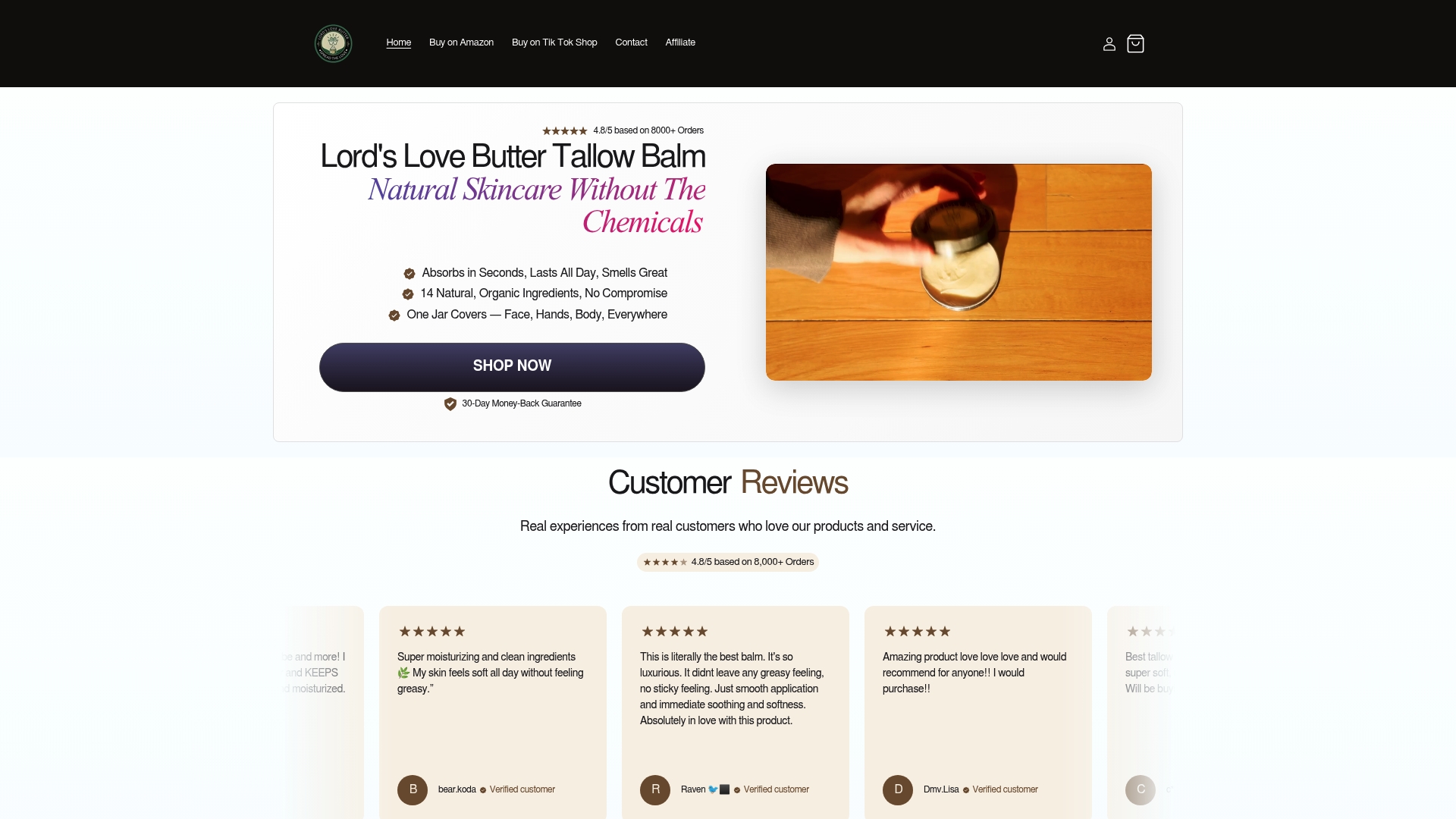
Lordslovebutter’s whipped beef tallow balm is made from grass-fed beef tallow with no synthetic ingredients, no fillers, and no chemical preservatives. Tallow’s fatty acid profile closely mirrors the lipids in the stratum corneum, which makes it one of the most compatible moisturizers for barrier repair. Lordslovebutter also offers a lightweight version for people who want the same barrier support without a heavier feel. Both are designed to work as a stable base layer while you carefully introduce new actives, giving your skin the best possible foundation for tolerance building.
FAQ
How long does it take skin to tolerate a new product?
Most people build full tolerance to new actives like retinoids or AHAs within 8–12 weeks, starting with once-weekly use. Mild dryness and peeling in weeks 2–4 are a normal part of the adjustment process.
What is the safest way to test a new skincare product?
Patch test on the inner forearm for three consecutive days, then introduce the product to your face while keeping the rest of your routine unchanged. Observe for at least two weeks before adding any other new product.
How do I know if my skin is purging or reacting badly?
Purging appears in your usual breakout zones and clears within 4–6 weeks. A bad reaction spreads beyond the application area, worsens over time, or includes hives and swelling, which means you should stop the product immediately.
Does skin stop responding to a product over time?
No. Tolerance means the initial irritation decreases as your skin adapts, not that the product loses effectiveness. The active ingredient continues to work at the same level throughout consistent use.
Can you use retinol and vitamin C together?
Yes, in most modern formulations. Encapsulation technology allows both to coexist without degradation. The combination that requires timing separation is copper peptides and L-ascorbic acid, which are best used at different times of day.

